When a mobile visit makes sense for fleet vehicles
A call-out suits vehicles that still move, but show repeat warning lamps, hard starting, flat batteries, intermittent charging or electrical faults that show up only after a few minutes on the road. It also helps when several units in the same fleet are showing similar symptoms, because wiring routes, earth points and charging issues can be checked in one visit.
For Cape Town fleets, mobile testing is often most useful where downtime costs more than the travel time to a workshop. A technician can read OBD fault codes, check live data, test battery condition, and inspect alternator output without stripping the vehicle first. That matters when the fault is not obvious, or when the problem appears on a bakkie, van, light truck or service car that must return to work quickly.
Call-outs are also practical for private owners with one vehicle parked at a workplace, depot or home base in Montague Gardens, Milnerton, Bellville, Somerset West or Paarl. If the vehicle has an electrical fault that comes and goes, a mobile inspection saves a lot of guesswork.
What to tell the workshop before the technician leaves
The best visits begin with clear facts. Share the vehicle make, model year, mileage if known, and the exact symptom. A flat battery after standing overnight is different from a battery that goes weak after idling with lights on. A starter that clicks once is not the same as a starter that cranks slowly and then recovers.
Useful details include the warning lights on the dash, any recent repairs, jump starts, battery replacements, trailer connections, accessory changes, or water ingress after rain. If more than one vehicle is involved, list which units are affected and whether they share a route, driver or body fitment. That helps the technician decide what to check first, especially where CAN bus faults or accessory wiring may be part of the picture.
- Vehicle registration or internal fleet unit number
- Exact location and access instructions for the vehicle
- Symptoms, warning lights and when the fault appears
- Any recent battery, starter, alternator or wiring work
- Trailer, tracker or accessory fittings added recently
Once the brief is done, our contact form can be used to send the details and the site address in one place. That keeps the first visit focused on testing, not on piecing the story together at the vehicle.
What gets tested on site
On a fleet call-out, the first checks usually cover the battery, charging system and starting circuit. A healthy system should show sensible voltage at rest, under cranking load and with the engine running. If readings are off, the technician can trace the fault through the starter, alternator, earth points, fuse box and related wiring.
Modern vehicles often need more than a visual inspection. Live data can show whether the battery sensor, charging control, alternator command or communication lines are behaving as they should. Some faults sit in the CAN bus network, where a poor connection or damaged wire can affect several systems at once. Parasitic drain testing is useful where a vehicle keeps going flat after standing, especially on fleets that park for long periods or use accessories that stay powered.
- OBD fault code reading and code interpretation
- Battery condition and charging output checks
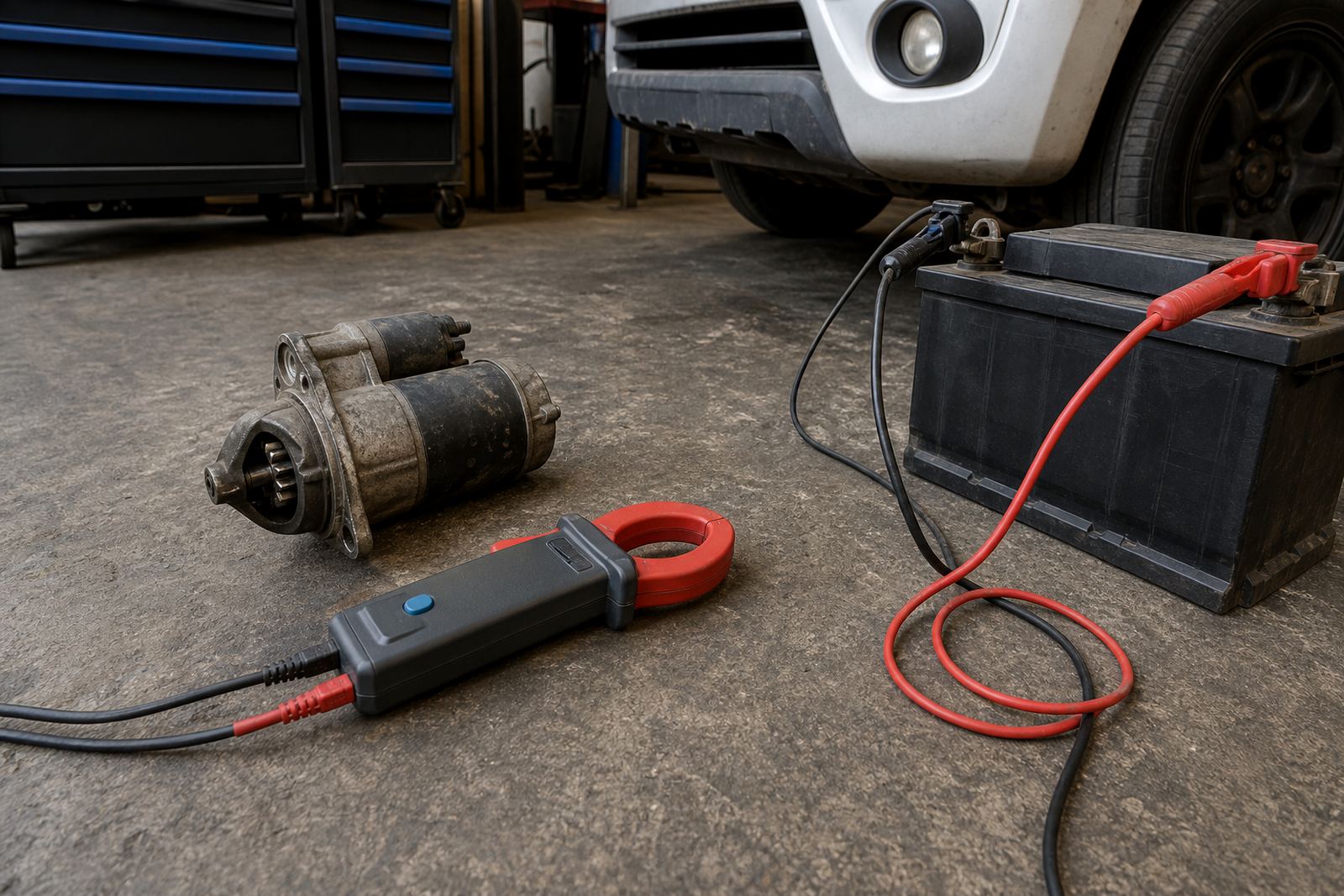
- Starter draw and crank-speed testing
- Alternator output and regulator checks
- Earth fault tracing and voltage drop testing
- Fuse box inspection and power feed tracing
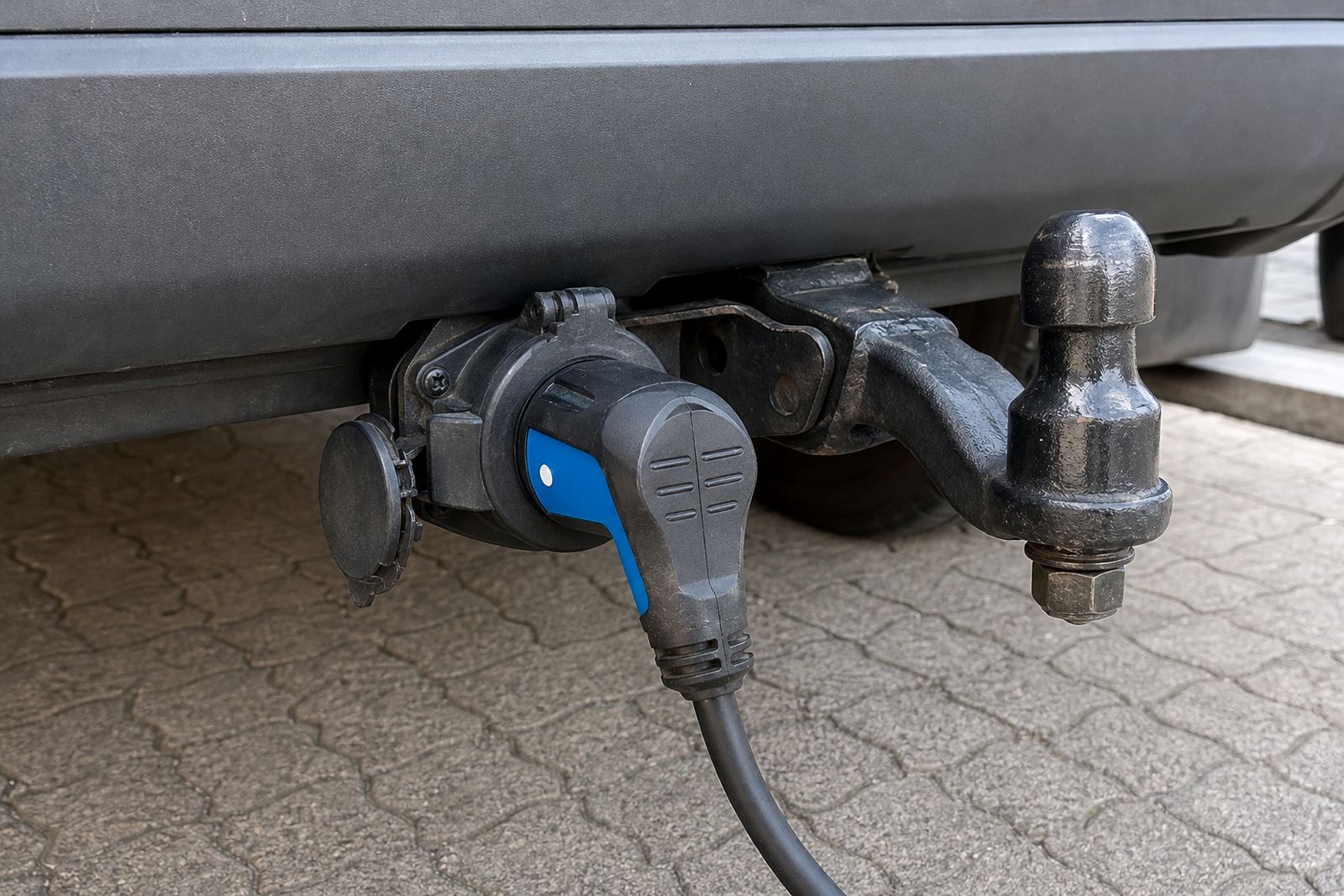
- Trailer wiring and accessory circuit checks
Some problems are found quickly, others need a methodical trace from the battery to the load. That is normal on vehicles with several add-ons, repaired looms or older wiring that has seen a few years of heat and vibration.
How to line up the vehicle and the site
Access is half the job. The technician needs enough room to open bonnets, work near the battery, inspect the rear wiring and check underbody points where necessary. A clean parking bay with space on both sides makes testing easier. If the vehicle is part of a yard with gates, security or loading activity, tell the coordinator what the entry rules are before the visit.
It also helps to know whether the unit can be started, whether the battery is fully flat, and whether jump starting has already been tried. If the vehicle has a tracker or accessory wiring installed, the technician may need to inspect those circuits as part of the diagnostic path. In Cape Town’s coastal areas, corrosion around terminals and earth points can add another layer, especially where moisture has been sitting under covers or in loom joints.
For fleet operators in Bellville, Durbanville or Brackenfell, grouping vehicles by site can save repeat movement. If two or three units show similar electrical symptoms, park them together and mark the keys clearly. A tidy yard and clear vehicle order helps the technician move from one test to the next without waste.
Faults that often point to wiring, not just parts
Many electrical problems look like a failed component at first glance. A dead starter can be caused by a worn starter, but it can also come from a bad earth, corroded terminal, damaged relay circuit or high resistance in the feed wire. The same goes for alternator complaints, where the alternator may be sound but the issue sits in the charging cable, battery clamp or control side.
Intermittent lighting faults, dashboard glitches and repeated blown fuses often point to wiring damage or poor repairs from earlier work. Trailer wiring can cause all sorts of strange symptoms when the loom has been joined badly or left exposed. On vehicles fitted with trackers and accessories, a drain or short circuit may hide in the add-on wiring rather than the factory loom.
That is why diagnostics matter before parts are replaced. A good test path avoids chasing the same fault twice. When a vehicle keeps returning with the same complaint, the cause is often in a shared circuit, a damaged connector or a loose earth that only fails under load.
What a fleet manager should record after the visit
Once the test is complete, keep a clear note of what was checked, what was found and what still needs attention. That record helps with repeat faults, driver reports and workshop planning. It also helps when a vehicle later shows the same symptom at another depot or on a different route.
A useful file should note the vehicle ID, mileage, fault codes read, live data observations and any repairs done on the day. If a starter, alternator or wiring repair was completed, record the part of the circuit that failed and any follow-up test results. For fleets with several similar vehicles, patterns often show up after a few visits. That makes future diagnosis more efficient.
- Vehicle unit number and registration
- Date, location and technician notes
- Fault codes and live data findings
- Parts repaired, replaced or isolated
- Any recurring symptom still to monitor
For planned fleet work, that paper trail is useful when scheduling a return visit or comparing one vehicle against another. It also gives your team a clearer picture of which faults are electrical, which are mechanical, and which need a deeper CAN bus or charging system trace.
Areas covered for mobile fleet work
V-Auto operates from Montague Gardens, Cape Town and handles mobile call-outs across the Western Cape. Fleet and private vehicles can be supported in Cape Town, Bellville, Milnerton, Somerset West and Paarl, with area coverage that also includes Brackenfell and Durbanville. The work ranges from diagnostics and wiring repairs to starter, alternator, battery drain and charging system faults.
For managers planning the next visit, the main aim is to match the fault, the location and the vehicle schedule. A clear brief makes it easier to send the right technician with the right test gear and parts knowledge. That is especially useful where several vehicles are parked in different parts of the city, or where one fault is holding up a whole run of deliveries.
If the fault sits in a hard-to-trace circuit, a mobile inspection can be the first proper step before a workshop repair. It gives the fleet team a grounded view of what failed, what still needs attention, and which vehicle should be lifted out of service first.