Patrol cars do not like weak current paths
Security vehicles spend long hours idling, moving in short bursts and carrying extra electrical equipment. That mix puts strain on batteries, alternators, starter circuits and earth points. A vehicle can still crank, but have a low charging voltage or a poor ground that upsets lights, radios and tracking units. We check the whole electrical path rather than looking at one symptom in isolation.
Our workshop handles fleet units and private security vehicles across Cape Town, Bellville, Milnerton, Somerset West and Paarl. We test live data, read OBD fault codes where the vehicle system supports it, and trace faults that sit inside looms, connectors or fuse boxes. On patrol vehicles, a small voltage drop can create a large nuisance, so the job needs careful testing and fault tracing.
- Intermittent warning lights after start-up
- Flat batteries after overnight parking
- Starter clicking but not turning the engine properly
- Auxiliary lights dimming when other equipment is on
- Trackers or warning kits losing power on rough roads
The equipment set we usually find on these vehicles
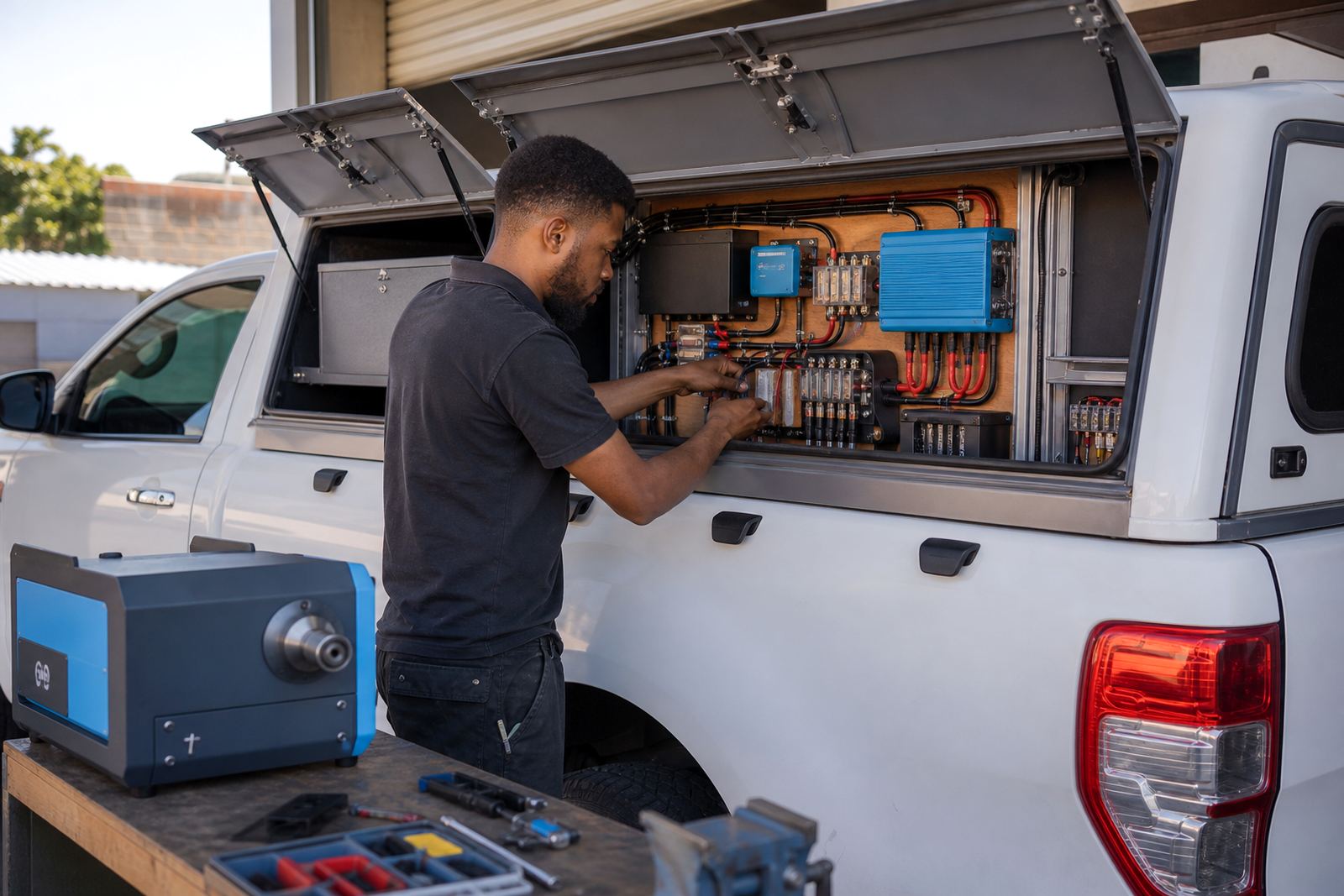
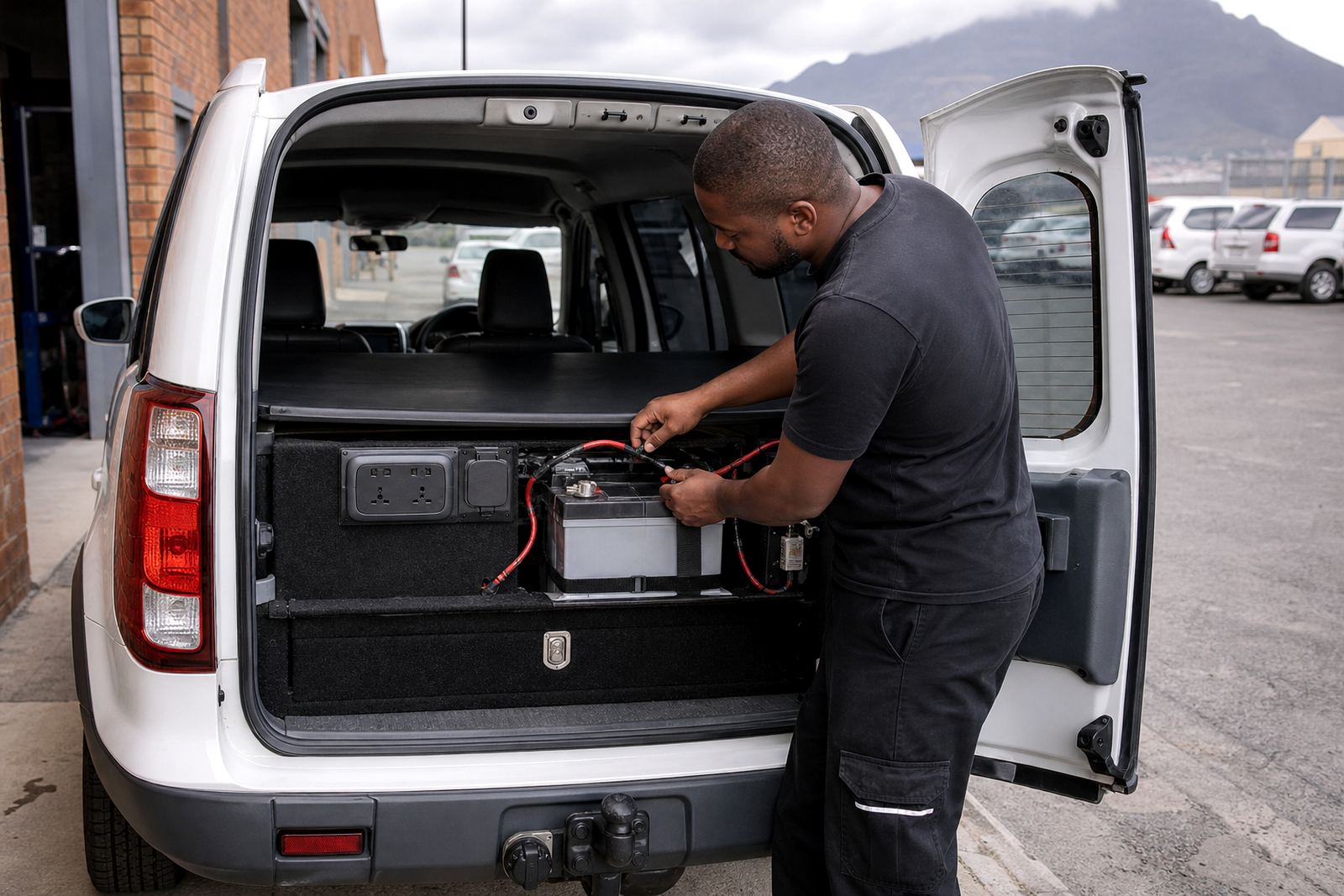
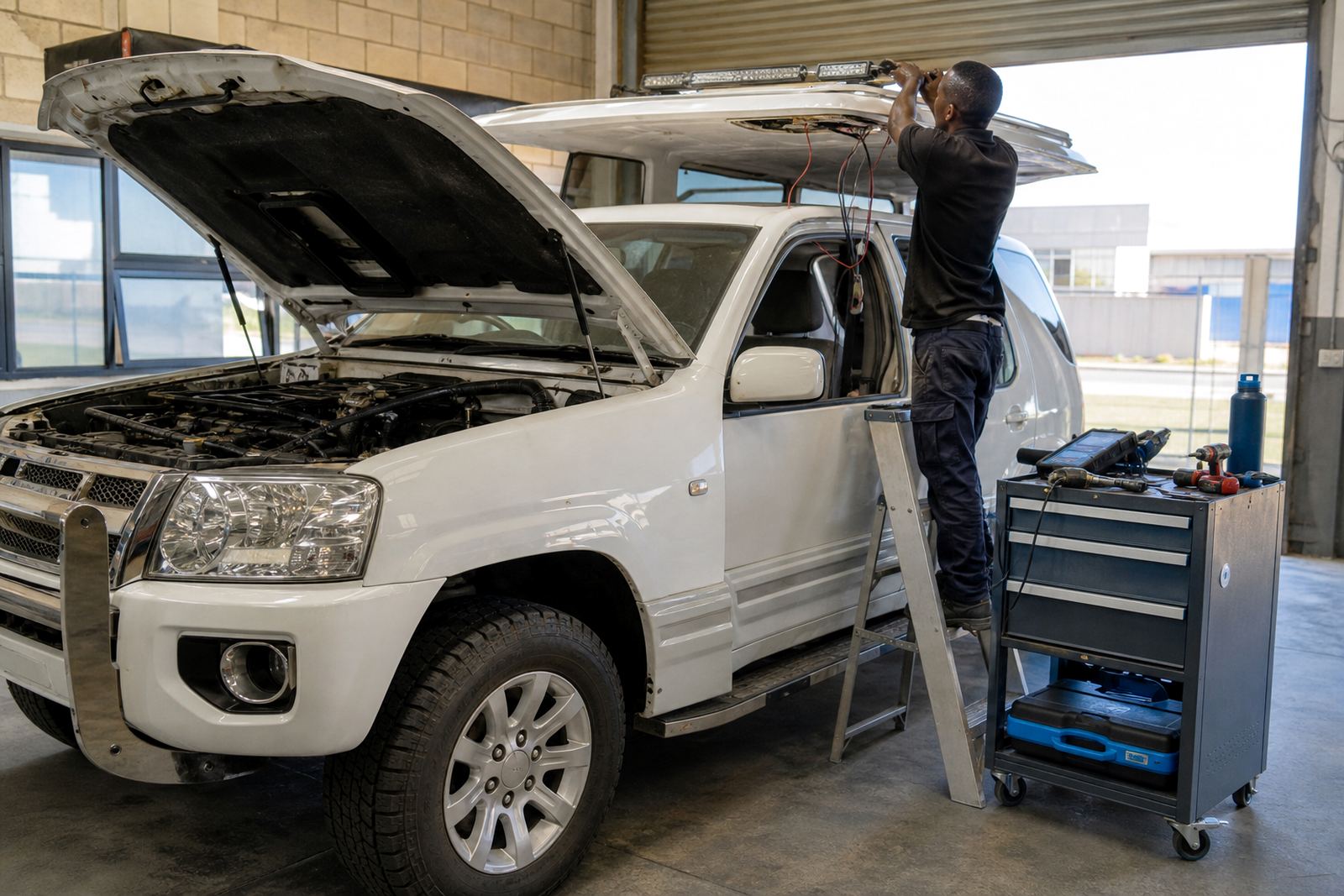
Security and response vehicles often carry more than standard road equipment. That can include flashing beacons, grille lights, sirens, two-way radio feeds, tracker units, dash cams, power sockets and extra charging points for handheld devices. Each item adds another branch to the electrical system, and each branch needs proper protection and correct routing.
We look at where the accessory wiring joins the original loom, whether the circuit has a proper fuse, and if the earthing point is clean and secure. On many vehicles the real fault sits in a loose connector, a damaged wire near a hinge, or an accessory that was added without enough current allowance. CAN bus systems need special care too, because a poor connection can create fault codes that seem unrelated to the actual problem.
- Warning lights and beacons
- Sirens and public address equipment
- Tracking units and immobiliser add-ons
- Extra battery feeds for radios and cameras
- Trailer wiring on response units that tow equipment
How we plan the wiring before anything is stripped apart
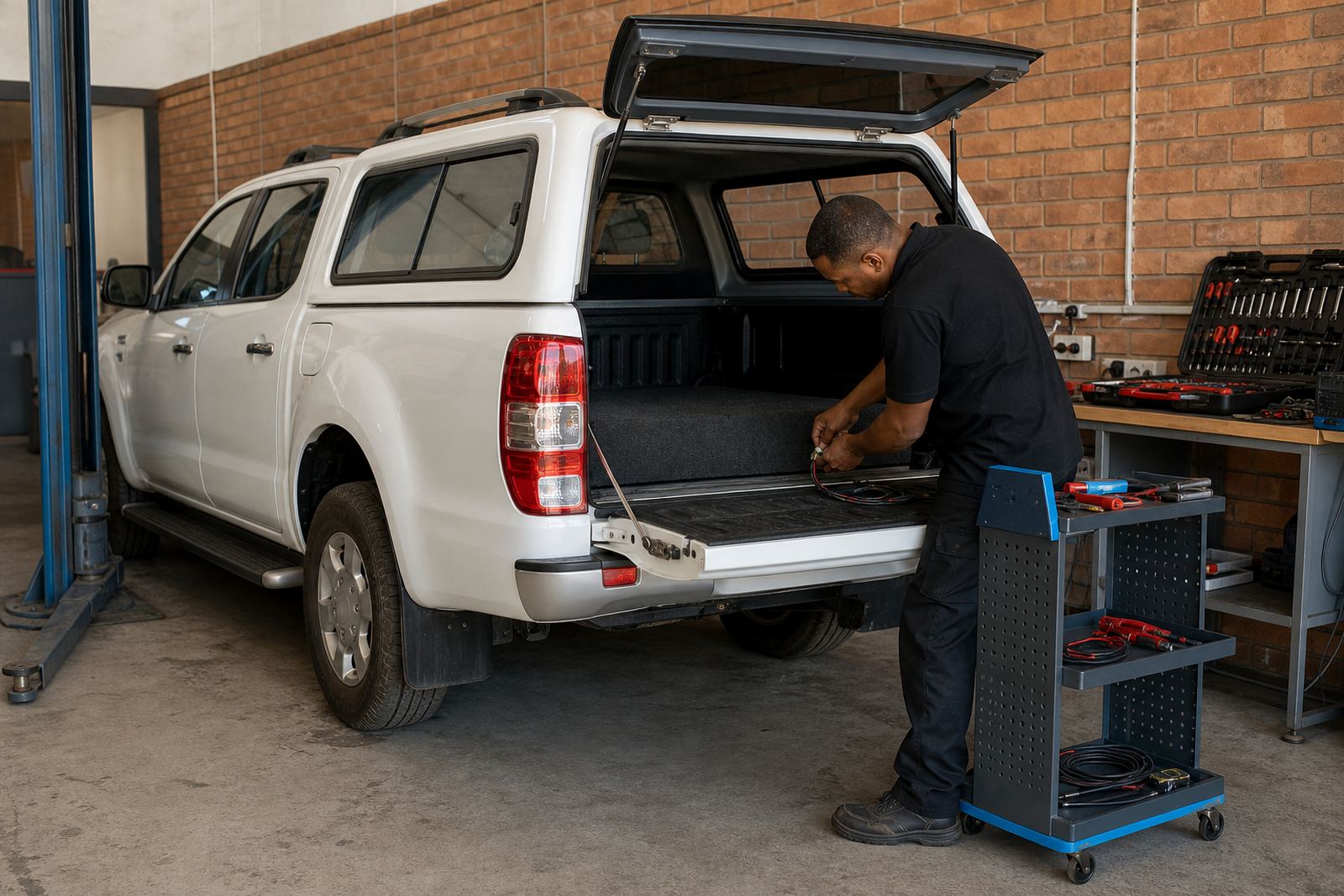
A useful repair starts with a clean plan. We identify what must stay live, what should switch with ignition, and what needs its own fused feed. That matters for patrol vehicles that stop and start all day, because a loose layout can drain the battery or make a warning circuit behave badly. If a unit has been added in a rush, we often need to separate the original vehicle fault from a fitting fault.
We also check where the wiring runs through body panels, doors, tailgates and roof sections. Those movement points are common trouble spots. Salt air in coastal areas, dust from inland routes and repeated vibration can harden insulation or wear through a section of loom. A neat repair gives the vehicle a better chance of staying reliable under daily use in the Western Cape.
- Keep high draw items on their own fused circuit
- We choose cable size to suit the load the vehicle will carry.
- Route wiring away from hinges, heat and sharp edges
- Leave access for future fault finding
- Label added circuits where practical
Faults that show up repeatedly
Some jobs arrive with a dead battery label, but the real issue is a parasitic drain. Others are tagged as starter trouble when the charging system is tired and the battery never gets full. We test battery condition, alternator output, charging ripple, starter current draw and earth faults, then move into the loom if the readings point there. That approach saves time on repeat faults that only show up after the vehicle has been parked or switched off for a while.
Common mistakes on security vehicles include tapping power from the wrong side of the fuse box, using undersized wire for extra equipment, joining cables with poor insulation, and skipping a proper earth point. Those shortcuts can leave warning lights flickering, accessories resetting or the vehicle refusing to start after a long shift. A few loose metres of cable can turn into a full morning of chasing faults if the circuit was never planned properly.
Budget ranges for patrol and response work
Each vehicle lands differently because the fault can sit in a simple connector or deep inside a damaged loom. Small repairs such as a basic wiring fix, fuse box issue or earth fault usually fall in the lower hundreds to low thousands of Rand, depending on access and testing time. Starter repairs and alternator repairs are usually higher, especially where strip down and bench checking are needed.
For accessory fitting or a full tracking and warning light rewire, the budget rises with the number of devices, the route of the wiring and whether extra relays, fuses or split charging parts are needed. Fleet vehicles sometimes need more than one circuit cleaned up at once, which is why we look at the whole electrical setup before the work starts. That gives a clearer Rand range for the job.
Montague Gardens workshop work and mobile call-outs
Our base is in Montague Gardens, Cape Town, and we also offer mobile call-outs for security fleets and private owners across the Western Cape. We cover Cape Town, Bellville, Milnerton, Somerset West, Paarl, Brackenfell and Durbanville. Some jobs are best handled in the workshop on a test bench. Others can be checked on site if the fault is linked to a dead starter, a charging issue or a failed accessory feed.
The team includes Vuyani Mthembu, Anele Khanye, Ridwaan Davids, Megan Maluleke, Sipho Gamieldien and Liezl Botha. That mix helps with diagnostics, wiring repair, fleet booking coordination and mobile attendance. If your patrol vehicle, response car or site security unit needs electrical attention, our contact form is the easiest way to send the details.