

When a fleet fault starts costing hours
A warning light on one bakkie can become a whole-day delay when the same fault appears on three units in the same week. Fleet managers usually need more than a code readout, they need a proper fault trace, a clear repair path and a record that the vehicle is safe to send back into service.
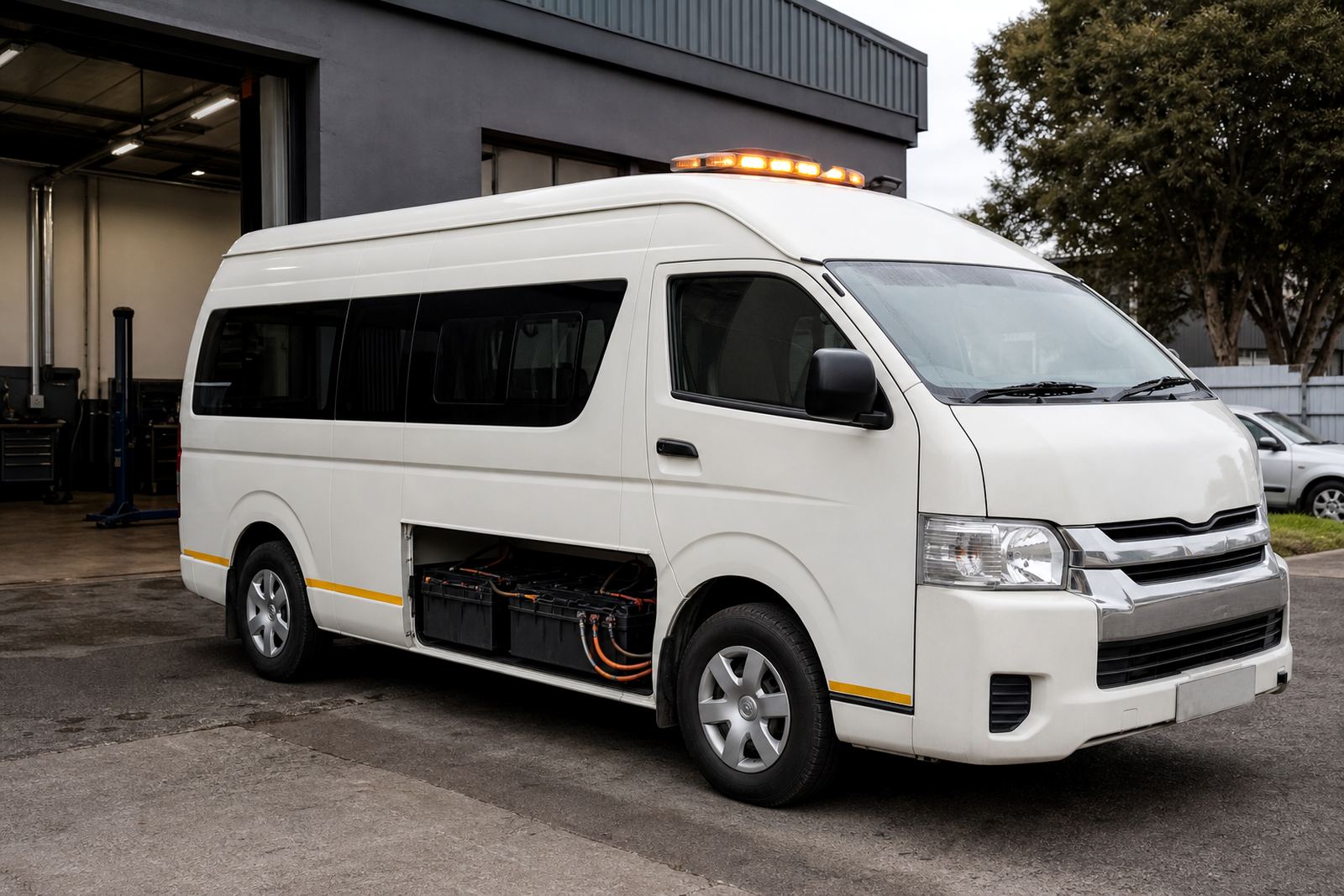
We work on vehicles that cycle through deliveries, site visits, service calls and long road use. That means frequent checks for battery condition, charging output, starter draw, earth faults, intermittent wiring breaks and parasitic drain. If a vehicle is cranking slowly, losing charge overnight, or showing a repeated CAN bus fault, the problem often sits deeper than the visible symptom.
For fleet owners in Cape Town, Bellville, Milnerton, Somerset West and Paarl, the aim is to keep each unit earning its place in the schedule. A workshop visit suits jobs that need strip-down time, while mobile call-outs help when a vehicle cannot be moved without making the fault worse.
The equipment side most fleets end up needing
Fleet diagnostics usually begins with the scan tool, but it does not end there. Live data, voltage drop readings, current draw checks and wiring inspection all matter when the fault comes and goes. Some faults are logged in the control system, others need testing at the fuse box, starter circuit or alternator output before the cause becomes clear.
- OBD fault code reading and live data checks
- Battery tests and charging system verification
- Starter motor and alternator fault finding
- Parasitic drain checks on parked vehicles
- Wiring repairs, earth faults and fuse box testing
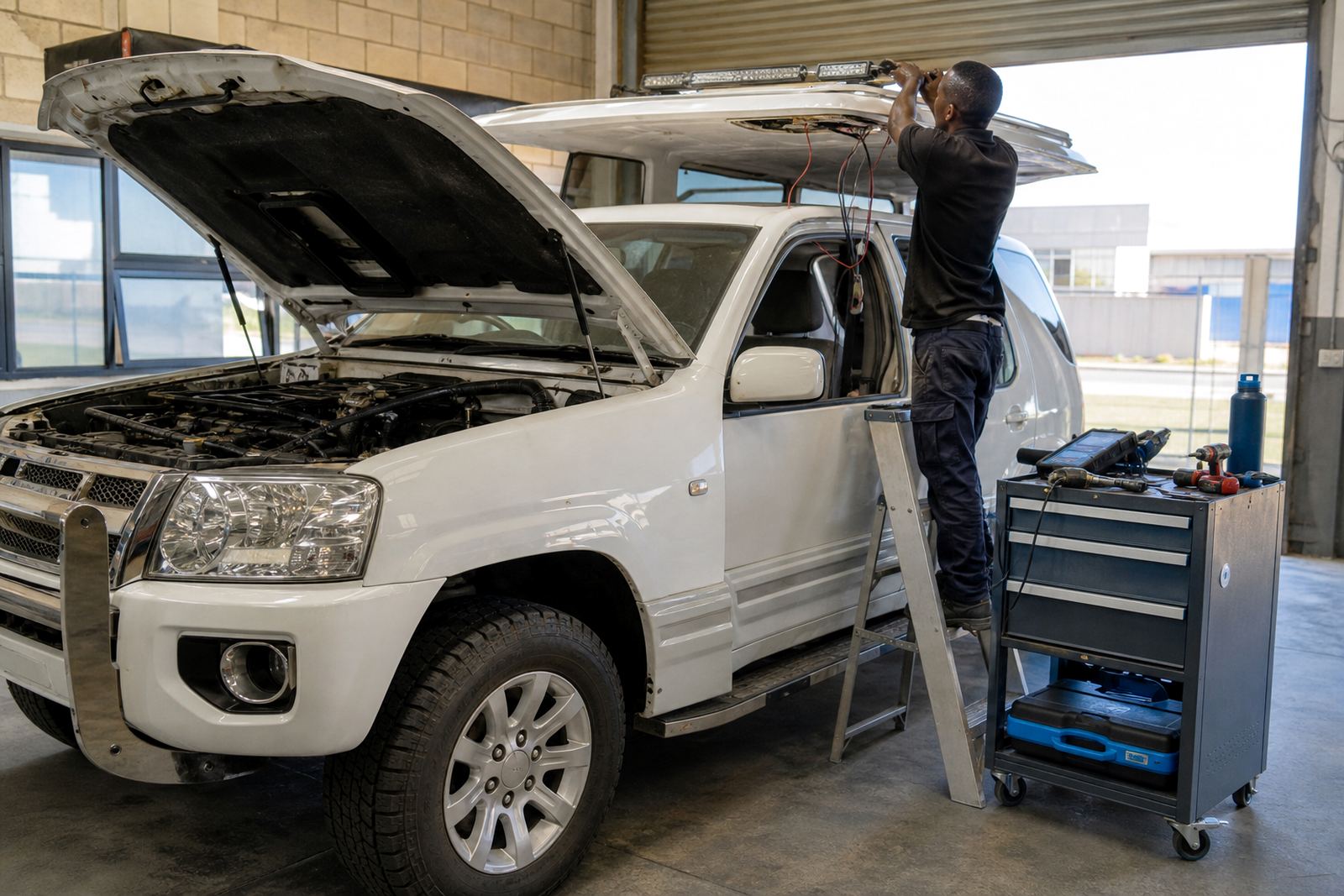
- Tracker fitting and accessory rewiring
- CAN bus fault checks where modules are communicating badly
On fleet work, the technician also looks at how the vehicle is used. Short trips, cold starts, tow use, stop-start deliveries and idle time all affect the electrical system in different ways. That context matters when deciding whether the issue is a worn part, poor wiring, or an installation that has been tapped into the wrong circuit.
How the workshop and call-out split usually works
Not every fault belongs on a ramp, and not every job suits roadside work. A mobile visit works well for battery drain complaints, tracker fitments, lighting faults, loose connections and basic charging checks. A workshop slot is better when the job needs alternator removal, starter repairs, deeper loom tracing or controlled testing over a longer period.
For fleet planners, the best layout is usually a mixed one. Keep the units with obvious electrical faults aside, mark the vehicles that need a second test after overnight standing, and group similar jobs together so parts handling stays tidy. That reduces repeat movement in the yard and avoids shuffling vehicles around just to find one fault.
We also see value in keeping a simple fault note on each vehicle: when it failed, what warning lights showed, whether the battery was recently replaced and whether any accessories were fitted before the issue started. Those notes save time when the same vehicle returns with a different symptom, or a fresh driver reports a related problem.
Common mistakes that make fleet faults linger
Fleet electrical issues often linger because the first check only clears the code without finding the cause. Another mistake is fitting a new battery to mask a charging problem, then sending the vehicle back out while the alternator or earth path still fails under load. A third one is adding accessories, trackers or extra lighting onto an already busy circuit without checking how the system carries current.
- Replacing parts before testing voltage drop and current draw
- Ignoring intermittent faults that only show after heat or vibration
- Using one vehicle as a template for every other unit in the fleet
- Leaving loose wiring in the engine bay or behind trim panels
- A fault code on its own rarely gives the full picture
CAN bus problems deserve special care. A poor splice, a damaged connector or a weak earth can cause more than one warning light and make several systems act up at once. That is why fault finding needs a methodical trace.
Trackers, accessories and fleet fitments that stay tidy
Fleet fitments need to be clean, secure and easy to service later. Trackers should sit where they are protected from heat, water splash and rough handling, while still allowing access for inspection. Accessories such as reversing lights, charging points, sirens, work lights and trailer wiring need proper protection, correct fusing and neat routing through the body and loom.
Good planning makes later maintenance simpler. If the vehicle is likely to be worked on again, leave the wiring labelled, the joins protected and the routing logical. That matters in fleets because a hurried accessory job can turn into a recurring electrical issue, especially on vehicles that live outdoors in coastal air or spend long hours moving between sites.
For mixed fleets, the cleanest setup is often the one that keeps factory circuits separate from add-ons wherever possible. It makes diagnosis easier, protects the original system and avoids confusion when a warning light appears after a new installation.
Budget ranges for fleet electrical work in rand
Fleet electrical budgets vary with fault depth, access and whether the vehicle comes to the workshop or needs a mobile visit. A straightforward fault code read and basic testing sits at the lower end, while deeper wiring repairs, starter or alternator work, and tracker installations move into higher bands. If the fault is intermittent, or if several systems are involved, the time on diagnosis usually matters more than the visible symptom.
As a working guide, many fleet jobs fall into these rough bands:
- Basic diagnostic checks and fault tracing: R650 to R1 500
- Battery drain testing and charging system checks: R850 to R1 800
- Starter or alternator repairs: R1 500 to R4 500
- Wiring, earth fault and fuse box repairs: R900 to R3 500
- Tracker or accessory fitments: R1 200 to R3 800
These figures shift when the job needs extra stripping, long fault tracing, hard-to-access components or repeated testing after a vehicle has stood overnight. On fleet work, the useful figure is not just the repair cost, but the time saved by avoiding another roadside stop or a repeat booking for the same unit.
Where fleet operators send the hard cases
Some vehicles arrive with a dashboard full of warnings, others with a dead battery that keeps going flat after a short stop. We handle both kinds, along with starters that click, alternators that undercharge, wiring that fails under vibration and accessories that were fitted without enough thought for the next service. The practical aim is the same: find the fault, repair it and return the vehicle to work.
Our team in Montague Gardens works with fleet managers, owner-operators and private owners who run more than one vehicle and need the electrical side kept under control. Call-outs across Cape Town, Bellville, Milnerton, Somerset West, Paarl, Brackenfell and Durbanville help when a vehicle is tied up at a yard, depot or site and cannot be moved easily.
We trace fleet faults, install trackers and check charging issues against the vehicle schedule. Clear notes on the vehicle usually lead to a cleaner fault trace.