Daily school runs ask more from the electrical system
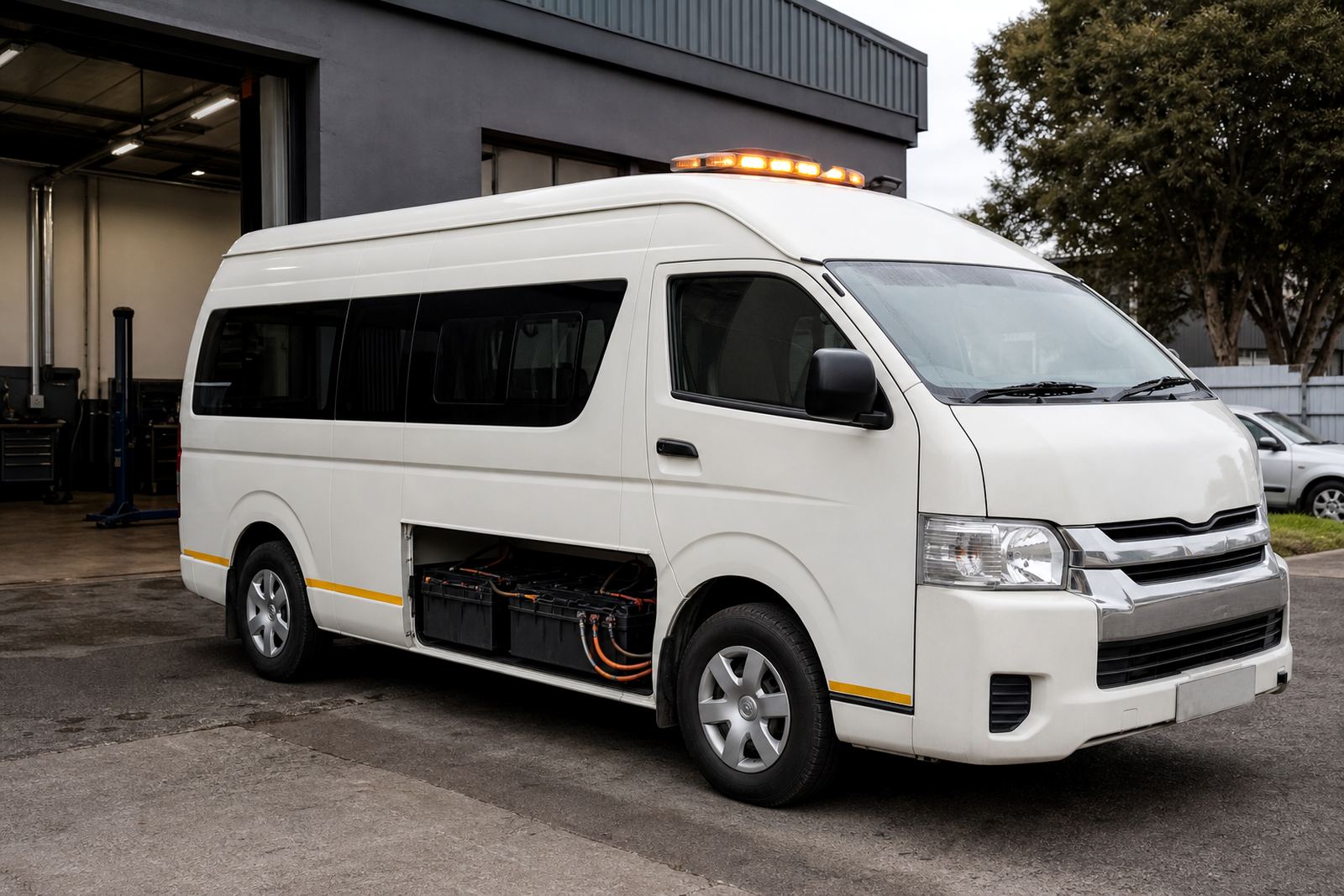
A minibus or SUV used for school transport does not behave like a weekend vehicle. The engine may start many times in a morning, headlights stay on in traffic, doors open and close often, and trackers or phone chargers draw power while the vehicle is parked. That pattern exposes weak batteries, tired alternators and small earth faults that are easy to miss until a driver is stuck with children waiting.
Our workshop in Montague Gardens handles school-run vehicles that need a clear electrical check. We look at battery condition, charging output, starter draw, warning lights and the fault history stored in the control systems. Where needed, we also check parasitic drain so the battery is not going flat overnight for no obvious reason.
What gets checked before the morning route starts
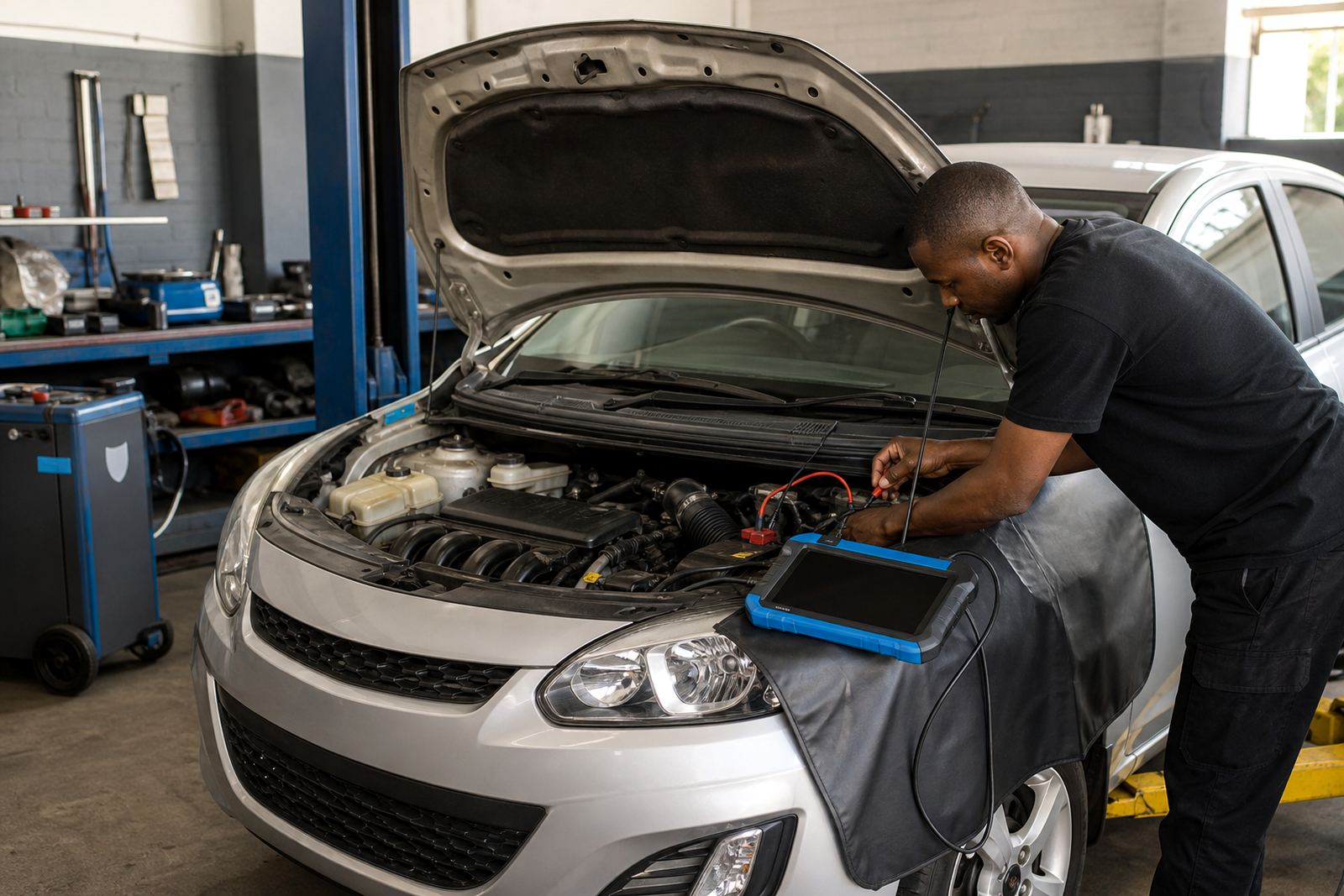
A proper school transport inspection starts with the basics and then moves into the circuits that matter most. We test battery state, cranking performance, alternator output, charging voltage under load and voltage drop across key cables. If the vehicle shows intermittent faults, we read OBD fault codes and look at live data to see what is changing when the problem appears.
- Battery testing for weak cells and low reserve capacity
- Charging system checks for alternator output and regulator behaviour
- Starter motor testing for slow cranking and high current draw
- Earth fault checks where lights, gauges or modules behave erratically
- Parasitic drain testing for overnight battery loss
- Fuse box inspection where small faults keep recurring
For school fleets, that kind of testing is useful because one weak vehicle can affect the whole route plan. A clean report also helps when you decide whether the fault is a repair, a wiring fix or a full component replacement.
Typical equipment fitted for school transport work
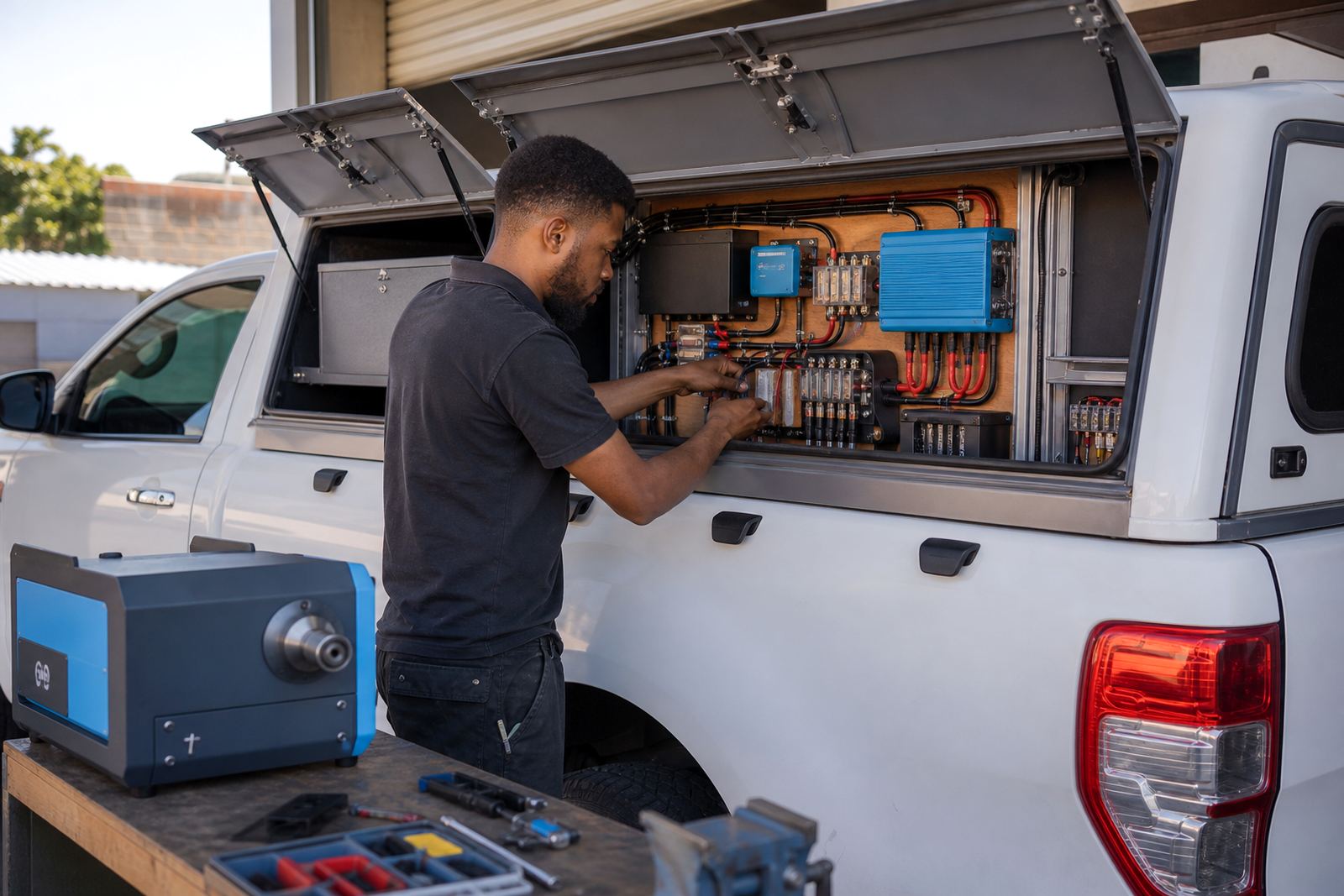
The electrical set-up on a school vehicle often grows over time. A tracker may be added for security, a second battery may be fitted for accessories, or extra lighting may be installed for early starts and late afternoon pickups. If the wiring is not planned neatly, those add-ons can introduce faults that keep returning.
We fit and repair school transport electrical equipment with an eye on the vehicle's daily use. That means tidy routing, protected joins, sound fusing and enough allowance for vibration, door slams and the damp conditions that often show up in Cape Town winters.
- Trackers and related wiring
- Accessory power feeds for charging points or interior equipment
- Lighting repairs for interior, brake and exterior lamps
- Trailer wiring where luggage or support trailers are used
- Starter circuit repairs where the vehicle only cranks sometimes
When the vehicle carries children, sloppy wiring is not a small issue. Loose joins and unprotected cables can lead to blown fuses, dead batteries or lights failing at the wrong moment.
Planning the layout around school collection routes
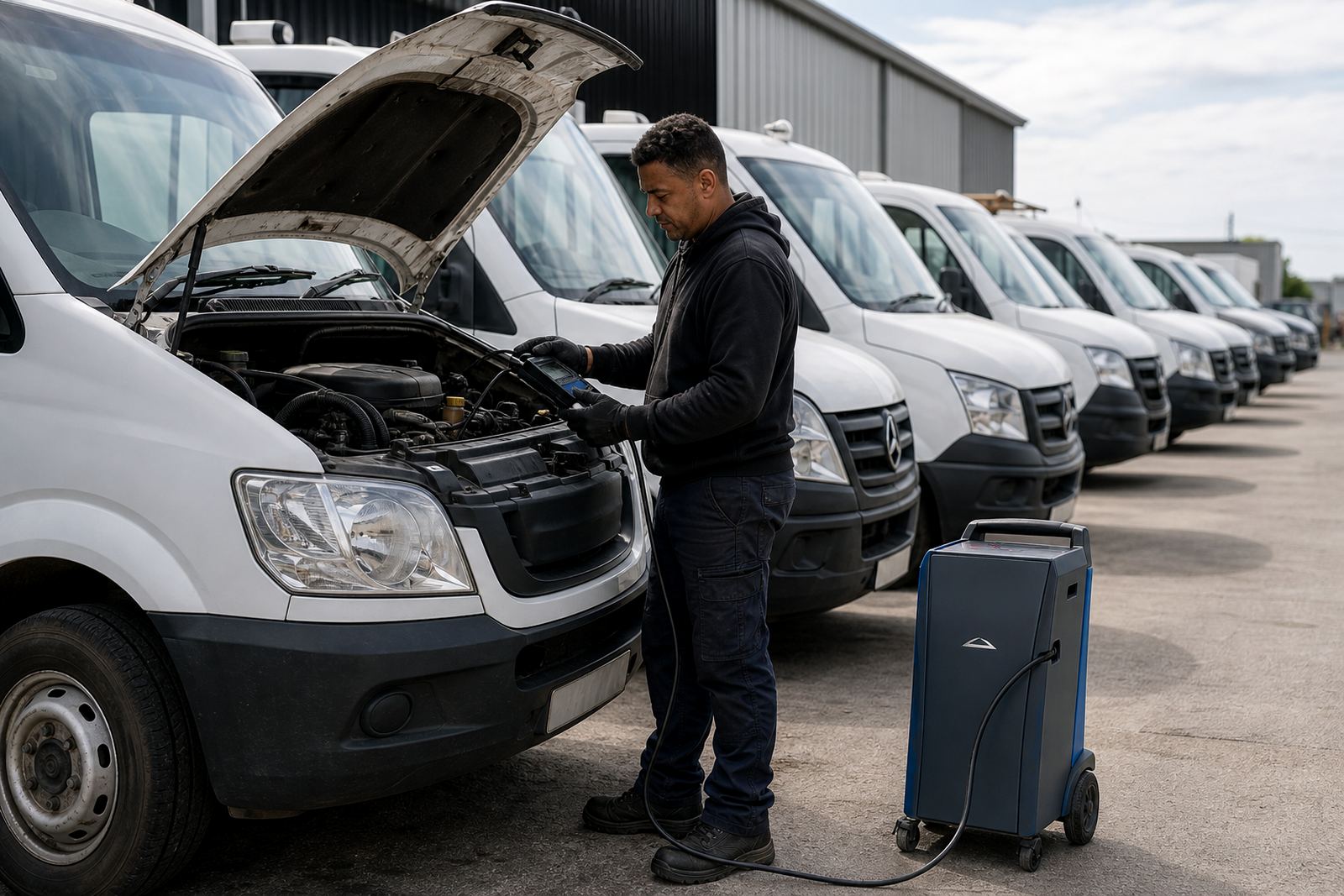
A school transport operator usually works with fixed morning and afternoon loops, plus stand-in vehicles when one unit is off the road. That means the electrical plan should suit short trips, repeated starts and long idle periods in traffic. Vehicles in Bellville, Milnerton, Somerset West or Paarl can also face different road and weather conditions, so a one-size wiring approach is not a good fit.
Before fitting anything extra, we look at how the vehicle is actually used. If the unit spends hours standing between runs, battery reserve matters. If the route includes many short hops, charging recovery matters. If there is a tracker, camera feed or power point in the cabin, cable routing and fuse placement matter just as much.
Good planning also keeps the vehicle easier to service later. A labelled wiring path, sensible fuse access and clear cable runs save time when the next fault appears, and that fault will usually appear at the worst moment if the original work was rushed.
Common mistakes that cause repeat electrical trouble
Most repeat faults on school transport vehicles come from a few practical mistakes. Someone fits extra equipment without checking alternator capacity. A battery is replaced without finding the drain that killed the old one. A starter issue is blamed on the battery when the real problem is a tired cable or bad earth.
We also see poor joins, corroded terminals and wires routed where water and movement attack them. Cape Town humidity and coastal air can make those weak points show up faster, especially on vehicles that work close to the harbour side or in damp parking yards.
- Replacing parts before testing the circuit properly
- Adding accessories without checking charging load
- Ignoring corrosion on terminals and earth points
- Running cables through sharp edges or moving parts
- Leaving a parasitic drain untreated after a battery swap
When those issues are sorted properly the vehicle is usually more predictable in daily use, and that matters when a route starts before sunrise.
Budget ranges for school transport electrical work in Rand
Costs depend on the fault, the time needed to trace it and whether parts must be repaired or replaced. A basic battery and charging check is at the lower end, while detailed fault tracing, alternator work or wiring repairs will sit higher. Tracker fitting, accessory wiring and CAN bus fault checks need more labour, especially when the fault is intermittent.
As a practical guide, school transport owners often budget in ranges rather than fixed numbers. Simple testing and minor repairs may fall into a modest band, mid-level wiring or starter work usually moves into a middle band, and complex tracing or component replacement can move higher again. If the vehicle has multiple faults at once, the final figure rises with the labour needed to isolate each issue.
For fleet operators, it helps to group vehicles by condition. A clean unit may only need testing and a few adjustments. A vehicle with slow cranking, dashboard warnings and overnight drain will need deeper work. That difference changes the budget far more than the badge on the bonnet.
What our Montague Gardens team handles for school fleets
V-Auto works from Montague Gardens and supports school transport operators across Cape Town and surrounding areas with workshop bookings and mobile call-outs. The team handles diagnostics, auto electrical repairs and fitting work for both private owners and fleet operators who need the vehicle back in reliable condition.
That includes fault code reading, live data checks, battery drain tracing, starter and alternator repairs, fuse box faults, lighting repairs, earth faults, trailer wiring and accessory rewiring. When the problem sits in the CAN bus network or a control module signal, we look at the basics first, then move into the circuit path that is actually causing trouble.
If your school transport vehicle is giving trouble with starting, charging or electrical accessories, our contact form is the way to send the details through. We work across Cape Town, Bellville, Milnerton, Somerset West, Paarl and surrounding areas with branch and call-out coverage that suits the route the vehicle already follows.