
When a municipal unit starts behaving oddly
A warning lamp on a patrol bakkie is rarely just a nuisance. It can point to a weak battery, an alternator that is not charging properly, a bad earth, or a wiring fault that only appears when the vehicle hits a rough road or a wet service yard. Municipal fleets also carry accessories that private cars never do, so there are more places for a fault to hide.
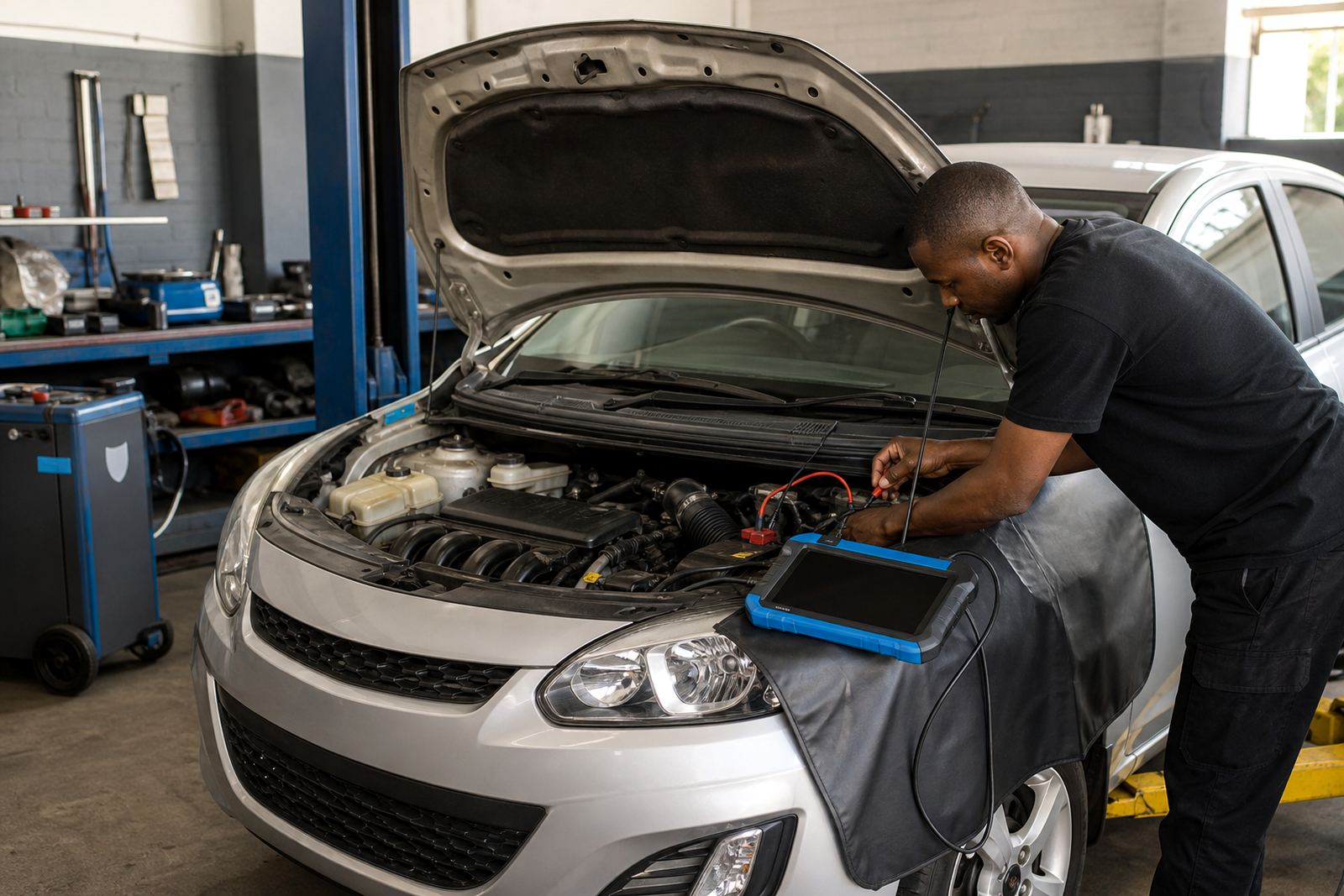
Our workshop reads OBD fault codes, checks live data, tests battery condition and charging output, then works through the loom, relays and fuses that feed the equipment on board. If a vehicle is cranking slowly, losing power to site equipment, or throwing repeated warning lights after a jump start, that is the point where proper electrical testing saves time and avoids parts being changed for guesswork.
In municipal work, the fault is often intermittent. A loose connection near the battery tray, corrosion in a fuse box, or a worn starter circuit can be enough to stop a vehicle from doing its shift. We handle those faults in the workshop and on mobile call-outs across Cape Town, Milnerton, Bellville, Somerset West and Paarl.
Equipment that usually sits on these vehicles
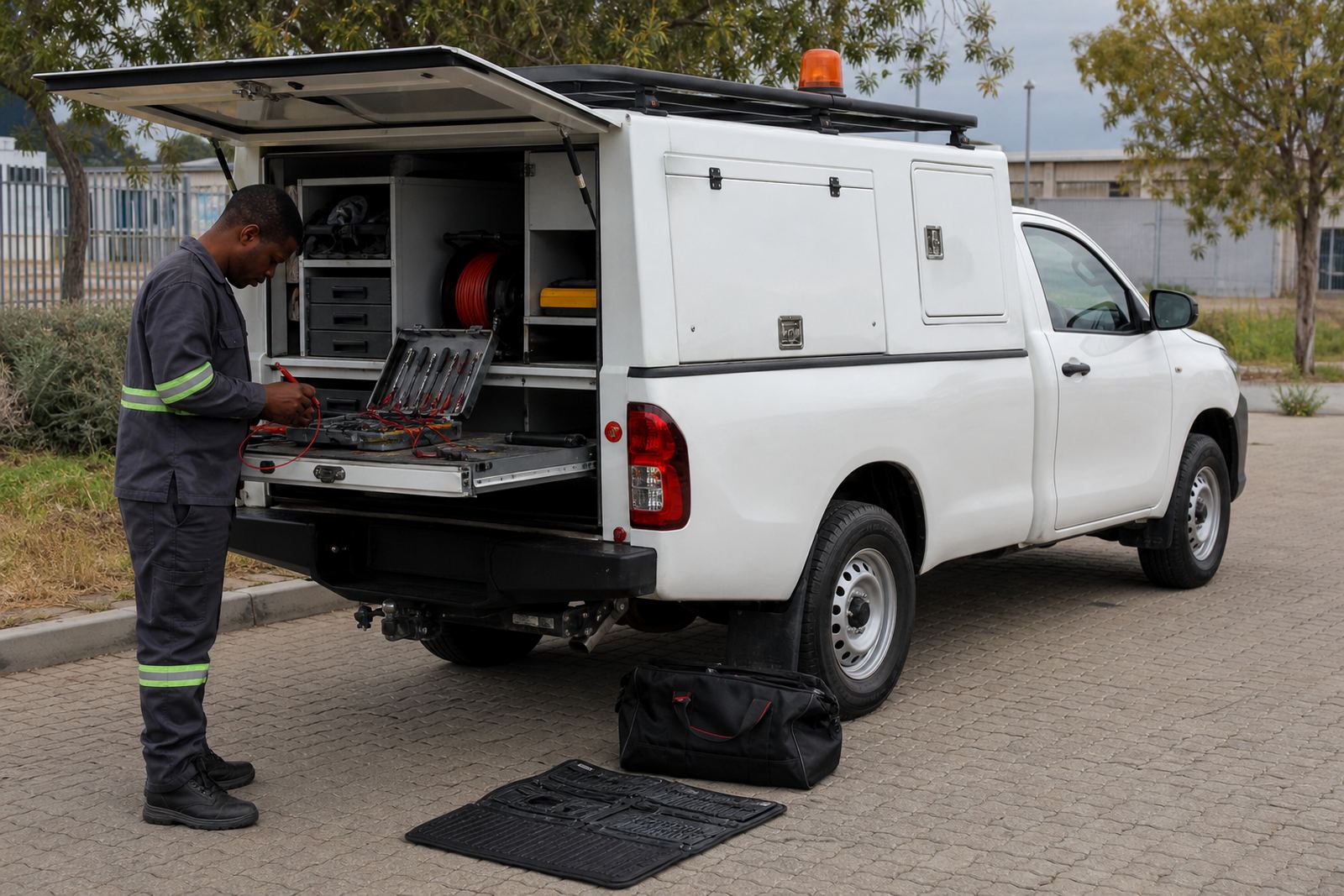
Utility vehicles are often fitted with practical extras that must work every day. A municipal fleet unit may carry warning lights, beacons, two-way radios, siren or alarm equipment, work lamps, extra charging points, trailer plugs, fridge feeds, or power for tools and measuring gear. When one item fails, it can affect the others if the wiring was put in poorly.
- Warning lights and beacons for road-side visibility
- Accessory power for radios, chargers and small tools
- Trailer wiring for tow-duty and service trailers
- Extra lighting for night work or shaded yards
- Tracking units that need clean power and tidy routing
- Auxiliary circuits tied into the ignition or battery feed
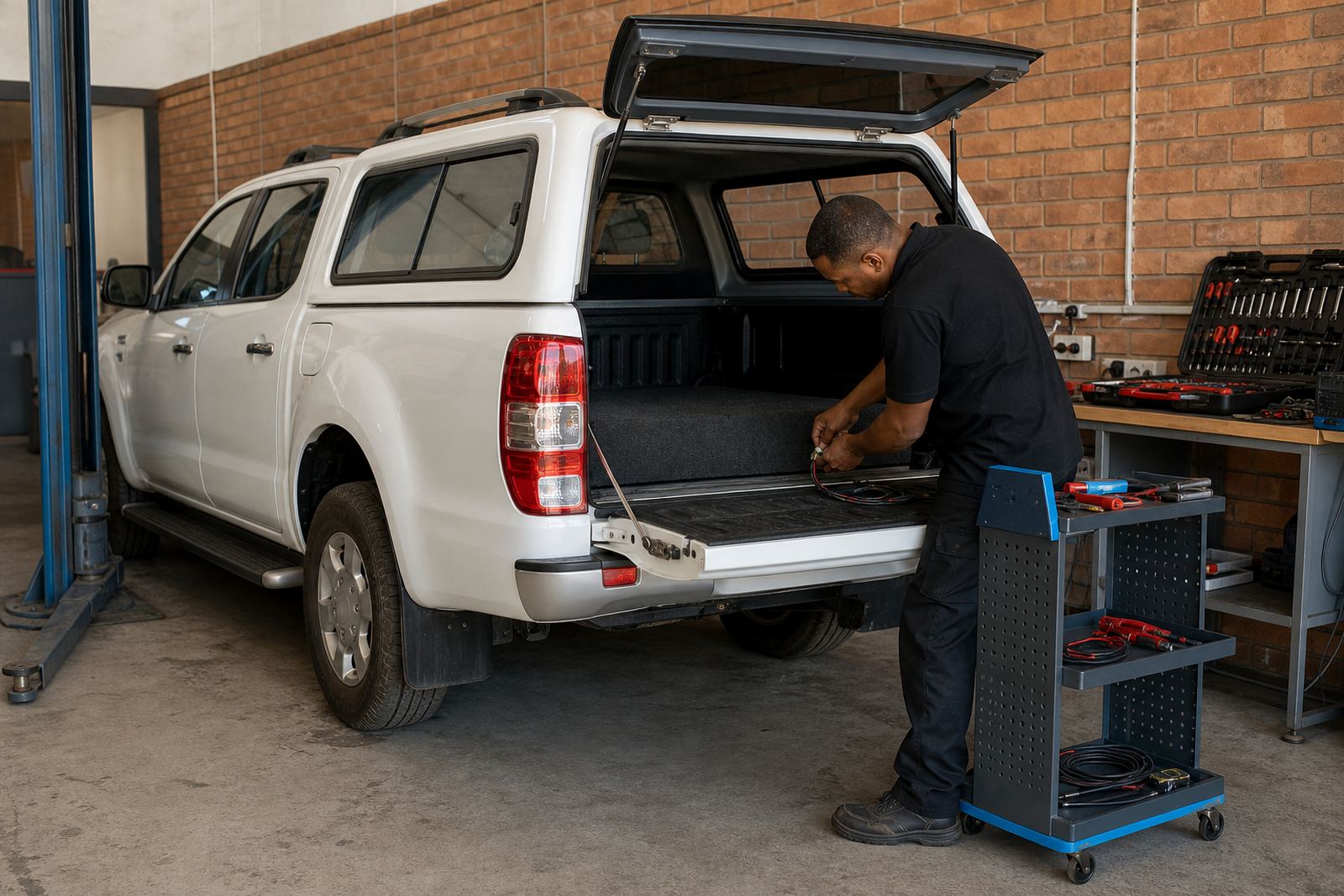
We fit trackers and accessories with proper cable routing, correct fusing and solid earth points. That matters on vehicles that spend hours idling, bouncing over uneven roads, or working near coastal humidity where terminals and connectors corrode faster. A neat installation is not cosmetic. It reduces breakdowns later.
How we plan the wiring on a working fleet vehicle
Good planning starts with the load the vehicle is expected to carry. A municipal bakkie used for inspections needs a different setup from a van that runs pumps, lights or trailer gear. We look at what must run from ignition, what must stay live, and what should shut down with the key. That keeps the battery from being drained overnight and avoids circuits pulling from the wrong side of the fuse box.
CAN bus systems need care as well. Many modern vehicles do not like random splices or loose add-on wiring. If an accessory is tied into the wrong circuit, the vehicle may show false faults, lose communication on the bus, or behave as if there is a bigger problem than there really is. We check the basics first: supply, earth, fuse protection, starter circuit, alternator output and parasitic drain. Then we work outward to the accessories.
- Keep accessory loads on clearly marked fused circuits
- Separate heavy current draw from control wiring
- Use proper earthing points, not painted brackets
- Protect loom runs from rubbing on metal edges
- Leave enough access for future testing and repair
Faults that show up most often on municipal units
Starter repairs and alternator repairs are common because these vehicles do a lot of stop-start work. A weak alternator can still let the engine run, but it will not keep the battery healthy under repeated use. Parasitic drain is another regular problem when radios, trackers or added lamps are wired badly and stay live after the ignition is off.
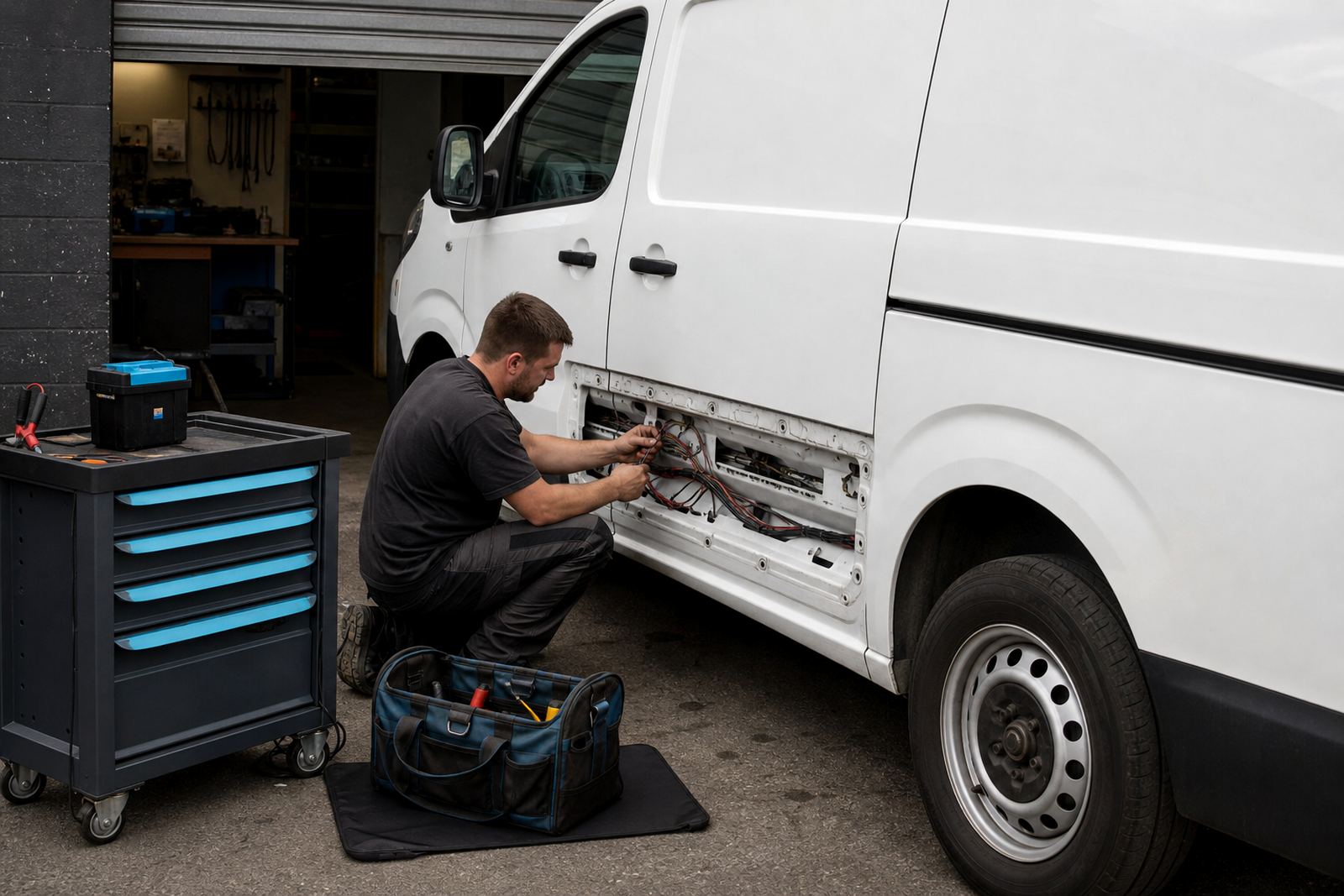
We also see earth faults, burnt fuse box terminals, damaged starter circuits and trailer wiring faults. On site vehicles the issue may be a simple break in a wire near the tailgate, or it may be a hidden fault in a loom that has been patched more than once. If lights dim when accessories switch on, or the vehicle struggles to start after short trips between depots, the charging system needs testing rather than a quick battery swap.
For fleet managers, the important point is consistency. One vehicle with an odd fault can become three vehicles if the same fitting method was used across the fleet. A single bad installation often spreads the same problem pattern through similar units.
Budget ranges for common repair paths
Every job depends on the fault found, the vehicle type and the condition of the existing wiring. Small diagnostic jobs are one level, while a full starter or alternator repair is another. Extra equipment fitment and loom repairs sit in between, especially when old wiring must be stripped back and rebuilt correctly.
As a practical guide, municipal use vehicle work in South African Rand often sits in these broad ranges:
- Basic electrical diagnosis and fault tracing: R650 to R1 500
- Battery drain testing and parasitic draw checks: R850 to R1 800
- Starter circuit repairs: R900 to R2 500
- Alternator or charging system repairs: R1 500 to R4 500
- Wiring repairs, earth faults and fuse box work: R750 to R3 500
- Tracker or accessory fitment and rewiring: R1 200 to R5 000
Those figures move with the amount of labour, the access to the fault and whether the vehicle must be booked into the Montague Gardens workshop or handled on a mobile call-out. Fleet work is often more efficient when several units are inspected together, because recurring wiring mistakes tend to appear in more than one vehicle.
How municipal teams in Cape Town usually use us
We work from Montague Gardens and handle call-outs for Cape Town, Bellville, Milnerton, Somerset West, Paarl, Brackenfell and Durbanville. That helps when a vehicle cannot be spared for a long trip across the city, or when a unit is stuck at a depot with a dead battery, no charge, or a wiring fault that stops it from leaving site.
Municipal use vehicles benefit from a clean maintenance pattern. Keep the fault notes, keep track of added equipment, and make sure every change to the electrical system is recorded. If a tracker, beacon, inverter or extra lamp is added later, it should be wired to the same standard as the factory circuits. A tidy install now is cheaper than chasing gremlins through a fleet later.
Send the vehicle type, the fault and the depot location through our contact form. Megan Maluleke handles workshop coordination and Liezl Botha manages fleet bookings, while our technicians handle diagnostics, wiring repairs, starter and alternator faults, charging system checks and CAN bus fault checks. The aim is to keep the vehicle fit for the next round of work, not just to make a warning light disappear for a day.