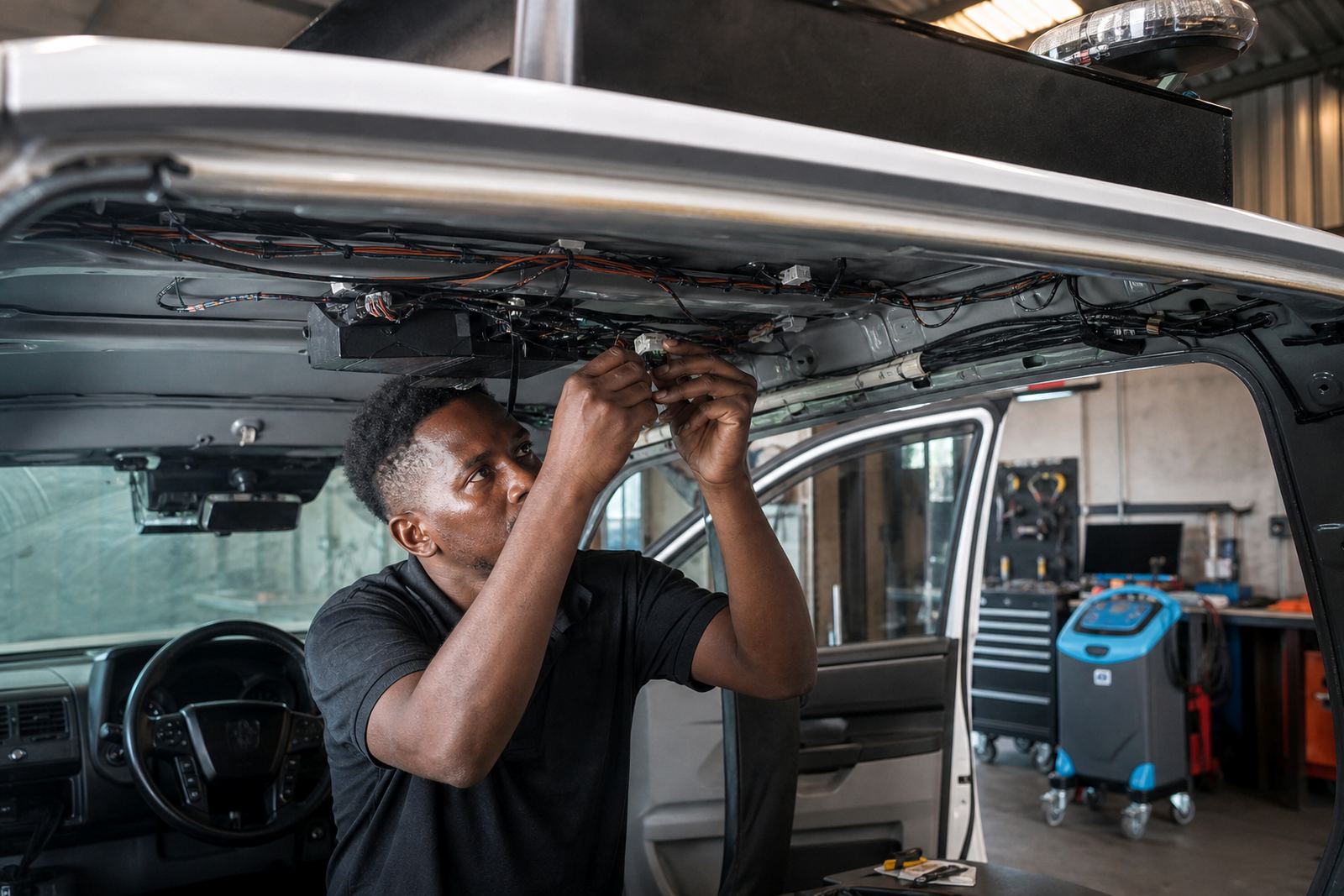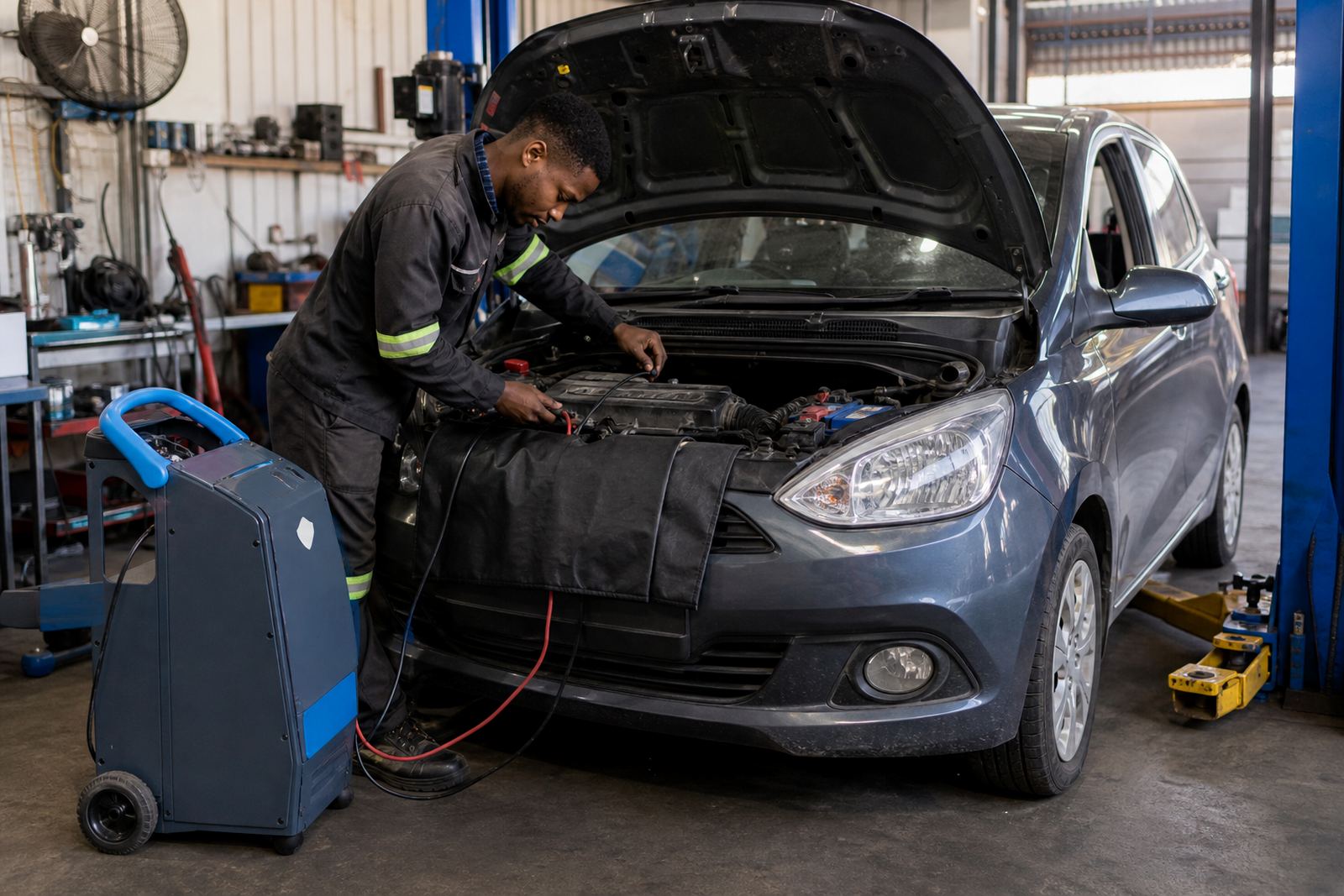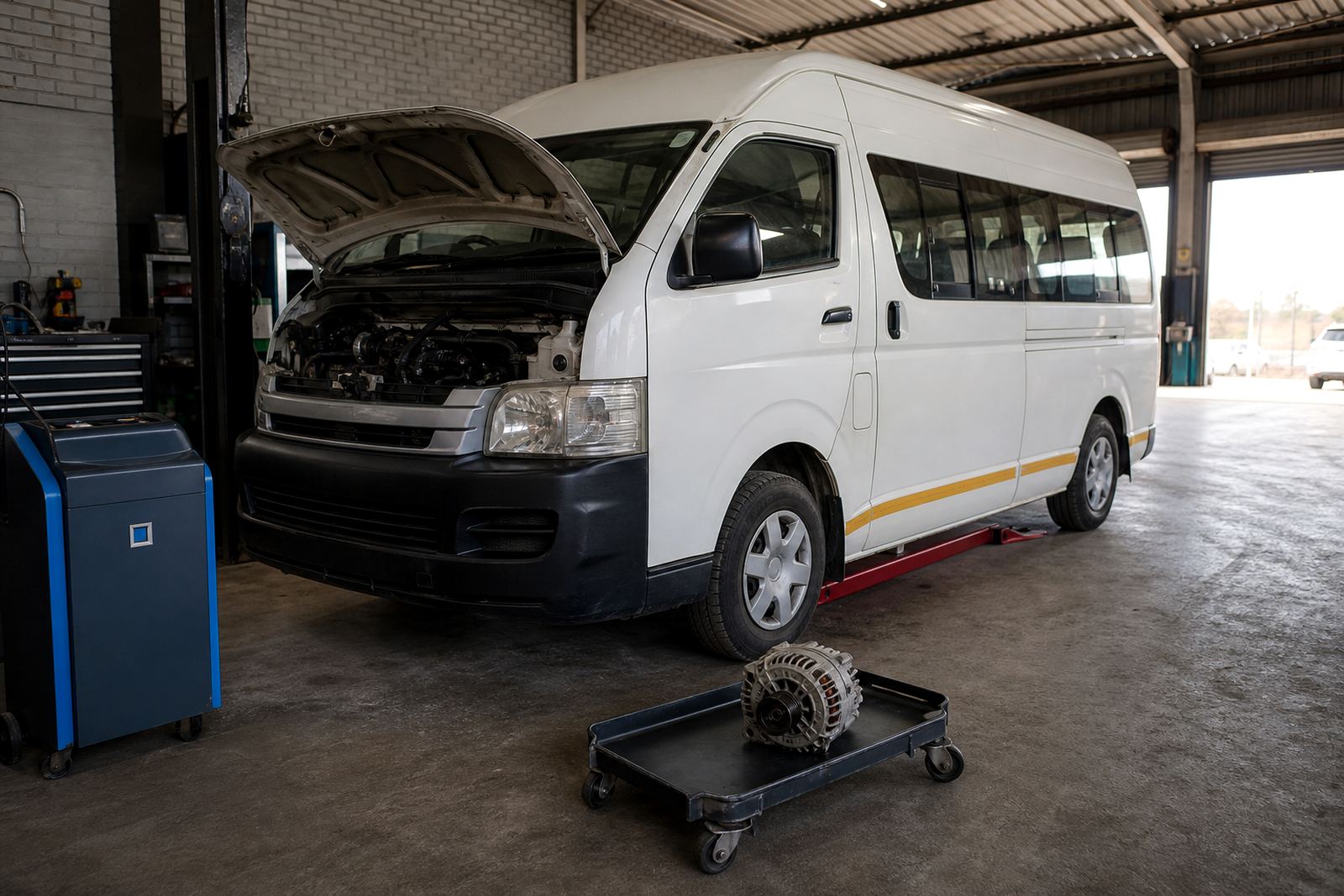

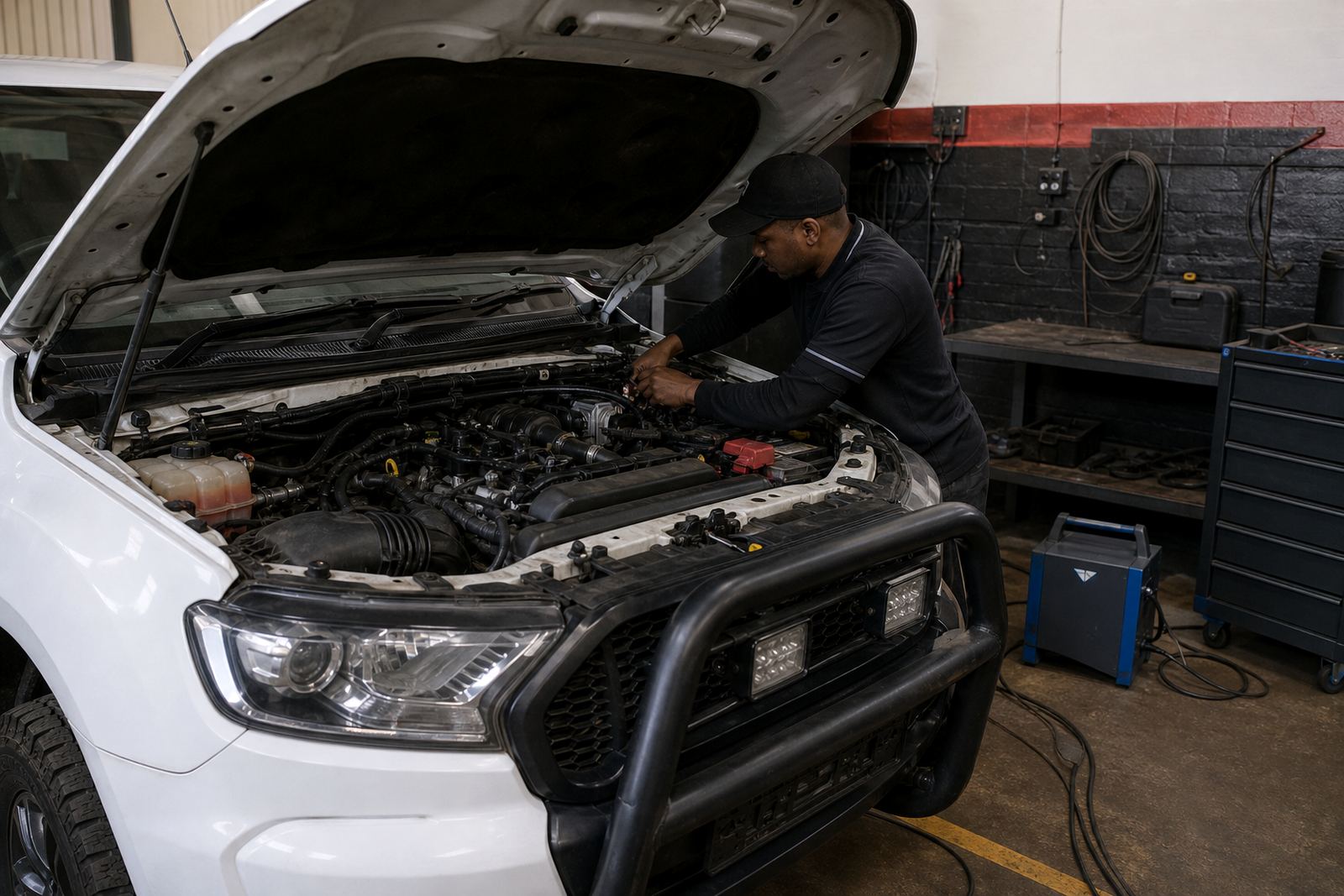
What the bakkie came in with on the Paarl side
The vehicle was a hard-working site bakkie used around Paarl and nearby farm roads, with extra lighting mounted for early starts and late pack-ups. The problem showed up as dead auxiliary lights, a warm wiring section near the front harness, and a fuse that kept failing after previous repair work.
The brief was to stop the repeat faults and give the lights a proper circuit that could handle daily use. Space under the bonnet was tight, and the vehicle still needed to stay practical for worksite loading, dust, vibration and the odd washdown after a muddy week.
- Town focus: Paarl and surrounding work routes
- Vehicle type: site bakkie with auxiliary lighting
- Fault type: repeated open circuit and poor protection
- Main risk: overheated wiring from direct loading
How we traced the fault before opening the loom
We started with fault code checks where needed, then moved into live circuit testing, battery condition checks and charging system checks to rule out a broader electrical issue. Once the main supply proved healthy, the fault sat squarely in the added lighting circuit and its earlier joins.
From there we tested continuity, voltage drop and earth points, then mapped the route of the cable from the switch to the load side. The old wiring had been extended in a few places with mixed joins, and a section near a moving bracket had started to rub through the insulation. That sort of fault can hide for weeks, then show up when the vehicle hits a rough road or gets washed.
- Battery and charging system tested under load
- Voltage drop checked across feed and earth paths
- Old joins opened and inspected for heat damage
- Rub point found near a moving metal bracket
Protected feeds, relays and a cleaner light circuit
We removed the unsafe patching and rebuilt the auxiliary light circuit with protected feeds, a relay setup and proper fuse sizing for the load. That kept the switch current low and moved the heavier work to a controlled part of the circuit, which is the better way to run extra lighting on a working bakkie.
Where the loom had chafed, we repaired the damaged section and re-routed it away from sharp edges and moving parts. We also checked the earth side carefully because many lighting faults are really earth faults in disguise. Fresh sleeving, proper fastening points and a neater run through the front bay gave the circuit a better chance of surviving vibration and dust. It is not glamorous work, but it matters on a vehicle that earns its keep.
- Relay fitted for controlled auxiliary light switching
- Fuse protection matched to the circuit load
- Damaged wire section repaired and insulated
- Cable run secured clear of heat and movement
Workshop work and mobile support in the same job
Some of the job was handled in the workshop in Montague Gardens, where testing gear, bench checks and proper access to the loom made the diagnosis faster to manage. The finishing work fit the pattern of our mobile call-out service too, because fleet owners often need a fix that makes sense both in the bay and on site.
For this Paarl bakkie, the work crossed between diagnostic testing and hands-on auto electrical repair. That included checking starter circuit condition in passing, confirming the battery was not under strain from the added lights, and making sure the lighting circuit did not interfere with any other vehicle functions. On modern vehicles, a small wiring mistake can create a CAN bus fault or a nuisance warning, so we keep an eye on the bigger picture even when the job looks like one light circuit.
- Workshop testing handled the fault finding
- Final circuit setup suited site use and vibration
- Accessory wiring kept separate from core vehicle wiring
- Electrical checks covered the wider system, not only the lights
The result after the rewiring was finished
Once the rewiring was complete, the auxiliary lights operated consistently and the fuse no longer showed signs of strain. The circuit was tidier, easier to inspect, and far less likely to suffer from heat damage at the old weak points.
The client left with a bakkie that could do proper worksite duty again without the stop-start drama of a failing lighting circuit. It also meant less time spent on loose joins or melted tape when the vehicle needed to head out early. For a fleet or private owner, that matters because a small electrical fault can cost a whole morning of planning if it keeps repeating.
- Auxiliary lights restored to normal operation
- Repeat fuse failures stopped
- Wiring neatly secured for rough-road use
- Inspection points left easier to follow later
We would carry out the same checks on another bakkie site
We would still start with proper testing before replacing parts, because that is where bad wiring jobs usually reveal themselves. We would also keep the lighting circuit separate from the control side with a relay, and use protected feeds from the start rather than trying to rescue a direct-load shortcut later.
On work vehicles used across Paarl, Bellville, Milnerton or Somerset West, dust and vibration are part of the job. The wiring has to be fixed with that in mind, not only with the bonnet open in the workshop. A clean path, correct current protection and solid earths give the driver a circuit that behaves more predictably when the bakkie is loaded and on the move.
- Test first, then replace only what is faulty
- Keep added loads off the original switch path
- Use relays and suitable fuse protection
- Secure loom routing against rub points and heat
Key facts
| Project | Paarl Site Bakkie |
|---|---|
| Town | Paarl |
| Vehicle use | Worksite bakkie |
| Fault | Failed auxiliary lights and repeated fuse failure |
| Work completed | Rewiring with protected feeds and relays |
| Lead time | 2 weeks |