
When wet roads expose a weak circuit
After a heavy shower, the fault is often not the rain itself but what the moisture finds. Water can creep into a cracked plug, sit inside a light housing, or travel along a loom where insulation has worn thin. That is when a vehicle that seemed fine on dry days begins acting up under damp conditions.
We see this on private cars, bakkies and fleet vehicles moving through Montague Gardens, Bellville and Milnerton, especially where splashback, road grime and older repairs meet. A clean battery, sound earth points and dry connectors matter more than most drivers realise. If one of those parts is weak, the first wet trip can show it.
The faults that show up first after rain
Moisture usually reveals itself through symptoms that look unrelated at first. A dash light may flicker, a starter may click once, or a vehicle may run rough at idle until the bay dries out. Lighting faults also become more obvious, especially where an earth path is poor and the lamp circuit is already tired.
- Misfires after standing in damp weather
- Dim headlights or one side failing after rain
- Random warning lights on the cluster
- Intermittent central locking or accessory faults
- Slow cranking after an overnight downpour
- Blown fuses where water has reached a connector
These signs do not always point to one single part. A wiring issue near the front bumper can look like a battery problem, while a weak charging circuit can seem like a starter fault. That is why a quick code read is rarely enough on its own.
How moisture changes diagnostics work
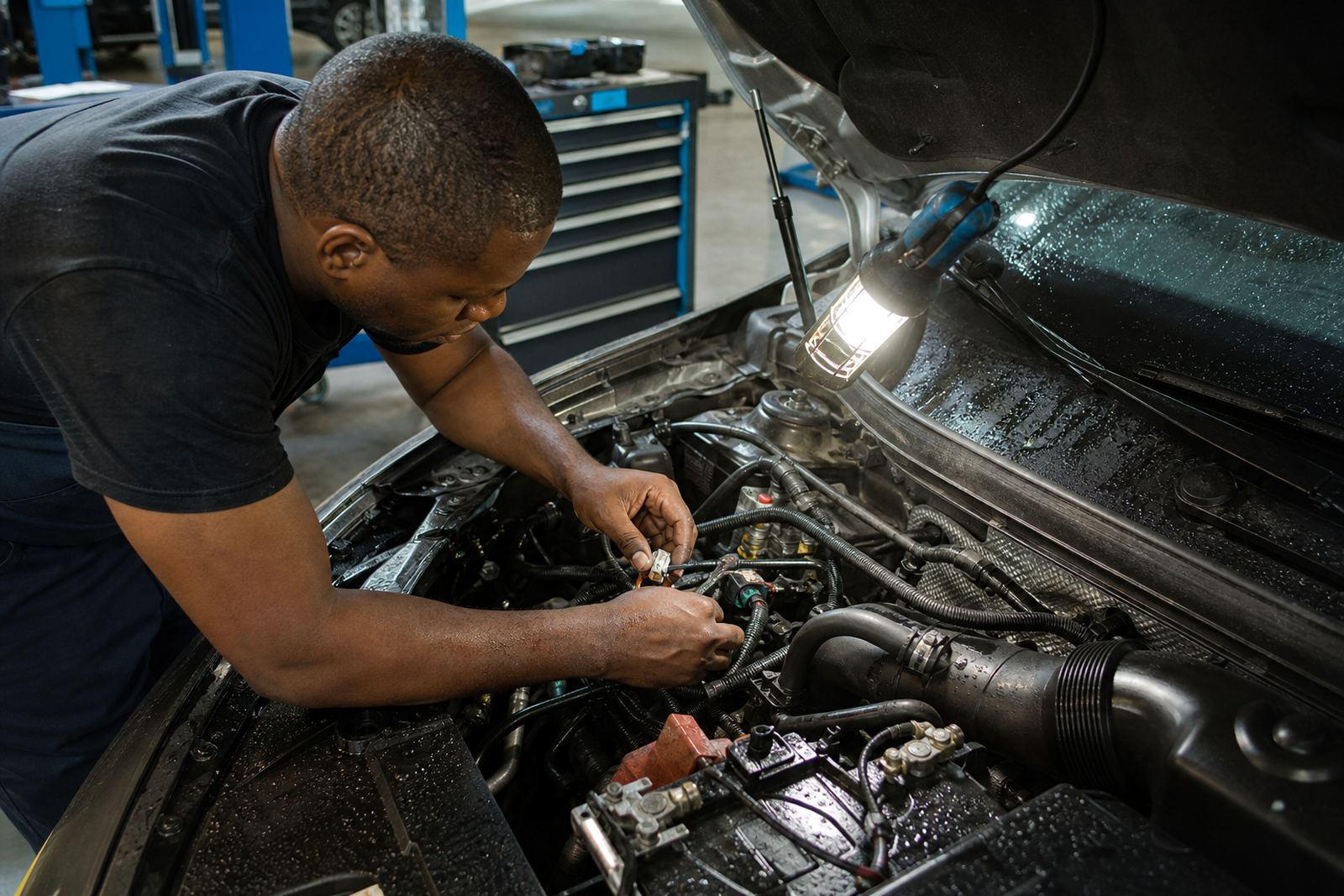
When a workshop checks an after-rain fault, the process needs more than a scan tool and a guess. OBD fault codes give direction, but live data shows whether the issue is present right now. Battery and charging tests help to separate a flat battery from an alternator that is not holding voltage under load.
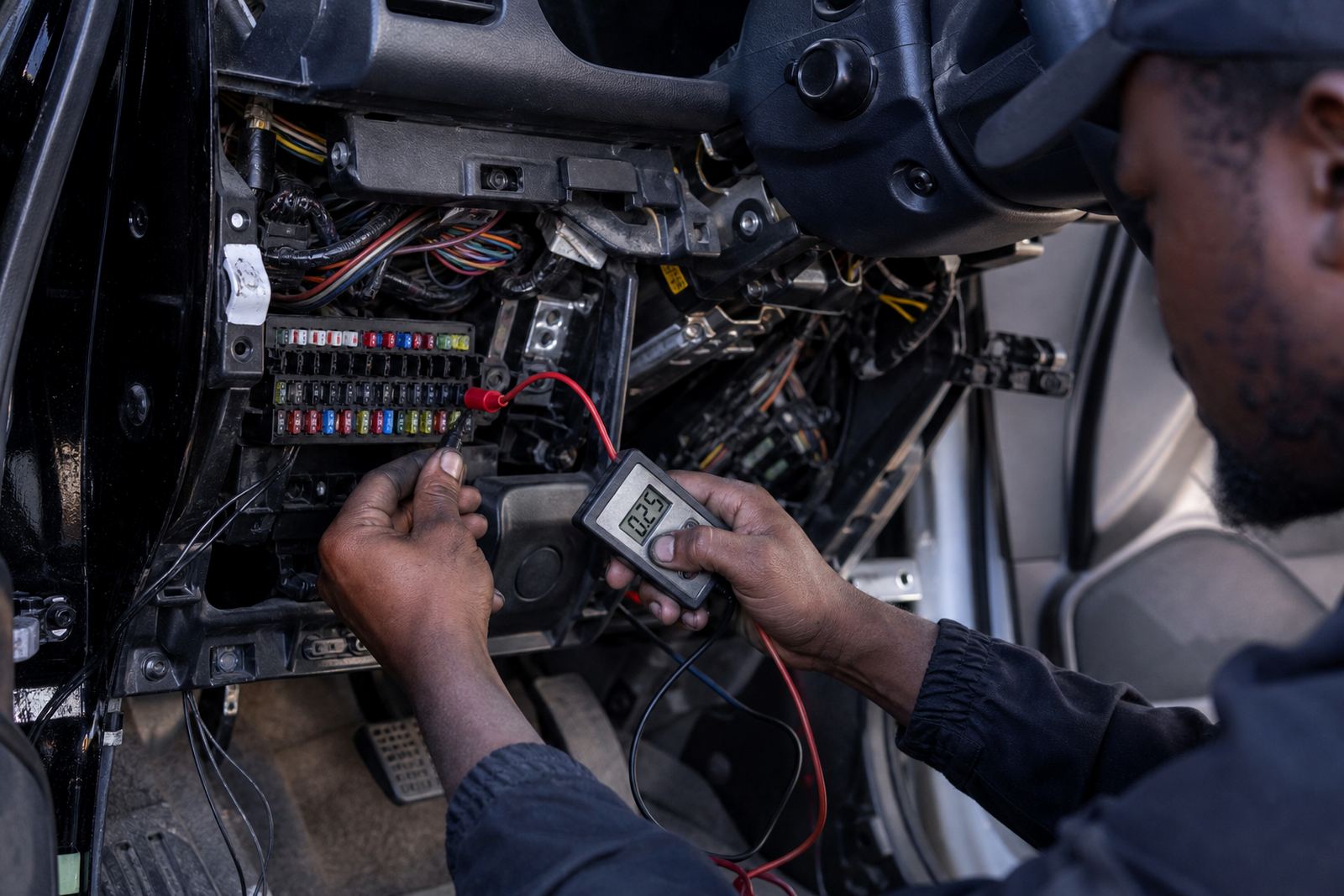
On wetter faults, we also look for parasitic drain, damaged insulation, green corrosion at terminals and water marks around fuse boxes or connector blocks. A light mist inside one plug can upset a sensor circuit or a CAN bus signal, and the fault may come and go as the vehicle dries. That is why tracing the fault path matters more than swapping parts one after the other.
In practical terms, the test sequence often includes:
- Scan the fault codes and compare them with live readings
- Check battery condition, cranking voltage and charging output
- Inspect earth points, fuse boxes and exposed connectors
- Test for current draw when the vehicle is parked
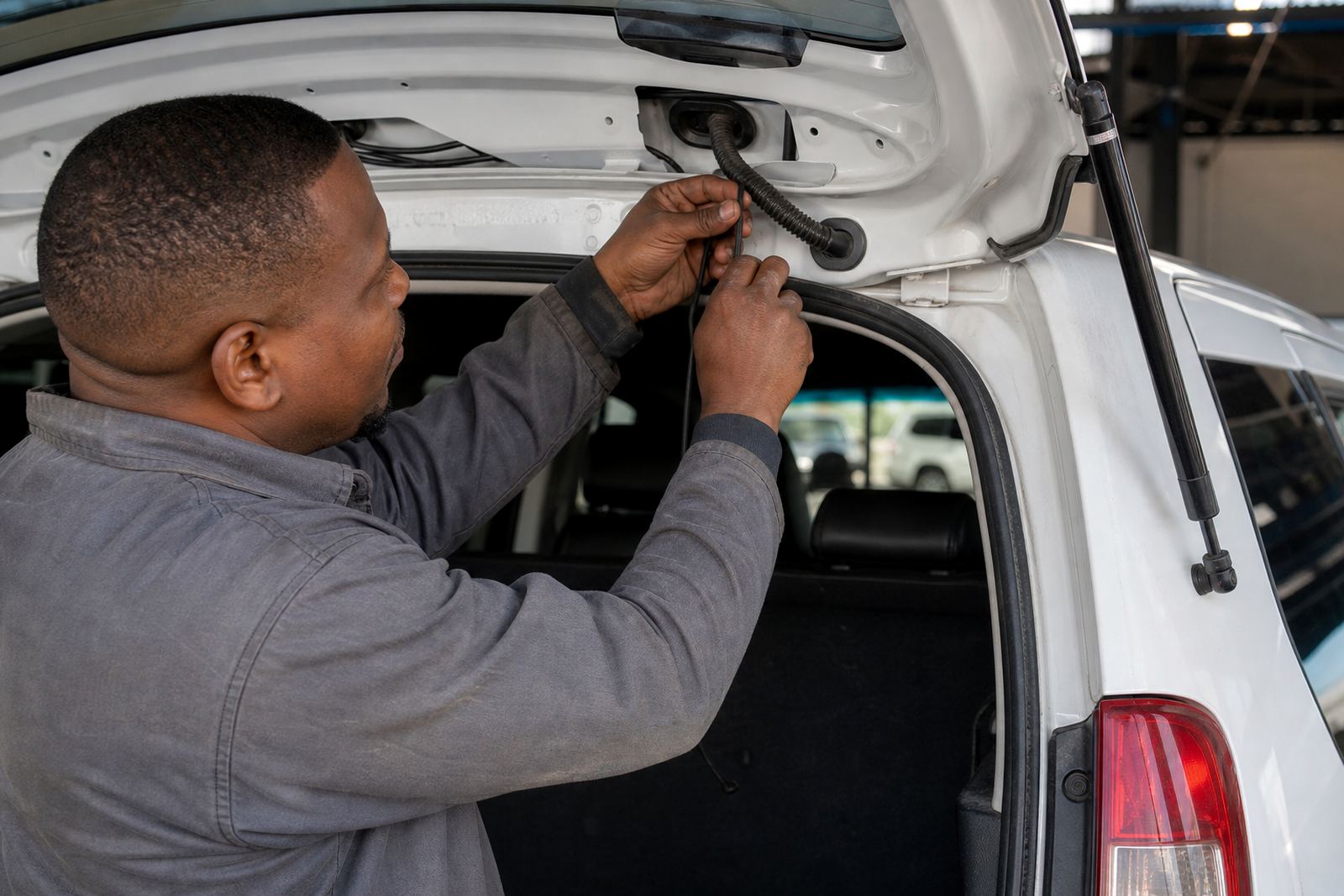
- Follow the loom for rubbed insulation or trapped wiring
- Confirm whether the issue returns after a wet run
Where water usually gets in
The weak points are often predictable. Headlamp clusters, tail lamps, bonnet area connectors, wheel-arch wiring, trailer plugs and underbody joins all take spray from the road. On work vehicles, extra wiring for trackers, trailers or accessories can add more join points, and each join needs proper sealing and support.
We also see faults where repairs were done without enough protection around the splice or terminal. If heatshrink, tape or conduit was fitted poorly, moisture can travel along the conductor and find the next weak spot. In Cape Town coastal air, corrosion builds faster, so a small nick in the insulation can become a real problem before long.
A Cape Town case after a wet week
A delivery vehicle from the Bellville side came in with a hard start, an unstable idle and a rear lamp that would work only on some mornings. The owner had already changed a battery, but the issue stayed. After rain the fault was worse, and the van would sometimes cut out when idling in traffic.
The real cause was a combination of a poor earth point near the rear body section and water entry around a damaged connector on the same circuit. Once we cleaned the earth, repaired the damaged wiring and sealed the connector properly, the electrical noise on the system dropped away. The battery was not the problem on its own, it was being blamed because the symptom showed up at the same time.
This kind of fault is common on vehicles that work between Cape Town, Milnerton and Paarl, where road spray, standing water and long daily use can all add up. The tricky part is that the first wet day only reveals the weakness, it does not always create it.
What technicians check before the water dries out
A careful inspection starts with the complaint, then moves to the circuits most likely to be affected by damp conditions. The aim is to find the point where water, wear and voltage loss meet. That usually means checking the physical condition of the harness as much as the electronic readings.
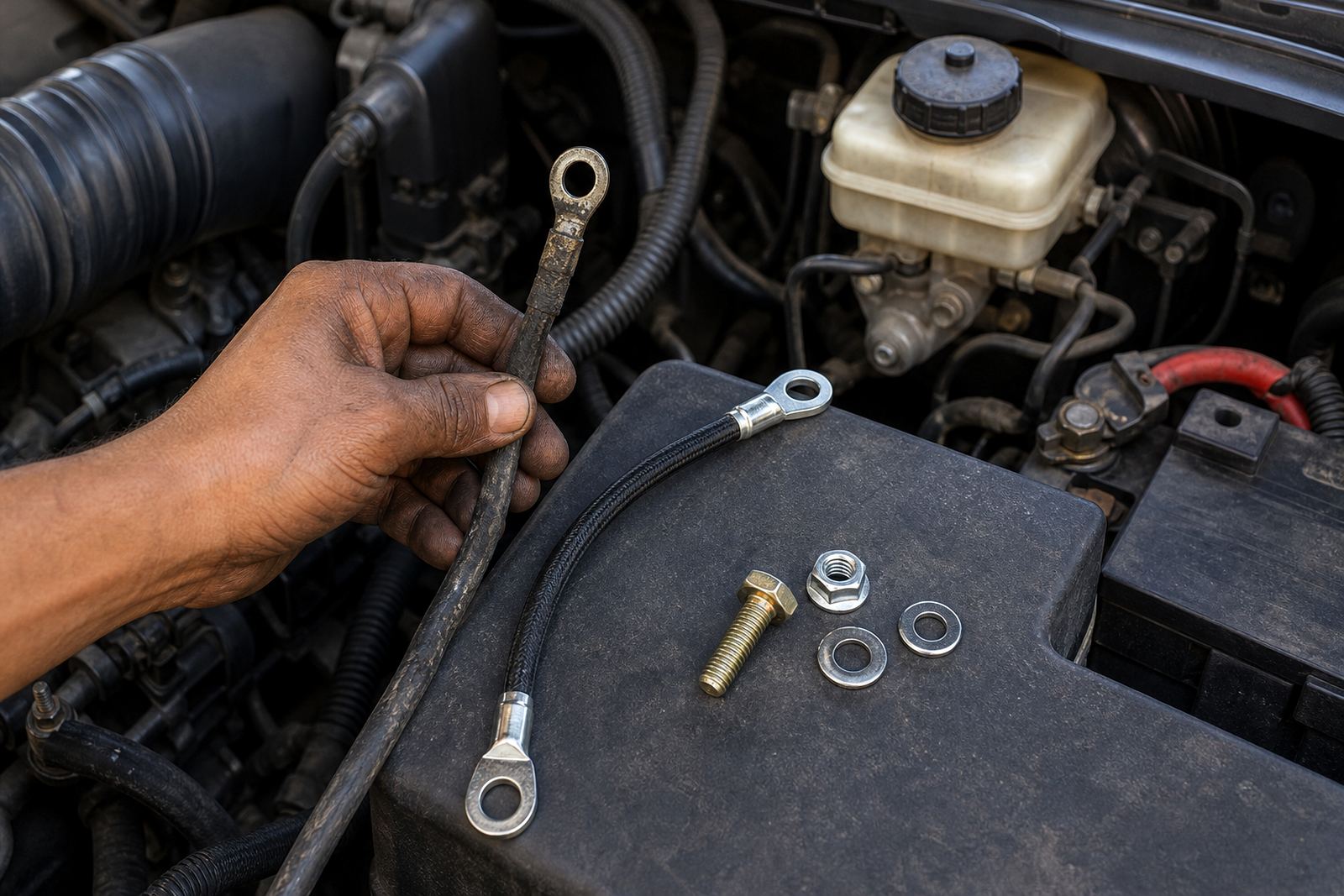
- Battery clamps, terminal corrosion and cable ends
- Alternator output and charging ripple
- Starter circuit voltage drop
- Fuses, relays and fuse box moisture marks
- Lighting earths and rear lamp plugs
- Trailer wiring joins and accessory fitments
- CAN bus related faults where modules stop talking cleanly
If a fault only appears after rain, the test has to reflect real use. A bench check can miss a problem that shows up only when the loom flexes on the road or when splash reaches the underside. That is why road conditions matter in the diagnosis, not just the workshop bay.
Keeping wet-weather electrical faults from returning
Prevention is mostly about keeping the vulnerable parts dry, tight and supported. A loose connector can move just enough to let moisture in. A cracked lamp seal can allow condensation to sit inside the housing. An exposed trailer joint can corrode from the inside before anyone notices the fault.
For fleets and private owners, a seasonal check after heavy rain can save a lot of frustration. It is worth looking at earth straps, battery health, under-bonnet wiring, and any added accessories that were fitted later. If a vehicle spends time in coastal areas, the same inspection should also include signs of rust at terminals and fuse box edges.
V-Auto works from Montague Gardens and also handles mobile call-outs across Cape Town, Milnerton, Bellville, Somerset West and Paarl. That makes it easier to track down faults that only show themselves once the vehicle has been driven through wet roads and back into daily use.