When the dash starts hinting at charging trouble
The first clue is often small. Headlights lose punch at idle, the cabin fan slows a little, or the battery light flickers after a short trip around Milnerton or Bellville. Many drivers blame the battery, but a charging system that is falling short will show up in the same pattern over and over.
An alternator does more than keep the battery topped up. It feeds the vehicle while the engine runs, supports lights, modules and accessories, and keeps voltage steady enough for the rest of the system to behave. When that supply slips, the symptoms can move around instead of showing up as one clean failure.
- Lights dim more at idle than at speed
- The battery light comes and goes
- Windows or wipers slow down under load
- The car starts, then feels flat after a short stop
What a weak alternator can look like on the road
A driver might notice the steering wheel feels normal but the radio resets, or the instrument cluster throws a charging warning after several starts. On a Cape Town route with short trips and stop-start traffic, the battery has less time to recover and a weak alternator shows itself faster.
We often see vehicles arrive with a battery that has already been replaced more than once. If the charging voltage stays low, the new battery gets pulled down again. That is why battery health, alternator output and wiring condition have to be checked as one system.
- Slow cranking after parking for an hour or two
- Burning smell near the belt drive area
- Charge lamp glow under load with lights and aircon on
- Intermittent faults after rain or humidity near coastal roads
The tests that separate a battery issue from alternator failure
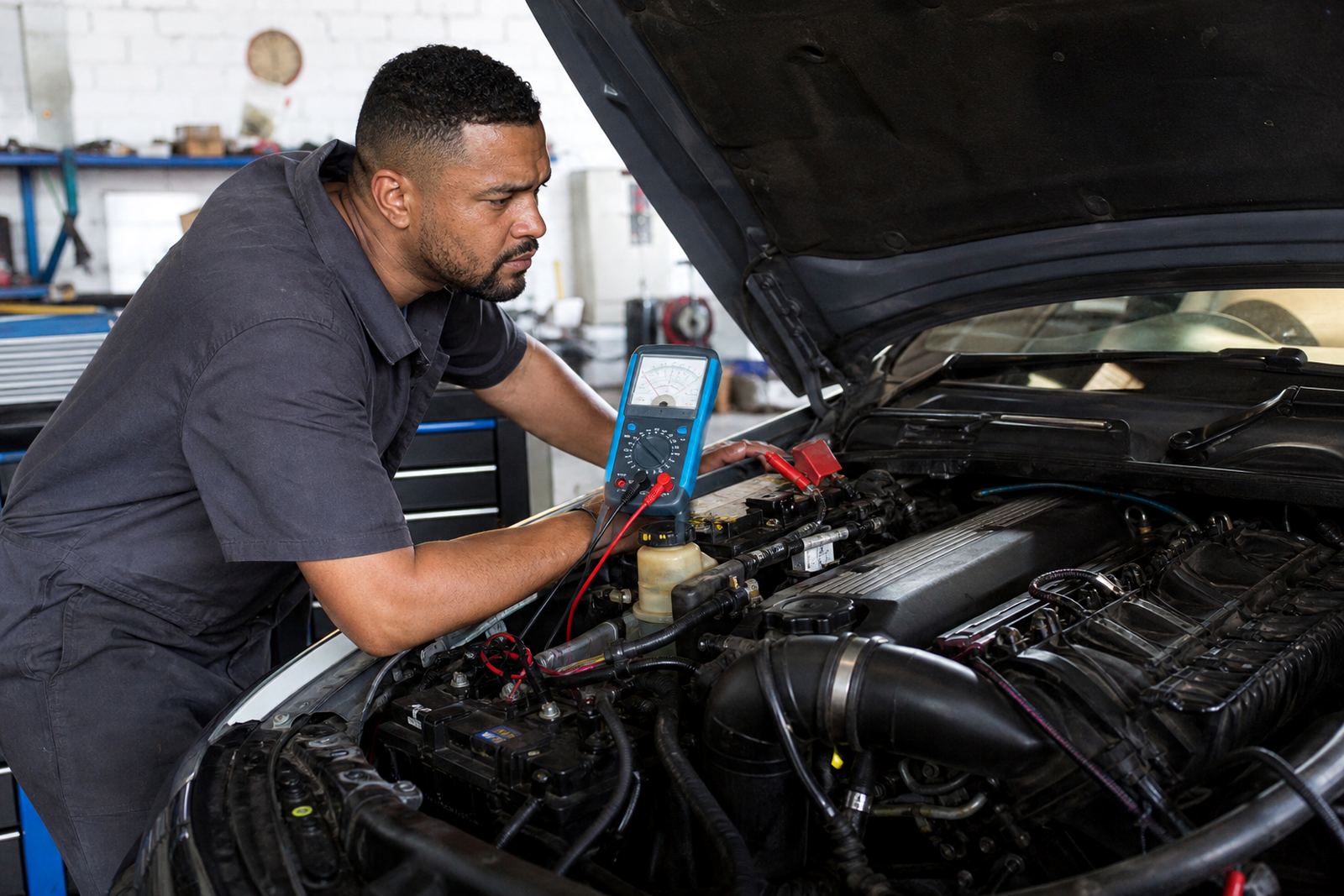
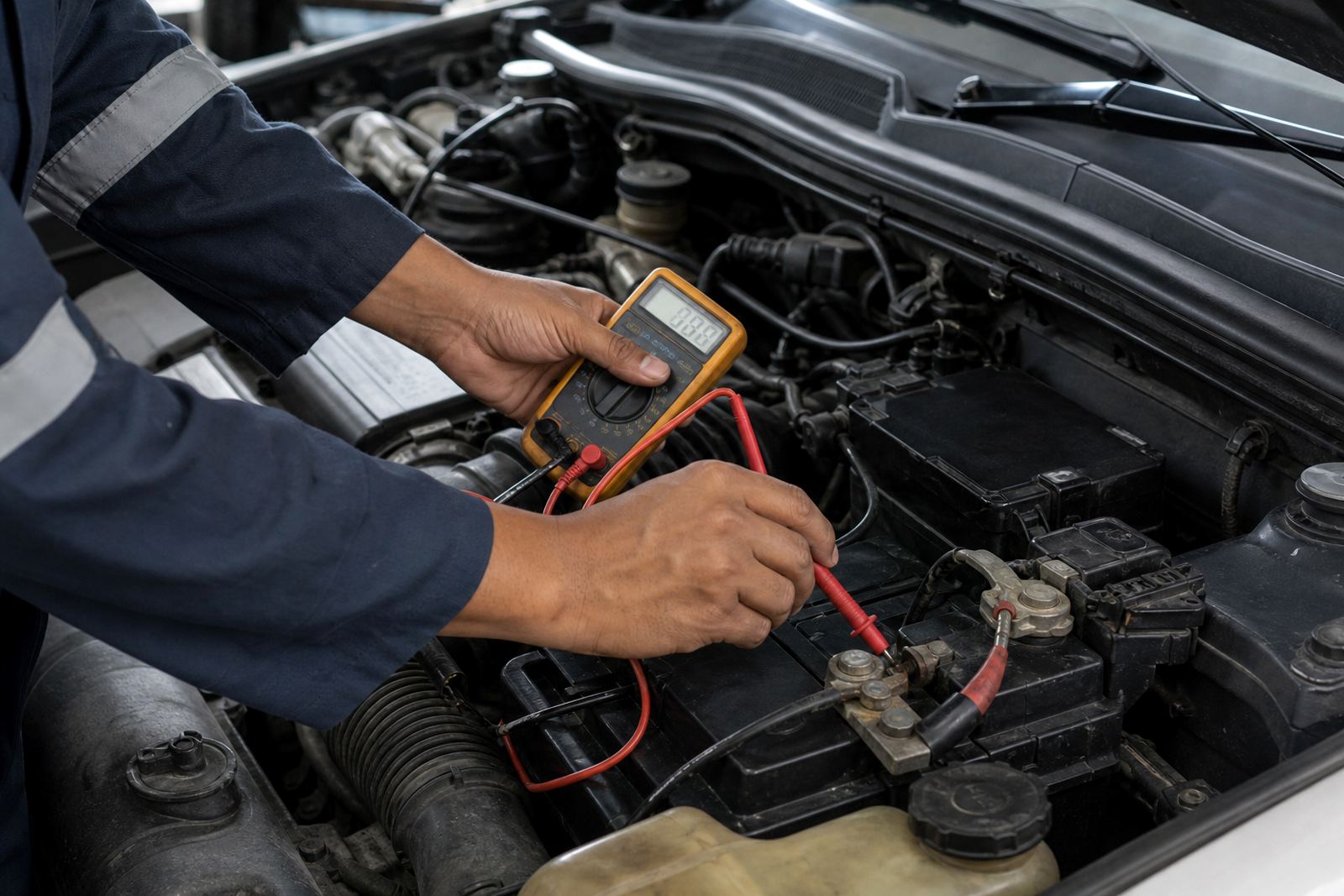
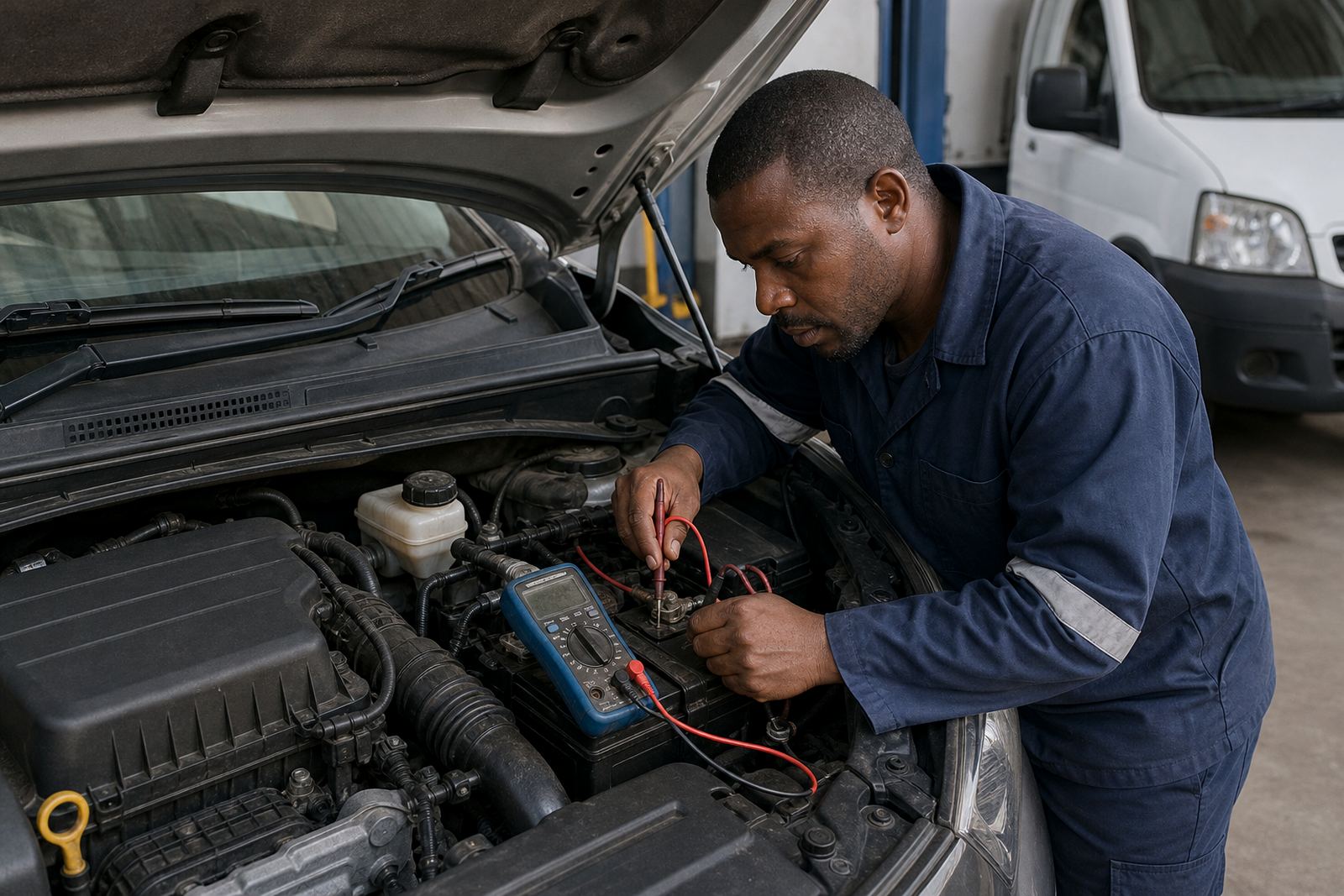
At the workshop in Montague Gardens, the usual starting point is battery state, charging voltage and current output. From there, technicians look at live data, voltage drop across cables, and the alternator belt condition. A healthy system should hold steady voltage under normal electrical load, not drift all over the place.
Fault codes can help, but they do not replace hands-on checks. A vehicle may store undervoltage codes, communication faults or charging-related warnings without pointing to the root cause. The real answer might be a loose earth, a failing rectifier, worn brushes, damaged wiring or a slipping drive belt.
- Battery test at rest and under load
- Charging voltage test at idle and raised engine speed
- Current output check under electrical demand
- Voltage drop test on main feeds and earth points
Wiring faults that pretend to be alternator trouble
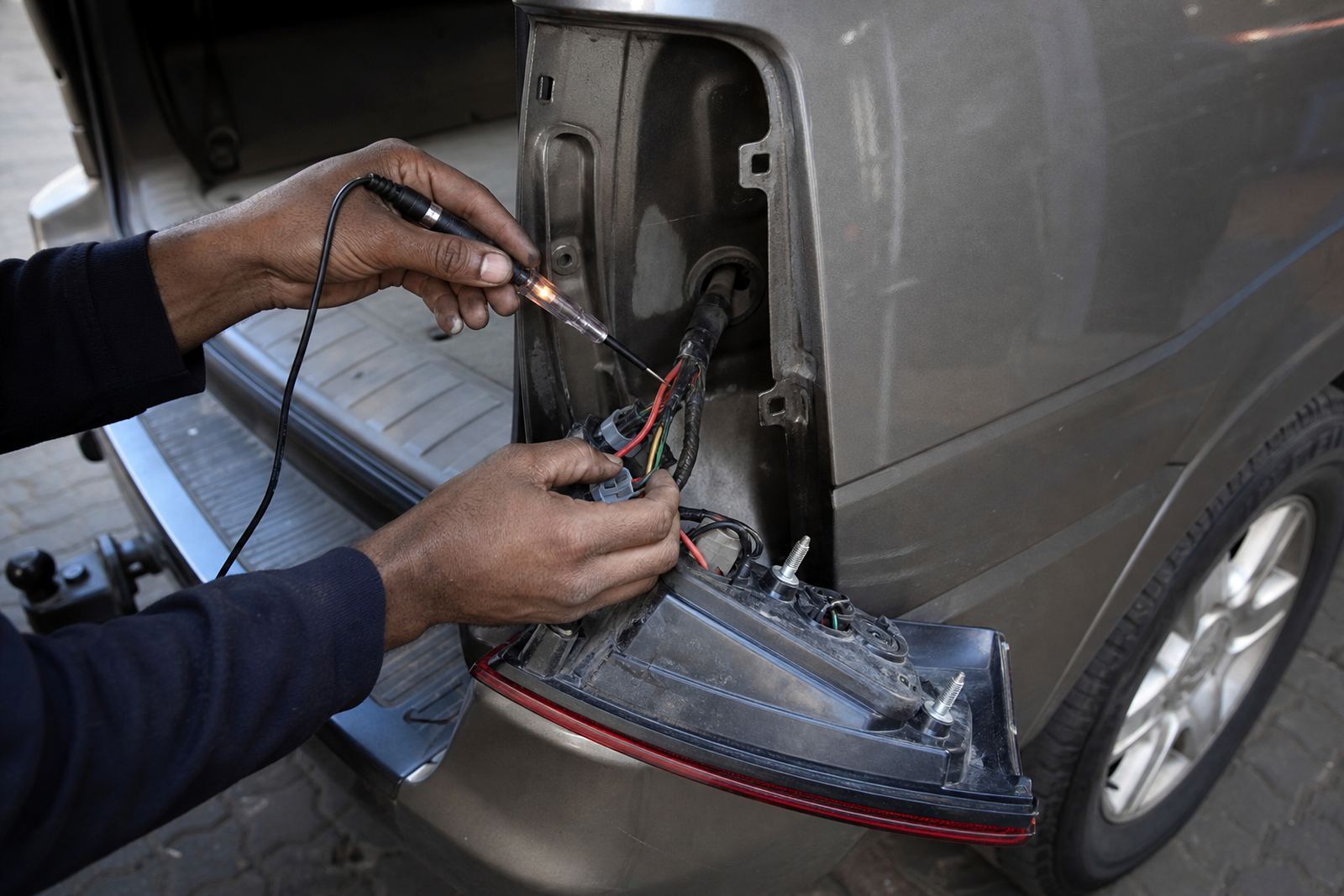
Not every charging complaint comes from the alternator itself. Corroded battery terminals, damaged loom sections, poor earths and loose fuse box connections can all make the system act weak. In older fleet bakkies and vans, the problem may be hidden in a repair done years ago that never held up in coastal humidity.
CAN bus basics matter too. If the charging system sends the wrong signal to control modules, the dashboard may light up even when the alternator is still producing power. That is why a proper inspection includes the battery cables, main charging wire, earth straps and any related connectors near the engine bay.
- Loose or oxidised battery connections
- Earth fault between body and engine
- Heat-damaged wiring near the alternator
- Fuse box or main link problems
Montague Gardens fleet charging fault
A delivery vehicle running between Montague Gardens and Somerset West came in with dim lights, a battery warning lamp and an occasional stall after a long stop at traffic lights. The battery had already been changed, but the fault stayed. Testing showed low output at idle, a poor earth path and a wiring section with heat damage close to the charging circuit.
Once the wiring repair was done and the alternator output checked again, the vehicle held steady voltage across the normal drive cycle. That sort of case is common with fleet work, because one weak charging system can waste time for the whole day. A vehicle may seem fine in the morning then unravel once the electrical load climbs.
- Private cars with short-trip use
- Fleets doing repeated idling and loading
- Vehicles with added accessories and trackers
- Units that have had battery changes without solving the root cause
What to sort before the fault becomes a bigger job
If the signs point toward charging trouble, it is better to trace the fault before the battery is flattened again or the starter is stressed. In many cases the repair is straightforward once the source is found, whether that means alternator work, a belt issue, a starter circuit fault or an earth problem. On the Western Cape side, the climate and the traffic pattern both put extra pressure on electrical systems, so small symptoms should not be brushed off.
Our team handles vehicle diagnostics and auto electrical work from Montague Gardens, with mobile call-outs to Cape Town, Bellville, Milnerton, Somerset West, Paarl, Brackenfell and Durbanville. If the warning signs are stacking up, use our contact form and send the vehicle details, the symptoms and any fault-code notes you already have.
- Alternator repairs and charging system checks
- Starter repairs and starter circuit testing
- Battery drain investigations and wiring repairs
- Tracker and accessory fitting for fleet and private use