A lamp that fails can hide three separate problems
A dead headlamp, dim brake light or flickering tail lamp is not always a bulb issue. The fault may sit in the power feed, the switch side, a corroded earth point or a damaged connector under the lamp housing. On vehicles that work hard in Cape Town traffic and coastal air, moisture and vibration can turn a small fault into a regular nuisance.
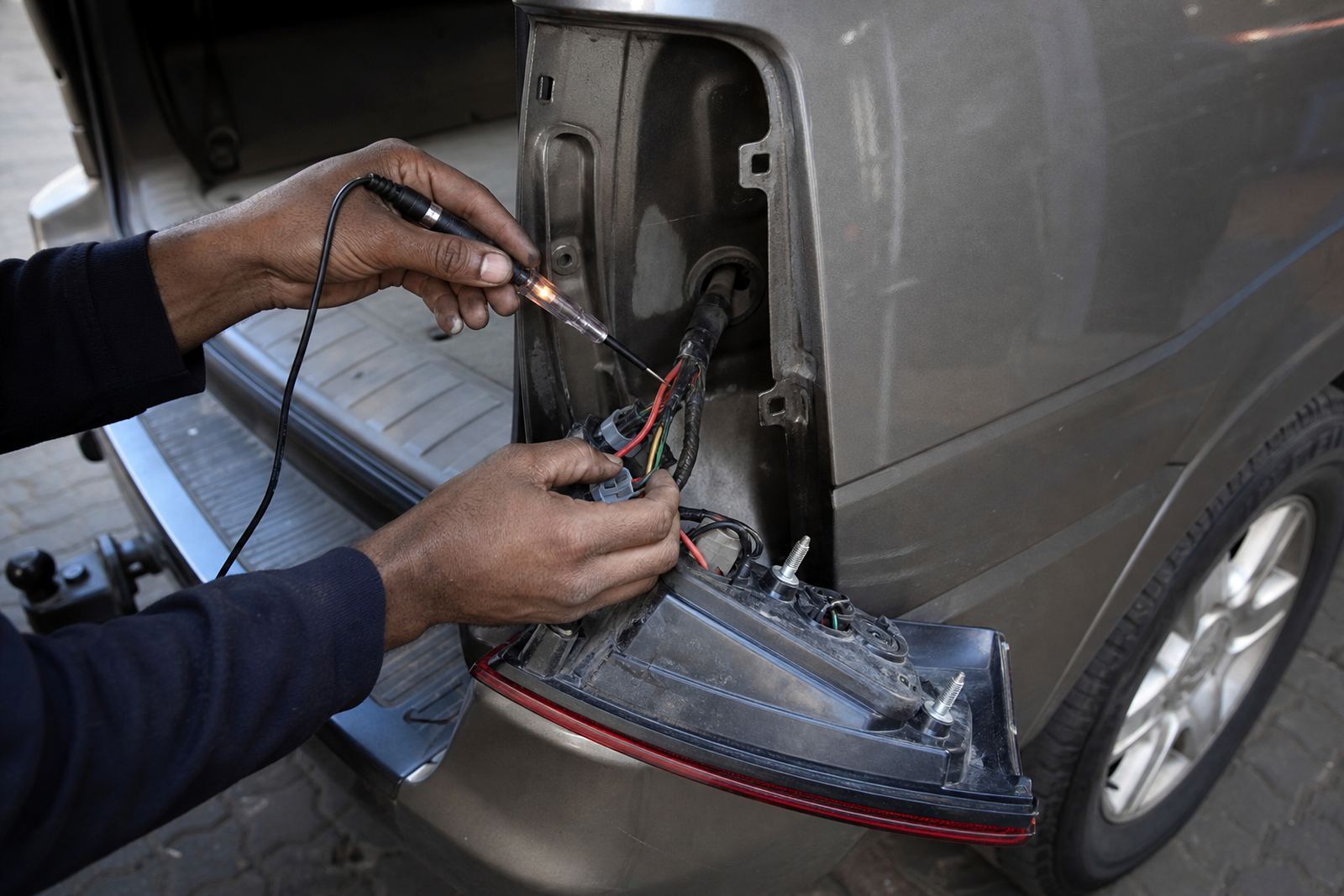
We start by checking whether the circuit is receiving proper voltage, then we confirm what happens after the switch is operated. A lamp can glow faintly with a poor earth, or work when the body flexes just enough to make contact. That is why light circuit faults need patient testing and not parts swapping.
What a proper light circuit inspection includes
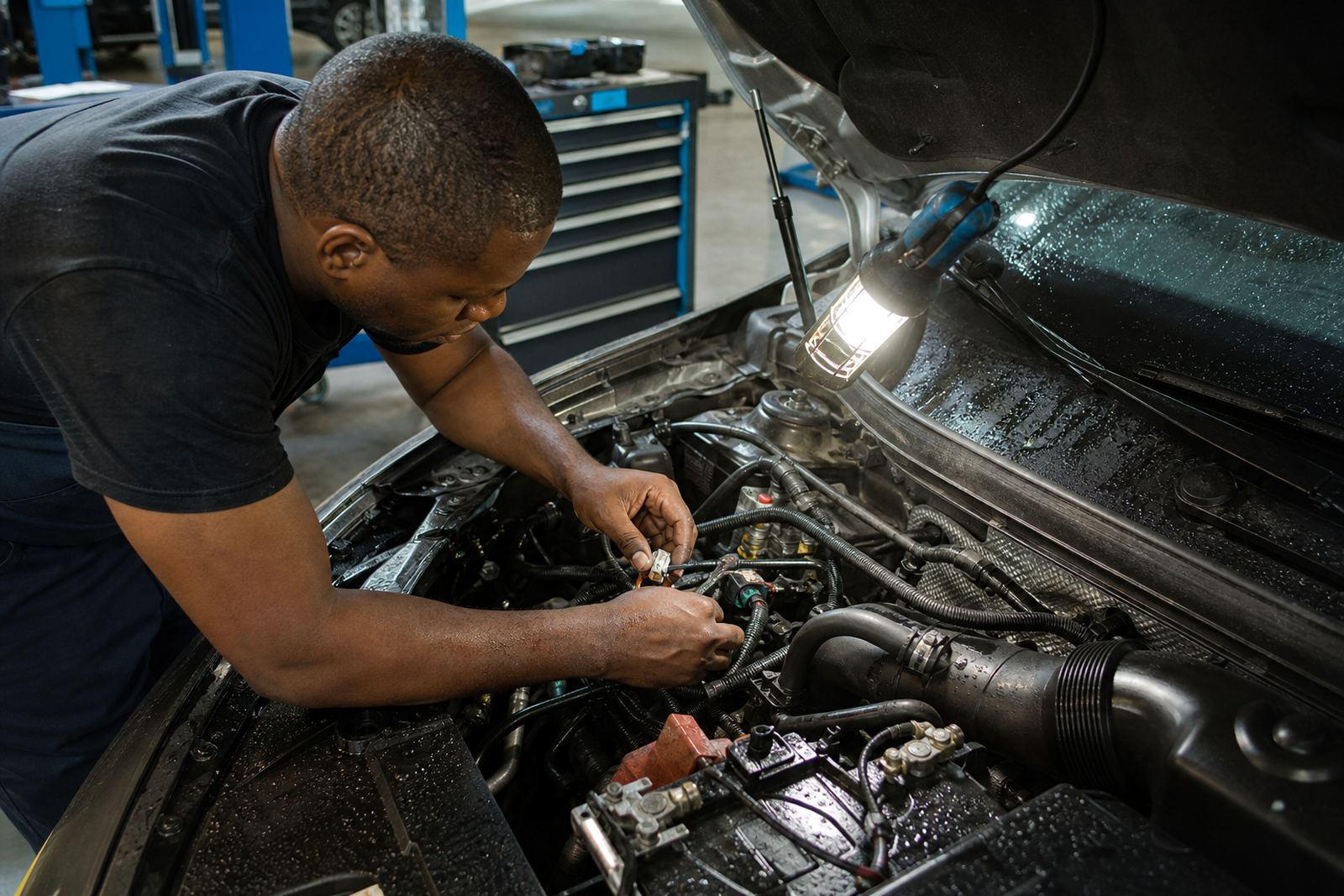
Our workshop looks at the complete path from source to lamp. That means fuse condition, relay operation where fitted, switch output, connector condition, wiring continuity and the earth return. On many vehicles the fault sits in a wire that has rubbed through near a hinge, behind a bumper, or at a tray where trailer wiring has been added and later disturbed.
- Voltage drop testing across the feed and earth side
- Fuse box checks for heat damage or loose terminals
- Connector inspection for green corrosion and water marks
- Bulb holder testing where the contact tabs have loosened
- Wiring continuity checks on suspect sections
When the fault is intermittent, we work through the circuit under real conditions, including vibration and load. That helps separate a loose contact from a deeper wiring break.
Earth faults cause more confusion than people expect
An earth fault can make one light behave oddly while the rest of the circuit seems fine. The lamp may glow dimly, pulse with another circuit, or fail only when the vehicle is idling and voltage is lower. On older vehicles the body earths can weaken from rust, paint, or repeated repairs in the same area.
We often find that a customer has replaced bulbs more than once, yet the problem was a weak earth strap or a poor earth point behind the cluster. On trailers and work vehicles the earth path is especially important, because mud, salt spray and loose plugs can change the way the circuit carries current. A neat repair at one point is not enough if the return path is still weak.
When the fault sits in the switch side
Some lighting problems begin at the switch, stalk, relay trigger or control side of the circuit. That can affect headlights, park lights, brake lights or indicators depending on how the vehicle is wired. A tired switch may pass voltage when cold, then fail after the cabin warms up or after repeated use in stop start traffic.
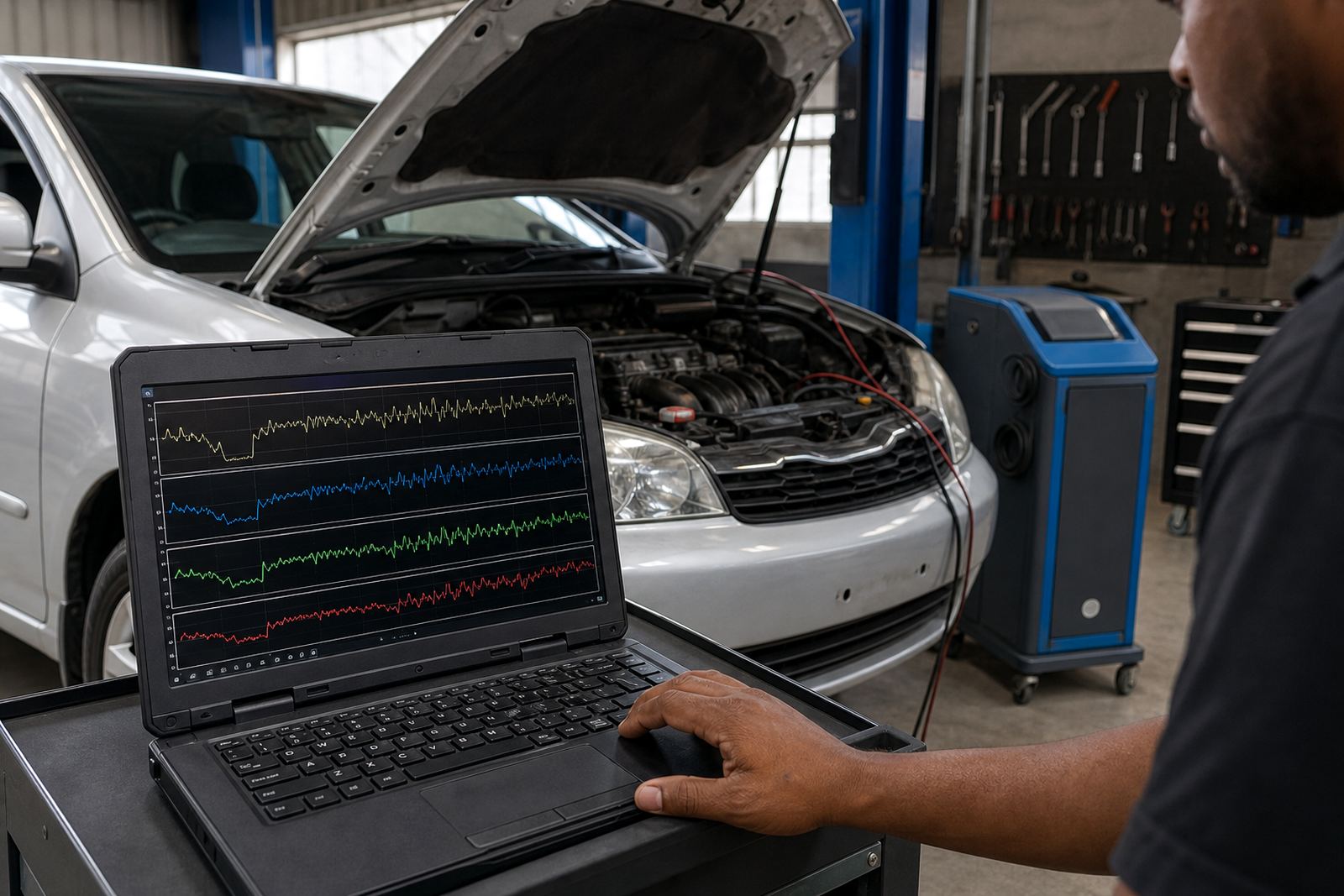
Modern vehicles can also use body control modules and CAN bus communication to manage some lighting functions. In those cases we still start with the basics, because a control fault may only be the result of a poor feed, low battery voltage or a damaged line. We use live data where needed, but the wiring still has to be sound before any electronic diagnosis makes sense.
Trailer wiring and accessory work need tidy routing
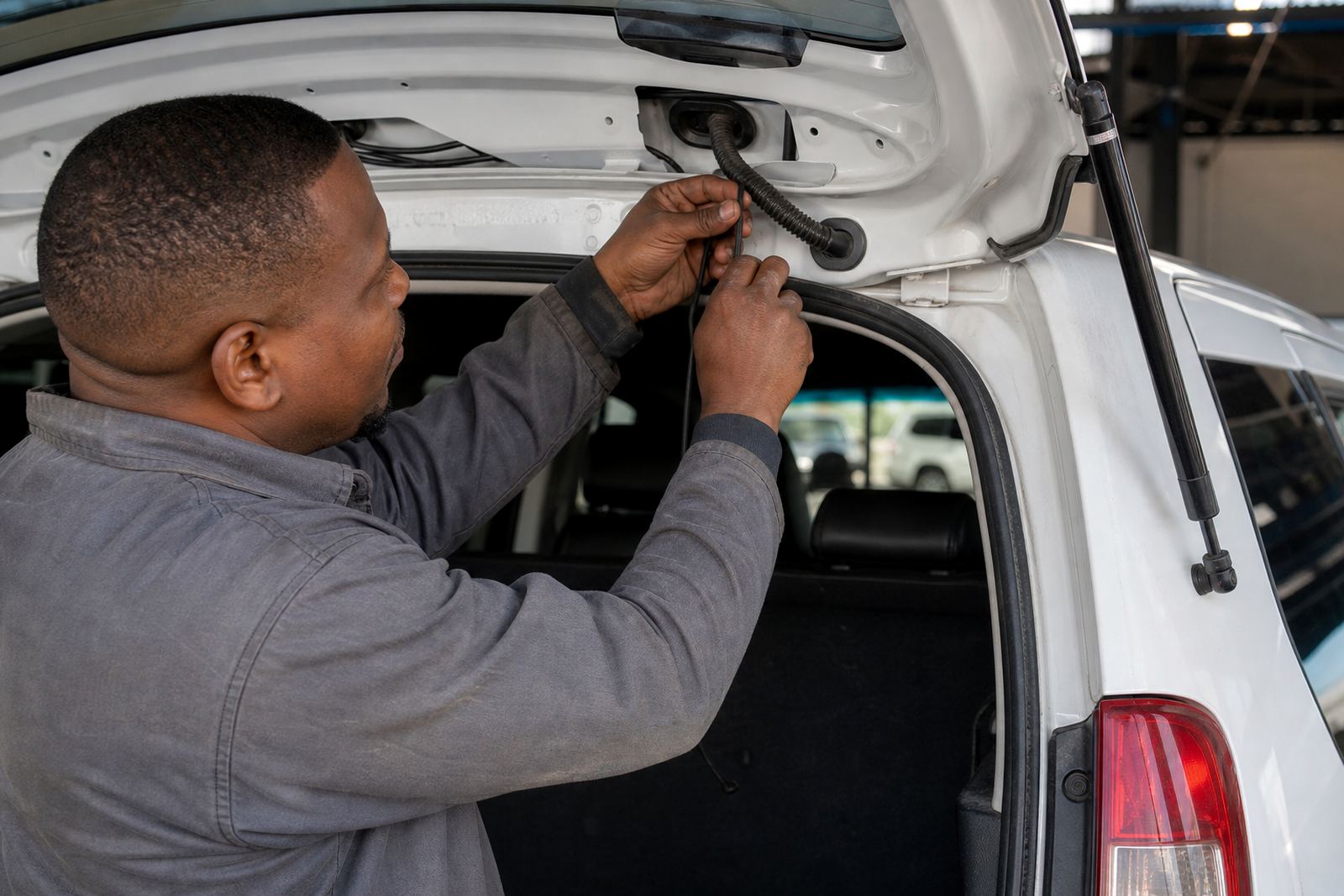
Trailer wiring faults show up often on bakkies and fleet vehicles that tow regularly around Cape Town, Bellville and Paarl. A badly fitted connector, crushed cable or loose splice can upset the indicators, brake lights or tail lamps on the vehicle itself. If accessory wiring has been added near the rear loom, there is a fair chance that a poor join is hiding inside the tape.
- Rear harness checks for damaged insulation and past repairs
- Trailer socket testing for bent terminals and weak earths
- Accessory rewiring where extra lights or control units were added
- Harness securing to stop repeated rubbing on body panels
We keep routing tidy so the repair lasts through daily loading, wet roads and repeated door or tailgate movement. A loose cable behind a trim panel often causes more trouble than the original fault itself.
A Montague Gardens case with a stubborn rear light
A delivery van from the western side of Cape Town came into our Montague Gardens workshop with a rear running light that failed on wet mornings. The bulb tested well, and the fuse was intact, so the issue had to be found further along the circuit. After checking feed voltage and the earth return, we found a corroded connection where a previous repair had been wrapped over and left inside the loom.
Once the damaged section was removed and the connector replaced properly, the light held steady during testing and under vibration. The fault had looked minor from the outside, yet it was enough to affect road safety and daily work. This kind of job is common on vehicles that work near the coast, where moisture and salt air can move into small openings and stay there.
How we handle light faults at V-Auto
Our team works on vehicle diagnostics and auto electrical repairs from our base in Montague Gardens, with mobile call-outs for fleet operators and private owners across Cape Town, Milnerton, Somerset West, Bellville and Paarl. For light circuit faults, we use a practical sequence that starts at the source and follows the circuit through to the lamp and back on the earth side.
We repair wiring, fuse box faults, earth issues, starter and alternator related low-voltage problems, and lighting circuits that fail because another part of the charging system is not doing its job. The point is to find the cause, not just make the lamp glow for the moment.