What the number really tells you
Cranking voltage is the voltage seen while the starter motor is drawing current and the engine is being turned over. A healthy battery can still show a respectable resting voltage yet collapse under load, so this reading is useful because it exposes weak cells, poor cable joints, tired earth points and a starter that is pulling too hard.
On a practical job, the reading helps separate a battery problem from a wiring problem. If the voltage falls sharply at the battery terminals, the battery itself may be weak. If the drop is far worse on the starter side than at the battery, the fault often sits in the cables, terminals or earth path. That difference matters when the vehicle must be diagnosed properly and not just fitted with parts until it starts.
What we look at during a cranking test
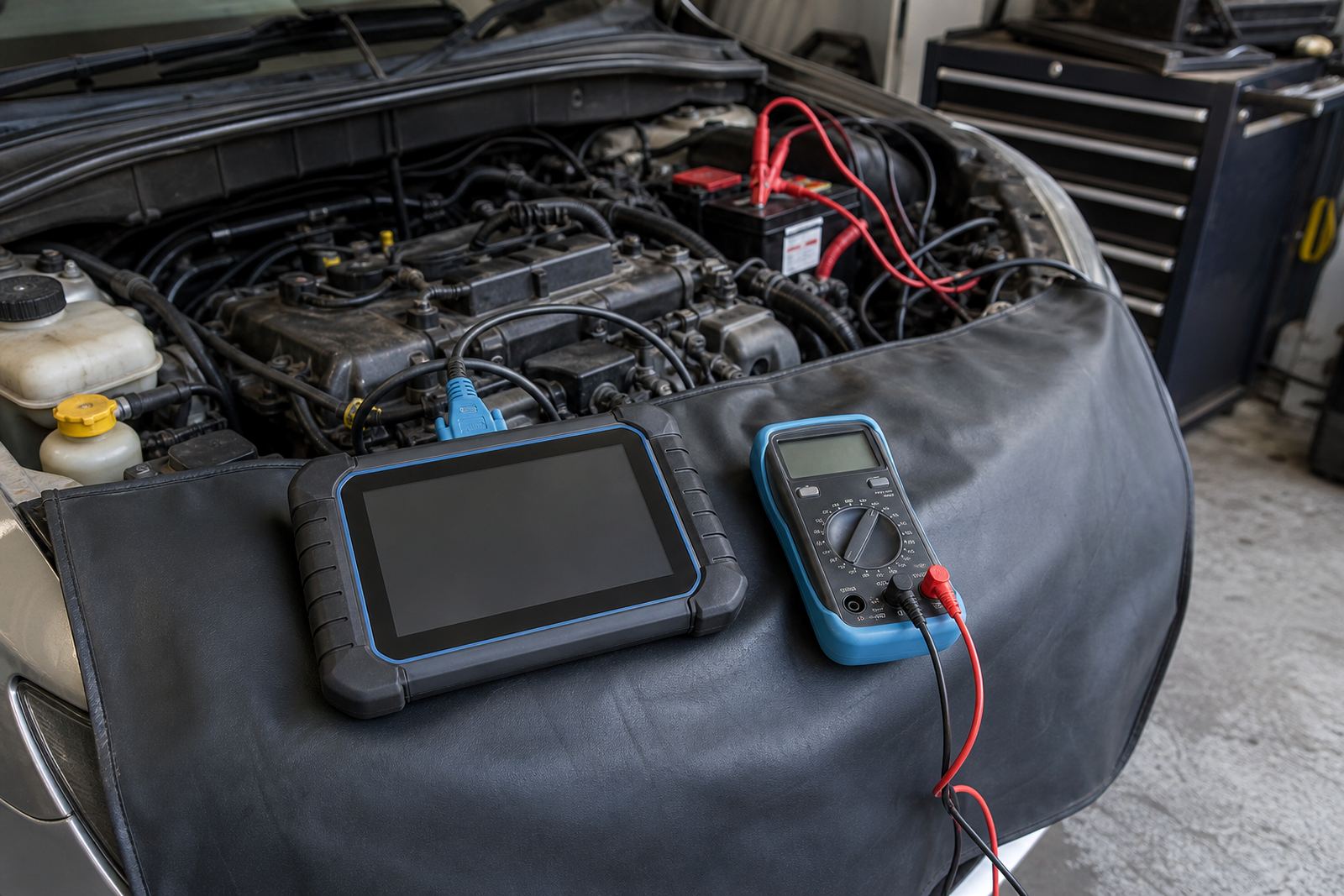
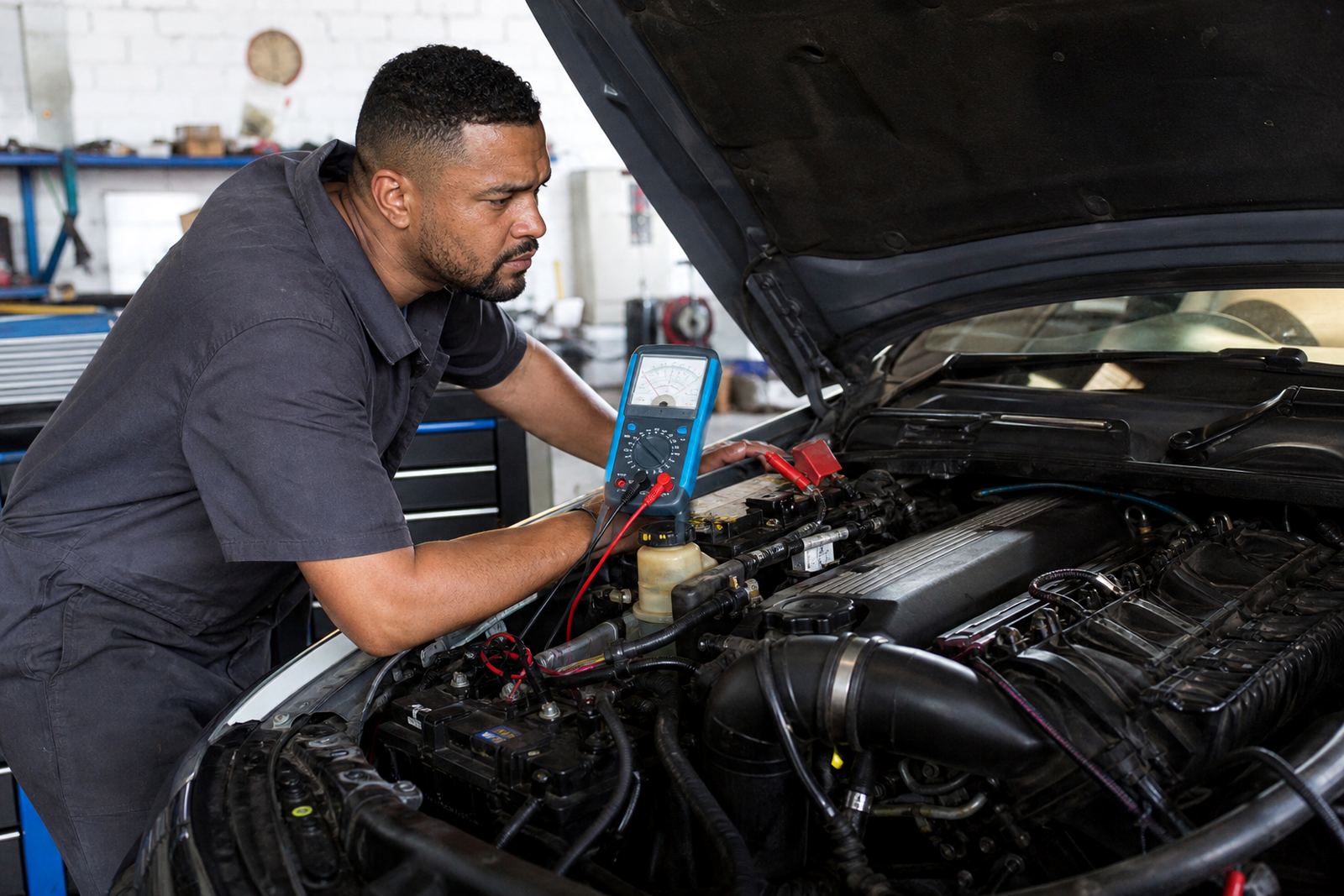
The test is not only about one number on a metre. A technician also watches how fast the voltage falls, how steady it stays while the starter turns, and whether the reading recovers cleanly once the key is released. In the workshop or on a call-out, that pattern often points straight to the next check.
- Battery state and reserve strength under load
- Voltage drop across positive and earth cables
- Starter current draw and mechanical drag
- Loose terminals, corrosion, heat damage or broken strands
- Signs of an intermittent fault that only shows while cranking
That same reading can also help with vehicles that have recent battery changes but still struggle. A fresh battery will not hide a poor earth strap, a damaged fuse box connection or a starter circuit fault for long.
How cable health changes the reading
Cape Town’s coastal air can be tough on terminals and exposed connections, especially on vehicles that sit outside in Montague Gardens, Milnerton or Brackenfell. Corrosion on a clamp, a loose cable eyelet, or a damaged engine earth can add resistance that only becomes obvious when the starter pulls current. The vehicle may have enough power for lights and radio, yet lose too much voltage during cranking.
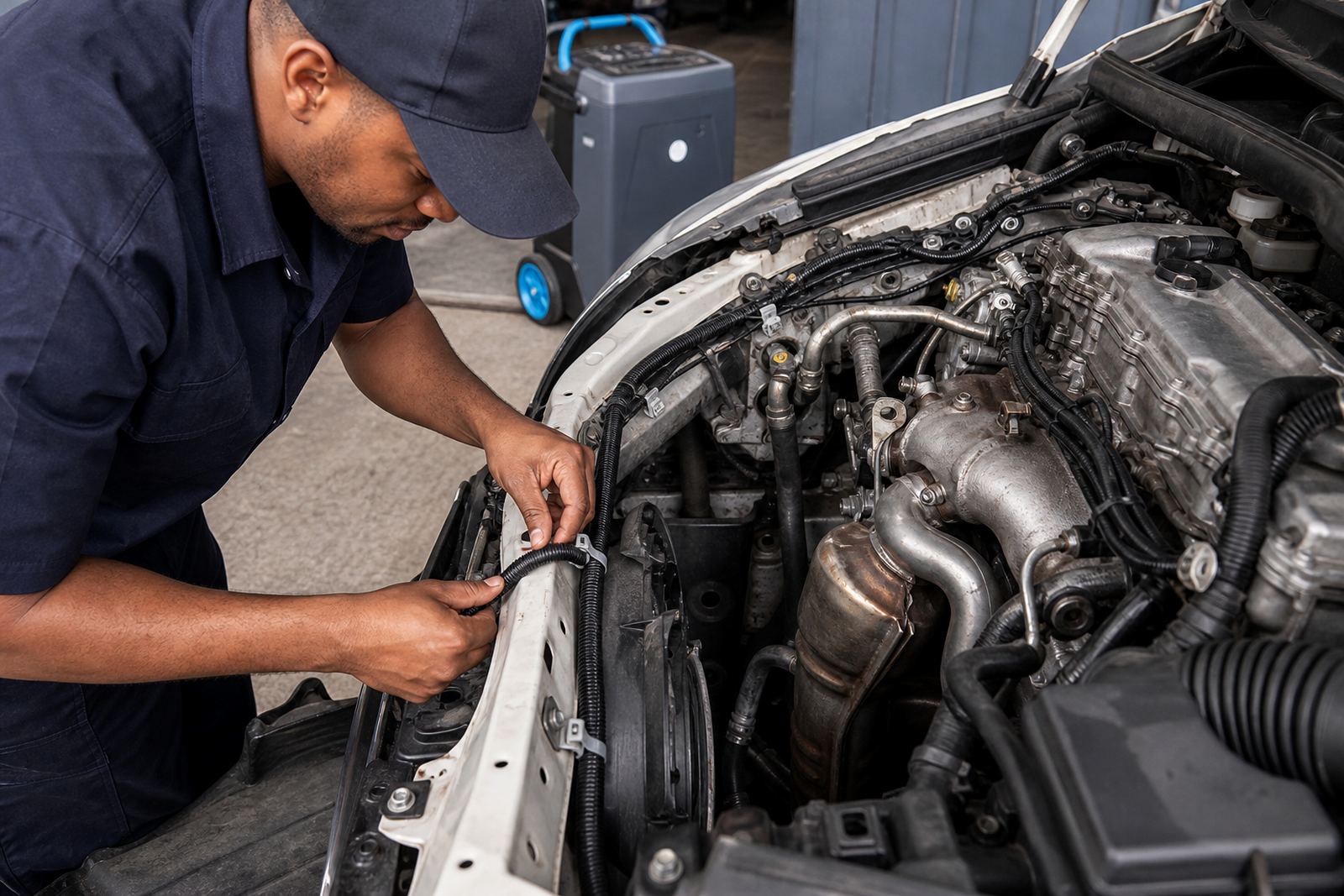
We often check both sides of the circuit separately. Measuring from battery positive to starter positive, and from battery negative to engine block, shows where the voltage is disappearing. If the numbers are higher than they should be, the cable path needs attention. That might mean cleaning joints, replacing a damaged cable, repairing a connector or sorting out an earth point that has gone green and brittle.
When a slow crank is not only a battery issue
A slow crank can point to a starter motor that is worn internally, has worn brushes, or is binding under load. It can also happen when the engine itself is harder to turn than it should be. The technician must read the symptom in context, because a weak battery and a tired starter often appear together and mask one another.
Cranking voltage gives useful clues, but it works best alongside current draw, battery testing and an inspection of the charging system once the engine starts. That wider view helps avoid a repeat visit after a simple battery swap did not solve the real fault.
- Starter motors that pull excessive current
- Alternators that are not recovering the battery after start-up
- Parasitic drain that leaves the battery low overnight
- Starter relay or ignition switch issues in the crank circuit
Montague Gardens delivery van cranking fault
A delivery van based near Montague Gardens came in with a complaint that it would crank slowly in the morning, then behave normally later in the day. The battery tested as serviceable at rest, which meant the fault needed a closer look. During cranking, the voltage fell more than expected and the drop on the earth side was much higher than on the positive side.
Once the earth strap and the related connection points were cleaned and repaired, the reading improved and the starter worked as it should. The van did not need guesswork or unnecessary parts. It needed the circuit tested properly, then the weak section found and fixed. That is the value of reading cranking voltage with care.
How V-Auto uses the reading on real diagnostics
In our Montague Gardens workshop, cranking voltage often sits at the start of a wider diagnostic path. We use it with OBD fault codes, live data, battery and charging tests, parasitic drain checks, wiring repairs and starter circuit checks. If the vehicle also carries accessories or a tracker, we look at those circuits too, because a poor connection in one add-on can affect the wider electrical picture.
For fleet operators and private owners across Cape Town, Bellville, Somerset West, Paarl and Milnerton, the target is clear enough: find the fault path, not just the symptom. A vehicle with a difficult crank can be affected by starter wear, alternator issues, earth faults, fuse box problems or wiring damage in the engine bay. Cranking voltage is one of the cleanest ways to narrow that list.
- Battery drain checks when the vehicle stands overnight
- Charging system testing after repair work
- Starter repairs and alternator repairs where needed
- Mobile call-outs for vehicles that cannot be driven in
What this reading means for owners and fleet managers
A cranking test is useful because it shows the health of the starting circuit under real load, not only on paper. That matters when a bakkie, panel van or work car must start every morning, or when a private vehicle begins to sound different and the owner wants the cause found before it gets worse.
If the numbers suggest a battery, a cable path or a starter issue, the next step is straight forward: trace the fault and repair the right section. That keeps the work targeted and helps avoid parts being fitted without solving the actual problem. For vehicles in wet coastal conditions, or those doing short trips around the metro, that kind of testing saves a lot of wasted effort.