Why 12.6 volts can still mislead you
A battery reading near 12.6 volts often sounds reassuring, but static voltage only tells part of the story. A battery can sit at that number and still collapse when the starter asks for heavy current, especially in a Cape Town vehicle that does short trips, idle time, or long periods parked at a site in Bellville or Milnerton.
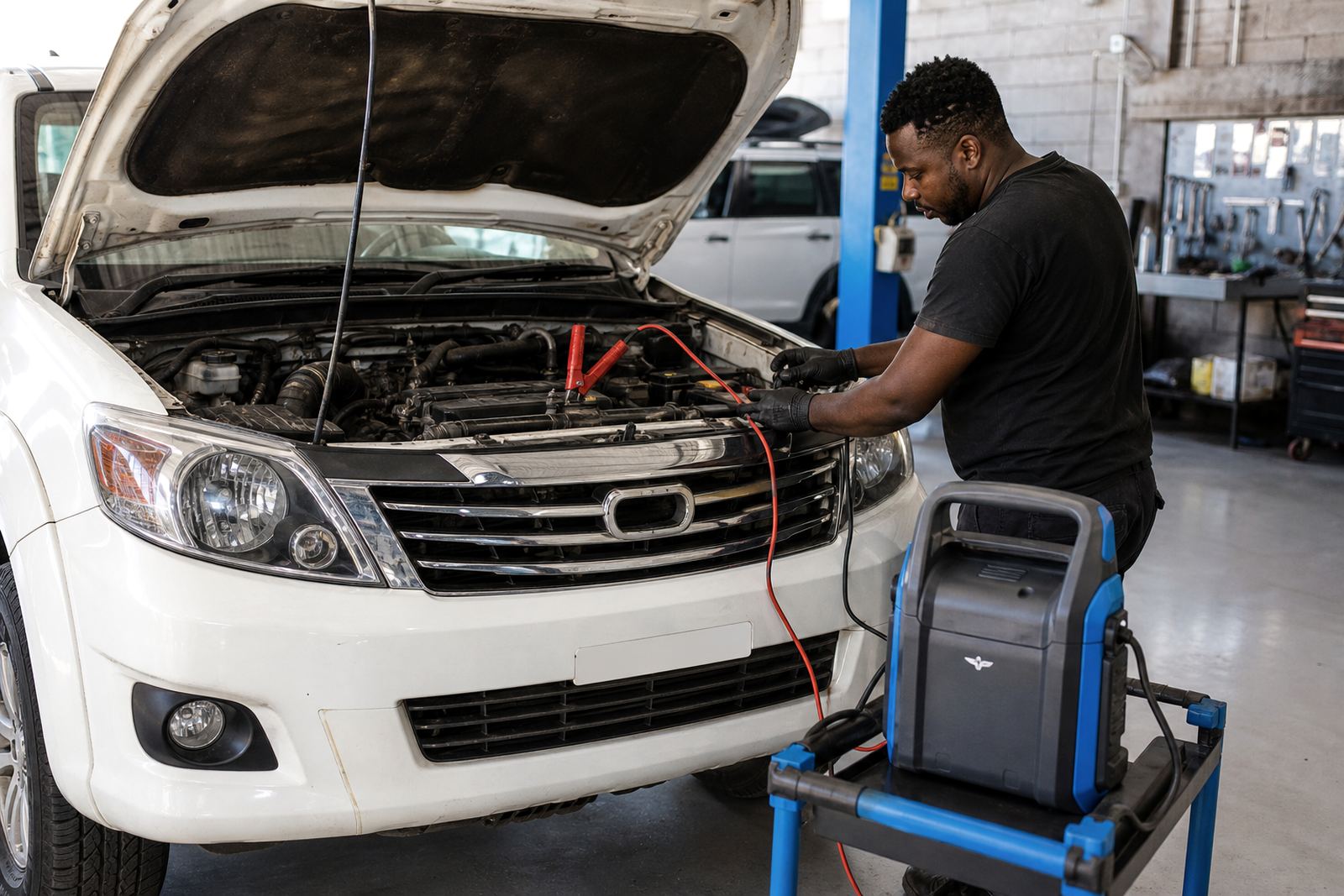
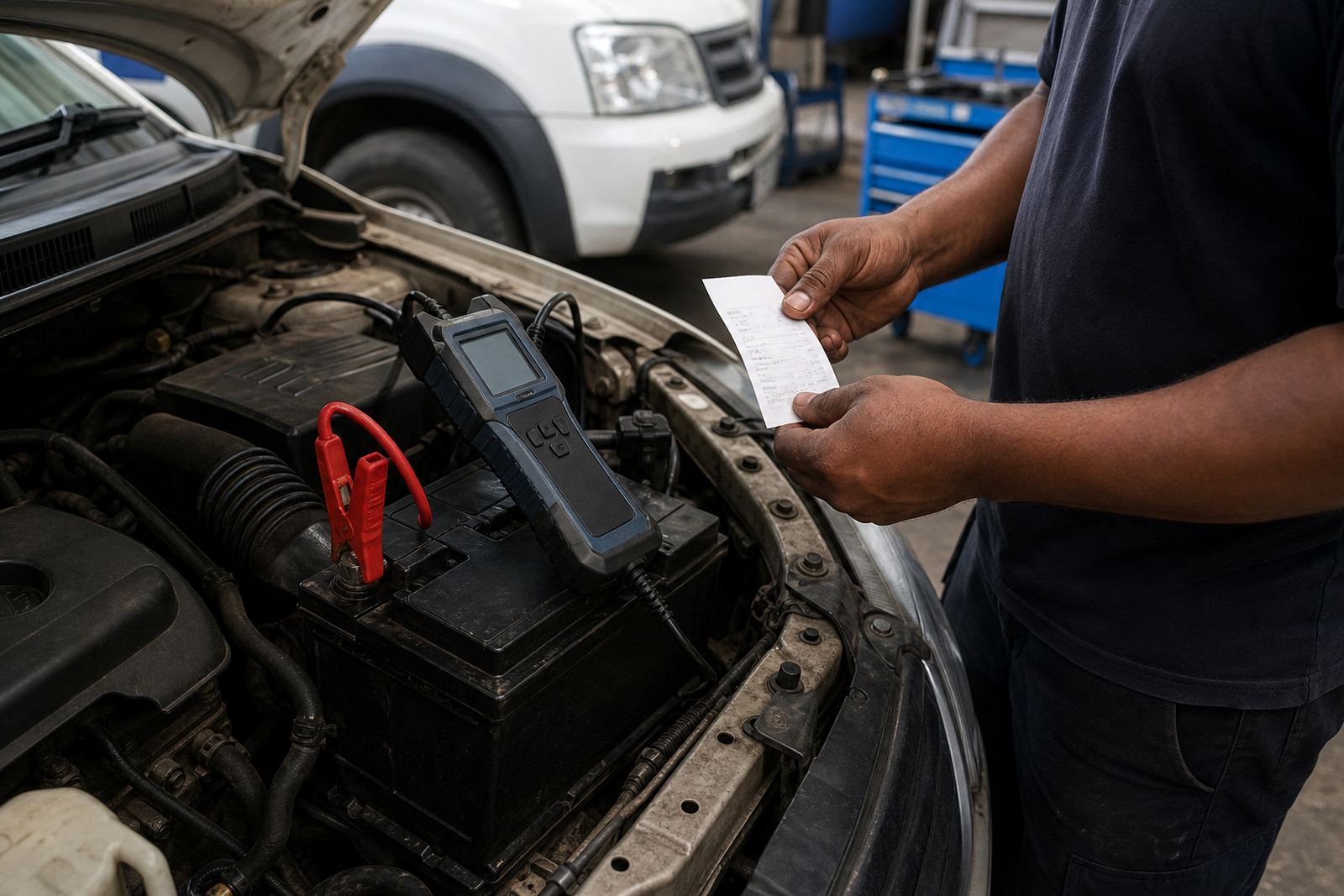
We treat voltage as the opening note, not the answer. A proper test looks at state of charge, internal resistance, terminal condition, and whether the battery can hold up when the engine is cranked under real demand. On many jobs the fault sits elsewhere, which is why a battery alone should never be blamed too quickly.
- Static voltage shows resting charge, not load behaviour.
- Corroded terminals can distort the reading.
- A weak battery may still power lights but fail on cranking.
What cranking tells the technician
Cranking is where the battery proves itself. When the starter motor pulls current, voltage should stay within a sensible range and recover cleanly once the engine fires. If it drops sharply, the battery may be tired, the starter may be drawing too much current, or a poor earth connection may be adding resistance.
We listen for slow turn-over, note how the dash behaves, and watch the metre while the engine is turned. On diesel and petrol vehicles alike, a sluggish crank can point to starter wear, cable loss, or a battery that looks fine on paper but struggles under load. That is common in fleet vehicles doing repeated stops around Somerset West and Paarl.
- Slow cranking deserves a load test before any part is replaced.
- Voltage drop across cables helps locate hidden resistance.
- Earth faults often show up only during the start phase.
Charging output needs to be measured
Once the engine runs, the alternator takes over. A charging system test checks whether the alternator is supplying the correct voltage and current for the vehicle’s needs, then confirms that the battery is actually receiving charge. A flat battery after repeated driving can mean the alternator is undercharging, the belt drive is slipping, or a wiring issue is interrupting the circuit.
We also check for ripple and unstable output, because a charging fault can disturb modules, lights and even tracker equipment. In modern vehicles, especially those with CAN bus systems, uneven charging can create misleading warning lights and strange electrical behaviour that looks far bigger than the real fault.
- Charging voltage should match the vehicle’s system type.
- Low output may come from alternator wear or belt issues.
- Electrical noise can upset control units and accessories.
Hidden drains that flatten a good battery
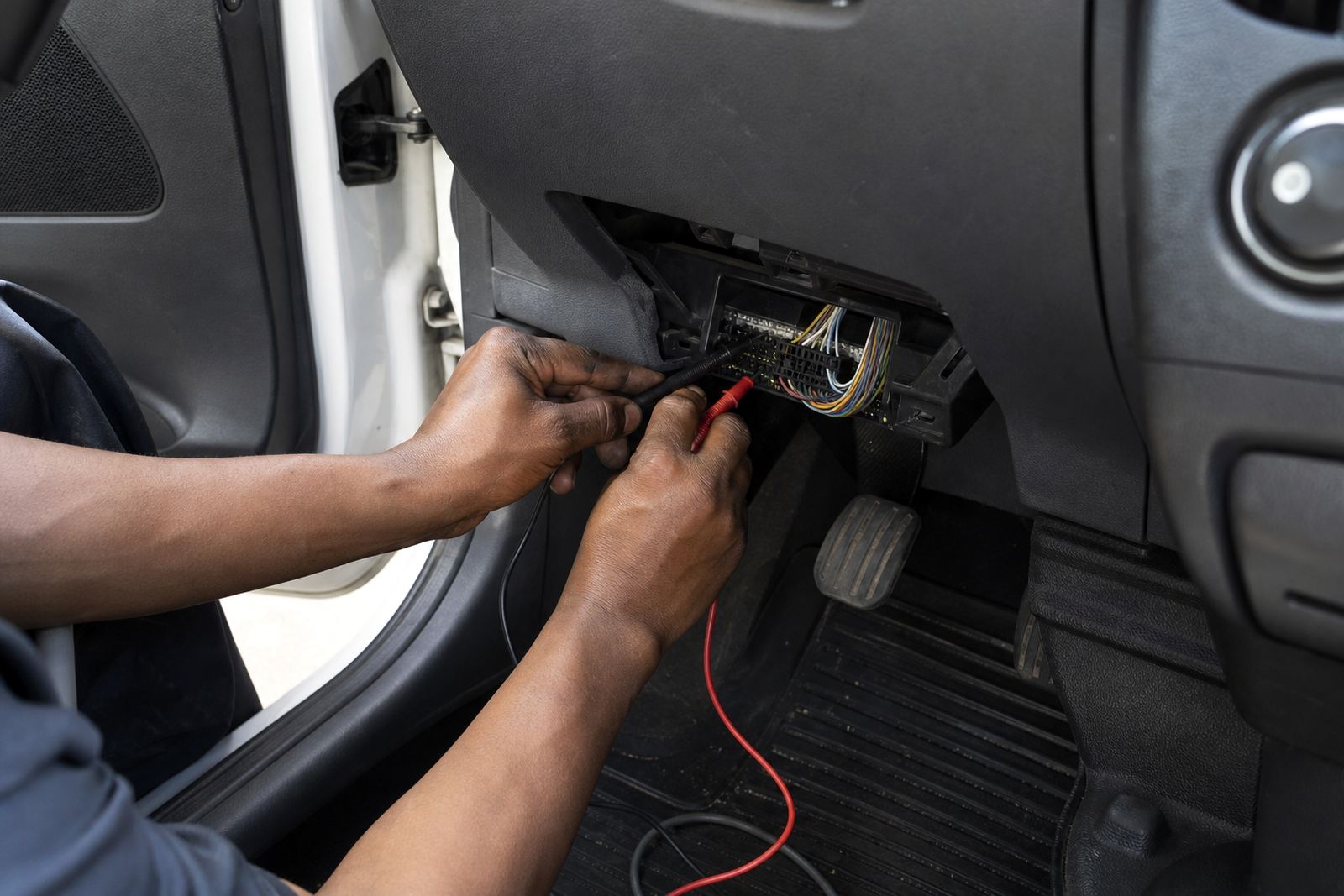
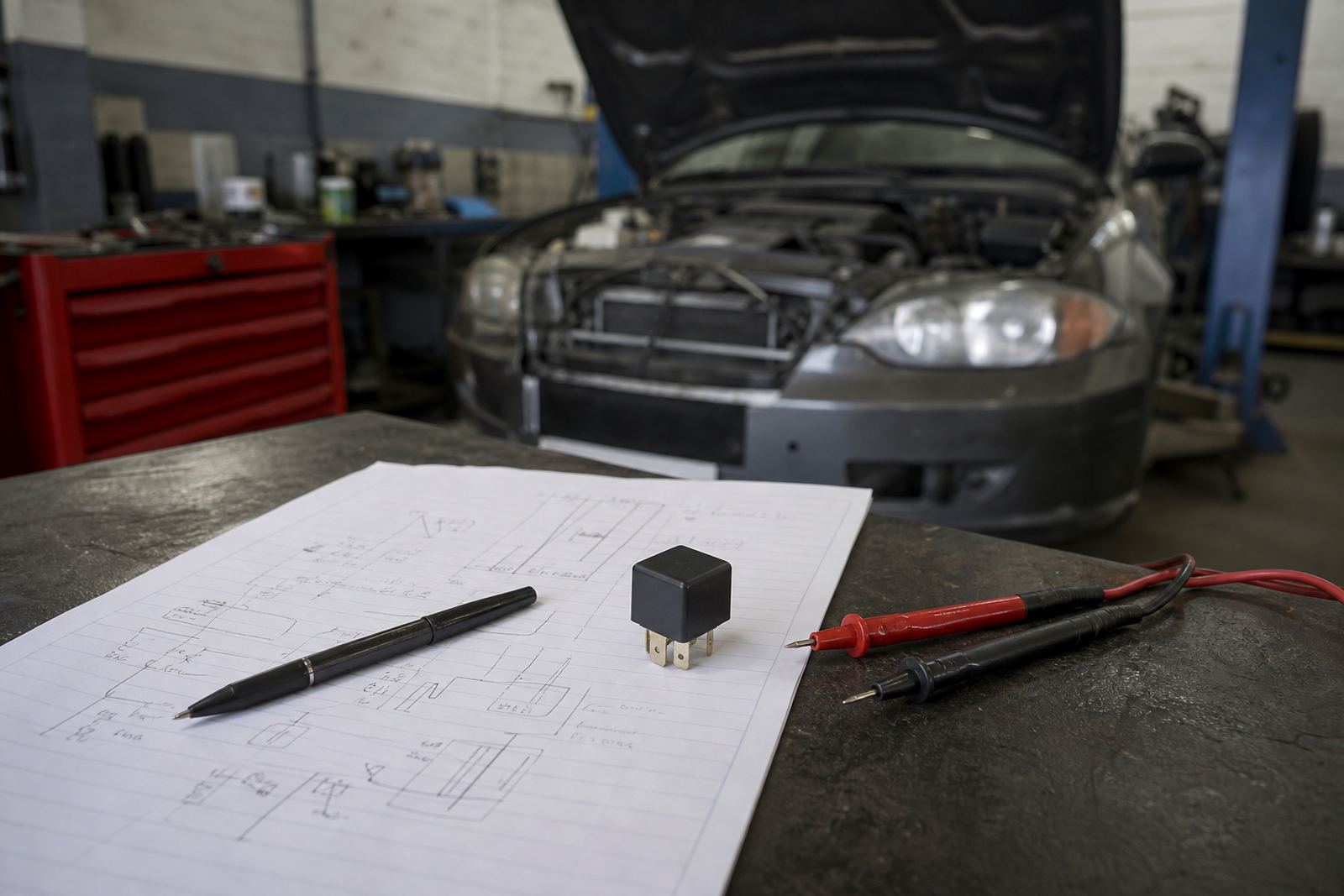
A battery that keeps going flat overnight is often not the battery at all. Parasitic drain tests help us find current draw that stays in the system when the vehicle should be asleep. Loose lighting circuits, aftermarket accessories, trailer wiring faults and relay issues can all keep pulling power in the background.
That kind of fault is common in mixed-use vehicles, from private vans in Cape Town to fleet bakkies working between Brackenfell and Durbanville. The key is to measure the current draw correctly, isolate branches one by one, and trace the circuit rather than replacing parts at random.
- Glove box switches and boot lamps can stay active unseen.
- Aftermarket accessories may be wired neatly but still draw current.
- Relay faults can hold a circuit open after the ignition is off.
Earth faults and starter circuits on older and newer vehicles
Battery testing and starter testing often meet at the earth points. A poor earth can create hard starts, dim lights, erratic instruments and charging complaints that look unrelated at first. On some vehicles, the fault is in the starter circuit itself, with a tired solenoid, damaged cable, or high resistance at a join that has heated over time.
Our checks cover the full starting circuit, including the battery posts. That means supply, trigger, return path and mechanical condition. In wet coastal conditions around Milnerton or the harbour side of Cape Town, corrosion can work into connectors, earth straps and fuse box terminals faster than many drivers expect.
- Earth straps must be clean, tight and correctly seated.
- Starter circuits need both current and signal to work properly.
- Heat damage often leaves visible marks on cables and terminals.
Montague Gardens fleet bakkie battery test
A fleet bakkie arrived from a depot run between Cape Town and Bellville with a battery that had already been replaced once. The driver reported hard starts in the morning, then normal running through the day. Static voltage looked acceptable, but the cranking test showed a steep drop and the starter drew more current than it should have. The charging system was also slightly low at idle, which explained why short stops kept exposing the weakness.
We traced the issue to a worn starter and a tired earth connection that had picked up resistance over time. After the repair, the same vehicle started cleanly and the battery could finally hold its charge properly. That is the point of a proper battery test: it tells you whether the problem is the battery, the charging system, the starter, or the wiring between them.
- Short-trip work can hide a weak charging system for weeks.
- A battery replacement alone may not solve the fault.
- Cranking data gives the clearest picture of starter health.
How we test before parts are replaced
At V-Auto in Montague Gardens, our battery checks sit inside a wider electrical diagnosis. We use live data where needed, test battery condition under load, inspect charging output, and trace wiring faults when the readings do not line up. If a tracker, light bar, trailer circuit or accessory is part of the vehicle, we include that in the inspection because added equipment can change the result.
That approach saves time and removes guesswork. A clean battery report tells one story, but the vehicle only makes sense when the rest of the system is included. For owners and fleet operators across Cape Town, Milnerton, Somerset West and Paarl, that is usually the difference between a temporary fix and a repair that actually holds.
- Battery tests should include rest, crank and charging checks.
- Drain testing helps find faults that appear after parking.
- Accessory wiring should be checked as part of the circuit.