When a module goes quiet, start with power and earth
Many complaints that sound like a dead module are not caused by the module itself. A scanner may show no communication, intermittent faults, or a stack of unrelated codes, but the root cause is often a missing feed, a poor ground, or voltage drop in the path that keeps the unit alive. That is why our technicians start with the basics before they condemn a control unit.
At the workshop in Montague Gardens, we treat module supply checks as proper vehicle diagnostics. We verify battery voltage, ignition feeds, ground quality, fuse condition, connector condition and the state of nearby wiring. A loom that has rubbed through behind a trim panel can look like a computer problem from the driver's seat.
The checks that reveal a hidden supply fault
Power and ground faults often hide in plain sight. A fuse can look fine and still not carry current properly. An earth point can be tight but still carry too much resistance because of rust, paint or heat damage. On some vehicles, the issue sits between the battery, fuse box and control unit, so the path has to be tested section by section.
- OBD fault codes and live data to see what the module is reporting
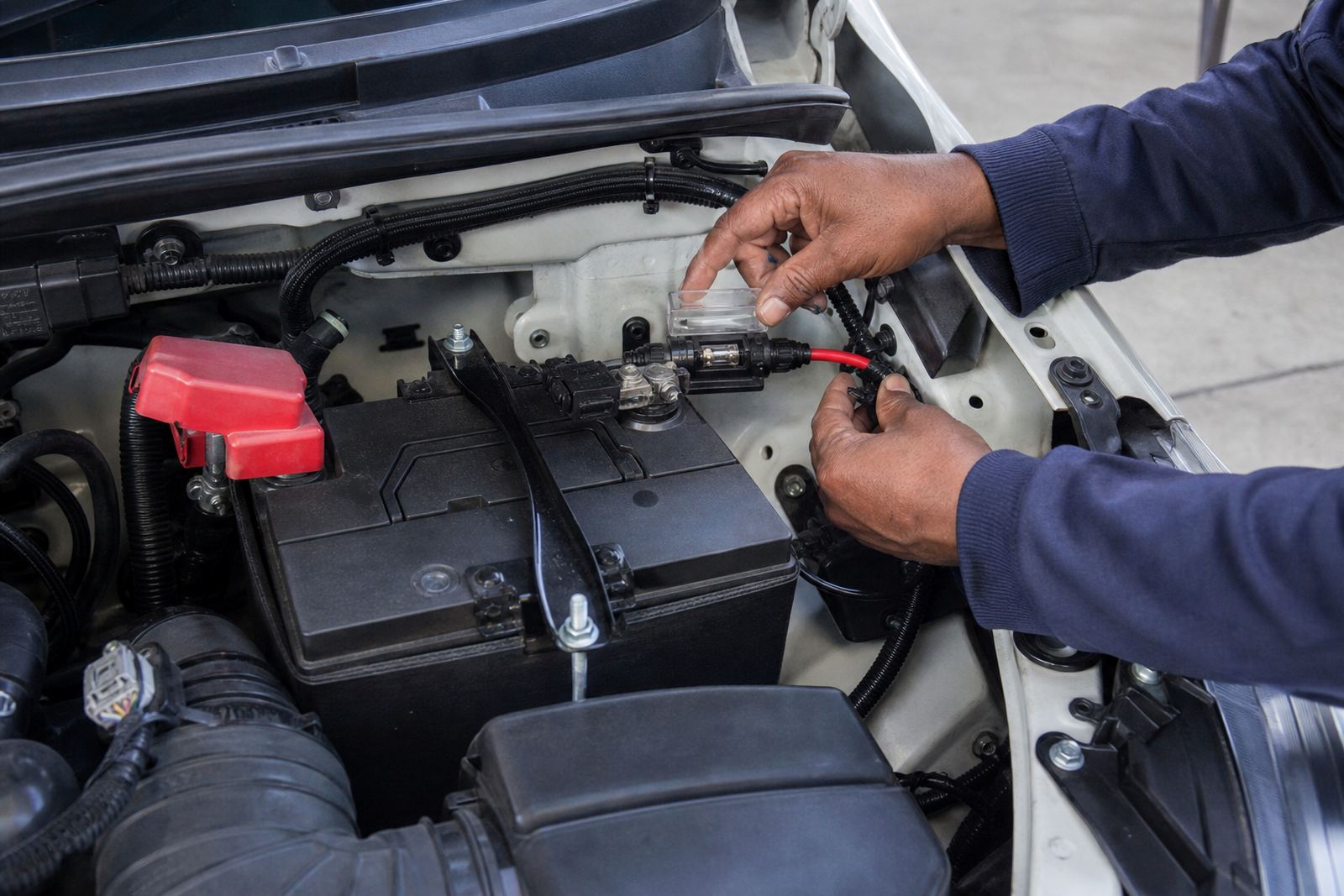
- Battery load and charging tests to check system voltage under strain
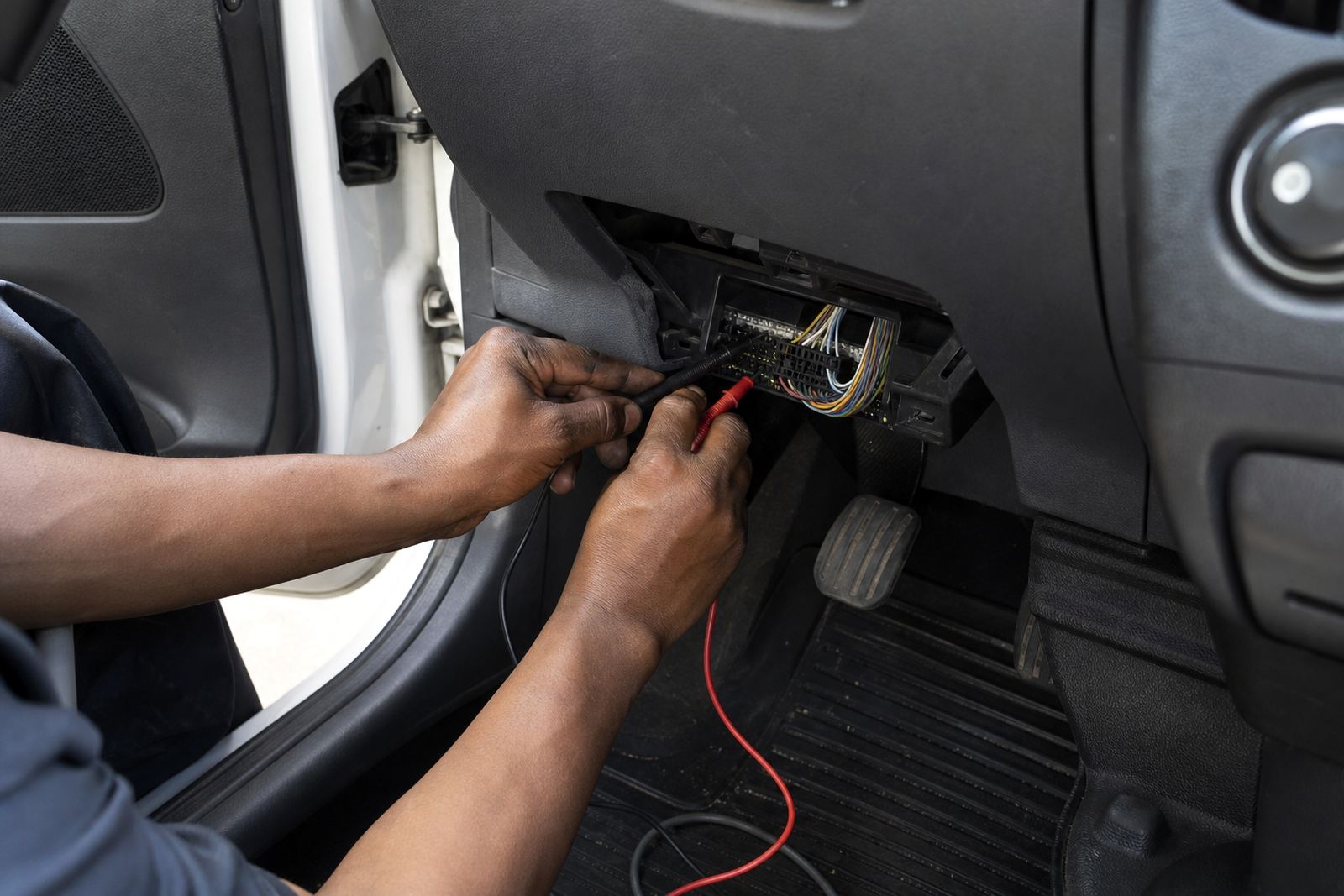
- Voltage drop tests on power and earth circuits
- Fuse box testing for loose contacts and heat marks
- Wiring continuity checks from source to control unit
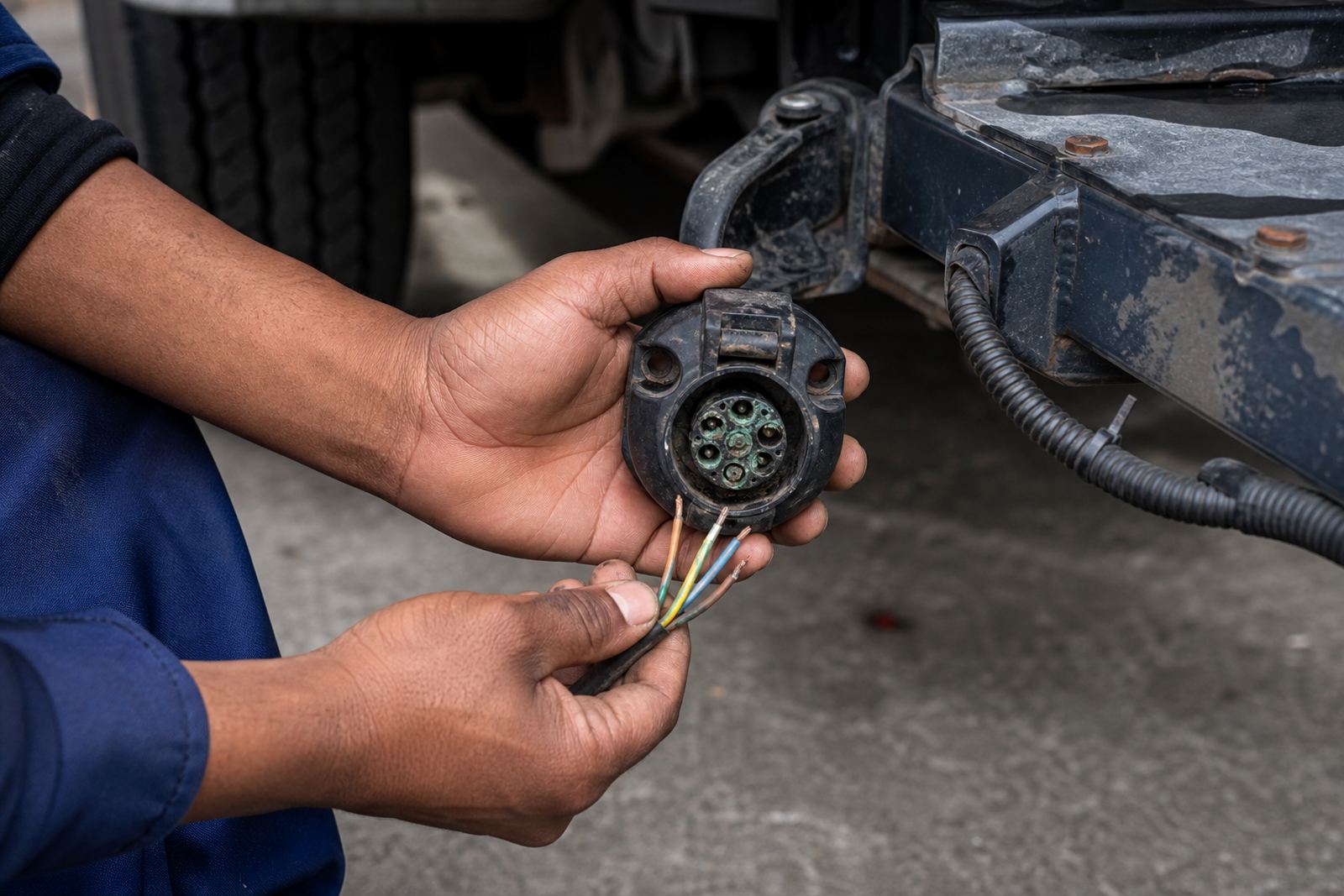
- Connector inspection for green corrosion, bent terminals and moisture entry
Those checks give a clear picture before any parts are changed. On a busy vehicle, that saves time and avoids swapping pieces that were never the fault in the first place.
Why communication faults often begin with low voltage
Modern vehicles depend on steady voltage across several systems at once. If the battery is weak, the alternator output is unstable, or the charging circuit is not keeping up, modules may drop offline or store false communication codes. In some cases the problem only appears during cranking, when voltage falls sharply and a control unit stops waking up.
CAN bus fault checks matter here too, because a wiring fault on the network can look like a lost module. A damaged twisted pair, water in a connector, or a poor earth at one branch can affect more than one unit. We do not jump straight to expensive conclusions when the real issue may be a supply feed that cannot hold voltage under load.
For fleet operators in Cape Town, Milnerton or Bellville, that distinction matters. A van with a faulty earth can arrive with warning lights, a dead accessory circuit and a no-communication code, yet the fix may sit in the power distribution side rather than the control unit itself.
What we see in local vehicles and work fleets
In the Western Cape, we see the same patterns across private cars, panel vans and work bakkies. Coastal humidity can push corrosion into connectors and fuse boxes, while repeated vibration on rough roads can loosen terminals and damage small sections of loom. In a commercial vehicle, a trailer wiring fault or a tracker feed tied into the wrong circuit can also create odd module behaviour.
A common example is a vehicle that starts one day and then throws communication faults after a rain spell or after a battery replacement. The scan tool may point in the wrong direction, but the real clues are often found at the battery clamps, earth straps, fuse holders and the connector feeding the affected module. That is why our mobile call-outs carry out proper tests before the vehicle comes back to the workshop for deeper tracing.
- Water ingress around fuse boxes and relay holders
- Loose grounds after previous repair work
- Damaged starter circuit wiring causing low cranking voltage
- Alternator faults creating unstable system voltage
- Aftermarket accessories tapping into the wrong feed
Trace the fault before replacing parts
A control unit should not be blamed until the supply side has been proved. That means checking the battery first, then the charging system, then the feed and ground at the module, and only then looking at network communication. If the module has no correct power or earth, the scan result is only telling part of the story.
We often use a simple sequence: confirm battery health, check charging output, load-test the circuit, then inspect connectors and earth points under working conditions. That approach helps on starter repairs, alternator repairs, parasitic drain jobs and lighting faults too, because the same weak point can affect more than one system. A corroded earth strap near the engine bay can upset the starter, the module supply and even the charging reading.
There is no value in replacing a control unit when a broken wire at the fuse box is starving it of power. Practical diagnosis keeps the repair tied to the real fault, not to the nearest code.
Montague Gardens call-out for wiring fault
A fleet vehicle based in Milnerton can arrive with intermittent warning lights and a dead communication line after standing overnight. The driver may describe it as an electrical ghost, but the test sequence often shows a parasitic drain on one branch and a poor earth near the control unit. Once the faulty wire or connector is repaired, the module wakes up normally and the codes stop returning.
That sort of job suits both the workshop and mobile call-out work. We can inspect the vehicle on site in Cape Town, Bellville, Somerset West, Paarl, Brackenfell or Durbanville, then move the vehicle to the workshop if the repair needs deeper tracing or bench testing. For fleets, this keeps the fault notes clean and the repair path straightforward.
Module power supply work is not dramatic, but it is where a lot of electrical problems are won or lost. Find the feed, prove the earth and the rest of the diagnosis becomes much clearer.
Where module supply work fits inside our workshop
Our team handles diagnostics and auto electrical repairs from Montague Gardens, with mobile support for private owners and fleet operators across the Western Cape. The same methods used for module supply faults also support starter circuit repairs, alternator repairs, battery drain repairs, fuse box repairs, earth fault repairs and trailer wiring checks.
We also fit trackers and accessories where a clean supply is needed, because a poor install can create the same sort of symptoms as a hidden wiring fault. Keeping feeds protected, grounds sound and connectors dry matters on every vehicle, whether it is a family car or a work unit that spends most of its day on the road.
- Wiring Repairs
- Starter Repairs
- Alternator Repairs
- Battery Drain Repairs
- Charging System Repairs
- CAN Bus Fault Checks
- Accessory Rewiring