When copper turns rough inside the insulation
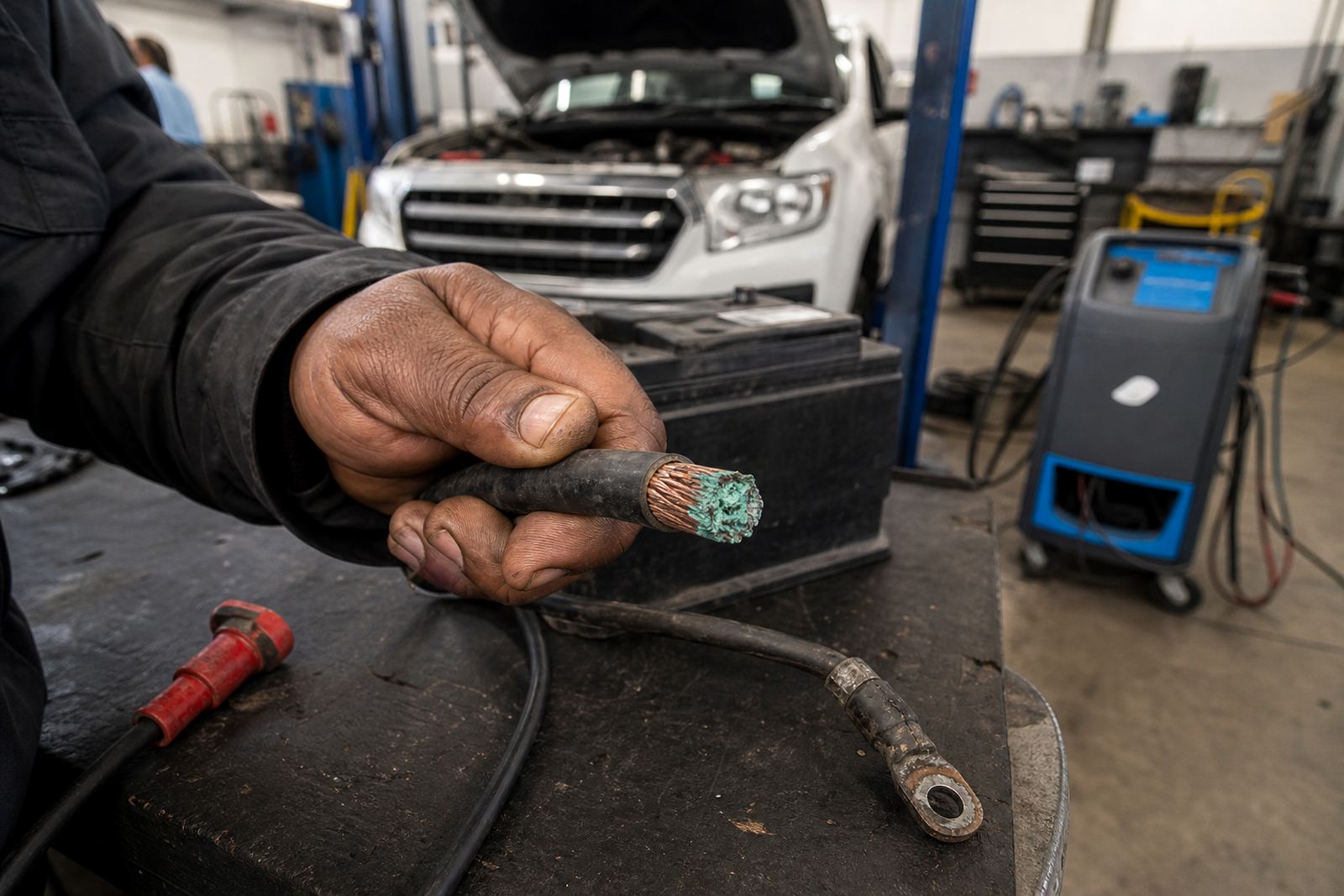
Corrosion does not always sit where you can see it. A cable can look clean at the terminals while the strands under the insulation have turned green, black or crumbly from moisture, heat and age. That broken surface raises resistance, so current has to work harder to pass through the same wire.
In a workshop this shows up as a vehicle that behaves normally at rest, then struggles when headlights, fans, injectors or a starter motor draw more current. The circuit may still pass a basic continuity test, but under load the weak section starts to fail. That is why hidden corrosion is so often mistaken for a bad battery, a worn starter or a weak alternator.
Coastal air around Cape Town, Milnerton and Somerset West can push moisture into joins and poorly sealed repairs. On fleet vehicles, repeated vibration and heat cycles make the problem worse, especially where wiring has been joined, taped up or routed near sharp edges.
- Green powder at a crimp or splice is a warning sign
- Heat discolouration often points to a high resistance joint
- Swollen insulation can hide broken strands underneath
- Intermittent faults often appear after rain or washing
What the driver feels when resistance climbs
Higher resistance changes the way a circuit behaves. The battery may still read fine on a metre, yet the starter turns slowly, the charging system looks unstable, or a light dims when another load switches on. In modern vehicles, the effects can spread into control modules, sensors and CAN bus communication if supply voltage falls too far.
Owners often describe the problem as a delay, a weak pull, or a fault that appears only on cold mornings. Fleet operators notice it when a bakkie starts slowly after a stop, a trailer plug misbehaves on a long run, or a tracker drops off-line for no clear reason. Those are classic signs that the cable path is no longer carrying current properly.
Not every corroded cable fails completely. Many keep working, just badly. That is what makes the fault frustrating, because the vehicle can pass a quick glance test and still lose performance under real working conditions.
- Slow cranking even after battery charging
- Charging voltage that swings under load
- Lights that dim when the starter is used
- Accessory faults that come and go without warning
How we trace a hidden cable fault
We start with the circuit the vehicle is using. Fault code readings can point to low voltage, communication loss or sensor supply issues, while live data shows whether the system is reacting normally once the engine is running. From there we test the battery, charging output and voltage drop along the cable path.
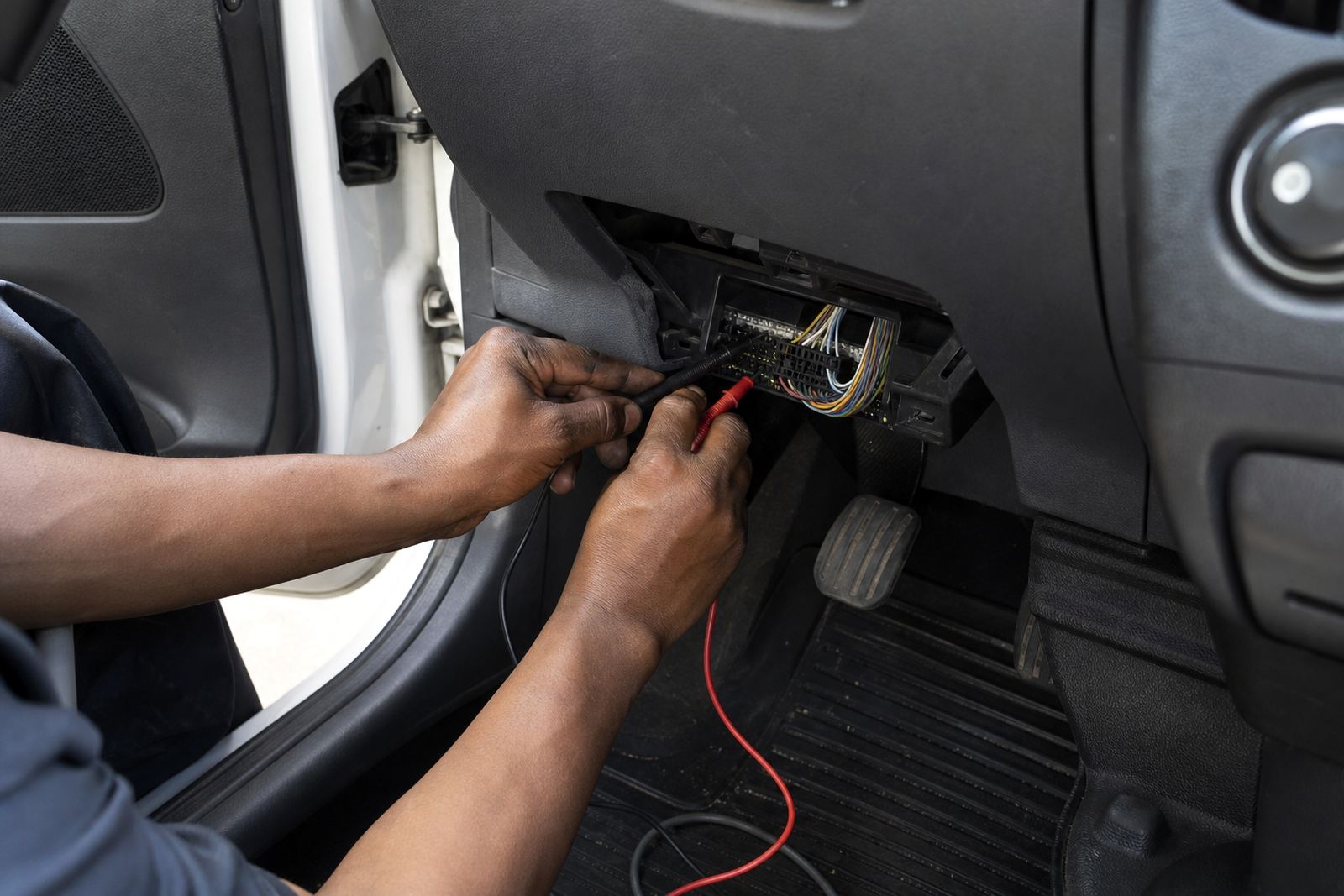
Voltage drop testing is often where the truth appears. A cable can still look sound on the outside and yet lose several volts across a corroded section under load. That loss matters on a starter circuit, a charging feed or a trailer wiring run, because the component at the end never gets what it needs.
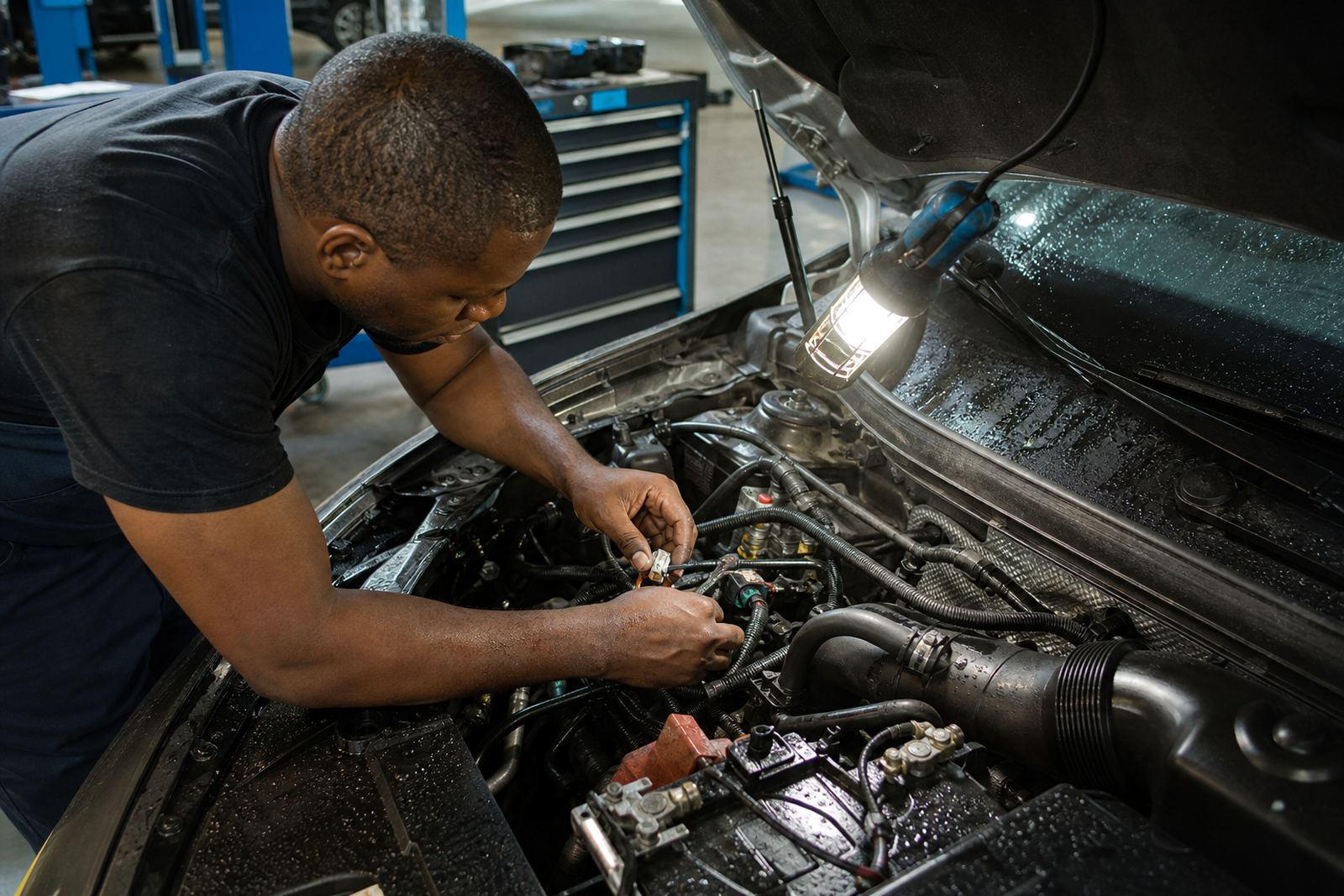
For harder cases we inspect earth points, fuse box feeds, splice joins and any section exposed to heat, oil or water. If the fault sits inside a section of wire, we cut back to clean copper and repair the path properly, rather than hiding it under tape and hoping for the best.
- OBD fault code checks for electrical and communication clues
- Live data review for supply and sensor behaviour
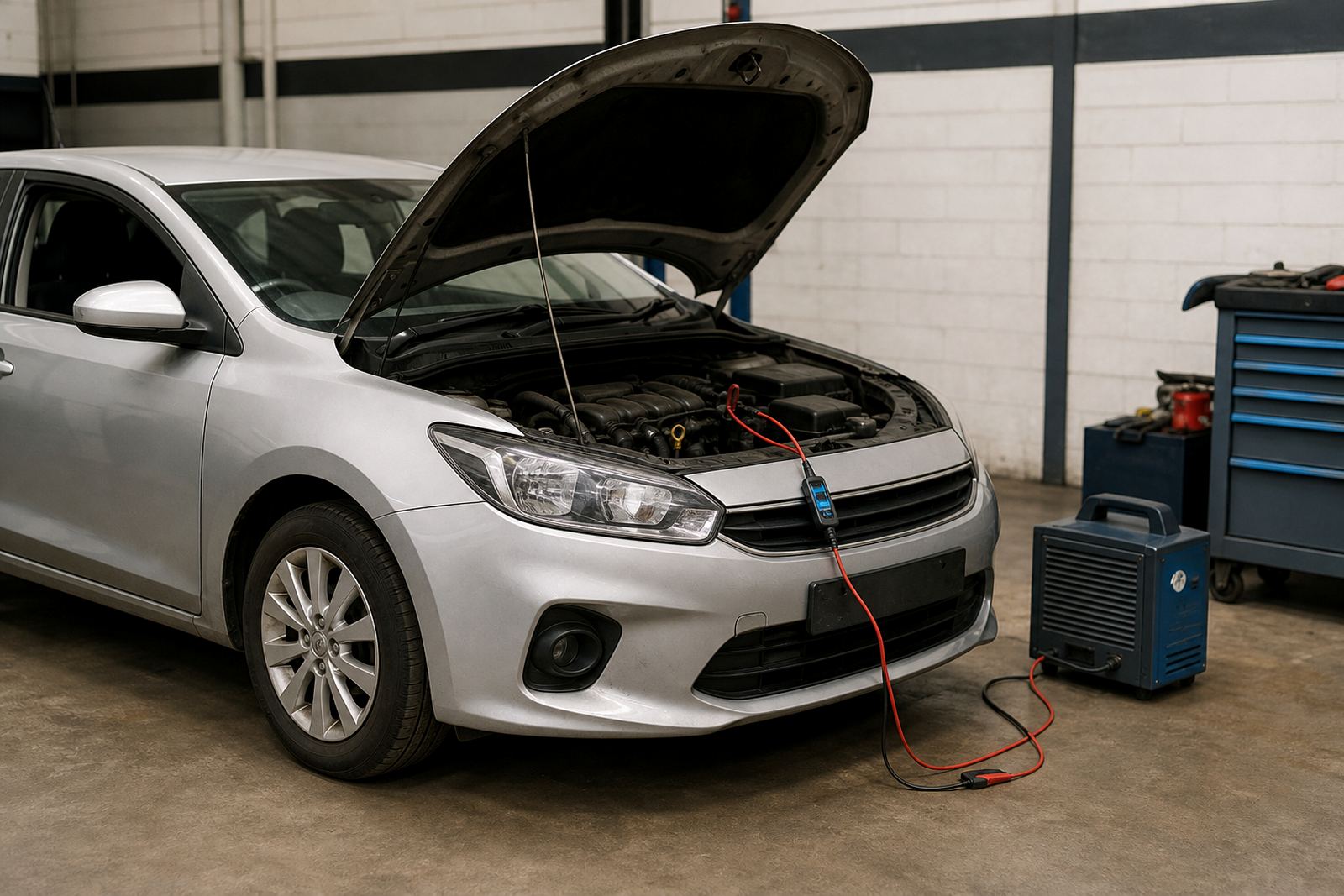
- Battery and charging tests under load
- Voltage drop readings across suspect cables
- Physical inspection of earths, joins and fuse box feeds
Where corrosion causes the most trouble on vehicles
Some circuits are more exposed than others. Starter circuits carry high current, so a little corrosion can create a big drop in performance. Alternator wiring has to move charging current cleanly back to the battery, and a poor connection there can leave the vehicle undercharged even when the alternator itself is healthy.
Lighting circuits are another common weak point, especially where bulbs, lamp holders, trailer plugs or repaired tails have been exposed to damp. Tracker and accessory fittings can also suffer if the original installation used a tired earth, a pinched feed or a splice that was not sealed against moisture. On a working vehicle, those small defects become practical headaches fast.
In Montague Gardens we often see this after repeated short trips, towing, or repeated engine bay heat. A vehicle may arrive with a complaint about slow starting, a flat battery, or warning lights that seem unrelated. Once the cable resistance is measured, the pattern usually makes sense.
Typical trouble spots include:
- Starter motor feeds and starter circuit joins
- Alternator output cables and battery terminals
- Earth straps between body, engine and chassis
- Trailer wiring and rear lamp circuits
- Accessory feeds for trackers, sirens and work lights
Repairs that restore current flow properly
Good repair work is about more than making the fault disappear. We replace damaged cable sections, renew corroded terminals, remake earth connections and protect the repaired area so the same problem does not creep back into the loom. Where a circuit has been overheated, the insulation nearby may need attention as well, because heat damage often travels further than the visible stain.
Starter repairs, alternator repairs and charging system repairs often sit alongside wiring repairs, because the weak point can be spread across several parts of the same circuit. The aim is steady voltage, clean current flow and a repair that can handle vibration, wet roads and daily use.
For fleets, that matters because a vehicle can lose time from something small and hidden. A corroded earth on a work van, or a tired trailer wiring join on a delivery bakkie, can interrupt the day more than the driver expects. A careful repair avoids repeat fault chasing and keeps the circuit honest.
- Remove corroded sections back to sound copper
- Renew terminals, lugs and earth points
- Seal joins against moisture and dust
- Check nearby wiring for heat damage
- Retest the circuit under real electrical load
Bellville to workshop cable corrosion job
A fleet vehicle from Bellville can arrive with a battery that tests well, yet the starter drags whenever the engine is hot. That kind of complaint often sends people straight to the battery, but the real issue may be a corroded cable hidden under the insulation near the starter feed or the engine earth. Once the voltage drop is measured, the weak section usually stands out.
We have seen the same pattern on private vehicles used around Milnerton and Paarl, especially after years of short urban trips and damp overnight parking. The driver notices a slow crank first, then a warning light, then an accessory fault that seems unrelated. Once the corroded cable is repaired and the charging path is checked, the vehicle settles back into normal use.
That is the practical lesson: corrosion is not just a cosmetic issue. It changes how the circuit works under load, and load is when most vehicles prove themselves. A clean reading at idle can hide a poor result where it matters most.