When a good battery starts acting tired
A healthy battery can still struggle if something is drawing current after the ignition is off. Owners often notice the first clue on a Monday morning, or after a vehicle has stood through a long weekend in Montague Gardens, Bellville or Somerset West.
The pattern is usually repeatable. The vehicle starts fine after a long drive, then sits for a day and feels weak again. That is different from a normal ageing battery, where cranking becomes slower all the time and the problem does not change much with standing time.
- Repeated flat starts after short periods parked
- Interior lights, boot lights or dashboard lamps that stay on
- Battery warning lights that come and go
- Fuses that show heat marks or a loose fit
What parasitic drain looks like in a real workshop
Parasitic drain is an after-hours current draw that should not be there. Modern vehicles use control units, alarm circuits, central locking, trackers and infotainment systems, so a small draw can be normal. Trouble starts when the draw stays higher than expected or a circuit fails to sleep properly.
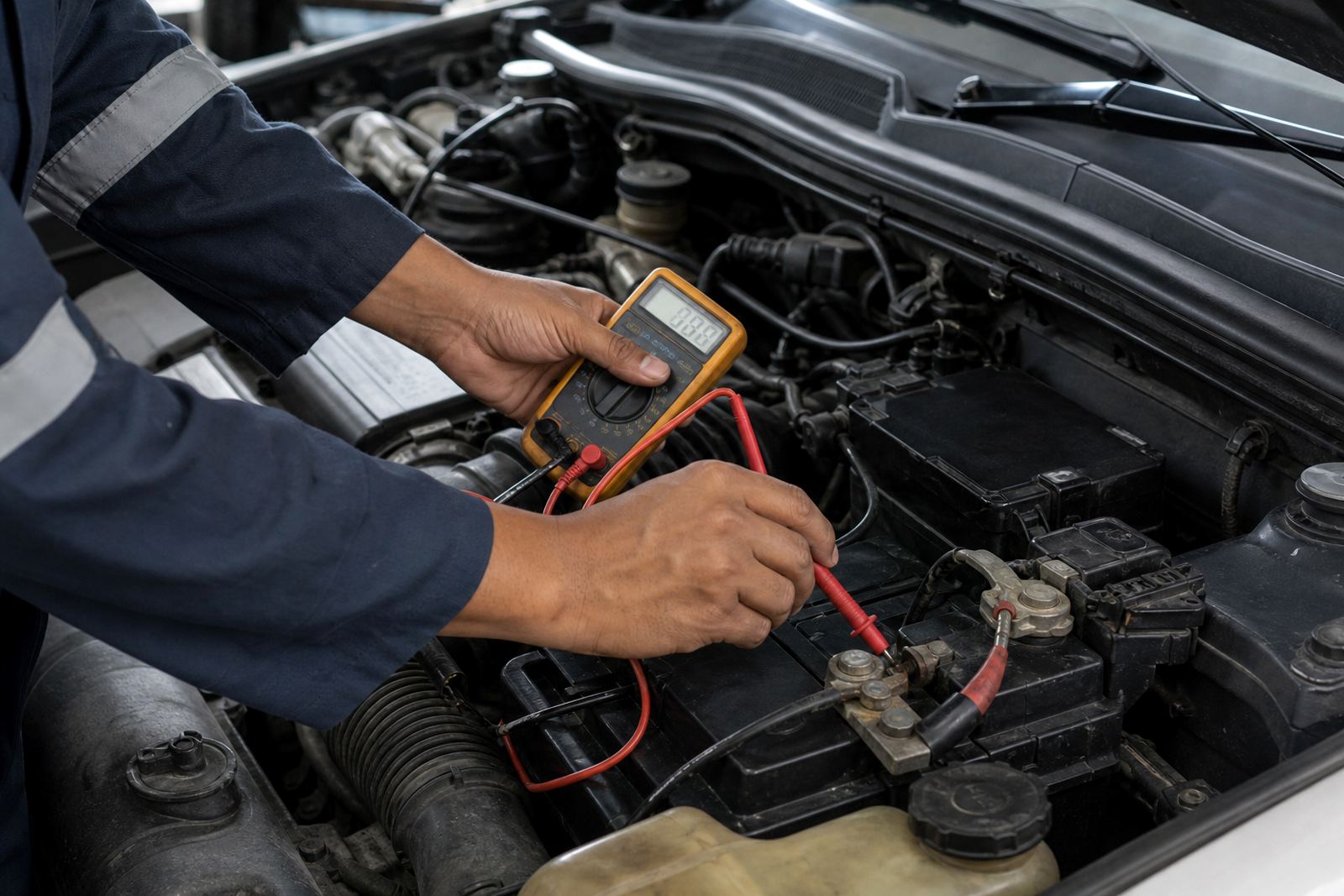
At workshop level, the check starts with battery and charging tests, then moves to current draw measurements, fuse-by-fuse isolation and fault code readings. A technician may also watch live data to see whether modules are shutting down as they should, especially on vehicles with CAN bus communication faults or recent accessory fitting.
- Accessory wiring tapped into the wrong circuit
- Relay contacts sticking after switch-off
- Alternator diode faults feeding current backwards
- Boot, glovebox or cab lamps staying active
Why batteries flatten faster after a standing period
Most parasitic drains do not stop the vehicle from driving straight away. They become visible after the battery has had time to lose charge overnight, or while the vehicle sits on a job site in Paarden Eiland, Durbanville or Paarl.
Short trips make the issue worse because the alternator has less time to recover the battery. If the battery is already tired, even a modest draw can tip it over. That is why some owners fit a new battery and still have the same complaint a week later. The root cause was never the battery alone.
- Deep discharge from repeated standing periods
- Charging system faults that never fully restore the battery
- Aftermarket accessories wired without proper isolation
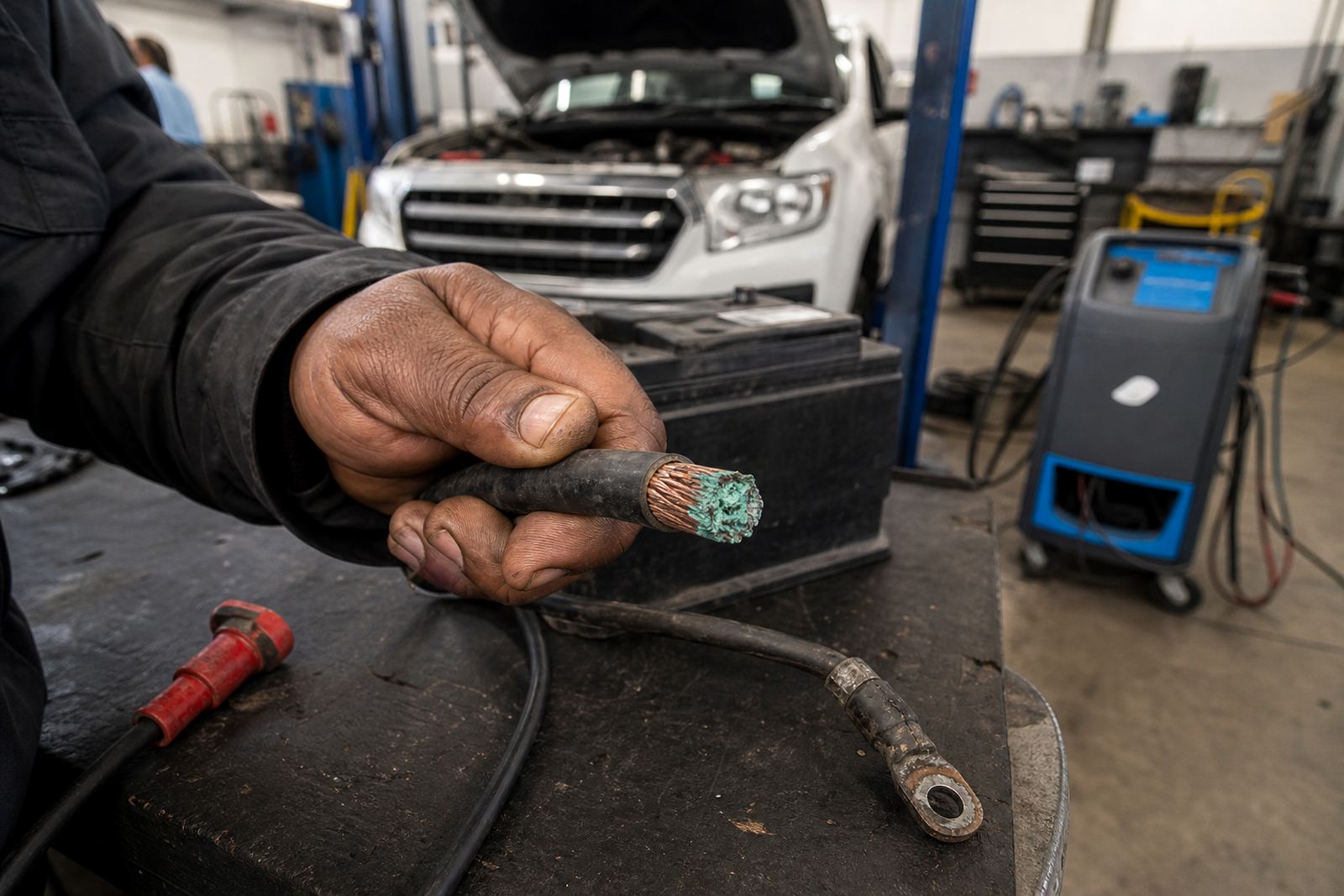
- Corroded earth points increasing the load on the system
What technicians test first
The first step is usually to confirm the battery condition and charging voltage, then measure the standing current after the vehicle has gone to sleep. If the draw remains too high, the technician narrows it down circuit by circuit.
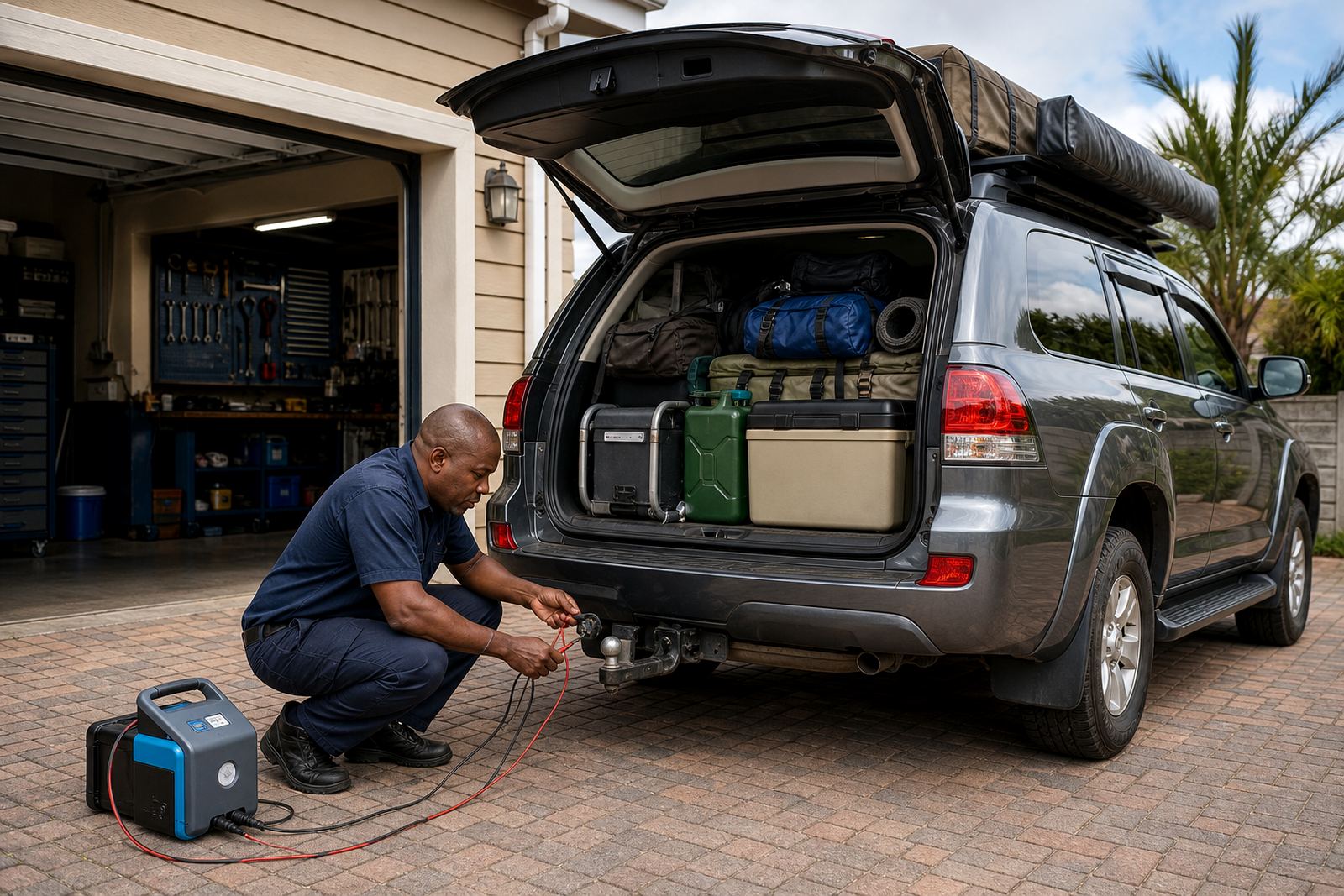
That process can include pulling fuses one at a time, checking starter and alternator circuits, inspecting earth straps, and tracing wiring repairs that were done poorly in the past. On fleet vehicles, the tester may also look at trailer wiring, tracker fitments and accessory rewiring because those are common places for hidden faults.
- Battery test and charging system check
- Starter current and alternator output inspection
- Fuse box and relay isolation
- Earth fault and wiring continuity testing
Montague Gardens van drain fault
A delivery van based near Montague Gardens can arrive with a fresh battery and the same complaint: it starts well after a run, then goes flat over a weekend. On inspection, the vehicle may have a tracker, a trailer plug repair and a previous alarm splice under the dash. Any one of those can be fine on its own, but together they can leave a small but constant draw.
Once the faulty circuit is found, the fix is usually practical rather than dramatic. A bad earth gets cleaned and secured, a relay is replaced, a damaged wire is repaired, or an accessory is moved to a proper ignition controlled feed. The point is not to replace parts at random, but to stop the current path that should not exist.
Signs that point beyond the battery itself
Some clues point straight to an electrical drain rather than a simple worn-out battery. Watch for electrical items that behave oddly after the vehicle is parked, or fault codes that return after clearing. On newer vehicles, a CAN bus fault can keep one module awake and drag the battery down over time.
These signs are worth noting before the vehicle is booked in, because they help narrow the search:
- Radio or infotainment unit staying active after key-off
- One door, boot or bonnet switch not registering properly
- Starter clicking after standing, then working later
- Battery going flat only after rain, washing or humidity
- Alternator warning lamp appearing with other electrical faults
In coastal conditions around Milnerton and Somerset West, moisture can worsen weak connections and tired earth points. A small fault can turn into a repeated battery drain once corrosion gets into a connector or fuse holder.
How V-Auto handles drain faults in workshop and on site
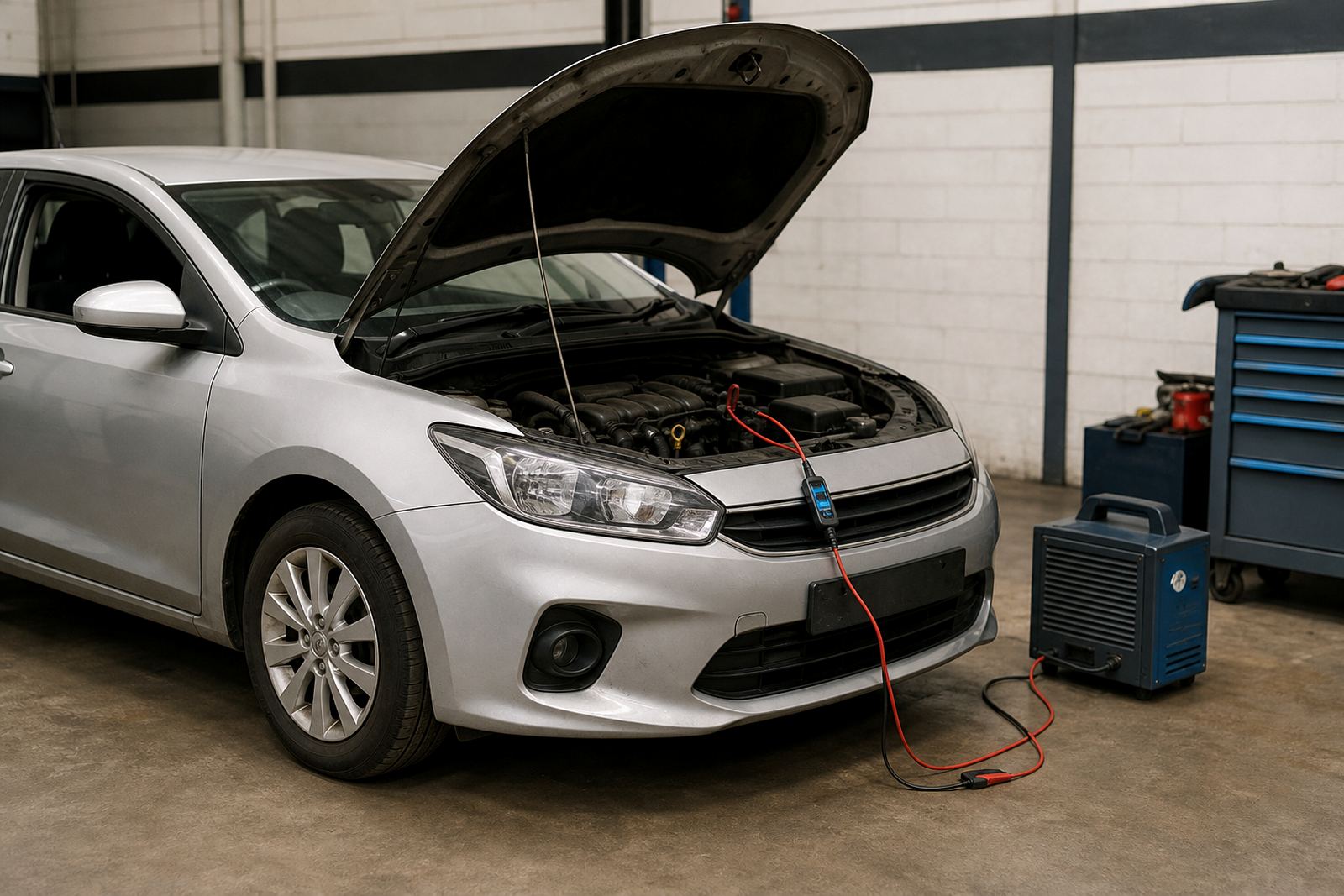
V-Auto works on vehicle diagnostics and auto electrical faults from Montague Gardens, with mobile call-outs across Cape Town, Bellville, Milnerton, Somerset West, Paarl, Brackenfell and Durbanville. The team checks fault codes, live data, battery condition, charging output and standing current, then traces the circuit that is staying awake.
That work can lead to wiring repairs, starter repairs, alternator repairs, charging system repairs, lighting repairs, fuse box repairs, earth fault repairs, starter circuit repairs, trailer wiring repairs, accessory rewiring or CAN bus fault checks. For fleets and private owners, the aim is the same: find the drain, fix the source, and stop the battery from being flattened by a hidden load.