What the paired wires are doing in a modern vehicle
On many vehicles, control units do not work in isolation. They pass messages over a paired communication line, usually referred to as the CAN bus, so the engine, gearbox, body module, instrument cluster and other systems can share what they know. If that network stays electrically healthy, the vehicle reads as one coordinated machine. When it does not, faults can spread across more than one system and the dashboard may point to the wrong area.
In workshop terms, the bus depends on clean voltage, sound grounds, correct termination and wiring that has not been pinched, corroded or disturbed by a previous repair. A bad earth near a battery tray, a damaged loom behind a bumper or moisture in a connector can all upset communication even when the main components still test well.
The clues that tell a technician to think beyond the part
A CAN fault is often not a single broken module. The vehicle may crank but not start, lock and unlock irregularly, or lose communication with one section while other systems stay live. Warning lamps can light up in groups. A scan tool may report multiple unrelated codes, which is usually a sign to test the network before replacing parts.
- Repeated communication faults across different modules
- No fault on a component that still behaves badly
- Intermittent warning lights after rain, washing or vibration
- Slow cluster start-up or blank displays
- Battery drain that returns after the vehicle is parked
Those clues matter on fleet vehicles too. A courier bakkie working in Montague Gardens can show a heater fan issue, a central locking complaint and a charging warning on the same job card, yet the root cause may sit in one damaged harness section or a corroded connector near the front of the vehicle.
How we test a CAN bus fault without guessing
A proper diagnosis starts with fault codes, live data and a battery and charging check. If the supply voltage is unstable, the network can misbehave and create false leads. We then inspect grounds, fuses, relay feeds and the wiring routes that carry communication between modules.
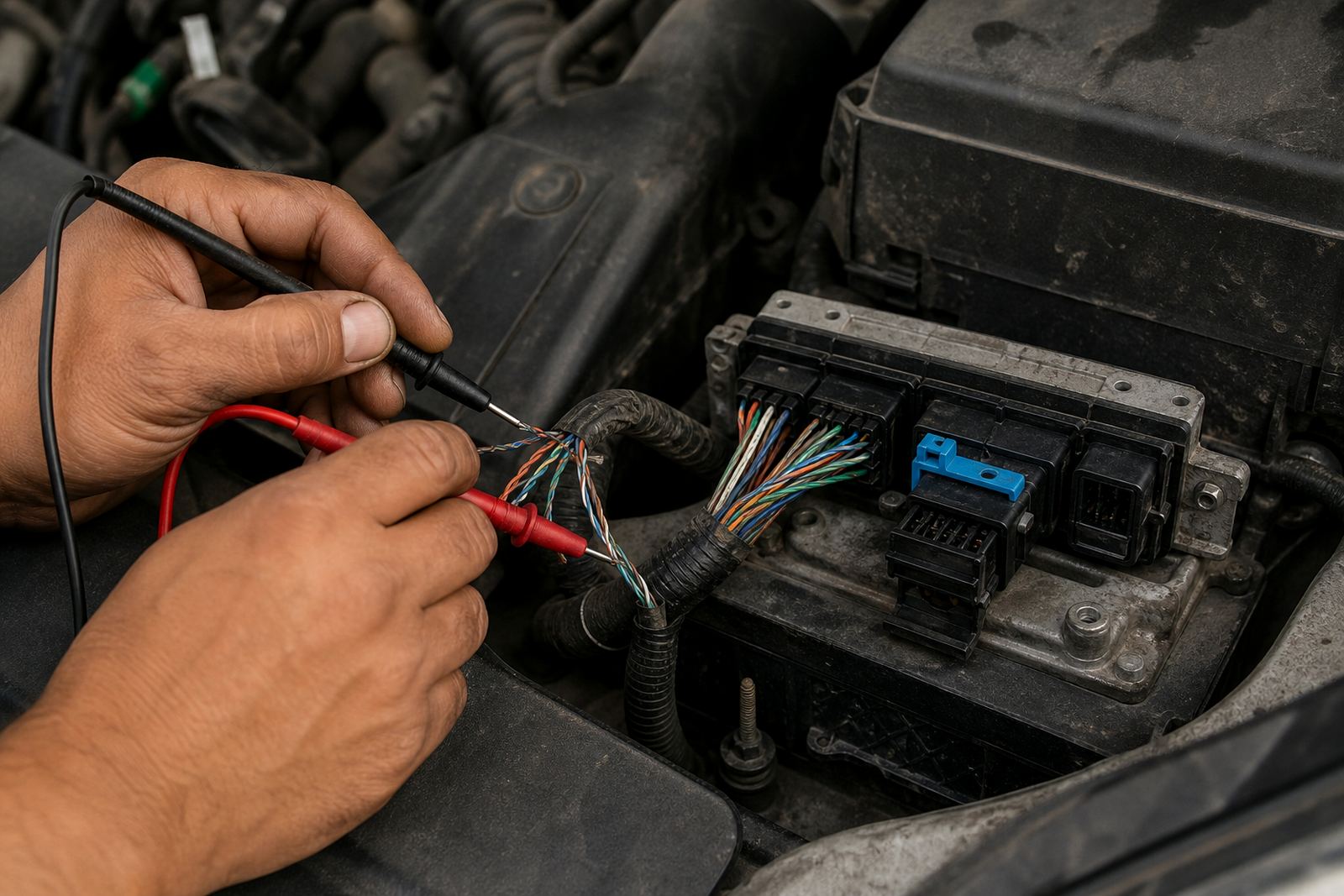
On the bench and in the vehicle, technicians look for line resistance, short circuits to power or earth, and signs of a module pulling the network down. A parasitic drain test can also help when the battery goes flat overnight. If one circuit wakes up when it should sleep, it can keep the bus active and flatten the battery slowly.
- Scan all modules, not only the one with the light on
- Check battery health before chasing a network fault
- Inspect earth points, fuse boxes and loom rub points
- Measure communication line resistance and voltage patterns
- Test for draw after shutdown when battery drain is suspected
Where wiring damage usually hides on Cape Town vehicles
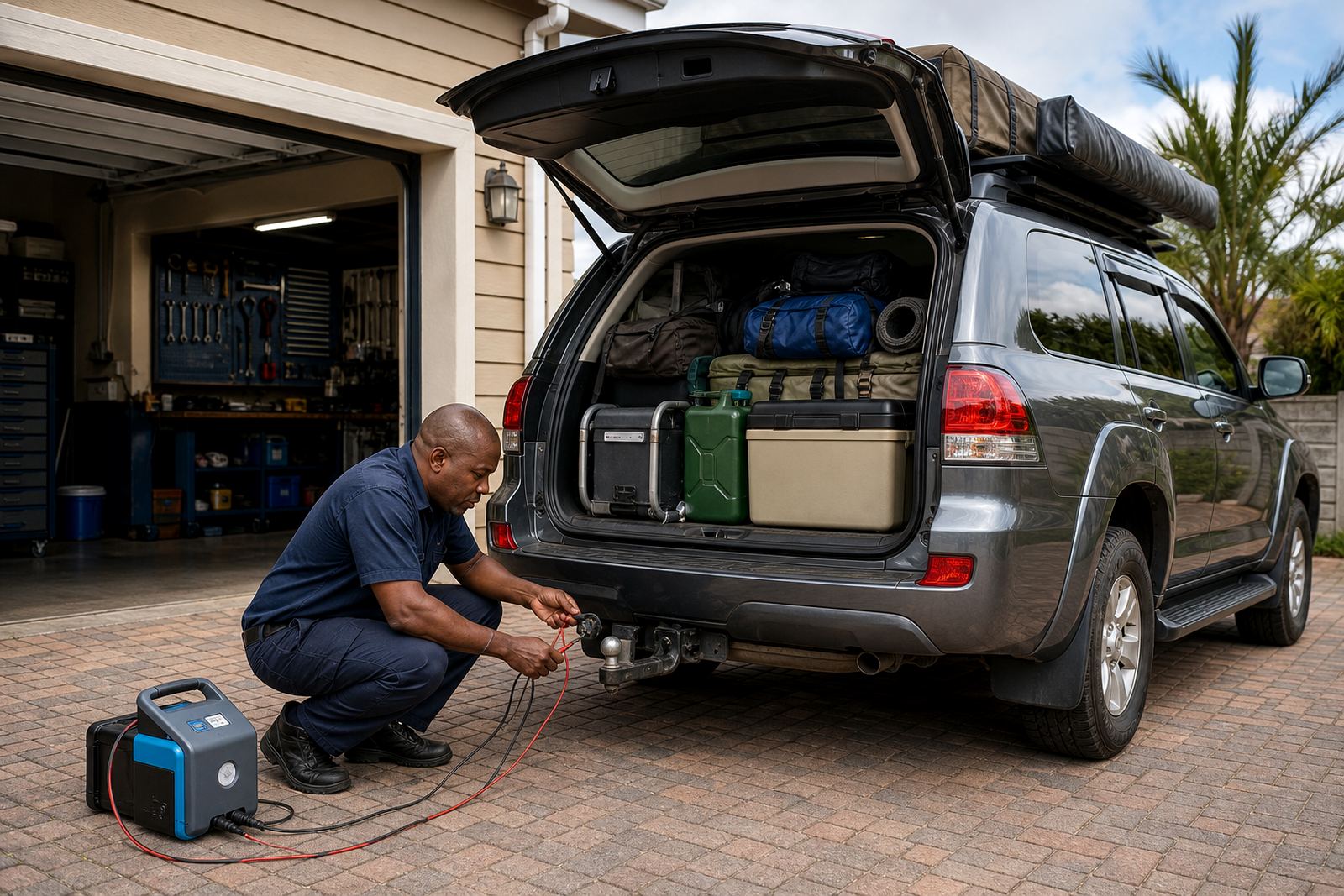
In Cape Town and along the coast, moisture and road grime can work into plugs and earth points faster than many owners expect. Vehicles that spend time near the harbour, in Bellville industrial areas or on longer runs to Paarl can pick up wear in different ways. Trailer wiring is another common trouble spot, especially when extra lights or accessories were fitted without proper protection.
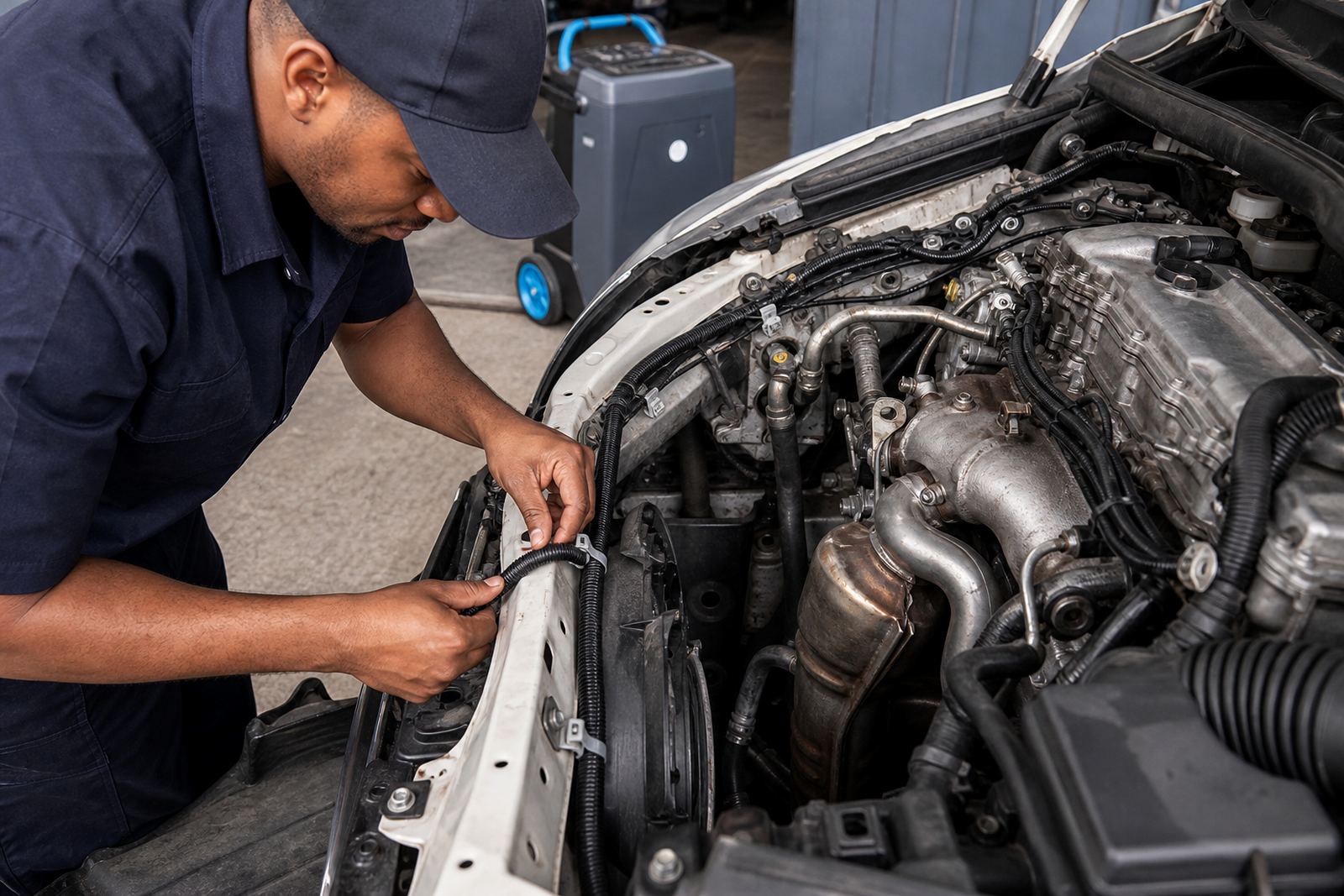
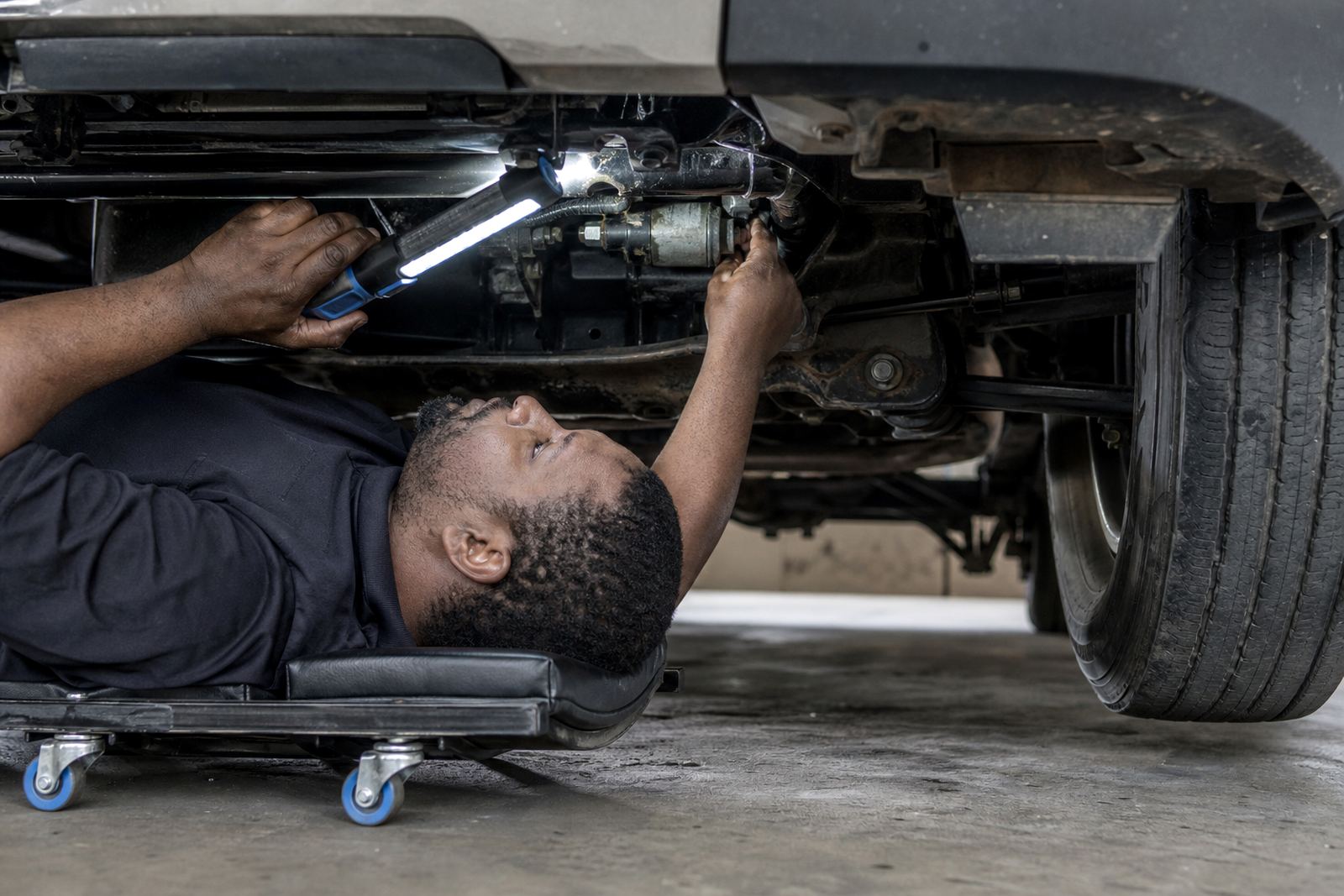
We often find trouble at the edges of the system rather than inside the module itself. That includes broken wires near hinge points, poor splices after accessory fitting, damaged insulation under the battery tray and corrosion inside connectors. A short circuit in one area can confuse several control units at once, which is why the fault pattern matters as much as the code list.
What a clean repair looks like in the workshop
Once the fault is found, the repair has to suit the vehicle and the duty it carries. Some jobs need a section of loom repaired and sealed, others need a connector rebuilt, a ground point cleaned or a fuse box trace restored. If the issue sits with a starter circuit, charging system or alternator control wire, the work has to be checked against the rest of the network so the fix does not create a new problem.
For fleet operators, a tidy repair means less repeat downtime and fewer call-outs for the same complaint. For private owners, it means the warning light is not just cleared, but the cause is dealt with. That is especially important on vehicles with extra accessories, trackers or trailer connections, where one poor join can affect several systems.
Local work spans from Montague Gardens through to Somerset West
A panel van based in Montague Gardens arrived with a battery that kept going flat and a cluster of warning messages that changed from day to day. The first scan showed several communication faults, but the battery test and charging output were the real clue. After tracing the loom, the issue turned out to be a damaged section near an accessory splice and a weak earth path at the body.
Once the wiring was repaired and the ground point restored, the module network settled down and the false codes stopped returning. That sort of job is common across Cape Town, Bellville, Milnerton and Somerset West because modern vehicles depend on communication as much as mechanical parts. When the wiring is sound, the rest of the diagnostics becomes much easier to trust.
When the bus check should sit beside the rest of the electrical test
CAN bus basics are useful, but they work best inside a full electrical diagnosis. A vehicle can have a starter fault, an alternator problem or an earth issue that looks like a network complaint until the numbers are checked properly. The same applies after accessory fitting, tracker installation or trailer wiring work.
- Scan the system before and after repair work
- Confirm battery condition and charging output
- Check earths, fuses and supply feeds first
- Look at live data instead of codes alone
- Test the vehicle under load, not just at idle
At V-Auto in Montague Gardens, the aim is to separate a communication fault from a power supply fault, because those two problems often sit close together. That approach keeps the diagnosis practical and the repair focused on the wire, the connection or the module path that actually caused the issue.