

The click that starts the guessing
A single sharp click when you turn the key is one of the most common starter failure clues, but it does not point to one part on its own. The solenoid may be trying to engage, the battery may be weak under load, or a high resistance joint can be stealing current before the starter gets enough power.
In Montague Gardens we see this on bakkies, family cars and fleet vans that have done a lot of short trips. The driver hears the click, maybe the dash lights dip, then nothing happens. That pattern is useful because it tells the technician to test the starter circuit from the battery through to the motor, not just replace the battery and hope for the best.
- One click can mean low voltage at the starter motor.
- Rapid clicking often points to poor battery condition or bad connections.
- Silence after key turn can mean a relay fault, ignition switch issue or open circuit.
- A heavy clunk with no crank can suggest a seized starter or mechanical binding.
No-crank symptoms that do not match a dead battery
Some vehicles show full dashboard power, lights on, radio working, yet the engine does not turn. That is where battery voltage alone can mislead you. A battery can sit at a fair reading and still fail under starter load, while a corroded earth strap or loose terminal drops the available current the moment the starter is asked to work.
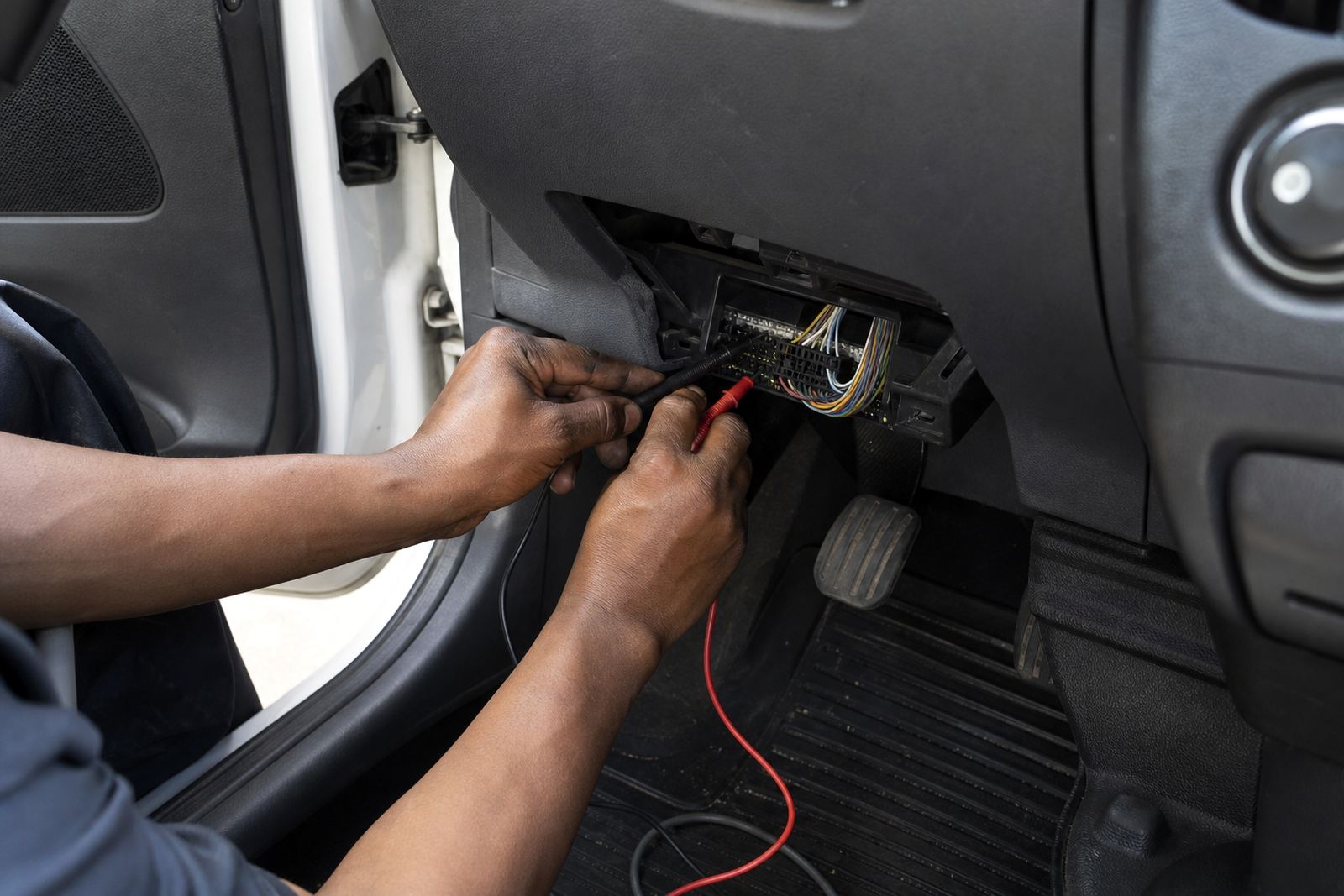
A proper test looks at battery state, cranking voltage drop, starter draw and the condition of the main cables. If there is excessive resistance in the positive feed or earth return, the starter may only receive part of the current it needs. On modern vehicles the same symptom can also appear when a control signal is weak through the ignition switch, relay or immobiliser related circuit.
- Check for heated battery terminals after failed starts.
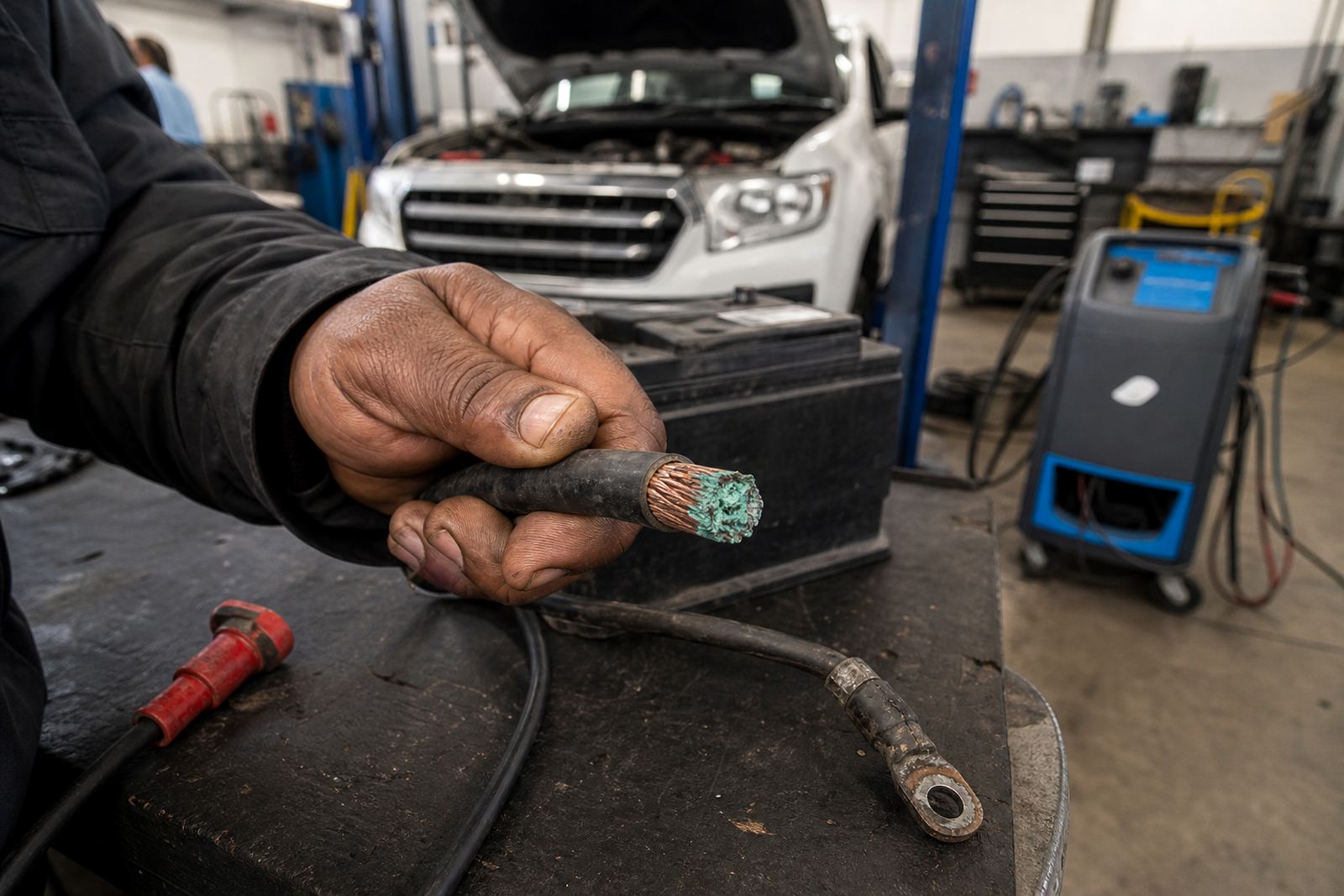
- Look for green corrosion on cable ends and fuse box links.
- Inspect the earth strap from body to engine, not only the battery clamp.
- Test both the control side and the heavy current side of the circuit.
Intermittent starts usually point to heat, wear or connection loss
An intermittent starter fault can be more frustrating than a complete failure because the car may start perfectly for days, then refuse to crank when the client is late for work. This is often where worn brushes inside the starter, a tired solenoid, or a cable joint that opens when warm will show up. Sometimes the motor works cold in the morning and refuses after a stop at the shops.
Heat soak matters. A starter tucked close to the engine can develop internal wear that only shows up once the unit is hot. On some vehicles the fault is in the wiring and not the motor at all, with a fractured conductor or loose terminal inside the loom. Vibration on rough roads around Bellville and Paarl can make that kind of fault appear and disappear without warning.
- Starts improve after a tap on the starter housing can signal worn internal parts.
- Failure only when hot often calls for bench testing and current draw checks.
- Random no-crank moments can come from loose earth points or relay contacts.
- Repeated jump starts can mask the real fault and create more damage.
What our workshop checks before parts are replaced
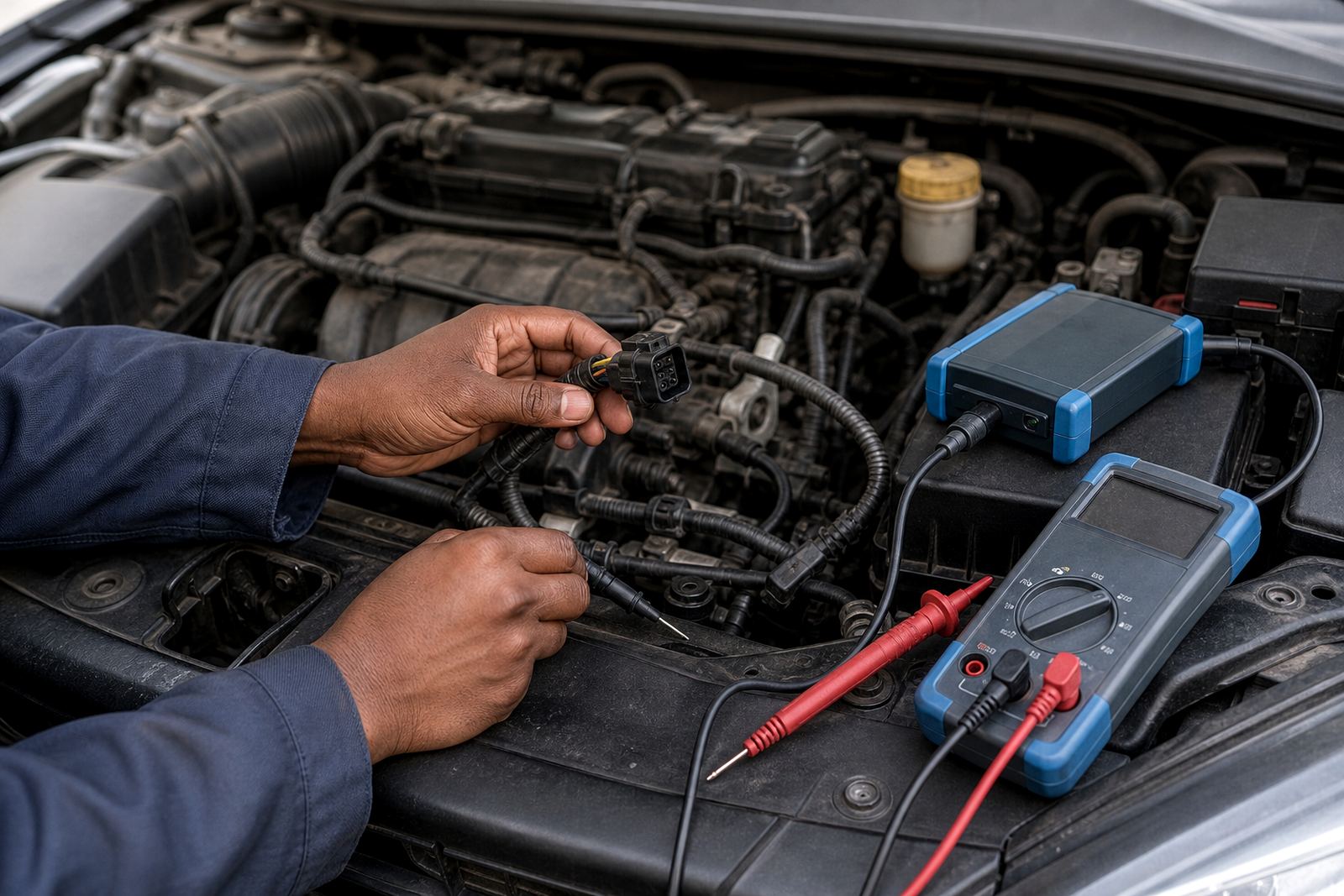
Measure first, then decide on parts. At our workshop we trace the power feed, control signal and earth path, then compare the readings against the symptoms the driver reported. That process matters because a weak battery, a damaged alternator output or a parasitic drain can create starter complaints that sound the same from the driver seat.
We also inspect related systems where needed. Charging system faults can leave the battery undercharged, and a battery drain overnight can make the next start fail even when the starter is fine. On vehicles with more electronics, CAN bus related issues and relay control problems can interrupt the start request. The job is to separate the starter motor fault from the circuit fault before any major part is swapped.
- Battery load test and terminal inspection.
- Voltage drop testing on positive and earth sides.
- Starter current draw check during crank attempt.
- Relay, fuse box and ignition signal verification.
- Wiring inspection for heat damage, rub-through and loose joins.
Montague Gardens fleet yard call-out
A delivery fleet in Montague Gardens called after two vans began showing the same pattern: dash lights came on, a click followed, then no crank. The battery readings looked acceptable at rest, which is why the problem had been narrowed down to the starters too early. On site we found poor earth continuity at one vehicle and a high resistance connection at the starter feed on the other.
Both faults produced the same driver complaint, but the causes were different. After cleaning the earth point, repairing the damaged section of cable and checking the charging output, the vans were back to normal starting behaviour. That kind of job saves time for fleet operators because one symptom can hide several possible faults across different vehicles.
Private owners see the same issue after a wet weekend, a long period of short trips or a trailer wiring fault that has been left unchecked. In coastal air, connectors and earth points can pick up corrosion faster than many drivers expect, especially when a vehicle is parked near the sea or used for daily stop-start running around Cape Town.
Starter repair
Starter failures are often blamed on the battery because that is the easiest part to test in the driveway. But clicks, no-crank symptoms and intermittent starts need proper starter circuit testing if you want a useful answer. The right test sequence can show whether the trouble sits in the battery, the charging system, the wiring, the relay path or the starter itself.
For owners in Cape Town, Milnerton, Somerset West, Brackenfell, Durbanville and Paarl, that matters when the vehicle has to get back into daily use without repeated breakdowns. A careful diagnosis gives the workshop a clear path: repair the cable, service the starter, fix the earth fault or trace the control side fault before it grows into a bigger electrical issue.
Where the complaint is mixed with tracker work, accessory rewiring or trailer wiring, the test still starts with the starter circuit and the battery condition. Once the electrical basics are correct, the rest of the vehicle tends to behave in a much more predictable way.