
Small faults that turn into roadside delays
Before a long run, the electrical system works harder than most drivers realise. Cold starts, short city trips, extra lights, a trailer plug and the steady draw from alarms or trackers all ask the battery and charging system to keep up.
In Montague Gardens we see plenty of vehicles that drive perfectly for the school run or the commute into town, then struggle once they are loaded for travel. A weak battery may still crank on a mild morning, while a worn alternator can hide under normal use and only show trouble after hours on the road.
- Slow cranking when the engine has been standing overnight
- Dim lamps at idle or flicker when revs rise
- Warning lamps that appear and disappear without a clear pattern
- Accessories that lose power when more than one item is switched on
What a proper pre trip check looks at
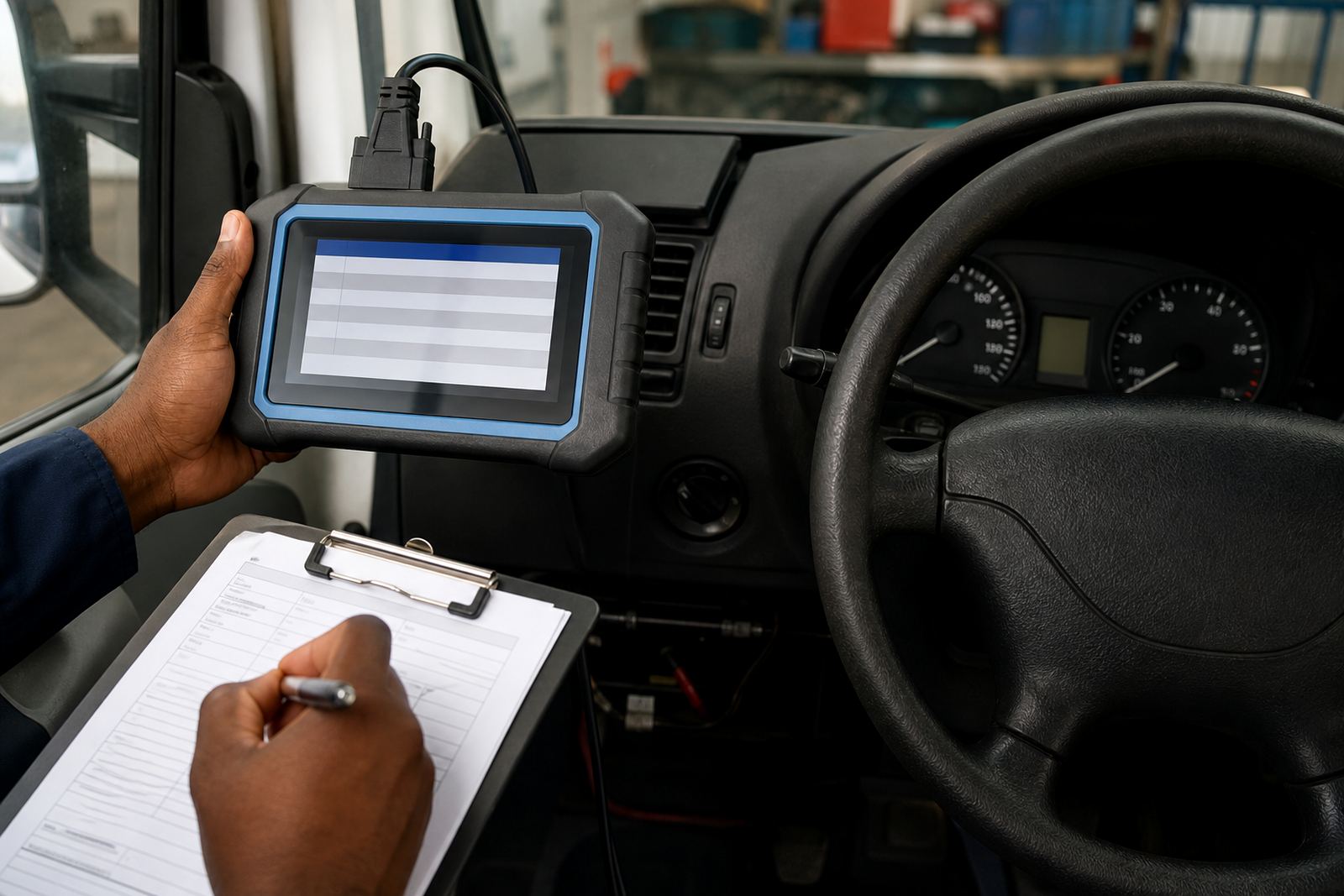
A useful check goes beyond a quick glance at the battery terminals. Technicians read fault codes, look at live data from the charging system and test the battery under load so the real condition shows up, not just the surface voltage.
We also look for parasitic drain, loose earths, heat damage at connectors and tired wiring around the fuse box. If a vehicle tows or carries added accessories, the trailer plug and any added circuits need attention too, because those areas are common trouble spots on older and newer vehicles alike.
- OBD fault code scan and live data review
- Battery condition and charging voltage test
- Starter draw and cranking speed check
- Earth fault inspection and wiring continuity testing
- Trailer socket and accessory circuit inspection
Why short trips around Cape Town can hide trouble
Vehicles that spend most of their time on short runs around Bellville, Milnerton or Somerset West often never get a full charging cycle. The battery then lives in a half charged state and starts to lose capacity long before the driver expects it.
That is common on family vehicles, delivery vans and pool cars that idle in traffic, make stop start trips, then sit overnight. The same pattern can also mask charging faults because the vehicle may seem fine until a longer trip asks for steady output over many hours.
When a battery is weak, the symptoms can spread into other systems. A low supply can trigger odd dashboard lights, strange central locking behaviour or intermittent faults on controls that rely on stable voltage.
Trailer wiring deserves its own check
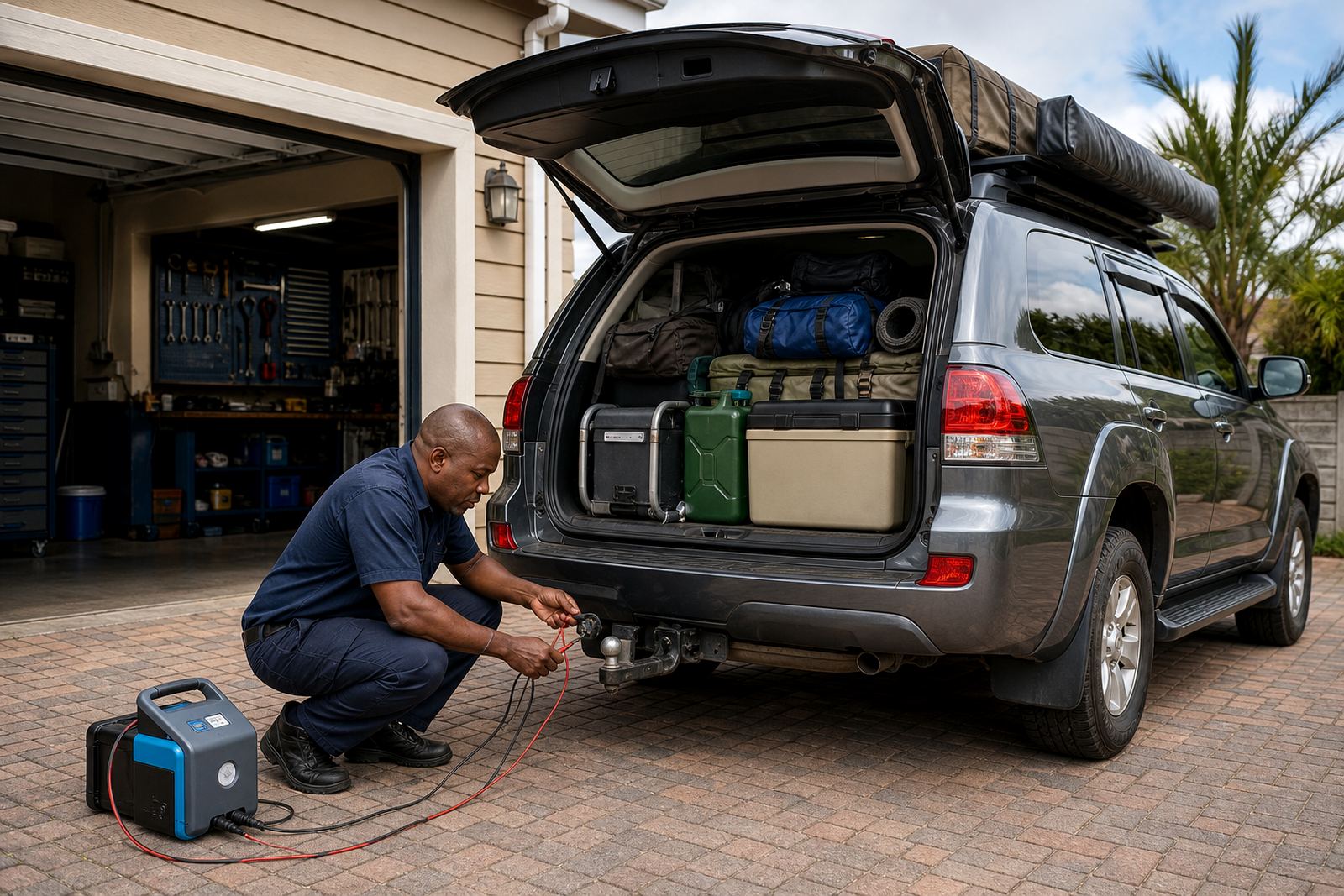
Trailer faults are easy to overlook until the lights fail at night or a fuse blows at the wrong moment. Corrosion inside the plug, damaged cable insulation near the towbar and poor earth connections all cause problems that do not always show up in town driving.
For holiday travel, caravan use or work trailers, we check the socket, the wiring route and the quality of the earth return. If the vehicle carries added lighting or a tracker, those circuits should be neat and correctly fused so they do not interfere with the main harness.
- Brake, tail and indicator light function at the trailer socket
- Earth connection at towbar and chassis points
- Signs of heat, green corrosion or moisture entry
- Fuse protection and added wiring neatness
When live data tells a different story
Some electrical faults do not leave a dramatic sign. The engine may start, the battery may test near normal and yet the alternator output, battery charge rate or system voltage may drift outside the useful range while driving.
Live data helps separate a real charging fault from a false alarm on the dash. It also helps with CAN bus related checks where several modules share information and one weak feed can create several confusing symptoms. That matters on modern vehicles where one poor connection can affect more than one circuit.
In practice, this means the workshop can trace whether the issue sits at the battery, the alternator, the starter circuit or a wiring path between modules. The fault may be simple, but the diagnosis needs electrical testing.
Paarl pre-trip electrical check
A family from Paarl booked a check before a coastal holiday run. The vehicle started well in the yard, but the battery test showed low reserve and the charging output dipped when lights, demister and air conditioning were switched on together. The trailer socket also had a weak earth, which explained the flickering rear lamps.
After the battery and charging issue were corrected, and the trailer wiring cleaned up, the car left with a steadier electrical base for the trip. That kind of job is common before December travel, school breaks and business runs to outlying towns, where a small fault becomes a bigger story far from home.
What to check before the keys leave the house
A quick walk around the vehicle can catch the easy signs before a workshop visit. If you spot one or more of these, it is worth booking a proper electrical inspection before the trip starts.
- Headlights or tail lights are dull, uneven or flicker at idle
- The engine cranks slowly after standing overnight
- Accessories cut out when other items are switched on
- The battery warning light has appeared recently
- The trailer lamps behave erratically or a fuse keeps failing
Our workshop in Montague Gardens handles diagnostics, wiring repairs, starter repairs, alternator repairs and battery drain faults for private owners and fleets across Cape Town, Bellville, Milnerton, Somerset West, Paarl and surrounding areas. For booking details, use our contact form.