When a small break can stay a small repair
A clean repair works when the damaged section is localised, the copper is still sound and the surrounding insulation has not turned brittle. That is common on rubbed-through starter trigger wires, damaged trailer plugs, pinched accessory feeds and loose earth points where the fault sits in one spot rather than through the full loom.
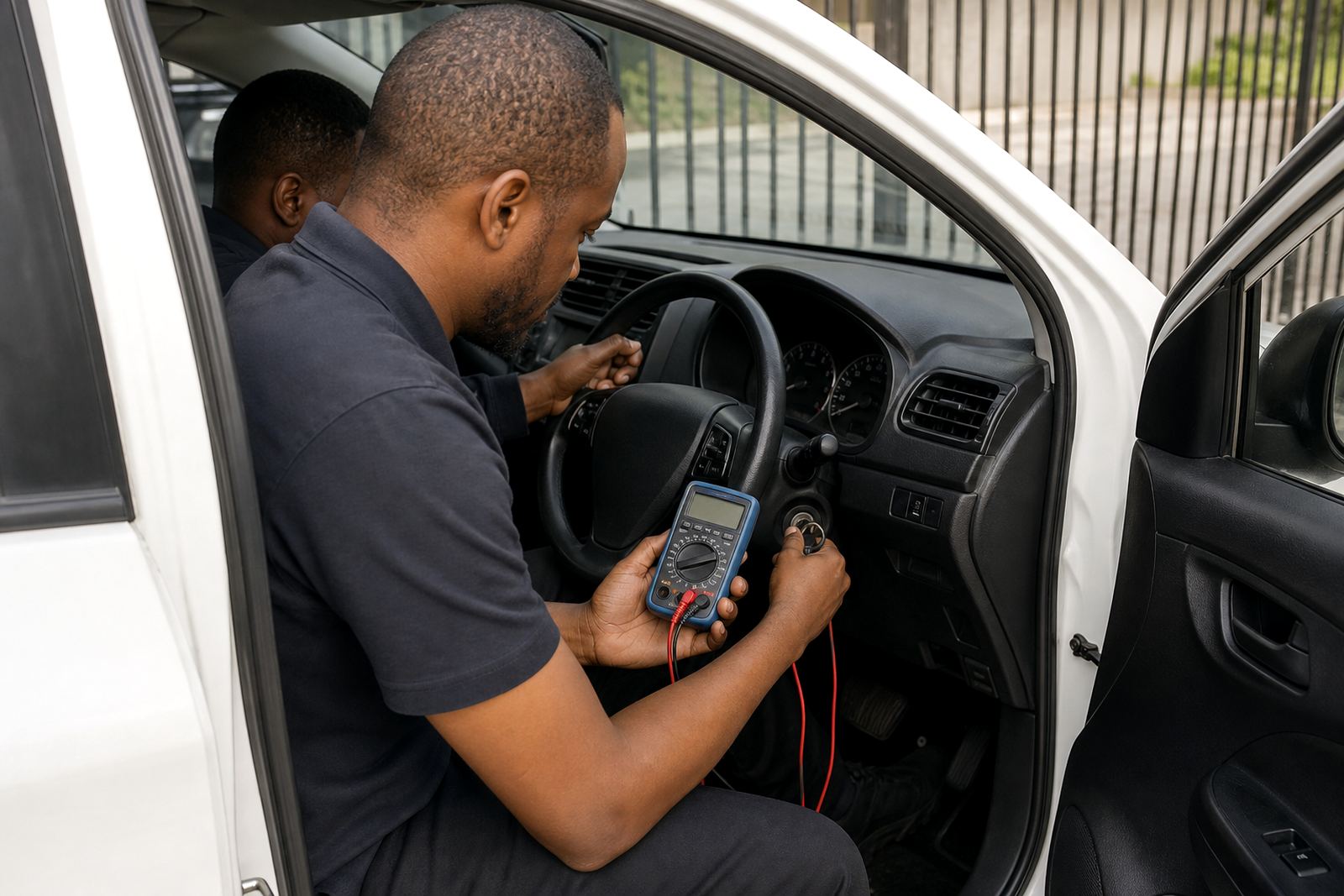
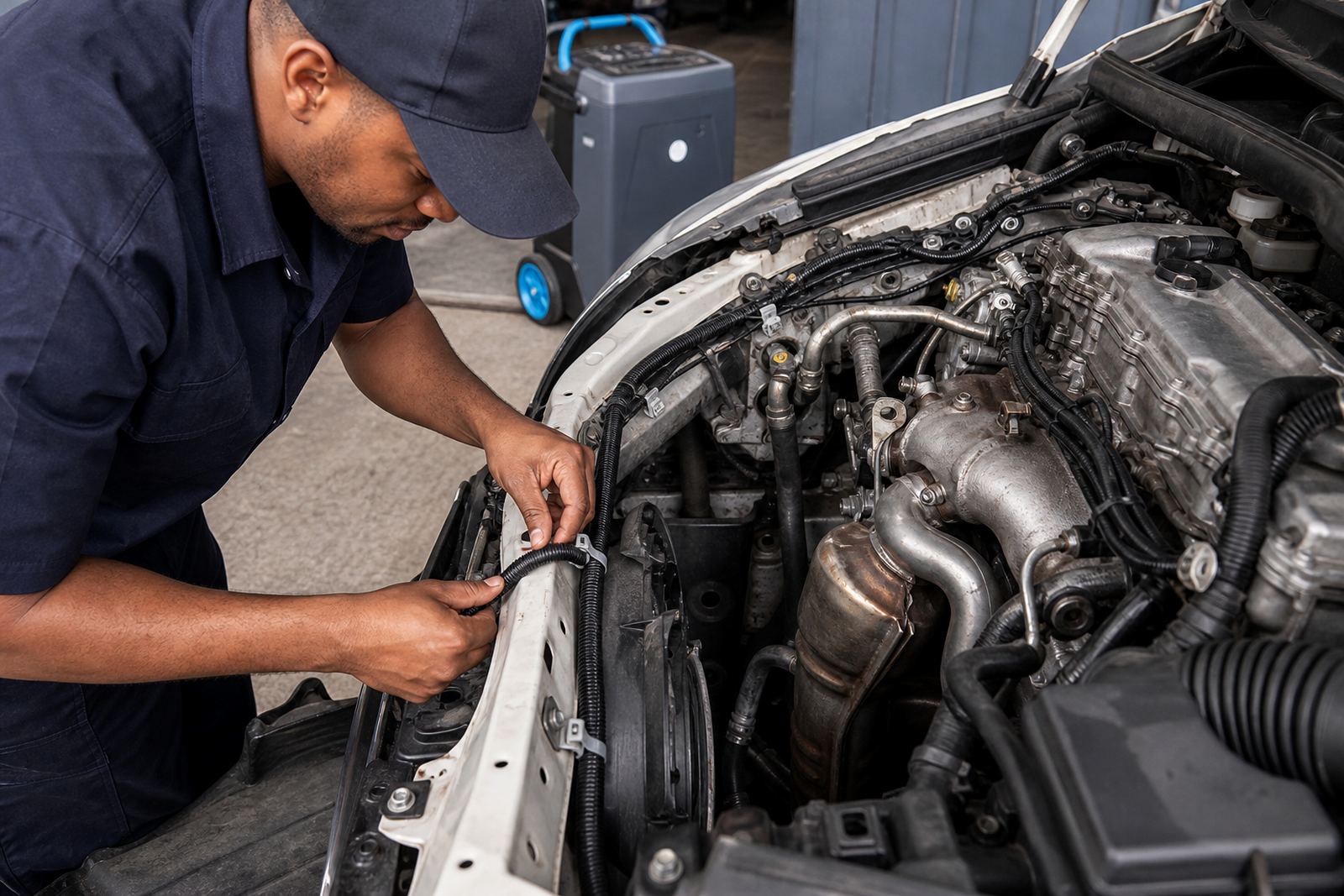
We open the circuit, check continuity, voltage drop and current flow, then trace where the problem started. If the wire has only suffered one nick or a short stretch of heat damage, a proper splice, heat shrink and re-looming can put it right without stripping the whole harness.
Where a full rewire makes more sense
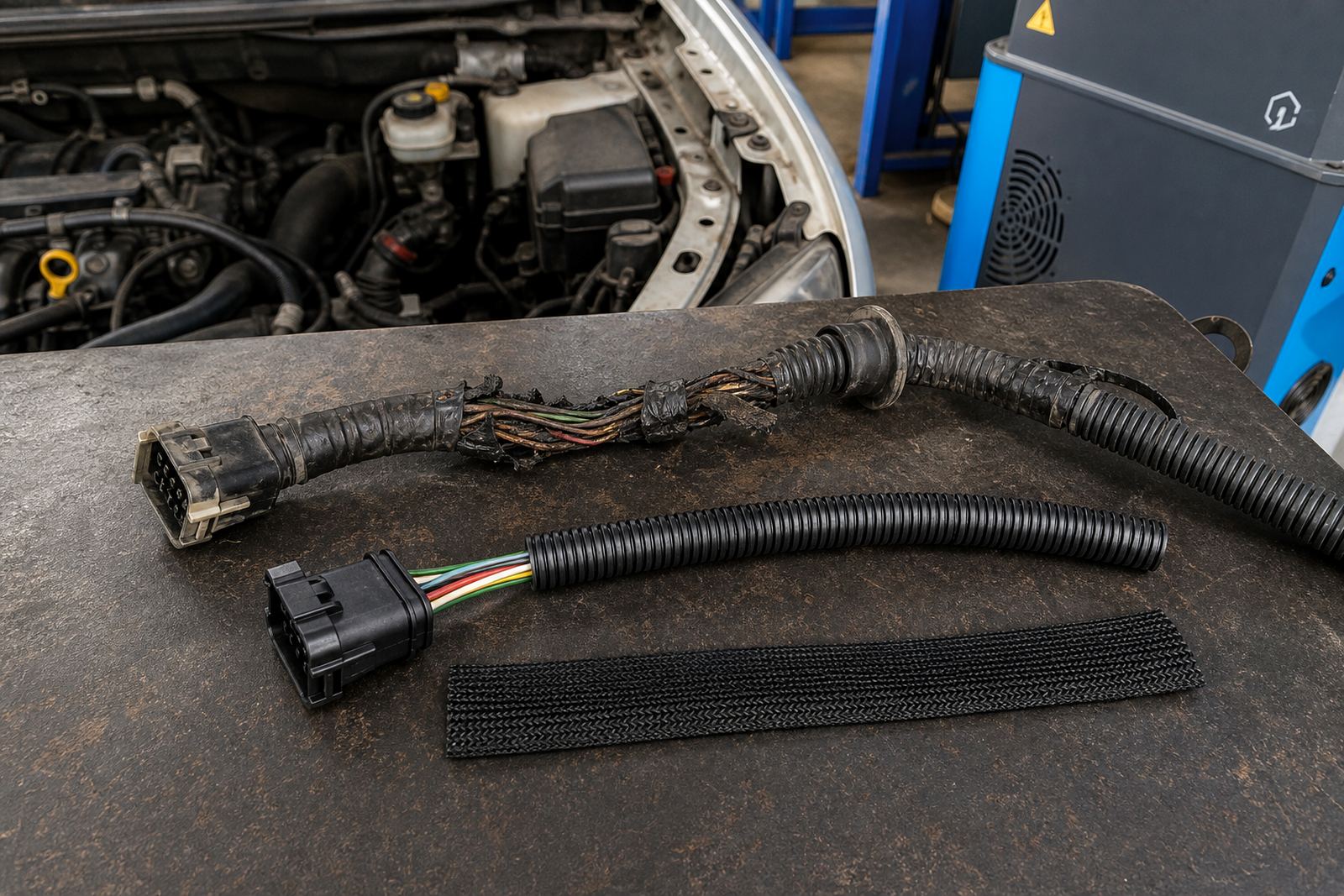
Some looms have too many previous patches, corroded joints or heat-damaged branches to trust with another local repair. That happens on vehicles that have lived through repeated battery issues, poor earths, water ingress, alarm fitment work or rough accessory installs that left the harness cluttered and brittle.
In those cases, a partial or full rewire is often the cleaner choice. It gives us a fresh path for the affected circuit, a neater layout around moving parts and fewer hidden joins for the next fault to hide in.
- Insulation that cracks when touched
- Wire damage spread across several branches
- Corrosion inside connectors and junctions
- Heat marks near exhausts or turbo piping
- Repeated faults after earlier patch repairs
The tests that point us in the right direction
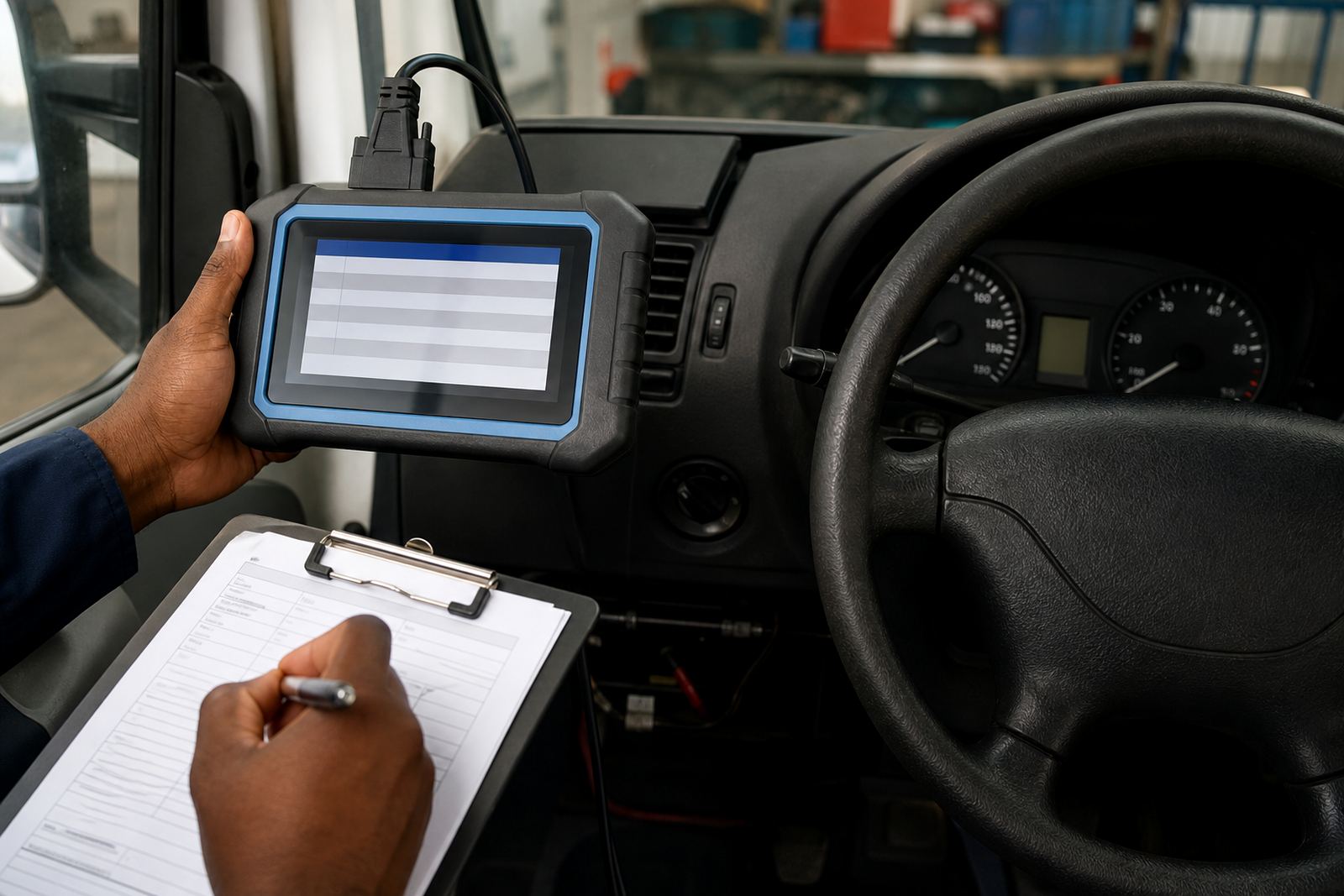
Vehicle electrics need more than a quick look. We read fault codes, watch live data, test battery condition, check charging output and measure parasitic drain before touching the loom, because a flat battery or weak alternator can mimic a wiring fault and waste time if it is treated as the main issue.
Once the basic health checks are done, we move through the circuit from power supply to load and back to earth. That approach helps with starter circuits, alternator feeds, fuse box faults, CAN bus communication issues and lighting problems that only show up under vibration or load.
- OBD fault code reading and basic network checks
- Battery and charging system testing
- Parasitic drain measurements with the vehicle asleep
- Earth fault tracing and voltage drop testing
- Starter circuit and alternator circuit diagnosis
Montague Gardens work that still has to suit the road
Our workshop in Montague Gardens handles repairs for private vehicles, work bakkies and fleets that spend time on Cape Town roads, the N7 and the routes out to Bellville, Milnerton, Somerset West and Paarl. We also do mobile call-outs where the vehicle cannot be moved safely or the job makes more sense on site.
A delivery van with a failing trailer plug is a good example. If the fault is a single broken feed at the rear cross member, a neat repair is usually enough. If the loom has rubbed through along a sharp bracket, or the joints have already been patched several times, replacing that section saves future downtime and makes the fault easier to trace later.
Tracker and accessory fitting needs tidy wiring
Tracker units, driving lights, radios, cameras and other accessories should be added with proper fused feeds, sound earth points and routing that keeps the harness away from heat, moisture and moving parts. A hurried fit can create parasitic drain, false warnings or CAN bus interference that becomes harder to sort out than the accessory was worth.
We keep new wiring separate where it should be separate, and we repair the original loom where the vehicle still needs the factory circuit intact. That matters on modern vehicles with multiple control modules, because one bad join near a data line can create symptoms that look like several faults at once.
How the repair choice is made on the day
The right call depends on the condition of the loom, the vehicle’s age, how the fault started and whether the circuit has already been altered by another shop. We look at access, connector condition, wire gauge, heat exposure and whether the damaged section sits in a high movement area such as the bonnet hinge, tailgate, door loom or trailer harness.
Our aim is not to replace what can still be repaired neatly, and not to patch what should really be rebuilt. That balance keeps the electrical work clean, reduces repeat faults and leaves the vehicle easier to service the next time a warning light or dead circuit turns up.
- Local damage can usually be repaired neatly
- Repeated faults often point to deeper loom trouble
- Battery and charging tests help separate cause from symptom
- Good wiring work should be orderly and easy to inspect