

OBD codes are clues, not verdicts
An OBD code is a stored message from the vehicle control system. It tells a technician which circuit, sensor or function has moved outside its expected range. That helps, but on its own it does not show the whole picture.
A code can point to a failed part, yet it can also show up because of low battery voltage, a loose connector, corrosion in a plug, a wiring break, or a fault somewhere else in the circuit. A dashboard warning light may look decisive, but the vehicle is usually reporting a symptom rather than naming the real fault.
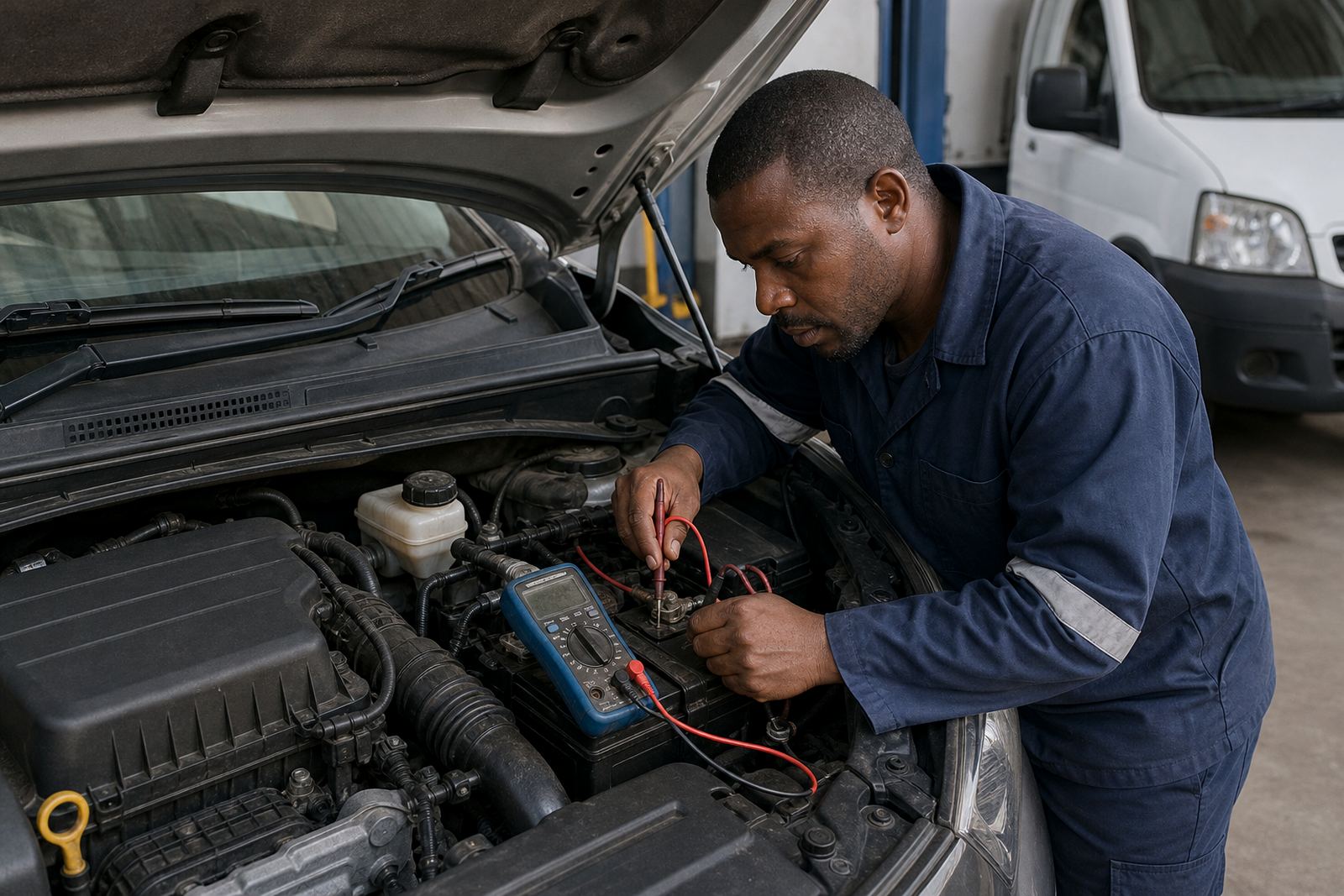
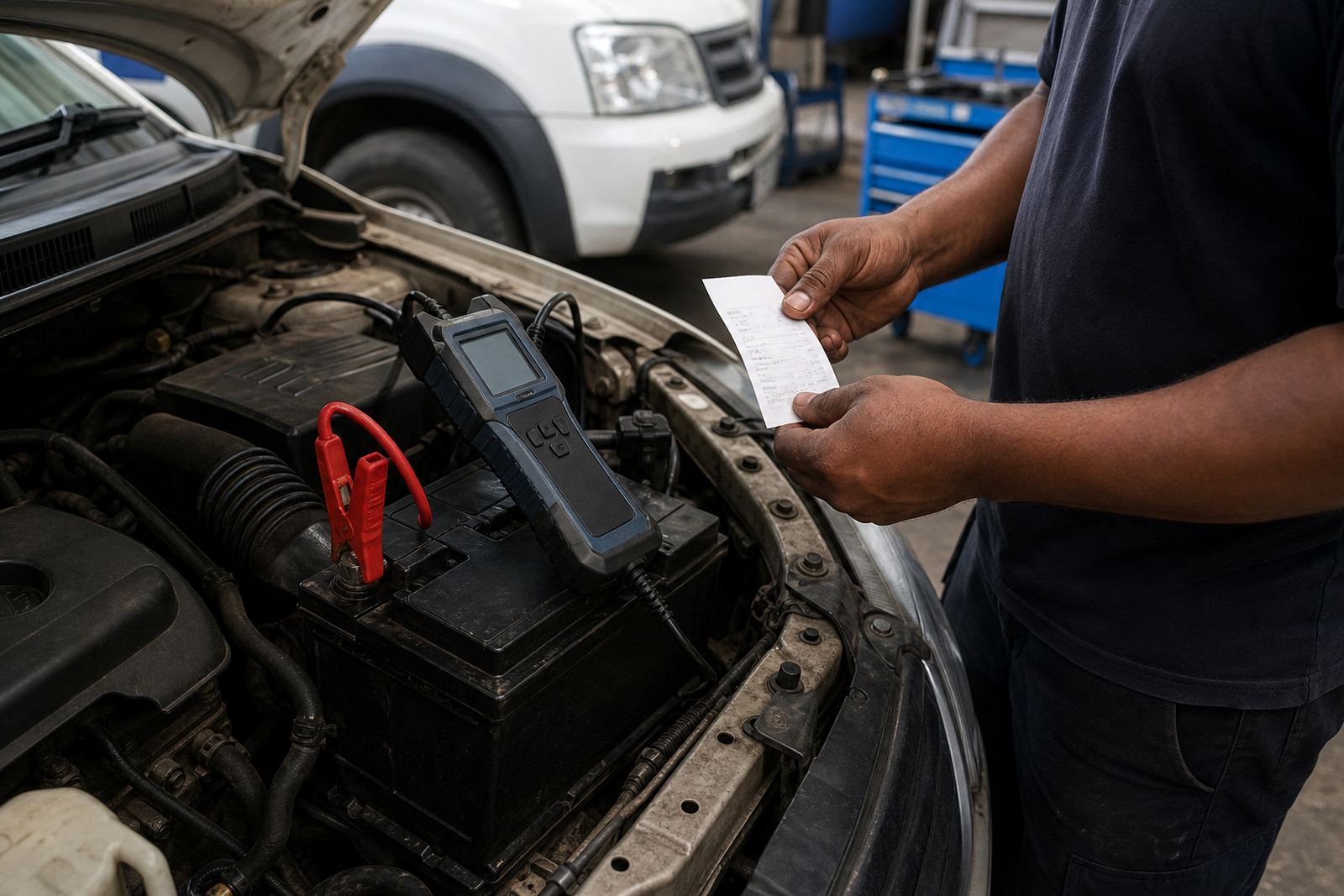
That is why a proper diagnosis starts with the code, then moves into testing. A scanner shows the stored information, while a multimeter, battery tester and wiring checks help separate the cause from the result.
Why the same code can mean different jobs
Two vehicles can show the same code and need very different repairs. One may have a weak alternator output, another may have a damaged earth wire, and another may simply have a battery that is no longer holding charge properly. The code stays the same, but the repair path changes.
- A charging fault code can follow a slipping belt, a worn alternator, or a corroded terminal.
- An oxygen sensor code may come from wiring damage, exhaust leaks or power supply issues.
- A misfire code can be linked to ignition, fuel delivery, battery voltage or wiring noise.
- A communication code can appear when a CAN bus signal is disturbed by bad connections or water ingress.
That is why fault codes should never be treated as a parts list. The code narrows the search, then live readings and hands on checks decide what needs repair.
What the scanner shows before anything is stripped down
When a vehicle arrives with a warning light, we start by reading the fault memory and checking live data. Live data shows what the vehicle is seeing in real time, which helps to explain whether a sensor is reading too high, too low, or changing in a way that does not match the engine or electrical system.
Useful checks may include battery voltage, charging voltage, alternator output, starter draw, sensor signals, throttle position, temperature readings and communication between modules. If the numbers do not make sense, the scanner helps show where to test next.
- Stored codes show what happened before the vehicle arrived.
- Pending codes can show a fault that is still developing.
- Live data shows what the system is doing now.
- Freeze frame data can capture the conditions when the fault set.
That mix of information is often more useful than changing a part straight away.
The hidden faults behind a warning light
Many electrical faults sit outside the area named by the code. A battery drain can wake up a warning light because one module is staying alive when it should sleep. A starter circuit fault can create low cranking voltage and trigger several unrelated messages. A poor earth point can upset lights, central locking, instrumentation and engine management at the same time.
On a busy Cape Town fleet vehicle, a driver might see an engine light after a jump start or after repeated short trips. The code may point to low voltage, but the real fault might be a tired battery, an alternator not charging correctly, or a parasitic drain from an accessory wiring issue. That is why diagnosis has to move beyond the code number.
Wiring repairs often make the difference on older bakkies, delivery vans and passenger cars that work through damp, salt air and stop-start use. Connectors loosen, insulation cracks and earth points corrode. The fault code only records the effect.
How we narrow down the real cause
Once the fault memory is read, the next step is to test the circuit in pieces. We look at supply, earth, resistance, continuity and voltage drop. If a starter is slow, the battery may be fine but the cable or earth path may be poor. If an alternator code appears, the alternator may be healthy yet the control wire or fuse link may be broken.
It also saves time on repeat failures, because the repair addresses the weak point instead of the symptom. On modern vehicles, CAN bus faults can add another layer, since one disturbed module can affect several systems at once.
- Battery and charging tests show whether the supply is stable.
- Starter circuit checks show where cranking voltage is being lost.
- Earth fault checks reveal resistance where there should be a clean path.
- CAN bus fault checks help when multiple modules stop talking properly.
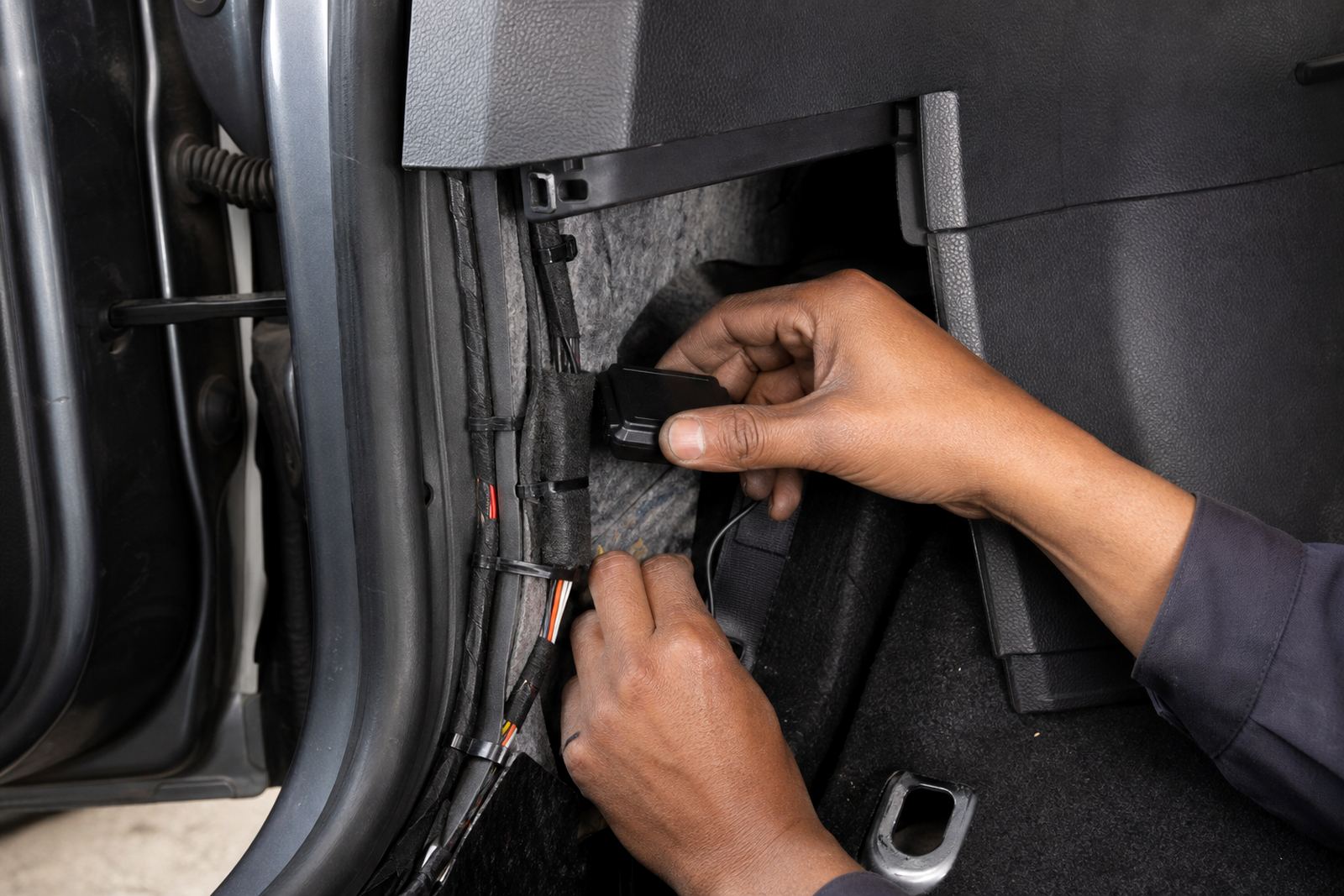
That process is practical on vehicles with accessories, trackers or trailer wiring too, because added equipment can share power and earth points with factory systems.
Bellville panel van with a charging code
A panel van from Bellville may arrive with a battery warning light and a starter that sounds tired. The scanner may store a charging code, but the alternator is not always the first part to blame. A technician might find a loose connection at the battery clamp, heat damage in a cable, or a parasitic drain from an added accessory installation.
In another case, a private vehicle from Milnerton may show an OBD code for a sensor fault after rain. The actual cause can be moisture in a connector, a damaged wire near the loom, or an earth point that has begun to corrode. The code is still useful, but only as the first marker on the map.
That is why local conditions matter. Coastal humidity, short trips, stop-start traffic and accessory fitments all shape the sort of electrical faults we see in Cape Town, Somerset West, Paarl and the surrounding areas.
What to do when a code appears
Do not clear the code and hope it disappears for good. If the warning light returns, the vehicle is telling you the fault is still there. It is better to note when the light came on, what the vehicle was doing at the time, and whether anything changed recently such as a battery replacement, jump start, tracker fitment or trailer wiring job.
Bring the vehicle in for proper testing before extra parts are fitted. That keeps the diagnosis focused and helps prevent repeat work. A code may point to the area, but the real repair often sits in a wire, connector, relay, earth path or charging component that needs proper inspection.
For fleet operators and private owners across Cape Town, Montague Gardens, Milnerton, Bellville, Somerset West, Paarl, Brackenfell and Durbanville, our contact form is the easiest way to share the fault details plus the vehicle make, model and symptoms before the diagnostic work begins.