When the key turns and the engine hesitates
A slow crank usually shows up as a long, laboured spin before the engine fires, or a click followed by a weak turn. In Cape Town workshops and on call-outs across Milnerton, Bellville and Somerset West, that symptom often starts with the battery but does not always end there. A vehicle can carry enough charge to power lights and radio yet still struggle under starter load.
The useful test is to look at the whole path: battery condition, terminal grip, cable resistance, earth return, starter draw and charging output once the engine runs. If one link in that chain is weak, the cranking speed drops and the fault may only show up on cold mornings or after short trips around town.
Battery condition is only the first clue
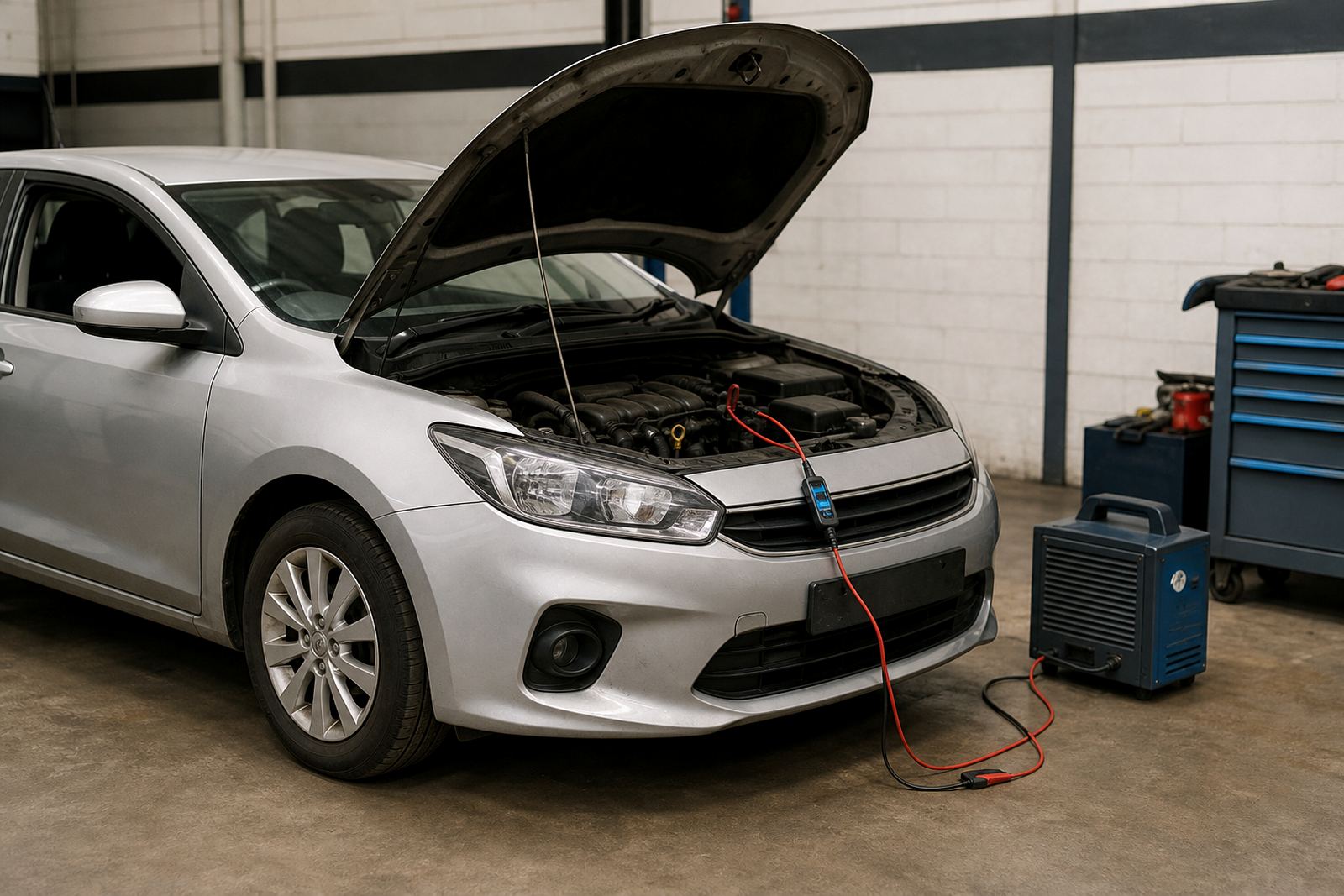
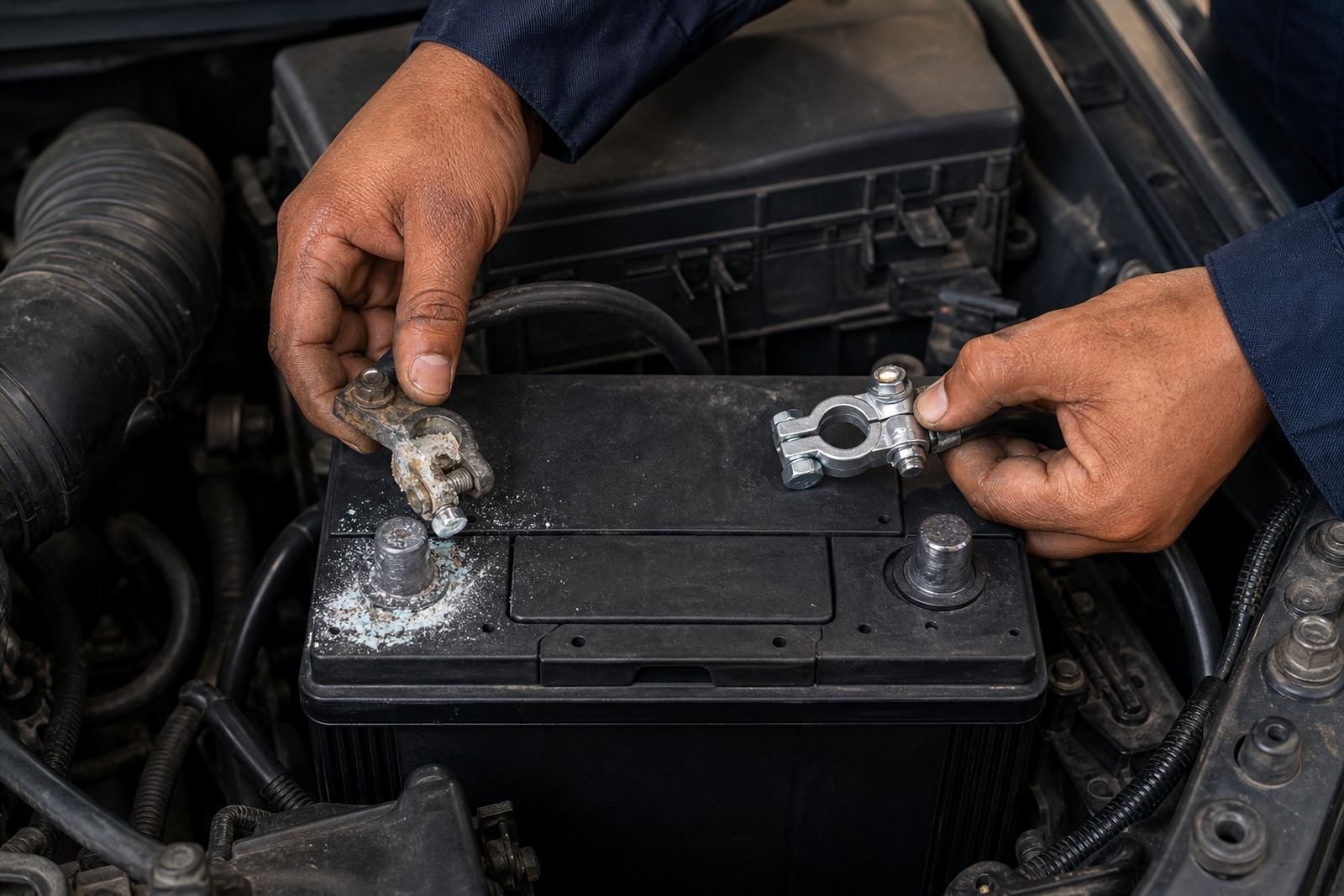
A weak battery is common, especially on vehicles that do short stop-start runs, sit for periods, or carry many accessory loads in daily use. But a battery that looks suspect can be made to seem worse by loose terminals or corrosion on the posts. We check the battery under load, not just at rest.
- Open-circuit voltage gives a quick first reading.
- Load testing shows whether the battery can hold up under demand.
- Charging checks confirm the alternator is doing its share.
- Terminal condition matters when the clamp grip is poor or oxidised.
A battery that passes a simple test can still drop too far when the starter is pulling current. That is why voltage under crank is more useful than the dashboard light or a quick jump start.
Cable loss and bad earths slow the starter down
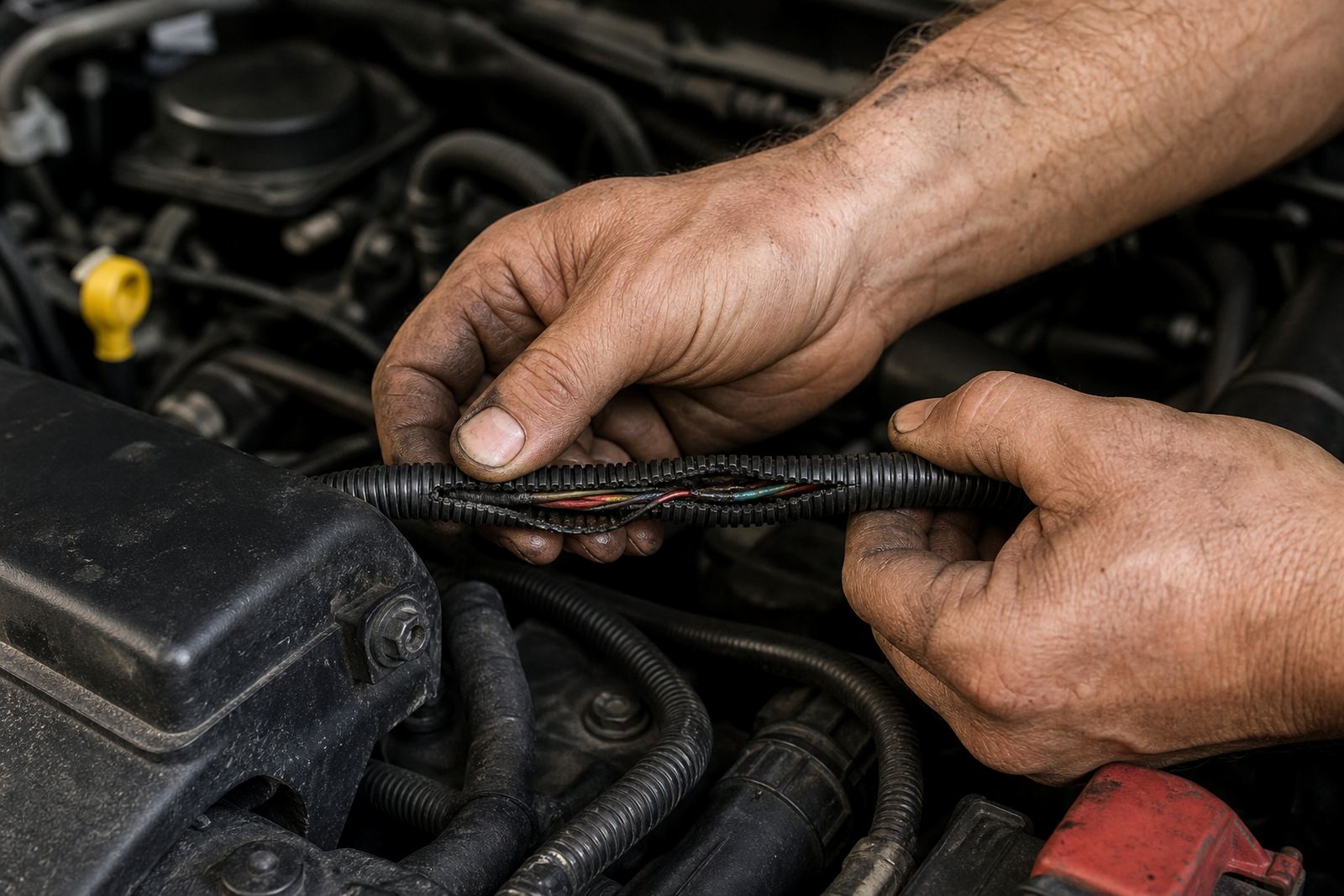
Old cable ends, poor crimps, loose lugs and corroded earth points can rob the starter of power before it even begins to turn. The starter motor then works harder for the same job, which makes the crank slower and the wiring warmer than it should be. On bakkies and fleet vehicles, this often shows up where vibration and weather have had years to work on the connections.
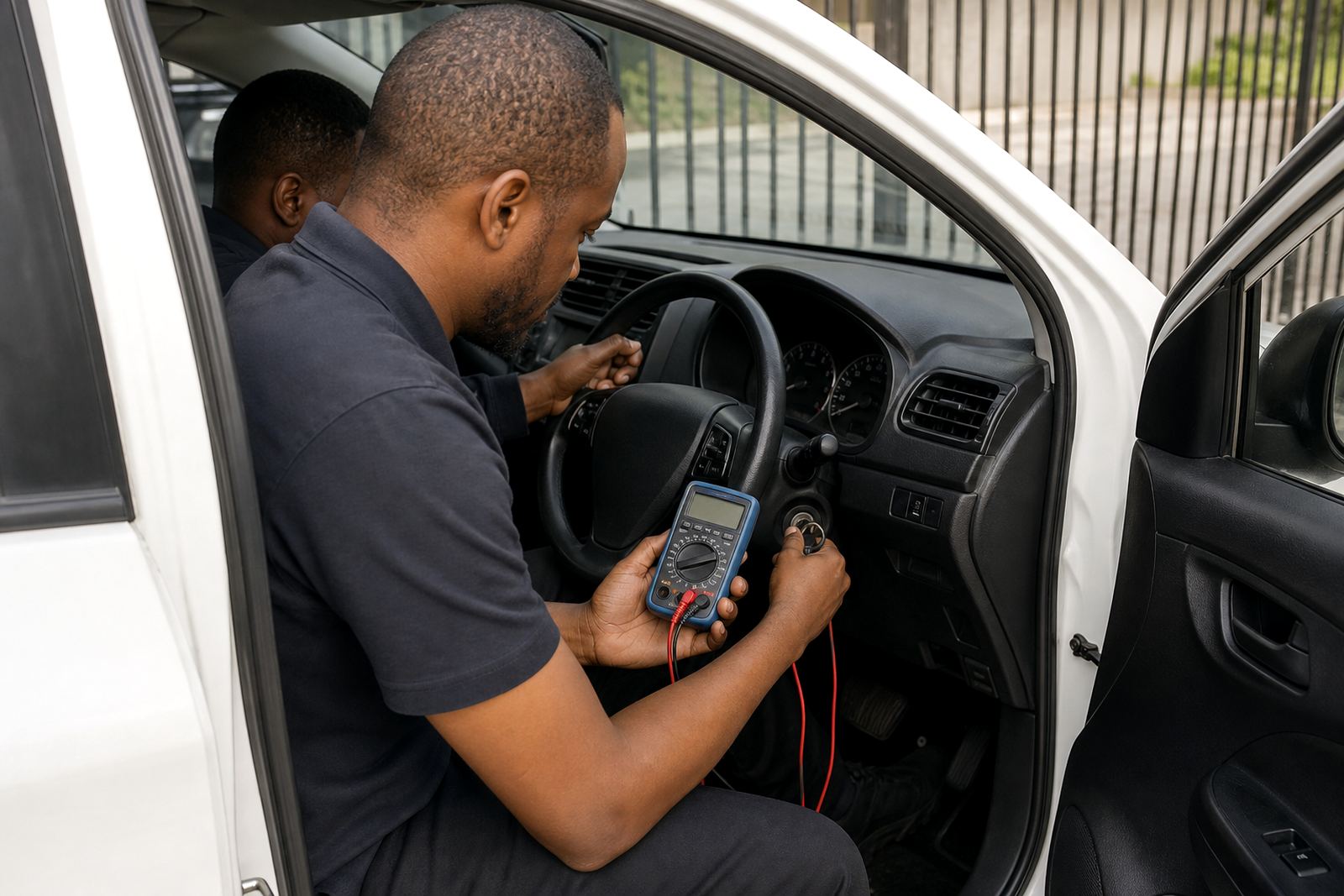
Earth faults are easy to miss because they do not always leave a clean break. The vehicle may still power accessories, then stumble when the starter asks for high current. A voltage drop test across the positive side and the earth side tells us where the loss sits, and that is better than replacing parts at random.
- Check battery-to-body and body-to-engine earth paths.
- Inspect starter feeds for heat damage or loose terminations.
- Look for green corrosion inside cable ends and junctions.
- Test for voltage drop while the starter is loaded.
Starters and alternators do not fail the same way
A tired starter can mimic a weak battery, especially when brushes are worn, the solenoid is sluggish, or the internal contacts have worn unevenly. The motor may draw too much current and still turn too slowly. In other cases the alternator is the real source of trouble because it charges poorly, leaves the battery underfed, and sets the stage for the next cold start to drag.
That is why starter repairs and alternator repairs often sit in the same diagnosis. A proper check looks at charging voltage, ripple, belt condition where relevant, and current draw during cranking. If the alternator is underperforming, the battery never really recovers. If the starter is dragging, the charging system gets blamed for a fault it did not create.
Modern wiring faults can hide behind a simple symptom
Newer vehicles can use control modules, CAN bus communication and smart charging logic, so a slow crank may be linked to more than one system. A fault in the starter circuit, an immobiliser-related inhibition, or a wiring issue in the control side can all affect the result. We read fault codes and live data to see whether the complaint is electrical, control related, or both.
On some vehicles the problem only appears after a tracker, accessory or trailer wiring job has been added without proper isolation or routing. A poor splice or a rubbed wire can create a parasitic drain that leaves the battery low by the next morning. That sort of fault is common enough to deserve a close look, especially in mixed fleet use around Paarl and Brackenfell.
A Montague Gardens case that looked like a battery problem
A delivery vehicle from the western side of Cape Town came in with a slow crank that showed up after overnight standing. The driver had already replaced the battery once, but the problem returned. The fault turned out to be a combination of worn starter brushes and a weak earth connection near the engine, so the starter was working against resistance every time the key was turned. Once both issues were corrected, the crank speed became steady again.
That kind of case is worth noting because a fresh battery does not cure poor wiring. In workshop terms, the symptom can sit in one part of the system while the cause sits somewhere else entirely. The shortest route is a proper test plan, not a parts lottery.
What a careful test should cover before parts are changed
If a vehicle arrives with slow cranking, the checks should follow the current path from battery to starter and back again. That includes the battery state, terminal condition, earth continuity, starter current draw, alternator output and any fault codes that may point to control-side interference. We also look for heat marks, loose fittings and signs of repeated jump-starting, because those leave clues in the wiring.
- Battery voltage at rest and under load.
- Starter current draw during crank.
- Voltage drop on positive and earth sides.
- Charging voltage after the engine starts.
- Fault codes and live data where modules are involved.
For vehicles used across Cape Town, Milnerton, Bellville, Somerset West or Paarl, the answer is often practical rather than dramatic. A slow crank is usually a measurable electrical fault, and once the numbers are checked the fix becomes clearer.