A battery rarely fails on its own
In the workshop, a flat battery is often the final symptom, not the first fault. A battery that keeps going flat may be hiding a charging issue, a parasitic drain, poor earth contact or a starter that is pulling too hard when the key turns.
Vehicles used around Montague Gardens, Milnerton and Bellville often do short runs, sit overnight, then get started for a quick school drop or a delivery round. That pattern leaves little room for a weak charging system to recover, and a battery that is already tired will show its age fast.
We test the full system, not only the battery. That means checking cranking voltage, charging output, live data where needed, and the cables and connections that carry current to the starter and alternator.
Loose terminals look small, but they change the whole story
A loose terminal can cause hard starting, warning lights and erratic electrical behaviour. The driver may only notice a slow crank one morning, then a dashboard that flashes for no clear reason on the next trip.
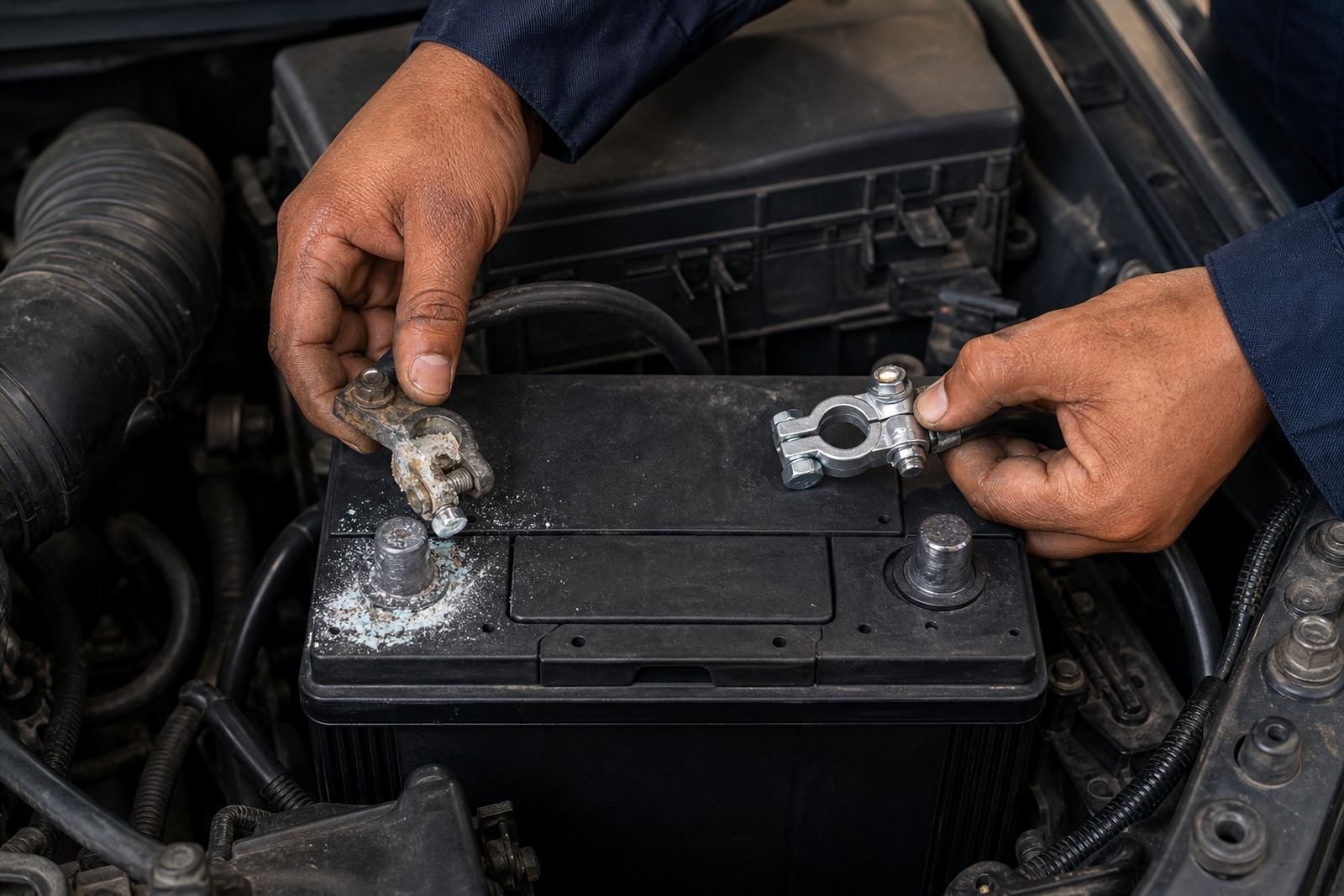
Corrosion between the clamp and post adds resistance. Old clamps lose grip, especially where the battery has been disturbed more than once or the clamp has been overtightened and cracked. Coastal air around Cape Town can make that wear show up sooner than owners expect.
- Check for movement at the terminal when the vehicle is off.
- Look for white or green corrosion around the posts and clamps.
- Inspect the cable ends for heat damage, swelling or frayed strands.
- Make sure the battery is secured firmly in its tray.
If the connection is poor, even a strong battery can struggle to deliver enough current to the starter. That is when people replace parts in the wrong order and miss the real fault.
Old clamps and tired cables waste good current
Battery clamps and cables age in quiet ways. The outside may look tidy while the inside has oxidised, stretched or begun to break. A cable can also look fine and still carry too much resistance for the load it has to handle.
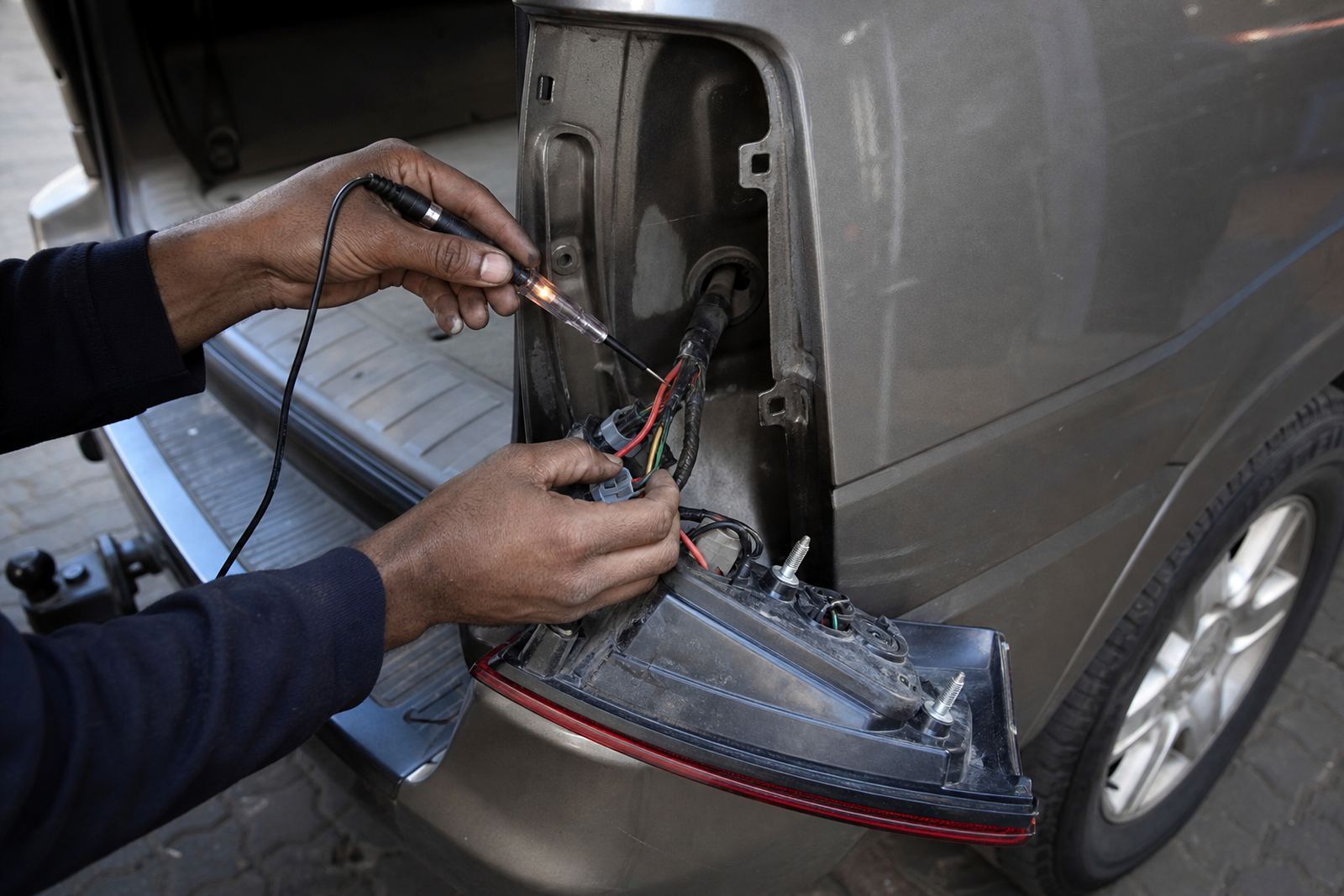
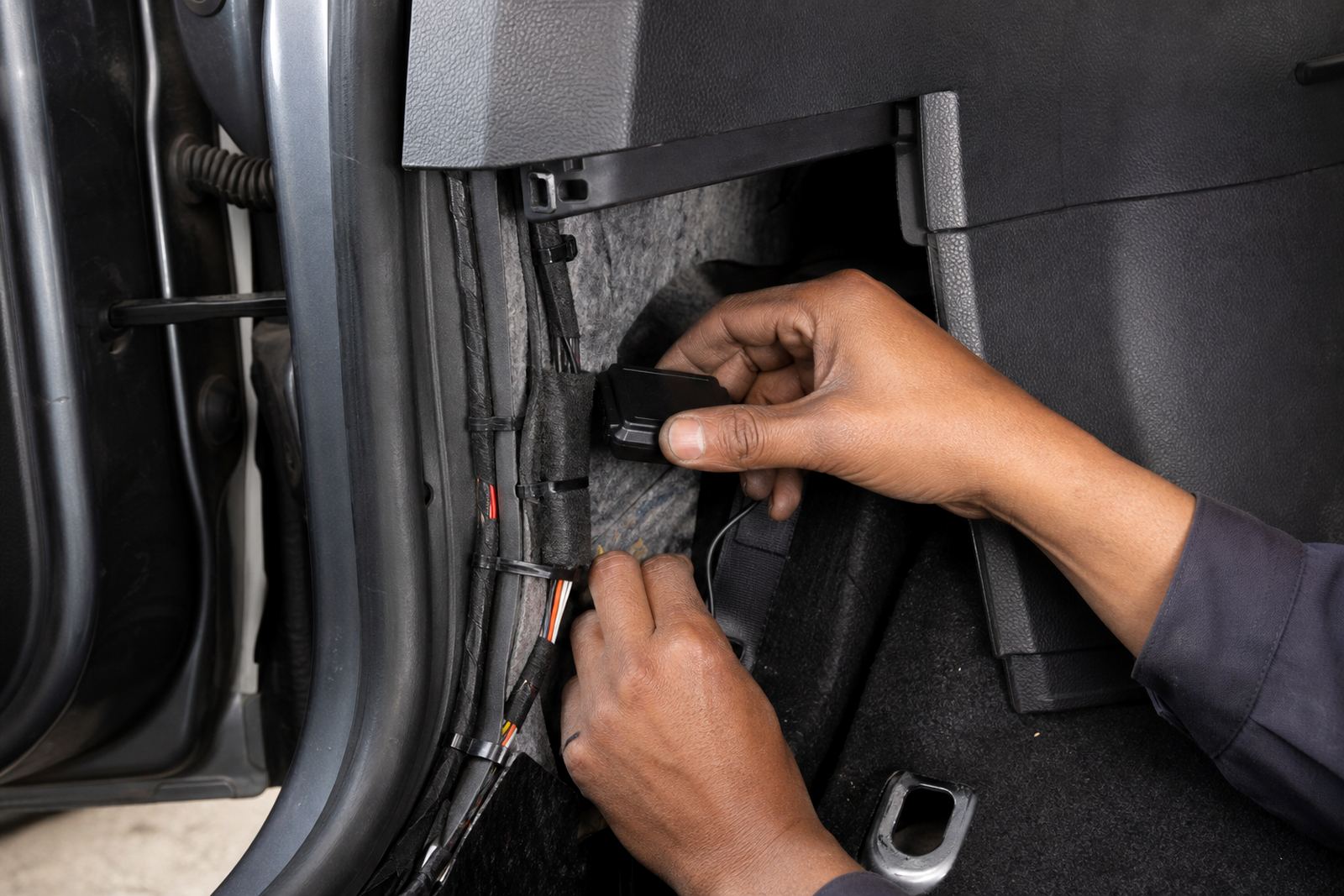
We often see this on older bakkies, delivery vehicles and family cars that have had accessories added over time. Extra lighting, trackers, trailer wiring and audio gear all place more demand on the charging side if the wiring was not done neatly.
When a cable gets hot, or the starter sounds laboured, the fault may not be the battery itself. A proper battery drain repair or charging system check will show whether the issue sits in the cable run, the earth path or the alternator output.
- Replace clamps that no longer grip properly.
- Repair damaged cable ends before the copper strands fail further.
- Test the earth straps, not only the positive side.
- Check for voltage drop under load, not just at rest.
Warning signs usually appear before the breakdown
Many drivers ignore the small clues. Slow cranking, a dim interior light, clicking relays or a battery light on the dash are all signs that deserve attention. If the engine starts only after a second or third try, the vehicle is already asking for diagnosis.
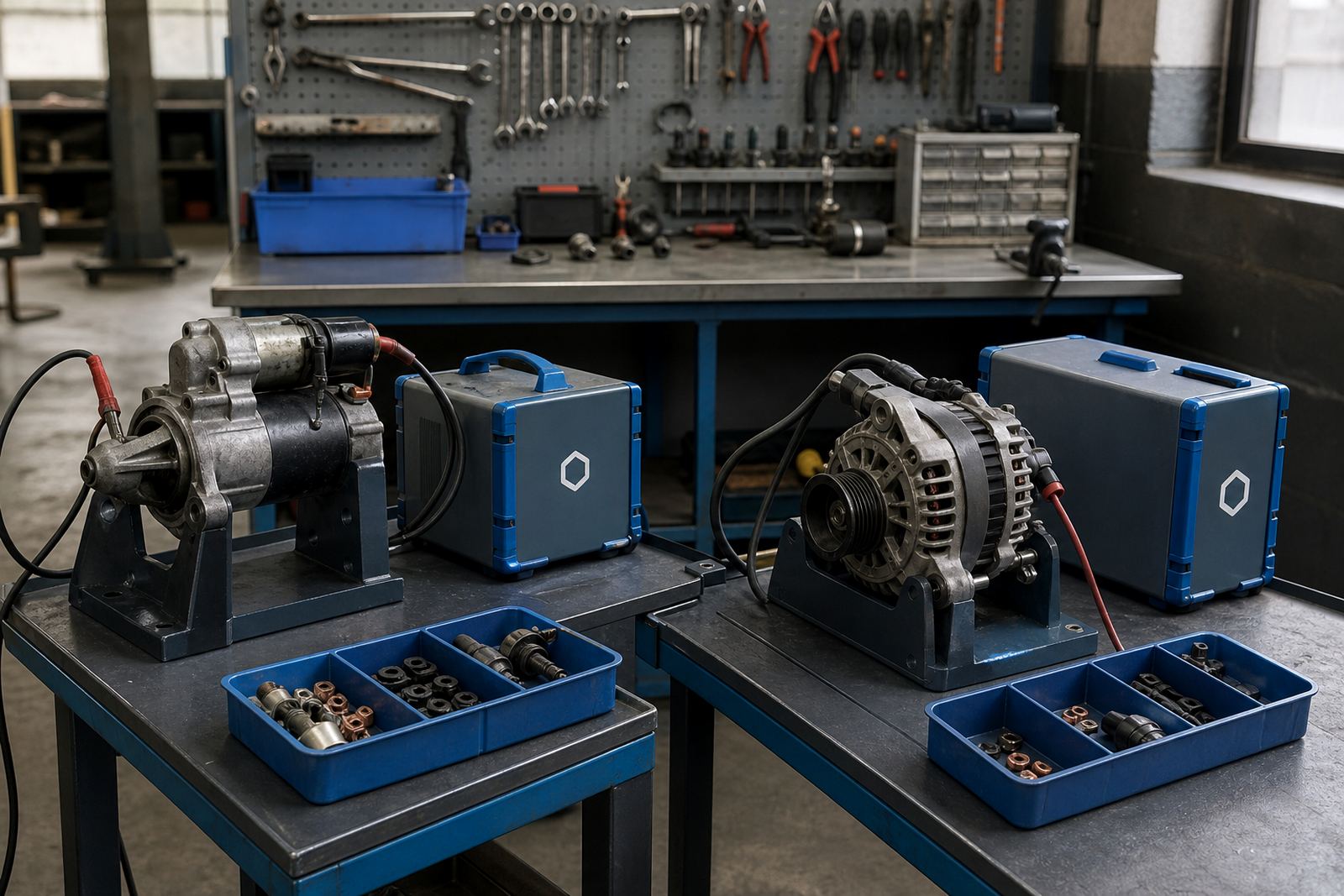
Battery warning signs can also be tied to starter circuit faults. A worn starter may draw more current than normal. An alternator with weak output may leave the battery undercharged, while a parasitic drain can flatten it overnight without any obvious symptom while driving.
On newer vehicles, CAN bus faults can complicate the picture. A module that stays awake, or a wiring fault on the network, can keep the battery under pressure even when the car is parked.
A Cape Town call-out can catch the fault early
One fleet vehicle in the Western Cape arrived after repeated jump starts, and the battery had already been replaced once. The real issue was a bad earth connection with a charging fault on top of it. The vehicle moved around Bellville and Paarl during the week, so the battery never got a proper recovery cycle. Once the earth fault and charging output were corrected, the repeated flat battery problem stopped returning.
That kind of case is common where vehicles work hard across Cape Town, Somerset West and the surrounding routes. A truck, panel van or private car may still run, but it runs badly enough to hide the early signs.
- Mobile checks help when the vehicle cannot be left idle for long.
- Fleet vehicles benefit from battery and charging tests before a fault spreads.
- Starter, alternator and wiring checks should be done together where possible.
- Accessory wiring must be neat, fused correctly and easy to trace later.
Practical habits that reduce battery trouble
Good battery care is mostly about attention to detail. Keep terminals clean, watch for slow cranking and do not treat a warning light as background noise. If a battery has been flat more than once, the rest of the system needs inspection before another replacement goes in.
We record every battery or part fitted, along with the date it went in. A tracker, trailer plug repair or accessory rewiring job can affect the charging picture if the wiring was rushed or the earth path was left weak. That is why a battery problem is often really a wiring problem wearing a battery face.
Our workshop in Montague Gardens handles diagnostics, starter repairs, alternator repairs, fuse box faults, trailer wiring and CAN bus fault checks, with mobile call-outs across Cape Town, Milnerton, Bellville, Brackenfell, Durbanville, Somerset West and Paarl. For booking notes or fleet details, use our contact form on our contact page.