Why a removed unit can tell the clearer story
A vehicle can arrive with slow cranking, a flat battery or a warning light that points toward the charging system. That does not always mean the first part blamed is the one that failed, because a weak battery, corroded earth, damaged cable or CAN bus related fault can change the picture.
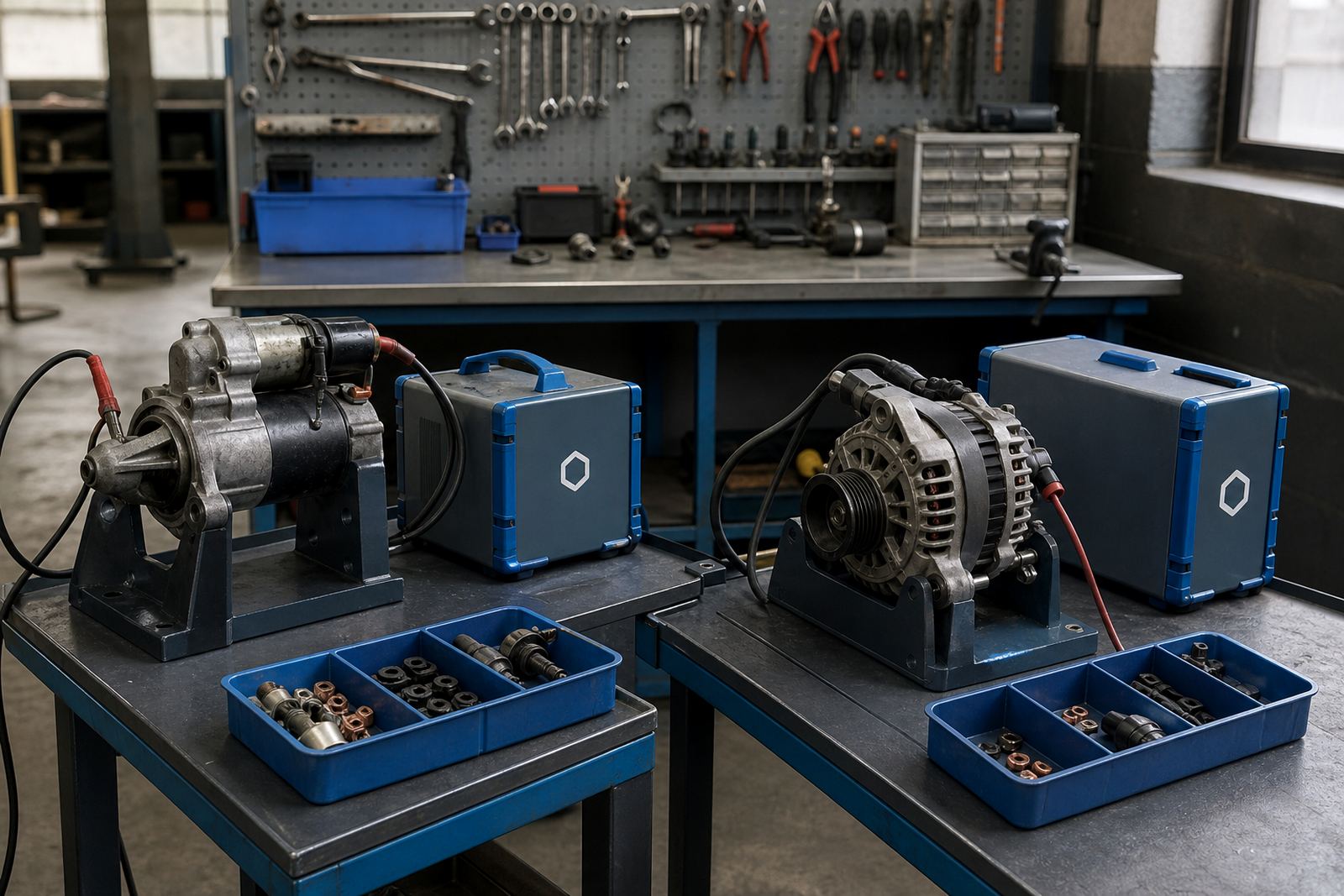
Bench testing helps when the vehicle side tests point in one direction, but the part itself still needs a separate check. On the bench, a starter or alternator can be assessed away from the rest of the vehicle, which makes it easier to see whether the fault lives inside the unit or in the wiring around it.
That separation matters in workshop work around Cape Town, Milnerton and Bellville where a vehicle may have seen coastal damp, stop start use and repeated short trips. Those conditions can hide a charging issue until the unit is tested under controlled conditions.
What gets checked before the part leaves the vehicle
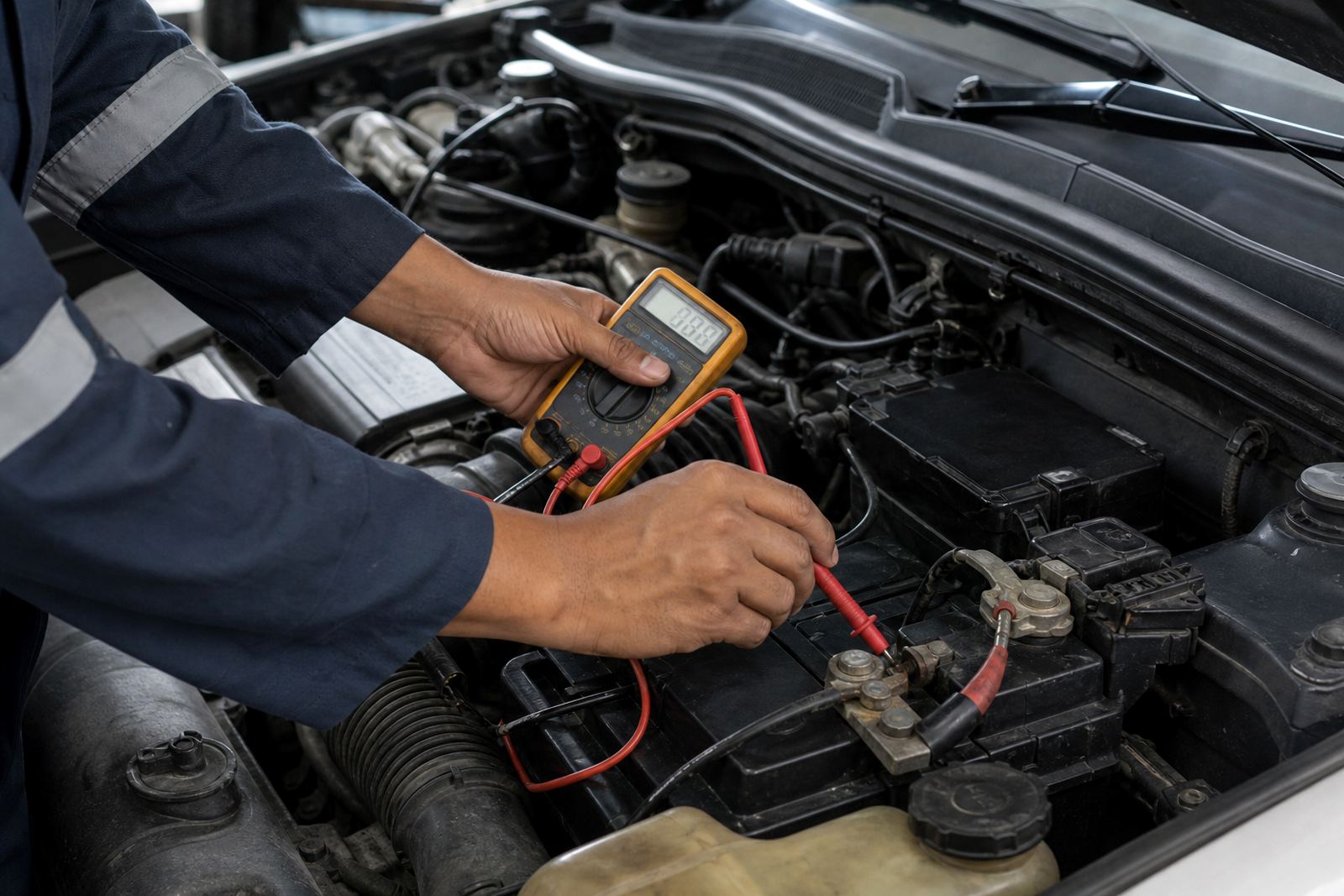
Bench testing is more useful when it follows proper in vehicle diagnosis. A technician may scan OBD fault codes, look at live data, test battery health and charging output, then inspect the starter circuit, earth points and main feeds before removing anything.
That first round of checks can point to a parasitic drain, a loose terminal, a damaged trigger wire or poor alternator output. If the readings do not line up with the symptoms, the removed unit is tested on its own to separate the electrical fault from the vehicle side fault.
- OBD fault codes that point to charging or communication faults
- Battery voltage, cranking drop and charging output
- Starter signal, solenoid action and current draw
- Alternator output, ripple and regulator behaviour
- Earth faults, fuse box issues and damaged wiring
Starters on the bench: the noise, the spin and the pull
A starter that sounds tired on the vehicle does not always fail in the same way on the bench. The motor may spin freely, the solenoid may hesitate, or the gear engagement may show a weak pull that does not appear until load is applied.
Bench testing lets the technician see the unit as a whole. If brushes are worn, bearings are rough or the solenoid contact is burnt, the fault can be confirmed without wondering whether a bad cable or earth strap is hiding the real issue.
We often see vehicles where the starter circuit looks clean from the outside yet the complaint remains. In those cases a bench test can save the team from fitting a replacement and still hearing the same click or slow crank once the unit is back in place.
Alternators need more than a quick voltage reading
An alternator may show charging voltage at idle and still fail under load. A bench test can check output behaviour, ripple, regulator control and rectifier condition with more confidence than a quick glance at a multimeter on the vehicle.
That is important when the complaint is repeated battery flattening, dim lights or warning messages after driving. The problem could be inside the alternator, or it may sit in the wiring between the alternator and battery, especially where heat, vibration or moisture has worked on the loom.
- Charging output at different speeds
- Ripple that suggests diode trouble
- Regulator response under load
- Bearing noise and pulley wear
- Main cable condition and terminal heat marks
Montague Gardens fleet vehicle bench test
A delivery vehicle from Somerset West can arrive with a battery that keeps going flat after overnight parking. The driver may report a warning light, then a hard start the next morning. A scan and roadside style check can point to charging trouble, but the alternator may still need bench testing before any final call is made.
Once removed, the alternator can be tested on its own and the workshop can also inspect the battery drain path, the earth side and the main charge cable. If the alternator passes on the bench, attention shifts back to the vehicle for fuse box faults, accessory wiring or a parasitic draw from fitted equipment.
That kind of split diagnosis matters for fleet operators in Cape Town and Paarl because the wrong repair can keep a vehicle off the road longer than needed. It also helps private owners who want the fault traced from the actual source, not one symptom alone.
When fitting trackers or accessories changes the picture
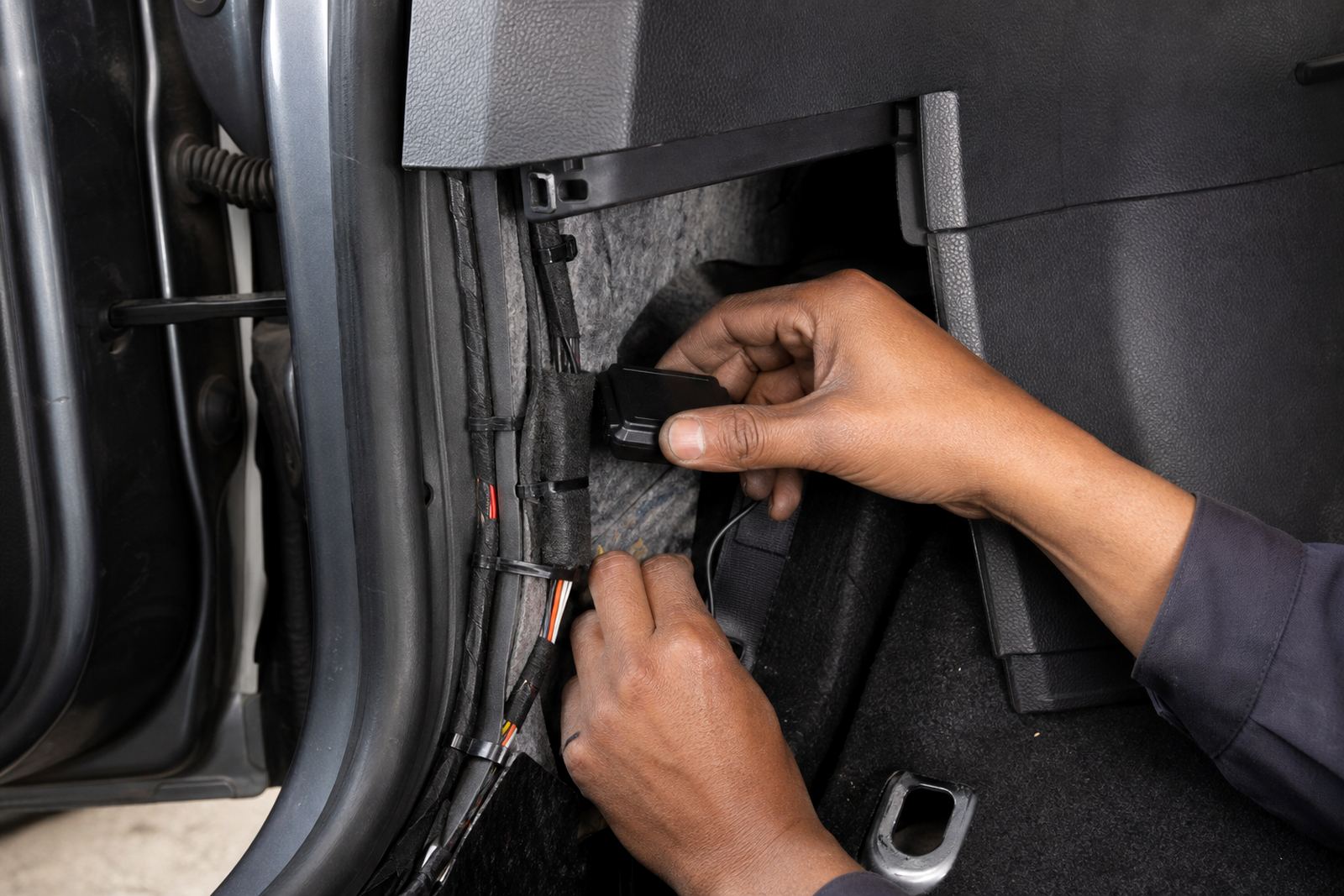
Tracker units, added lights, trailer wiring and accessory rewiring can create new load paths if the work is not neat. A small earth fault or poor connection may look like a starter or alternator issue, especially when the battery is already tired.
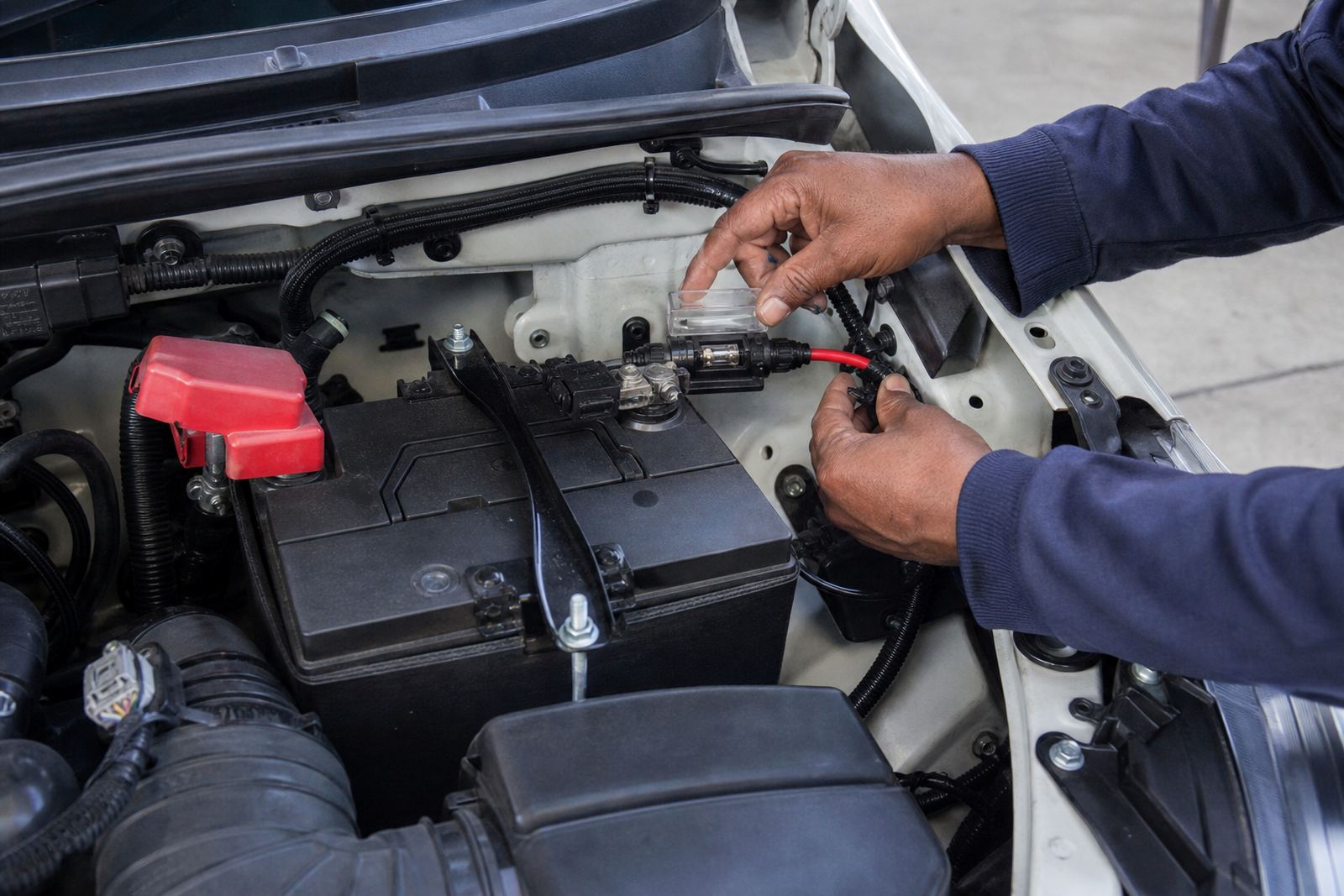
Bench testing still helps, but it should sit inside the wider diagnosis. A good workshop will check whether the fault came from the unit itself or from added equipment, a damaged fuse holder, or wiring that was routed too close to heat and movement.
- Tracker or accessory wiring tied into the wrong circuit
- Poor earth connections on body panels
- Trailer socket corrosion and pin damage
- Extra lighting that pulls more current than expected
- Fuse box links that have overheated or loosened
When the test bench saves time and parts
Bench testing is most useful when the symptoms are there, but the cause is still uncertain. It gives the workshop a clear way to verify a removed starter or alternator before the next step is taken.
At V-Auto, that approach sits alongside wiring repairs, charging system checks, battery drain repairs and CAN bus fault checks for vehicles across Montague Gardens, Bellville, Milnerton, Brackenfell, Durbanville, Somerset West and Paarl. The point is not to test everything for the sake of it, but to confirm the fault before parts are fitted or sent out with the vehicle.
When the unit passes on the bench, the vehicle side fault becomes the real focus. When it fails, the workshop has a firmer basis for repair or replacement, and the customer gets a clearer answer about where the problem lives.