A tracker should sit with the harness, not fight it
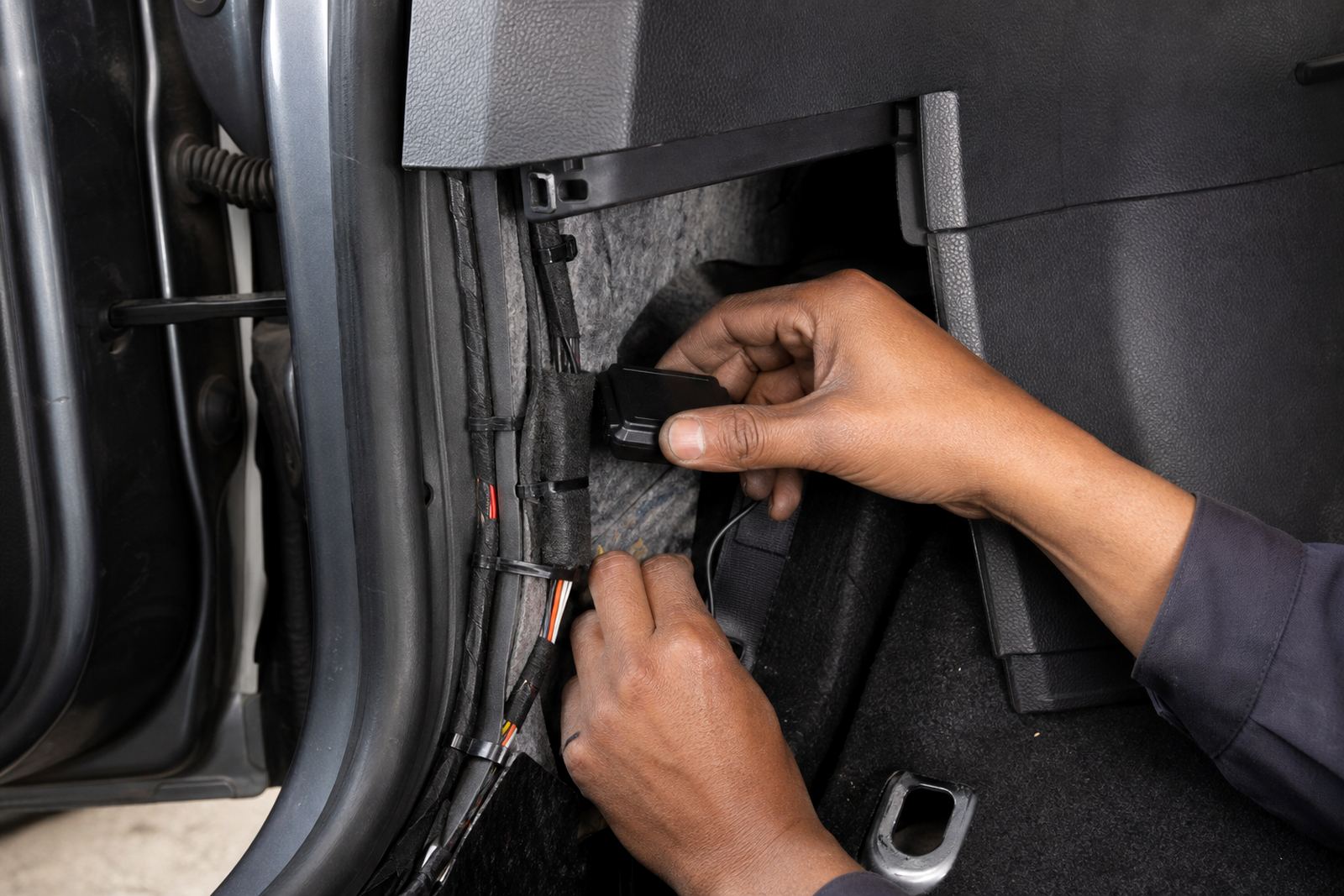
Good tracker fitment starts with the vehicle’s existing wiring paths. The unit needs a hidden position, a proper earth point and a fused feed that suits the vehicle’s electrical system. If the installation is rushed, a loose join or a badly placed cable can create trouble long after the job looks finished.
On private vehicles and fleet units we see the same issue often enough: a tracker is mounted, but the wiring hangs where it can rub against sharp metal or heat from the engine bay. In coastal conditions around Milnerton and the broader Cape Town area, that exposure matters. Moisture, salt air and vibration can work on poor joins and cause faults that are hard to trace later.
- Use cable routes that follow the factory harness where practical.
- Protect every new circuit with the correct fuse size.
- Keep the unit hidden, but still accessible for testing.
- Avoid cutting into wiring unless the circuit really calls for it.
What the technician checks before opening the loom
Before a fitment, the workshop needs to know where the battery sits, how the vehicle wakes up and where the main current paths run. On some vehicles the tracker can share a neat supply point in the cab, while on others the safest route is closer to the battery or fuse box. There is no single layout that suits every bakkie, hatch or panel van.
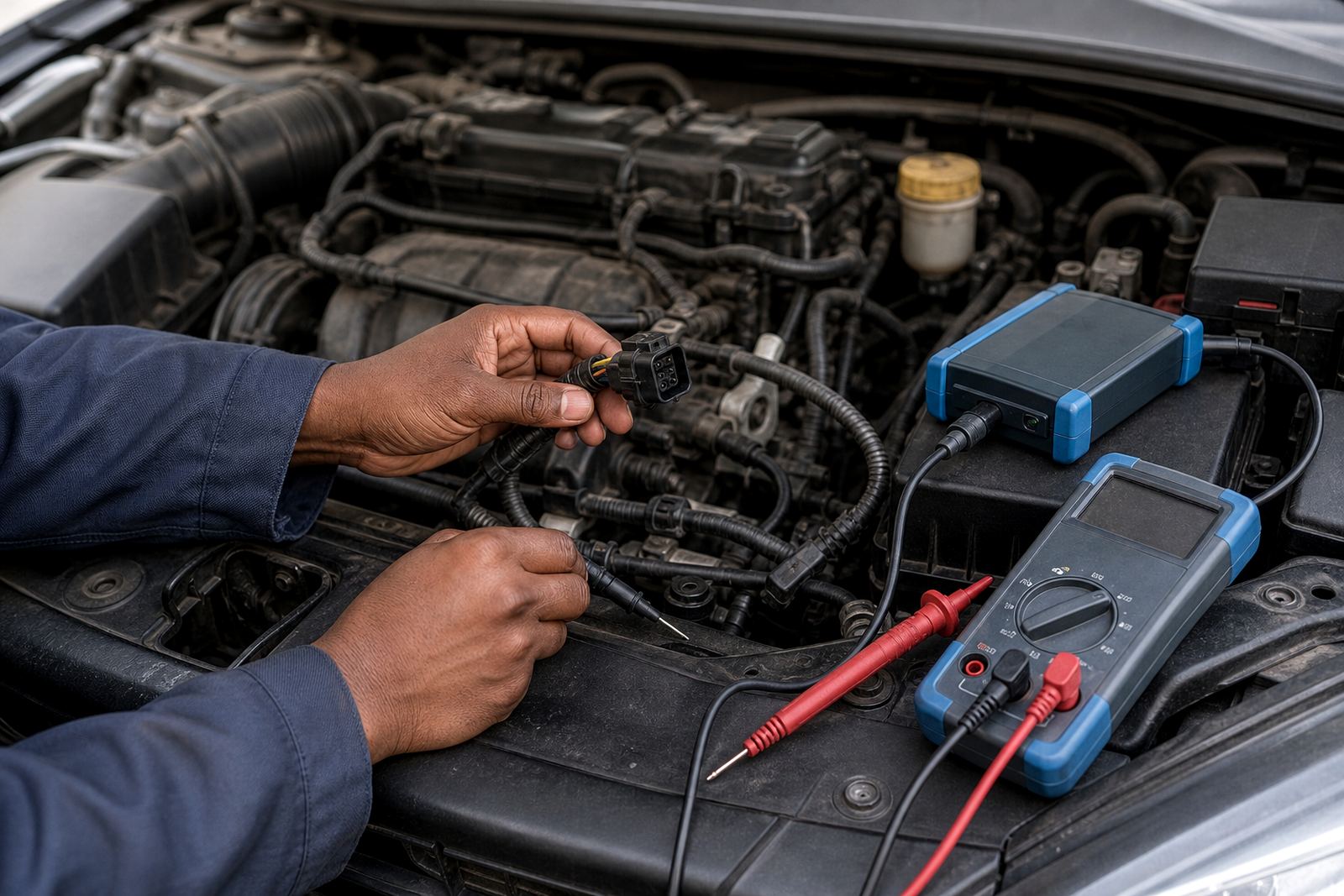
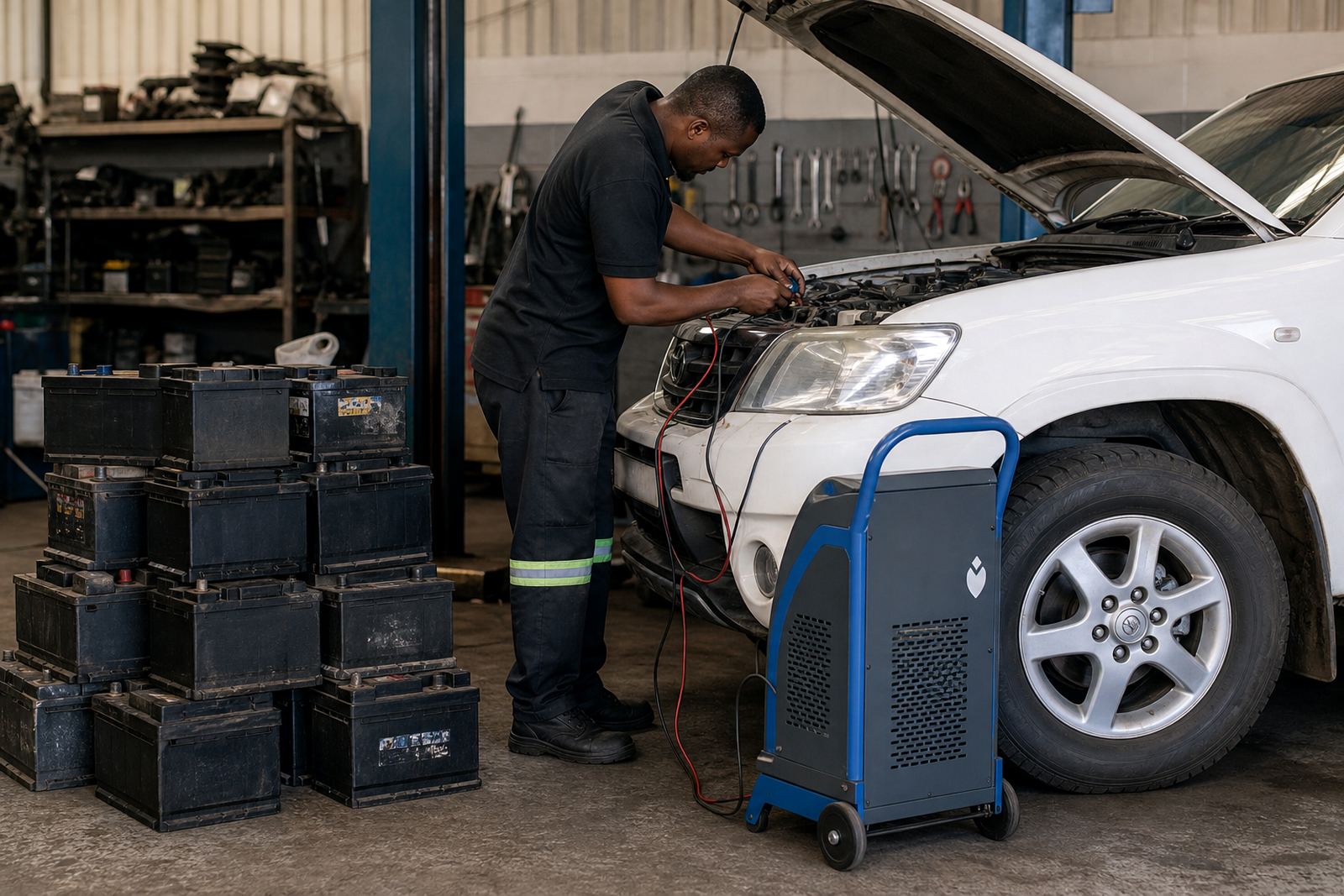
The technician will look at battery condition, charging voltage and any signs of existing parasitic drain. If a vehicle already has a weak battery, the owner may blame the tracker later when the real issue is an alternator that is not holding charge. That is why a proper electrical check matters before any accessory wiring goes in.
- Battery health and resting voltage.
- Charging voltage at idle and under load.
- Ground points for corrosion or looseness.
- Space for wiring without pinching or heat damage.
On fleet work, that check also helps decide whether the fitment should be done in the workshop or as a mobile call-out. A delivery van in Bellville may need a different approach from a private SUV parked in Somerset West.
Hidden does not mean careless
Tracker wiring should be hidden from view, but not buried in a way that makes future testing impossible. The best result is tidy, secure and practical. That means proper clips, sleeving where needed and no loose cable tied to moving parts. It also means leaving enough access for diagnosis if a warning lamp appears later or the vehicle develops a battery drain.
A hidden installation should never damage the original harness. When a loom is opened, the insulation must be closed back properly and the branch should not be forced through metal edges. A clean fitment respects the vehicle’s wiring path and keeps the new circuit separate from sensitive systems such as CAN bus lines and factory sensor wiring.
If the vehicle has had previous electrical work, the technician should inspect for old scotch locks, twisted joins or taped repairs. Those shortcuts are common trouble points. They can interfere with the tracker feed and create intermittent faults that only show up after a few days of driving.
When tracker work overlaps with other electrical faults
Some fitments are straightforward. Others turn into an electrical investigation. If the starter is dragging, the alternator is weak or the vehicle has a parasitic draw, the tracker can be fitted only after the real fault is found. Otherwise the owner ends up with two problems and no clean answer about which one caused the battery to flatten.
Our workshop handles starter repairs, alternator repairs, charging system checks, fuse box faults, earth faults and lighting issues alongside tracker and accessory work. That matters for fleet operators with mixed vehicle ages. A panel van with poor charging will not take kindly to extra electrical load if the root cause is left in place.
- Starter circuit faults can mimic battery trouble.
- Alternator issues can leave the tracker underpowered.
- Bad earths create random symptoms across several circuits.
- Fuse box damage can upset a clean installation.
On CAN bus equipped vehicles, the fitting method must avoid upsetting communication lines. That is not about fancy language, just careful work with the right test gear and a proper understanding of how the vehicle talks to itself.
Fleet fitting needs a neater standard than a one-off job
Fleet work has a different rhythm from a single private booking. The vehicle count is higher, the use is harder and the electrical load is often heavier because of radios, chargers, canopy accessories and work lights. A tracker fitment should be planned with that in mind, especially where drivers change often and each unit needs the same standard of wiring.
For operators moving between Cape Town, Paarl and Brackenfell, a mobile call-out can help when a vehicle cannot be spared for long. Even so, a mobile fitment still needs the same discipline as workshop work. The cable must be protected, the fuse must be accessible and the tracker must not sit where water or heat will shorten its life.
- Use one wiring standard across the fleet.
- Keep fitment notes with the vehicle record.
- Mark any added fuses and relay points clearly.
- Check that accessories do not overload the same circuit.
Montague Gardens tracker fitment on a mixed-use van
A practical example helps. A service van based near Montague Gardens came in with a tracker request and a flat battery complaint. The owner expected the tracker to be the cause, but the test showed a tired alternator and a small drain on an auxiliary light circuit. The tracker was fitted only after the charging issue was repaired and the wiring route was cleaned up.
The final installation used a fused feed, a solid earth and a hidden mount that did not disturb the factory loom. The van left with the tracker in place, the added accessory wiring separated from the main harness and a battery that could hold charge under daily use. That is the standard worth aiming for, because a tracker should support the vehicle, not become the reason it goes quiet in the yard.
For owners and fleet managers across Cape Town, Milnerton, Bellville, Somerset West and Paarl, the lesson is the same. Secure wiring, sensible fuse protection and careful routing make the difference between a neat fitment and a recurring fault.