A fault code is a lead, not a final answer.
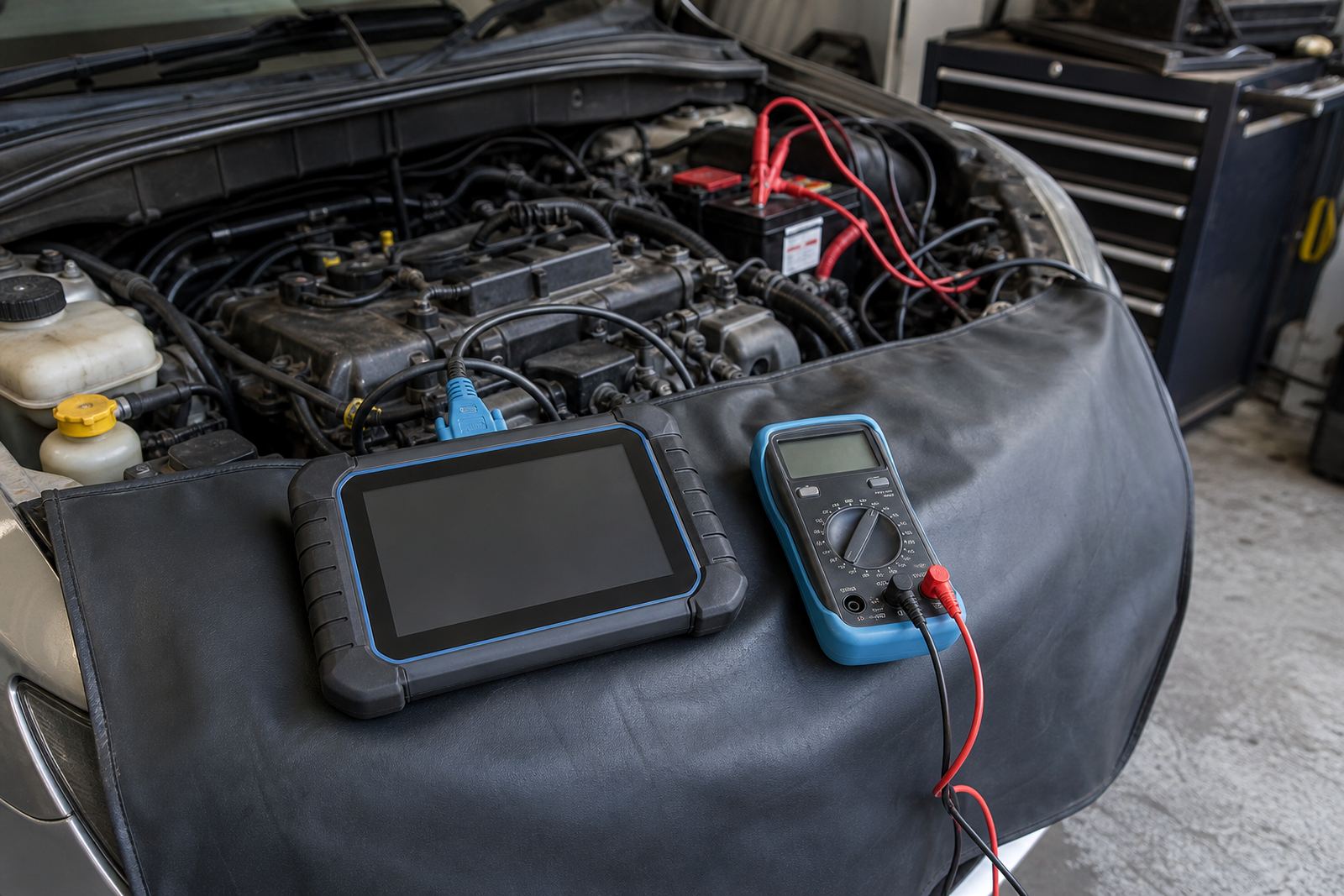
When a scan tool flags a fault, it is usually telling you where the control unit noticed a problem, not always where the problem began. A code for low voltage may sit next to a tired battery, a bad earth, a loose terminal or a charging fault, and the scan tool cannot sort that out by itself.
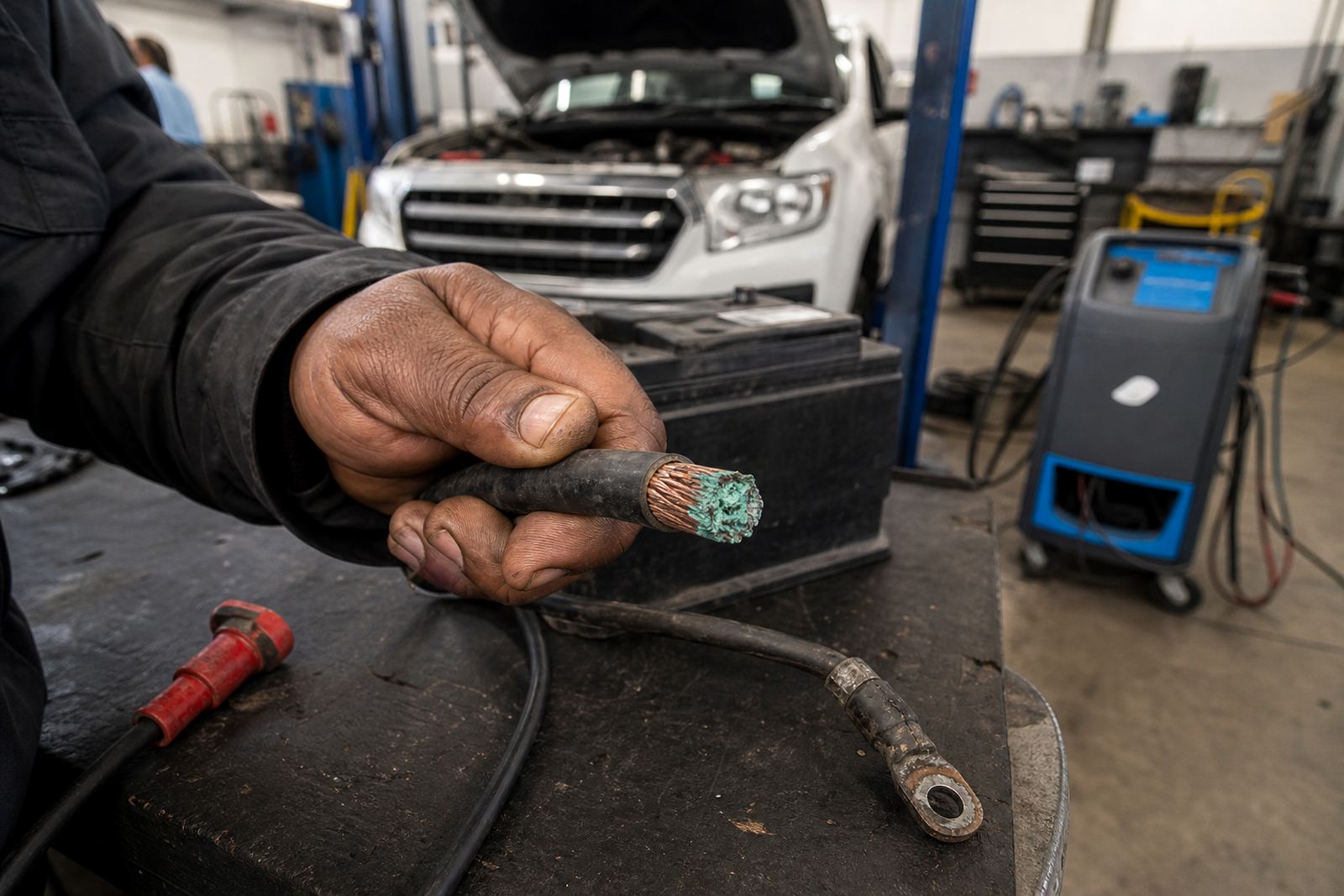
That matters in workshop work across Montague Gardens and the northern suburbs. A van can arrive with a warning light, yet the real issue sits in a corroded connector, a broken wire near the battery tray or a starter circuit that drops voltage under load. The code opens the door, practical testing finds the reason.
Live data shows the story moving, not just stored faults
Stored codes are only part of the picture. Live data can show coolant temperature, battery voltage, throttle position, air flow readings and sensor signals while the engine is running, cranking or idling. That is where patterns start to show up, especially on faults that appear only when the vehicle is hot, under load or after a long drive.
- A code may point to a sensor, but the live reading may be normal and the wiring trace is where the fault sits.
- Two vehicles can set the same code for different reasons, so the fix is never copied blindly from one job to the next.
- Intermittent faults often need a test drive, a wiggle test and a metre on the circuit at the same time.
On fleet work in Bellville or Paarl, that saves time. A truck or service bakkie that logs the same fault twice in a week needs more than a code printout and a reset.
Voltage testing finds what the scanner cannot see
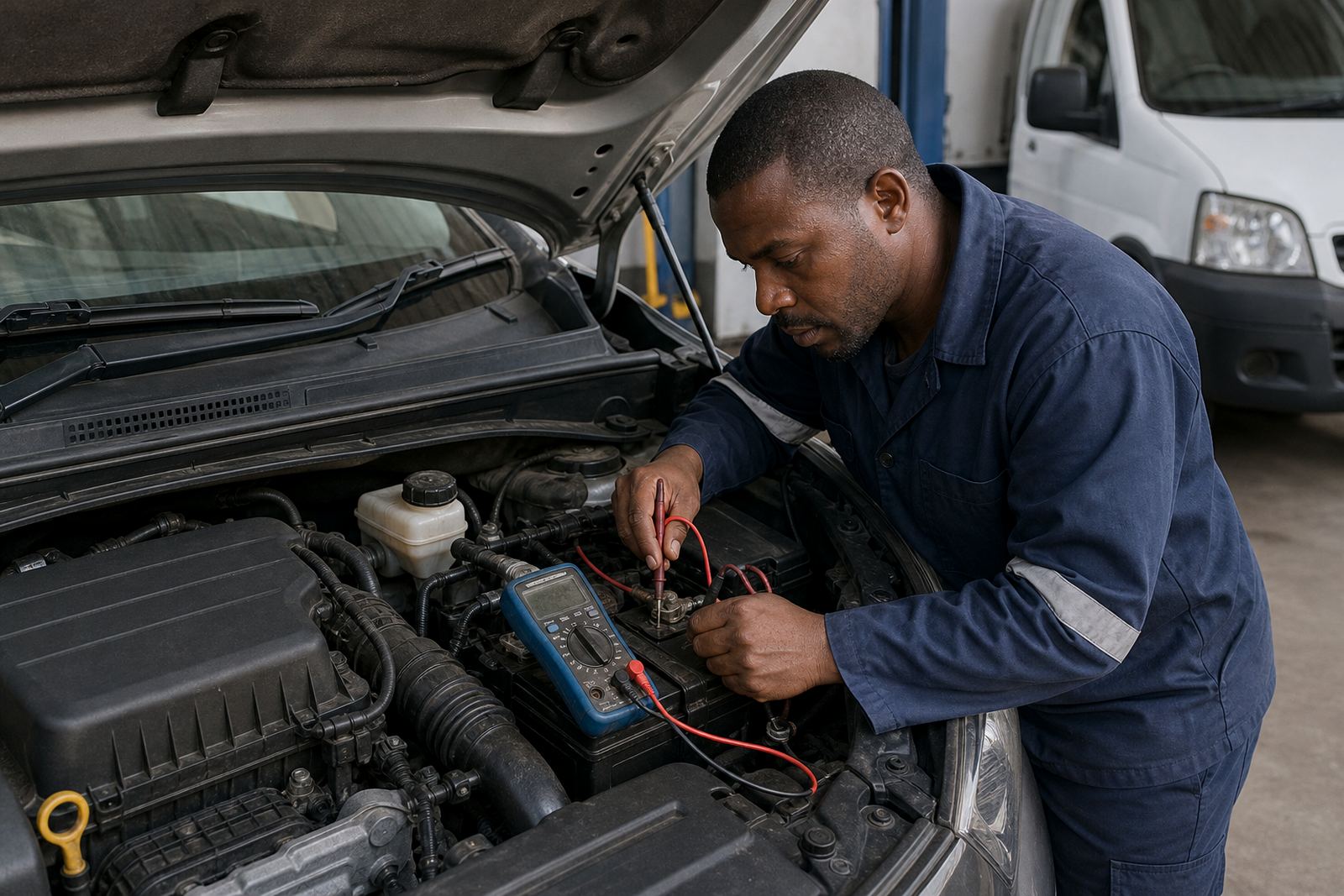
A scan tool cannot measure voltage drop across a cable, a weak ground path or a starter drawing too much current. That is where multimeters, clamp metres and load testers do the heavy lifting. Battery condition, alternator output and charging ripple all need a proper check before anyone starts replacing parts.
We see this often on vehicles with hard starting or dim lights. The scan result might mention under-voltage, but the real fault could be a slipping belt, a failing alternator diode, a battery that fails under load or a starter circuit with high resistance. Each of those faults looks different once you test the system properly.
- Battery tests show whether the battery can hold up under cranking load.
- Charging tests confirm whether the alternator is supplying steady output.
- Parasitic drain checks help find a slow battery drain overnight or over a weekend.
- Earth fault testing catches poor grounding that can affect lights, modules and starting.
CAN bus faults need more than a reset button
Modern vehicles talk across shared data lines, and a break in that network can affect several systems at once. A CAN bus issue might show up as multiple warning lights, dead instruments, no communication with one module or random electrical behaviour. A scan tool may list those symptoms, but it does not prove which wire, connector or module is causing the interruption.
That is where pin checks, resistance readings and power supply checks matter. Water ingress, pin spread in a connector, damaged loom sections and poor aftermarket wiring can all disturb the communication path. The fault often looks electronic on the surface, yet the fix is mechanical and electrical at the same time.
For vehicles running between Cape Town, Milnerton and Somerset West, vibration and moisture matter too. Coastal humidity can turn a small connector problem into an intermittent headache, especially when a vehicle spends long hours on the road and parks outside overnight.
When a tracker or accessory changes the diagnosis
Tracker units, extra lighting, trailer plugs, auxiliary charging gear and added accessories can all change the way a vehicle behaves. A neat installation still has to be tested for current draw, fuse protection and proper earth points. A poor add-on may not fail straight away, but it can create battery drain, false warning lights or a starter circuit fault that looks unrelated.
We often trace problems back to accessory rewiring that was done without checking the original circuit load. On a work bakkie, a trailer wiring fault may blow a fuse, trigger a lighting complaint or cause water corrosion at the rear loom. The scan tool may show the effect, but the fault usually sits in the wiring path, not the module.
- Accessory fitting should respect the vehicle’s original circuit limits.
- Tracker wiring must be secure, insulated and routed with care.
- Trailer wiring needs proper earthing and weather protection.
- Extra lights should be checked for draw, placement and fuse size.
A Montague Gardens workshop case, with a real-world pattern
A private owner from Durbanville may arrive with a vehicle that starts badly after standing overnight and throws a charging warning now and then. The code may suggest low voltage, yet the battery tests fine at rest. A closer look can reveal a charging system that drops out under heat, or a parasitic drain from a circuit that stays alive after the ignition is off.
That is where the work gets practical. We test the battery, confirm alternator output, check starter draw and look for voltage drop across cables and earths. If the drain only appears after a delay, the fault may sit in a module, accessory or relay circuit. The scan tool helps narrow the search, but the metres finish it.
For fleet managers in Brackenfell or Bellville, this approach keeps the diagnosis tied to the vehicle. It also avoids swapping parts that were never faulty in the first place.
The takeaway for owners and fleet operators
Scan tools are useful, but they are not the whole story. The strongest diagnosis comes from combining fault codes with live data, voltage testing, wiring inspection and a clear understanding of how the vehicle is supposed to behave. That is true for starters, alternators, lighting circuits, fuse boxes and CAN bus faults alike.
If a warning light keeps returning, or if the same electrical complaint keeps showing up on the same vehicle, the code is only the opening line. The real answer usually sits in the wiring, the charging path, the earth points or the load on the circuit.