What the call-out technician checks first
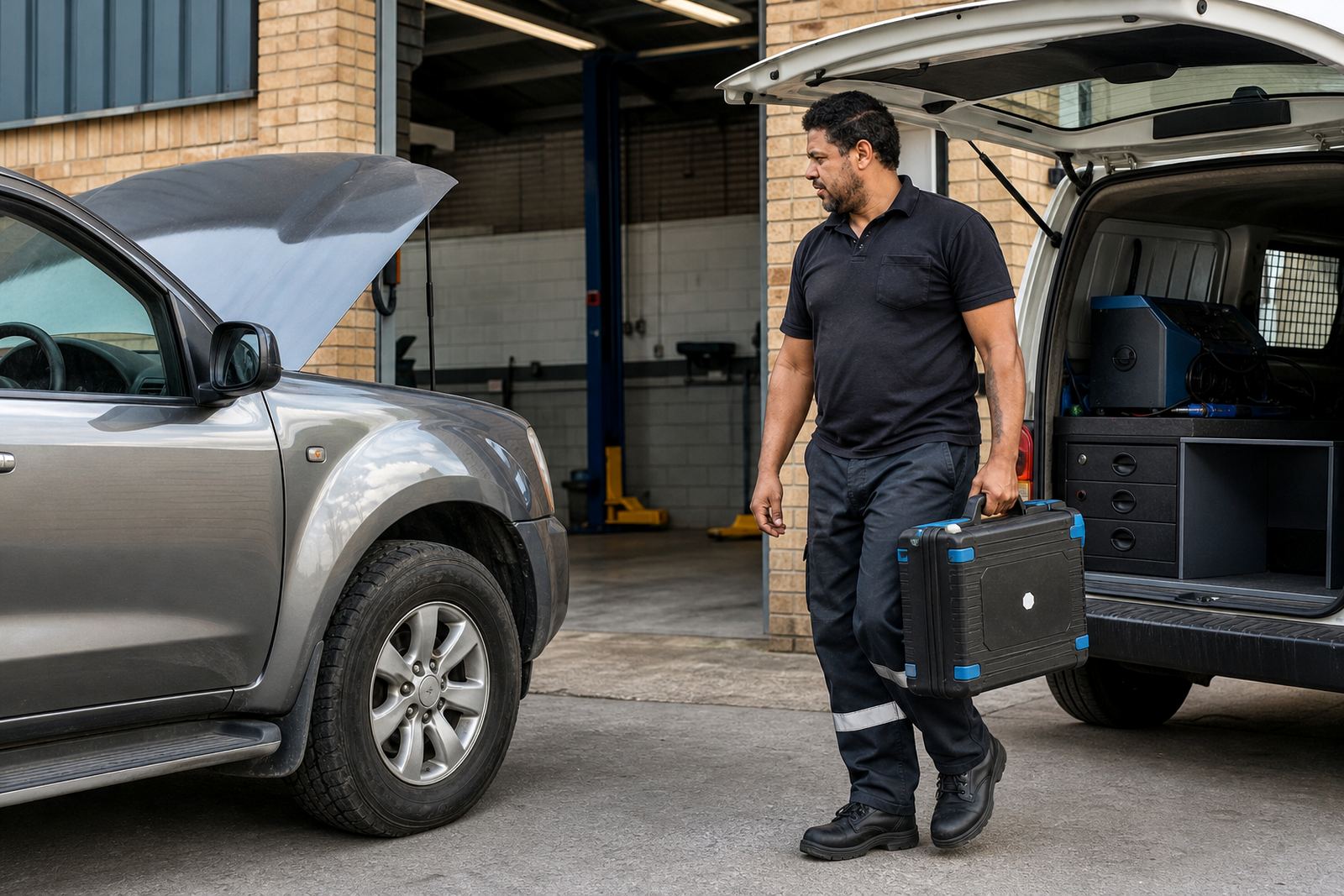
A good mobile visit does not begin with parts swapping. It begins with the complaint, the dash lights, the crank pattern and any history the driver can give, then the technician moves into an OBD scan and basic electrical checks. On many jobs in Montague Gardens, Milnerton or Bellville, that first pass already points to a weak battery, a poor earth, a charging fault or a wiring break that has been hiding behind a simple warning light.
At V-Auto, the mobile technician reads fault codes and looks at live data where the system allows it, because numbers on their own can mislead. A low-voltage event can set off several codes at once, so the job is to separate the real fault from the noise. That is especially useful on fleet vehicles that have been driven through rain, dust, stop-start traffic and short trips.
- Symptom review with the driver or fleet manager
- OBD fault code scan and live data check
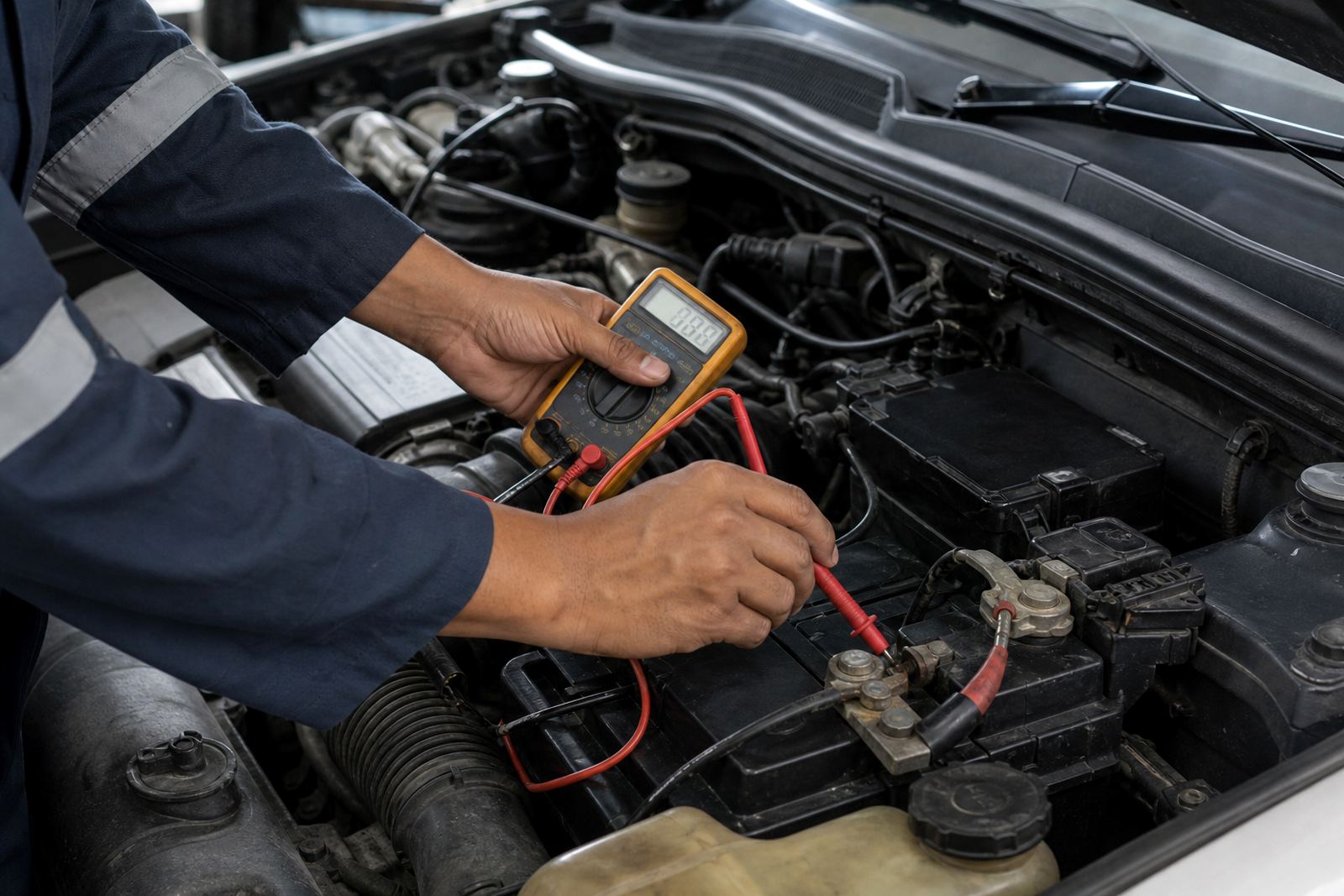
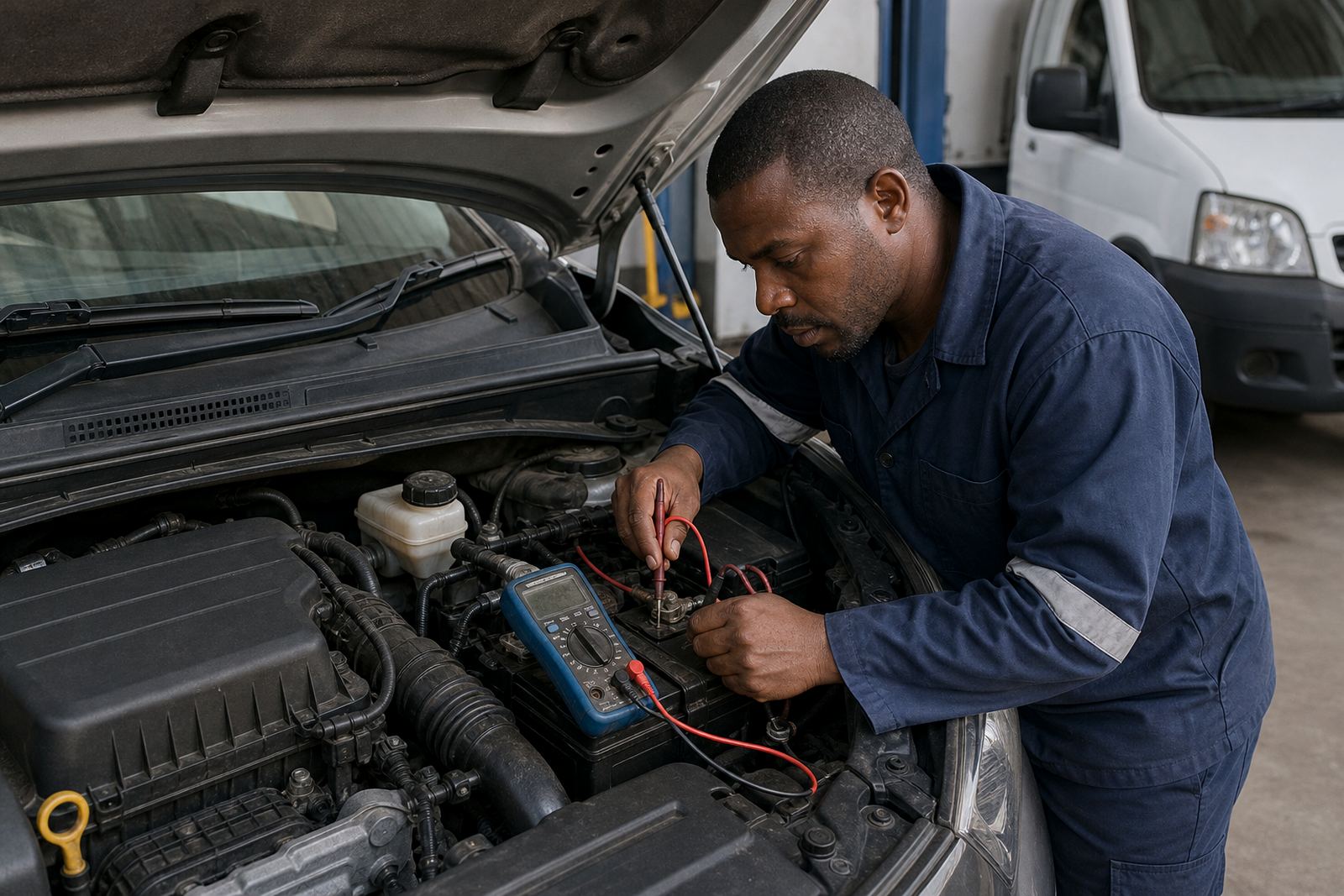
- Battery state, charging output and cranking test
- Visual check of cables, grounds, fuse boxes and connectors
Why roadside electrical faults need proper tracing
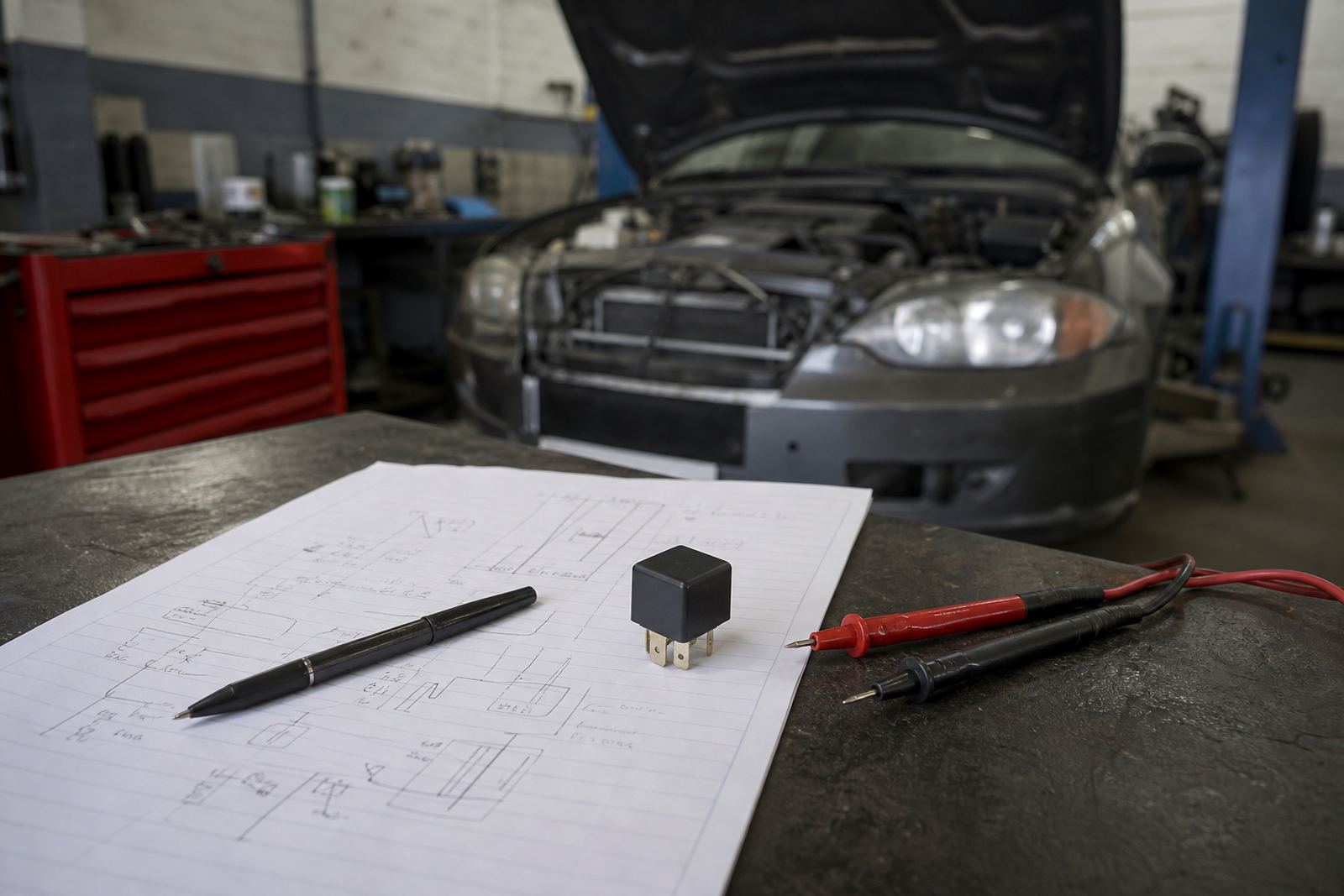
Some faults look mechanical at first glance, yet the real problem sits in the electrical path. A starter may click once and refuse to turn, an alternator may charge weakly only when hot, or a parasitic drain may flatten a battery overnight. Those jobs call for tracing. On a mobile visit we look at the full circuit, from power feed to earth return, and we test each point that can interrupt current flow.
In coastal areas such as Milnerton and Somerset West, damp air can speed up corrosion in terminals, fuse holders and connectors. In older bakkies and panel vans, the trouble often shows up as a loose earth strap, green corrosion inside a plug, or a wire chafed through near a moving edge. A small fault like that can stop a vehicle, or keep a tracker and accessory from working as intended.
A Montague Gardens visit that started with a dead battery
A local fleet operator from the western side of Cape Town called in after a delivery van kept arriving with a flat battery. The van started after a jump, then the battery went flat again after standing for a few hours. On site, the first scan showed no major engine fault, but the electrical readings did not agree with a healthy charging system.
The technician checked the battery, alternator output, belt condition and cable connections, then followed the drain path with the ignition off. The fault turned out to be a wiring issue feeding an accessory circuit that stayed live when it should not have. Once that was isolated and repaired, the battery held charge normally and the van returned to service. Jobs like this are common with fleet vehicles that carry trackers, load equipment or added accessories fitted over time.
- Short-trip use can hide charging weakness
- Added accessories may create unwanted current draw
- Loose or overheated terminals can mimic bigger faults
- A clean scan result does not replace voltage testing
Starter, alternator and charging work on site
Mobile diagnostics often lead straight into starter or alternator repairs. If the starter circuit is weak, the engine may crank slowly, only turn when hot or fail after a few attempts. If the alternator is not charging properly, the battery may survive a single trip but not a full working day. We test the battery first, then the charging system and starter circuit, so the repair follows evidence rather than habit.
For private owners in Paarl or Brackenfell, that can mean avoiding an unnecessary tow or workshop delay. For fleet vehicles, it can mean keeping one unit moving while another is booked for a deeper repair. We also check fuse boxes, relays, starter feeds and earth faults when the symptoms point that way, because a weak connection can sit in plain sight and still cause repeated failures.
When tracker and accessory fitting belongs in the same visit
Many vehicles now carry trackers, dash equipment, auxiliary lighting, tow wiring or other accessories that draw from the electrical system. If those items were fitted without careful routing, the result can be voltage drop, blown fuses or false warnings on the dash. A mobile visit lets us inspect the layout, tidy up poor wiring and protect the system before the small fault becomes a bigger one.
Our team also checks CAN bus related concerns where the vehicle symptoms suggest a communication issue rather than a simple broken wire. That work needs a careful hand, because modern systems can share data across several modules. We do not treat every warning as a module failure. We look for the cause, whether it is a damaged wire, a poor earth, a sensor feed issue or interference from an added accessory.
- Tracker fitting and accessory wiring checks
- Trailer wiring faults and loose connections
- Lighting circuits that fail under vibration
- CAN bus fault checks where the symptoms point there
How we plan the route around Cape Town and the Western Cape
Mobile diagnostic work is best when the visit matches the vehicle and the setting. A depot in Montague Gardens needs a different flow from a driveway in Somerset West or a loading area in Bellville. We organise the visit around access to the vehicle, the symptoms described and the electrical tests that make sense for that model and fault pattern.
For fleet managers, that can mean checking several vehicles in one location and separating a battery issue from a starter circuit issue before any repair work starts. For private owners, it often means a faster understanding of why the vehicle failed to crank, why the battery keeps dropping, or why an accessory has gone quiet. The point of the visit is not just to scan codes, it is to trace the fault to the place where it actually lives.
The kind of detail that avoids a second call-out
Good electrical diagnosis depends on small details. Clean battery terminals matter. Earth straps matter. So does knowing whether the fault appears hot, cold, wet or after the vehicle has sat overnight. If a problem only shows up after rain in Milnerton, or after repeated short runs in Cape Town traffic, that context helps narrow the work. We use that information to guide tests on wiring repairs, battery drain repairs, charging system repairs and starter circuit repairs.
When the vehicle is accessible on site, the mobile diagnostic visit gives the technician a live view of the fault rather than a story told after the fact. That usually leads to clearer decisions about repair, replacement or further workshop testing. It is practical work that suits vehicles needing a proper electrical answer before they go back into daily use.