The first question is what the camera must do after the key turns
A dashcam can be wired to wake only when the ignition is on, or it can stay alive from a constant feed and watch the vehicle while parked. Those two setups solve different problems. A commuter who wants road footage may only need ignition power, while a fleet bakkie parked in Montague Gardens overnight may need parked recording as well.
Switched power is the simpler option. The camera starts with the vehicle, shuts down when the key is off, and leaves the battery alone. Constant power gives more coverage, but it needs a proper low voltage cut-off, tidy fuse selection and a careful route through the cabin so the wiring does not rub, rattle or sit near hot parts.
- Switched feed for driving footage only
- Constant feed for parking mode and incident capture
- Battery protection for long stationary periods
- Neat cable routing near the fuse box, not loose across trim
Switched feeds suit drivers who want a clean, low-drain setup
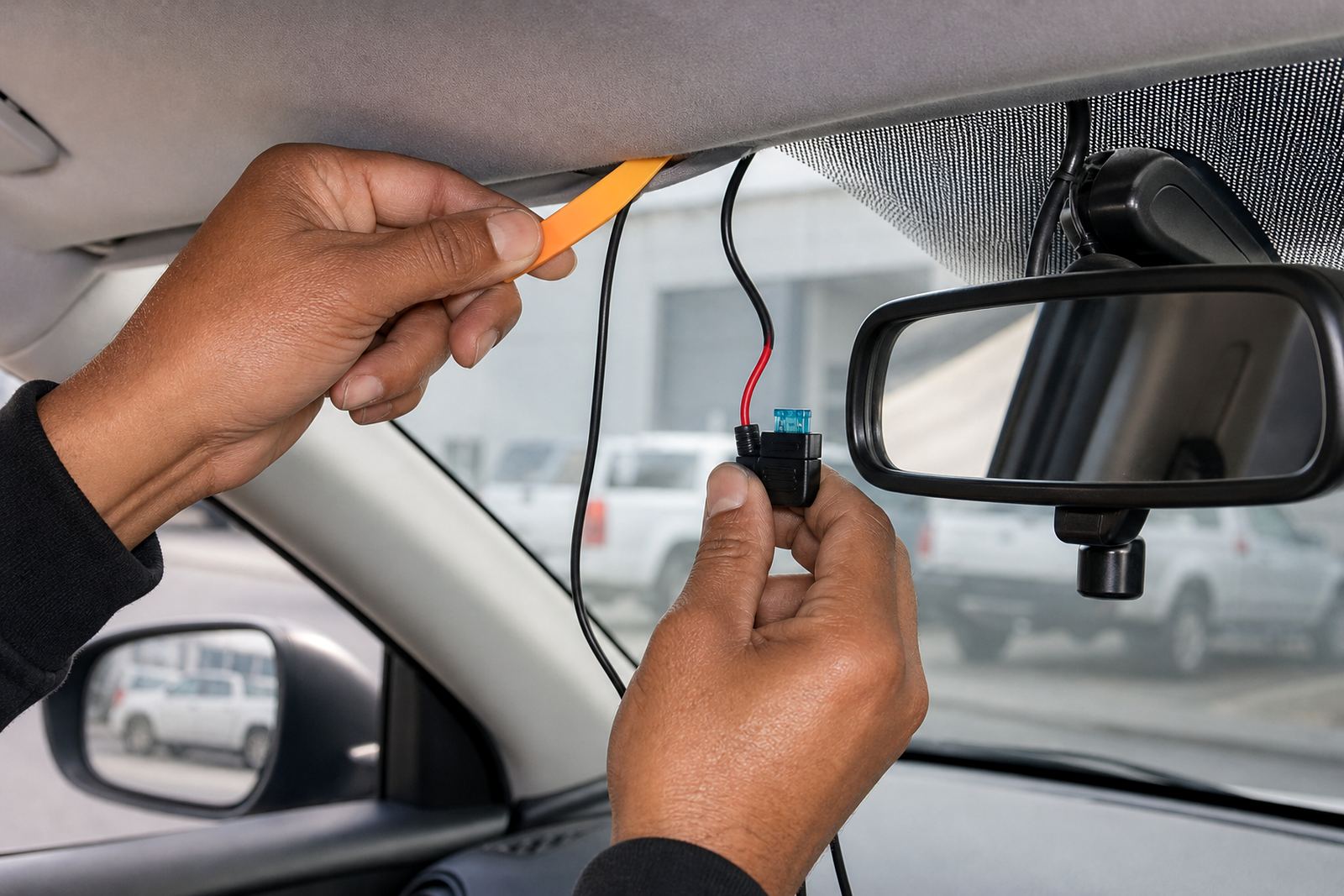
In a switched setup the dashcam powers up only when the vehicle is on. That works well for private owners in Milnerton, Bellville or Somerset West who mainly want records of trips, taxi stops, or daily use on the N1 and R27. The wiring is usually taken from an ignition-controlled fuse, then protected with the correct fuse tap so the original circuit remains properly protected.
This setup is often the most sensible starting point when the camera is fitted to a daily driver. It reduces battery strain, keeps the install straightforward, and avoids unnecessary recordings in a driveway. The only real drawback is that the camera will not monitor the vehicle while parked, so any bump or scrape in a shopping centre bay may go uncaptured.
We also check for side effects on nearby circuits. Some fuse boxes carry low-current systems, and a poor tap-in can upset interior lights or warning circuits. That is where clean diagnostics matter more than just running a wire to a spare slot.
Constant power keeps parking mode alive, but the battery must be protected
Constant power is the better choice when parking mode matters. A camera can then record motion or impact events after the vehicle is switched off. Fleet operators who leave vehicles at depots, or private owners who park on busy streets, often ask for this arrangement because it covers the moments when nobody is inside the vehicle.
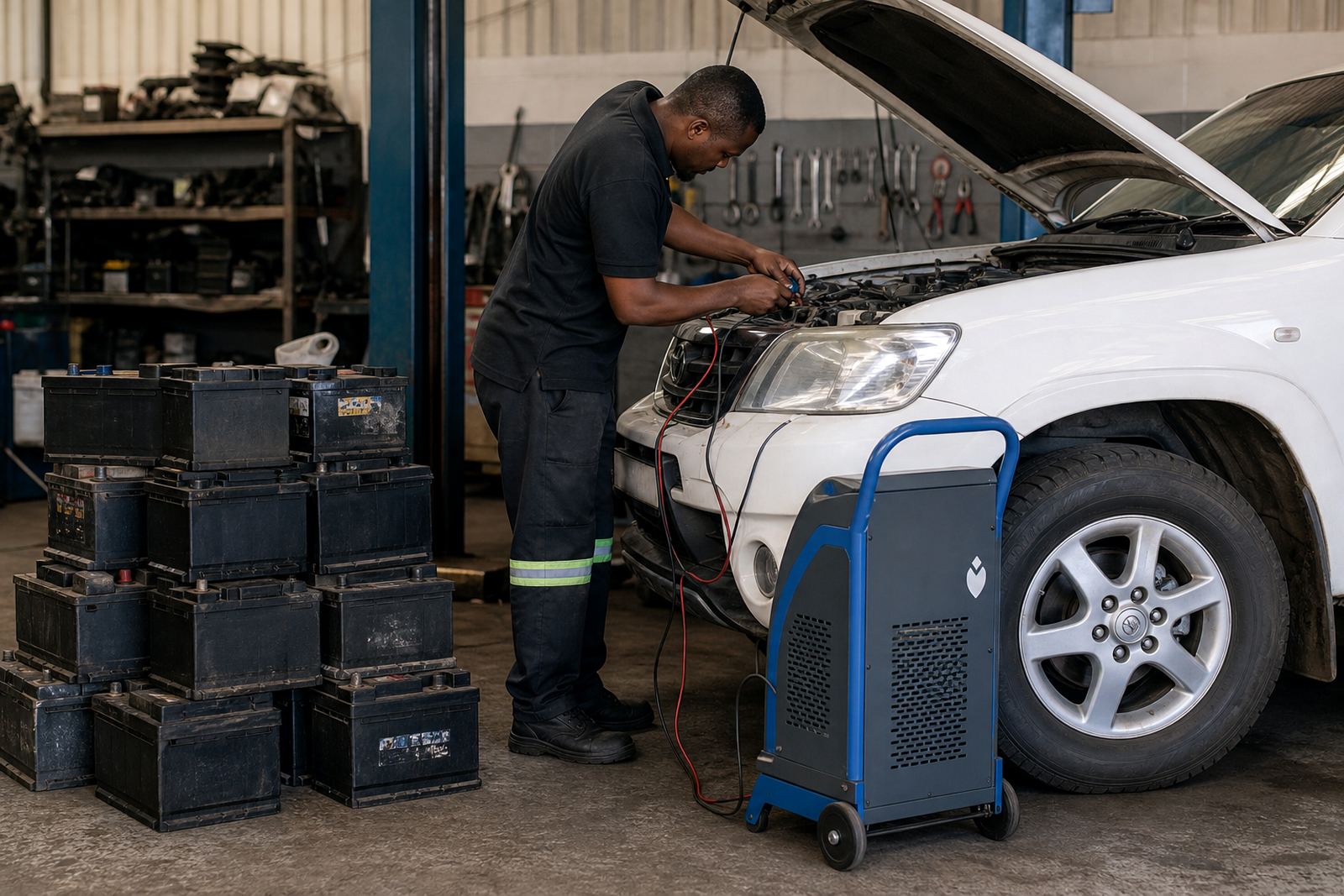
The trade-off is battery use. A parked camera that runs too long can flatten a tired battery, especially on vehicles that already have a weak charging system or short-distance driving patterns. In the Cape Town coastal air we also see more corrosion at terminals and earth points, which can make a marginal battery look worse than it should.
- Use a hardwire kit with low-voltage cut-off
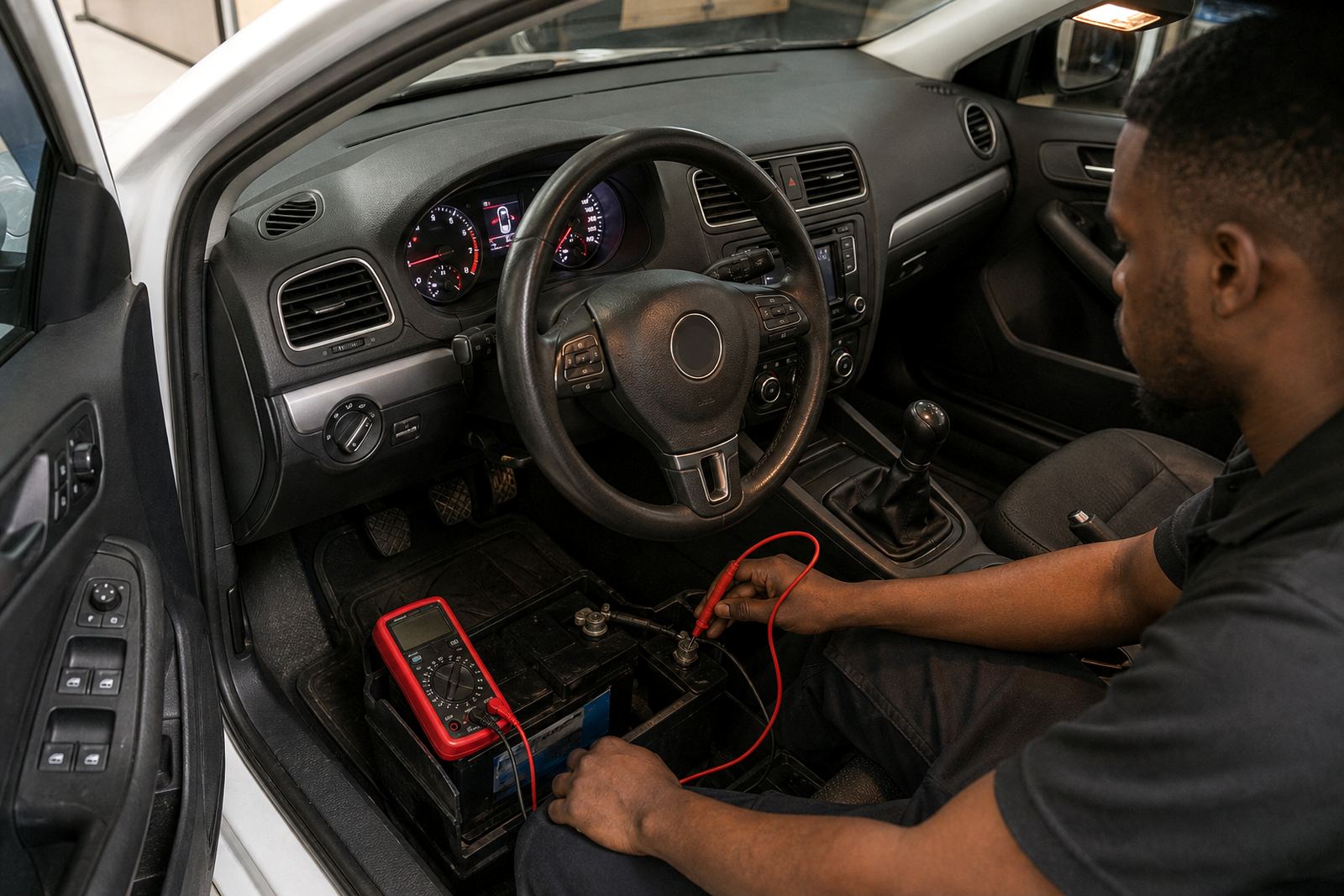
- Test battery health before fitting constant power
- Confirm the vehicle’s charging system is stable
- Keep parking-mode settings realistic for the battery size
For that reason, a constant feed should never be treated as a casual add-on. It needs a proper battery and charging check first, then a decision on how long parking mode can run before the cut-off engages.
Fuse boxes, earth points and cable routes decide whether the install lasts
Dashcam power is not just about the feed. The route matters too. A cable tucked badly behind trim can chafe, trap in the steering column or cross over an airbag path. The same applies to earth points, which need clean metal contact and a secure fastening. If the earth is weak, the camera may reboot, lose settings or behave erratically on rough roads.
On a proper installation we check the fuse box layout, choose a sensible live or ignition point, and avoid circuits that are not suited to extra load. We also keep the cable short where possible and use clips or loom tape so the trim goes back neatly. That is especially useful on work bakkies and panel vans where tools shift around and interior panels get knocked often.
Dashcam fitting is best handled like any other auto electrical job. It should leave the vehicle tidy, quiet and easy to service later. If another accessory is fitted later, the wiring should still make sense to the next technician who opens the panel.
Fleet vehicles often need a different answer from private cars
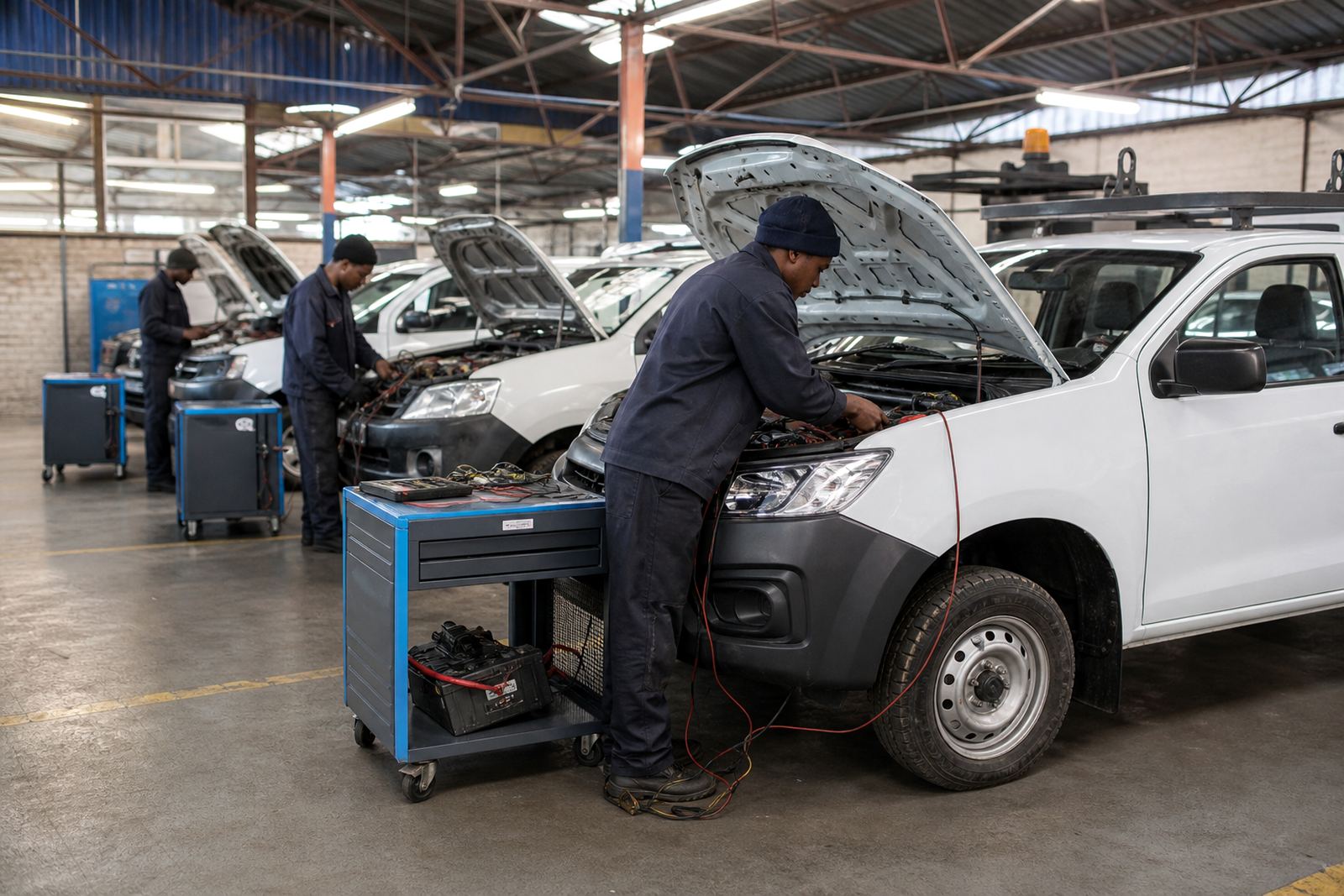
Fleet operators in Cape Town, Brackenfell and Durbanville often want one camera rule for many vehicles, but each unit behaves differently. A courier van with long idling periods may tolerate parking mode better than a small hatchback that sits for days at a time. Older batteries, trailer wiring, trackers and other accessories can also change the best power choice.
That is why we look at the vehicle’s use pattern before fitting power. A tracker and a dashcam can share the same vehicle, but they should not be treated as if they draw power in the same way. If the battery is already carrying another constant load, the dashcam feed may need its own protection or a shorter parking window.
For fleet work, the usual goal is dependable footage without creating extra downtime. For private owners, the goal is often simpler, no battery surprises and a neat install that does not spoil the cabin.
A Cape Town case from a mixed-use bakkie
A Montague Gardens bakkie used for site visits and after-hours parking needed both driving footage and parking protection. The owner wanted the camera live only when necessary, but also wanted evidence if the vehicle was bumped outside the office. The battery had already shown signs of weakness, so a direct constant feed would have been a poor call without checks first.
We tested the battery and charging output, confirmed the alternator was healthy, then looked at the fuse box for a proper ignition feed and a stable constant feed with cut-off protection. The install was kept simple, with the camera set to switch into parking mode only when the voltage stayed within safe limits. That approach suited the vehicle’s mixed use, and it avoided overworking a battery that was already doing enough.
In jobs like that, the right answer is rarely the fanciest one. It is the one that respects the vehicle’s condition, the way it is parked, and how much strain the electrical system can carry without trouble.
What we check before choosing switched or constant power
There is no single power option for every dashcam. The correct setup depends on the vehicle, the battery condition and the level of parking coverage the owner expects. At our Montague Gardens workshop and on call-outs across Cape Town, we first look at the electrical state of the vehicle, then choose the feed that fits the job.
- Battery health and charging output
- Fuse box access and circuit suitability
- Expected parking time and daily use pattern
- Existing accessories already drawing power
- Earth point quality and cable routing space
If the vehicle spends long hours parked, constant power may make sense. If the owner mainly wants clean driving footage, switched power is often the better route. The camera should work without creating a new electrical problem, and that means the installation has to be thought through from the start.