A fleet fit-out needs a wiring map, not just parts
When a Cape Town fleet adds trackers, reversing beacons, fridge sockets or cabin charging outlets, the usual mistake is to treat each item as a one-off add-on. That approach leaves loose joins, mixed fuse sizes and earth points hidden under trim, which makes future fault finding slower and more expensive.
A better method is to plan the accessory circuit as part of the vehicle's electrical system. At V-Auto in Montague Gardens, that means checking where the power source sits, how the circuit is protected, where the earth return runs and how the accessory will be isolated for testing later. A tidy loom is not cosmetic, it is the bit that keeps the fleet moving when a fault shows up in a job car or bakkie.
For private owners, the same idea applies. A dash-mounted power outlet or tracker can be fitted neatly, but the real value is in the routing, the fuse choice and the way the wires are secured against heat, rub points and moisture. In coastal areas like Milnerton and Somerset West, damp air and salty spray can find weak joins fast, so the finish matters.
Trackers and beacons fail for boring reasons
Most tracker and beacon complaints are not caused by the device itself. They usually start with a loose crimp, a poor earth, a fuse that is too heavy for the wire size, or a take-off point that was never meant to carry extra load. That is why accessory planning starts with the circuit, not the gadget.
In workshop terms, we look for the small things first. Voltage drop on the supply line, a weak earth path, an ignition feed that dies under load, or a wire that has rubbed through against a bracket. On modern vehicles, a careless tie-in can also disturb a CAN bus line or confuse a control module, so the job needs fault tracing.
- Use the correct fuse size for the wire and the load
- Keep tracker and beacon feeds away from hot exhaust zones
- Protect joins with proper insulation and strain relief
- Mount units where future testing is still practical
- Record the circuit path so later work stays neat
Power outlets need more than a neat bracket
Cabin charging points and load-area power outlets get used hard in fleet vehicles. Drivers plug in phones, handheld scanners, cooler boxes and small accessories, often while the engine is idling in traffic or on a site visit. If the outlet is wired with undersized cable or tied into the wrong circuit, the result is heat, blown fuses, erratic power or dead accessories.
We approach these installs by checking the draw, the route, the mounting position and the likely service pattern. A vehicle that works in Bellville traffic all week faces different wear from a bakkie doing Paarl runs and gravel road stops. Wire routes need to allow for vibration, trim movement and quick access when a fuse or connector needs inspection. Sounds simple, but many jobs go off track at this point in our workshop.
Good planning also helps with load distribution. If one circuit is already carrying a fridge, a beacon and extra lighting, then the next outlet should not just be piggybacked onto the same feed. Splitting the load properly keeps the electrical system easier to understand and easier to maintain.
Starter and charging checks protect the accessory work
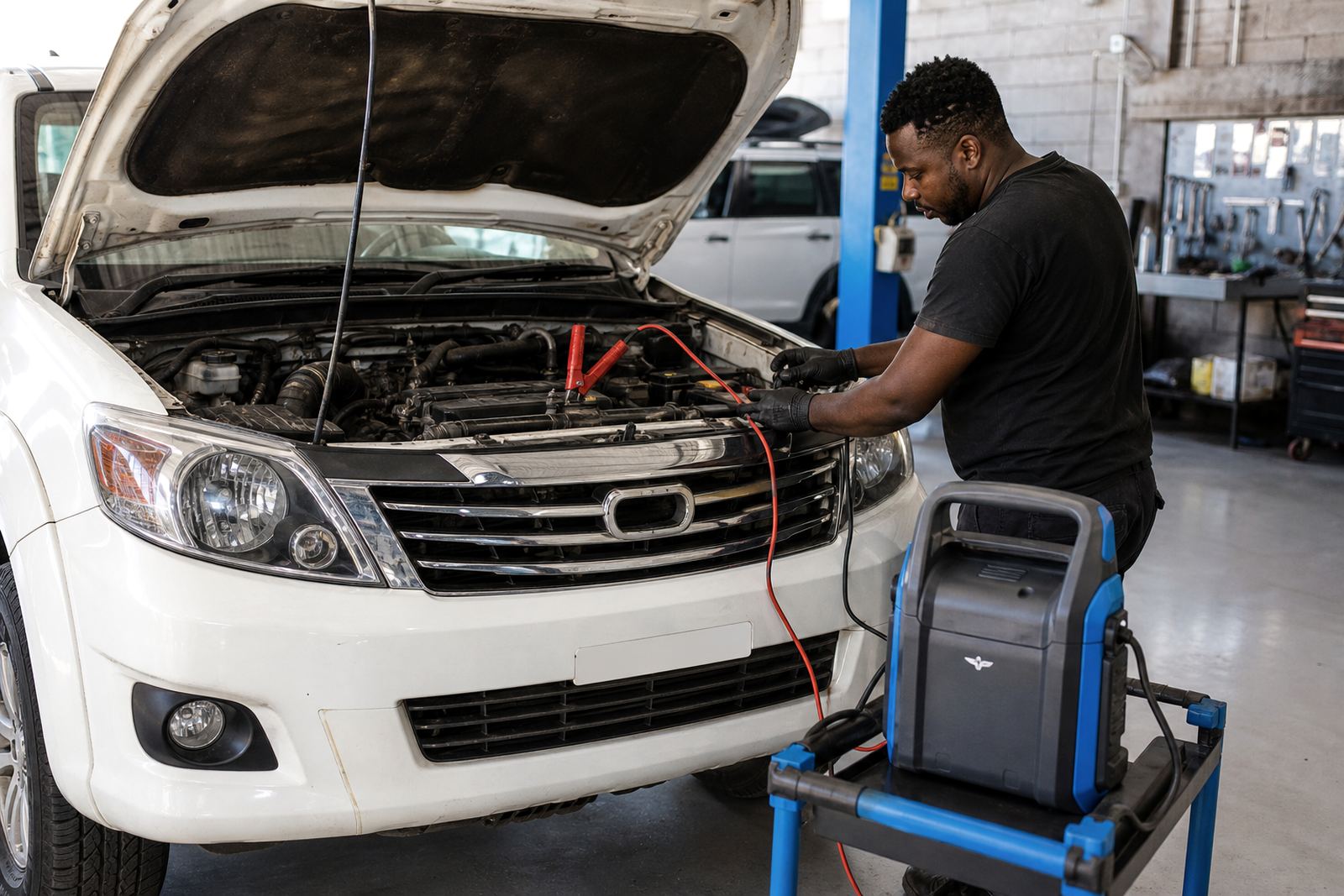
Accessory faults often look like tracker trouble or a dead outlet, yet the real cause sits in the vehicle's charging system. A tired alternator, weak battery, bad earth strap or starter circuit problem can pull voltage down far enough to upset accessories and control units. That is why we test the whole system, not only the add-on.
Battery and charging checks show whether the system is holding voltage under idle and running conditions. Live data helps when the vehicle has smart charging, while a parasitic drain test can show whether an accessory or wiring fault is drawing power overnight. If a fleet vehicle keeps flattening a battery after a tracker fit, the issue may be in the trigger feed or in the way the unit was earthed. No guessing, just tracing.
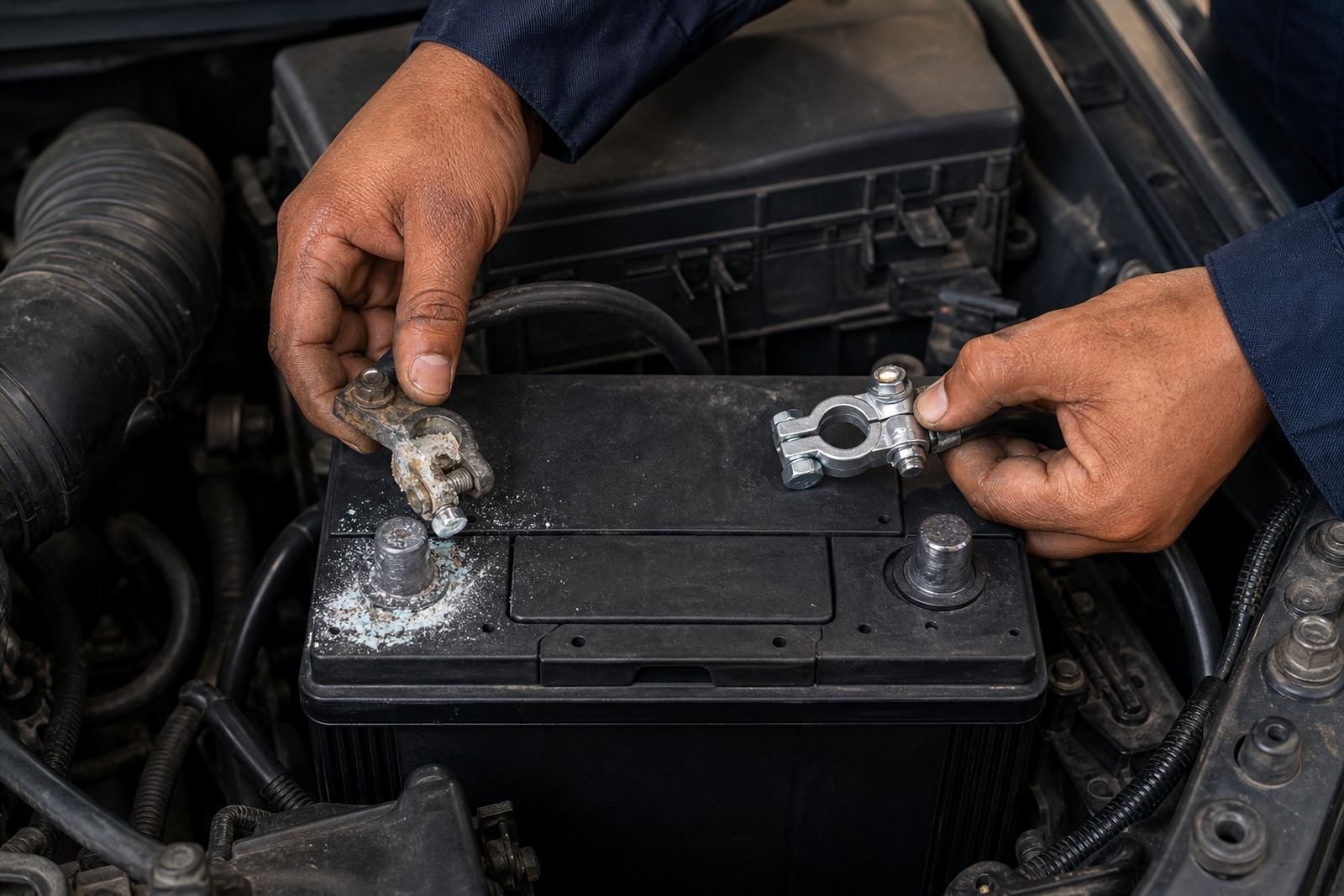
For vehicles with repeated electrical trouble, the workshop also checks starter current draw, main supply integrity and any signs of corrosion in connectors or fuse boxes. That wider view saves time when several symptoms appear at once.
Montague Gardens courier fleet accessory fitting
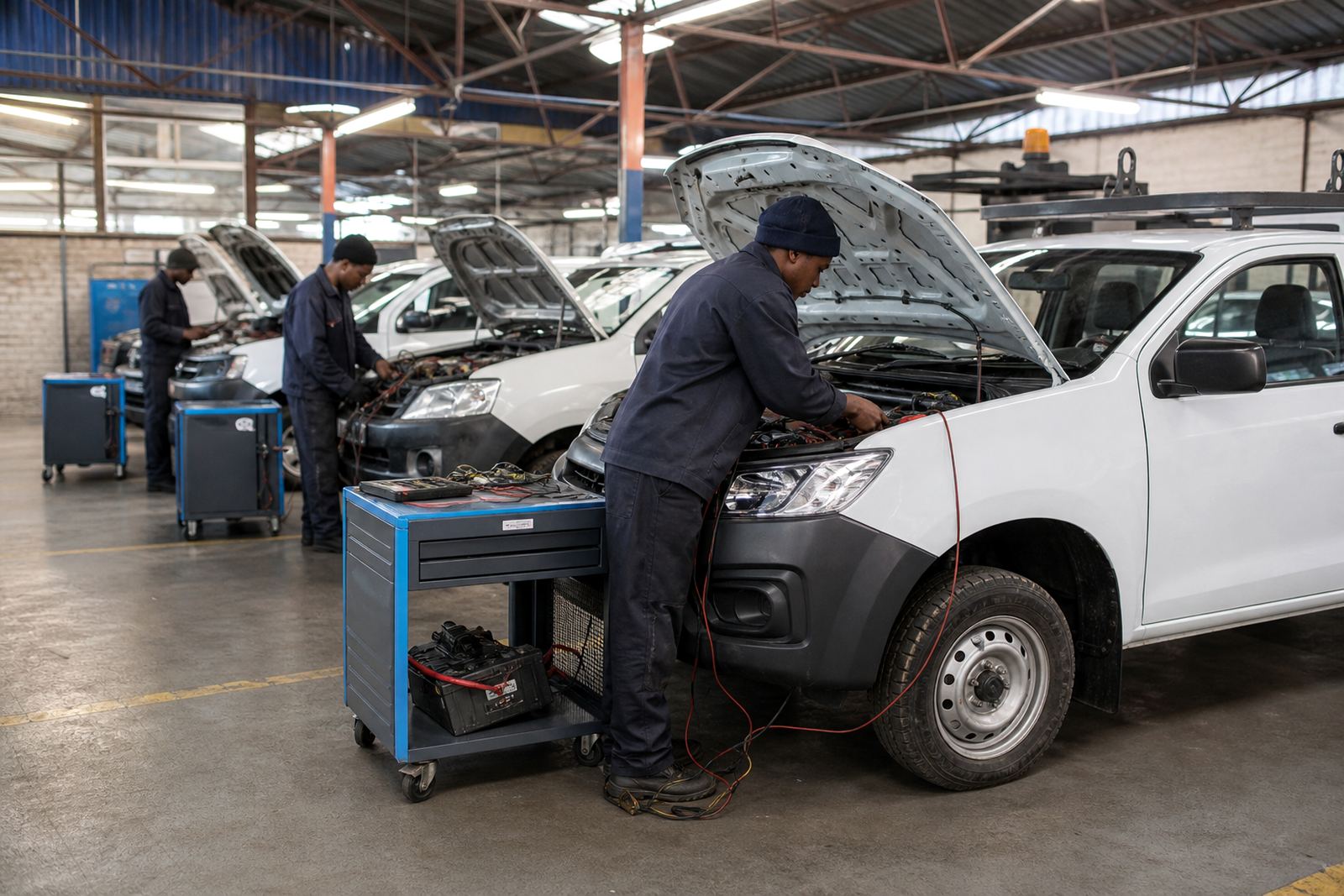
A courier operator running light vans between Montague Gardens, Milnerton and Bellville may need trackers, reverse beacons and a few charging outlets fitted across the fleet. If each vehicle gets a different method, the maintenance team ends up chasing five variations of the same fault. One van has the fuse behind the glove box, another under the seat, and a third with a hidden earth point near the bodywork. It becomes a mess.
Our preferred method is to standardise the layout where the vehicle allows it. Similar fuse positions, labelled feeds and consistent earth routing make later checks far quicker. If one technician is tracing a complaint, the next person should not have to learn the whole van from scratch. That is true for fleet work and for single vehicles too.
- Keep a common wiring style across the fleet where possible
- Use labelled protection points for quick fault tracing
- Leave access to connectors, not buried knots of cable
- Keep the install clear of moving trim and sharp edges
That sort of consistency is what turns accessory fitting into maintainable work, not just a finished installation.
What we check before the vehicle leaves the bay
Before a fitted accessory goes back into service, we test the system under the conditions that matter. The circuit must power up cleanly, hold voltage, and stay stable with the engine running. We look at the earth path, the fuse choice, the switch trigger, the connector security and any sign of interference with other vehicle systems.
We also make sure the vehicle can still be diagnosed later. A well-planned accessory job should not block access to fault codes, live data or the wiring points that matter during future repairs. If a tracker, beacon or outlet is fitted without that thought, the next fault can take twice as long to find. That costs fleets time and private owners money in unnecessary repeat work.
From our workshop in Montague Gardens, we handle accessory planning alongside wiring repairs, starter repairs, alternator repairs, charging system faults, earth faults and CAN bus fault checks. That mix matters because a clean install is only part of the picture. The real aim is a vehicle that can be serviced without tearing half the trim apart.