When a wire fault is really a pattern
A single warning light can point to more than one problem. A circuit may carry power at rest, then fail when the engine vibrates, or when rain gets into a connector, or when a load is added by headlights, fans or a trailer plug.
That is why wiring work starts with the fault pattern. A blown fuse tells only part of the story. A loose earth, rubbed cable, corroded connector or tired relay can create the same complaint in a very different way.
- Intermittent faults often show up over bumps or rough roads.
- Heat can open a weak joint after the engine bay warms up.
- Moisture tends to expose poor sealing and corrosion at terminals.
- Previous repairs can hide the original break under tape, joiners or twisted wires.
What heat and vibration do to a loom
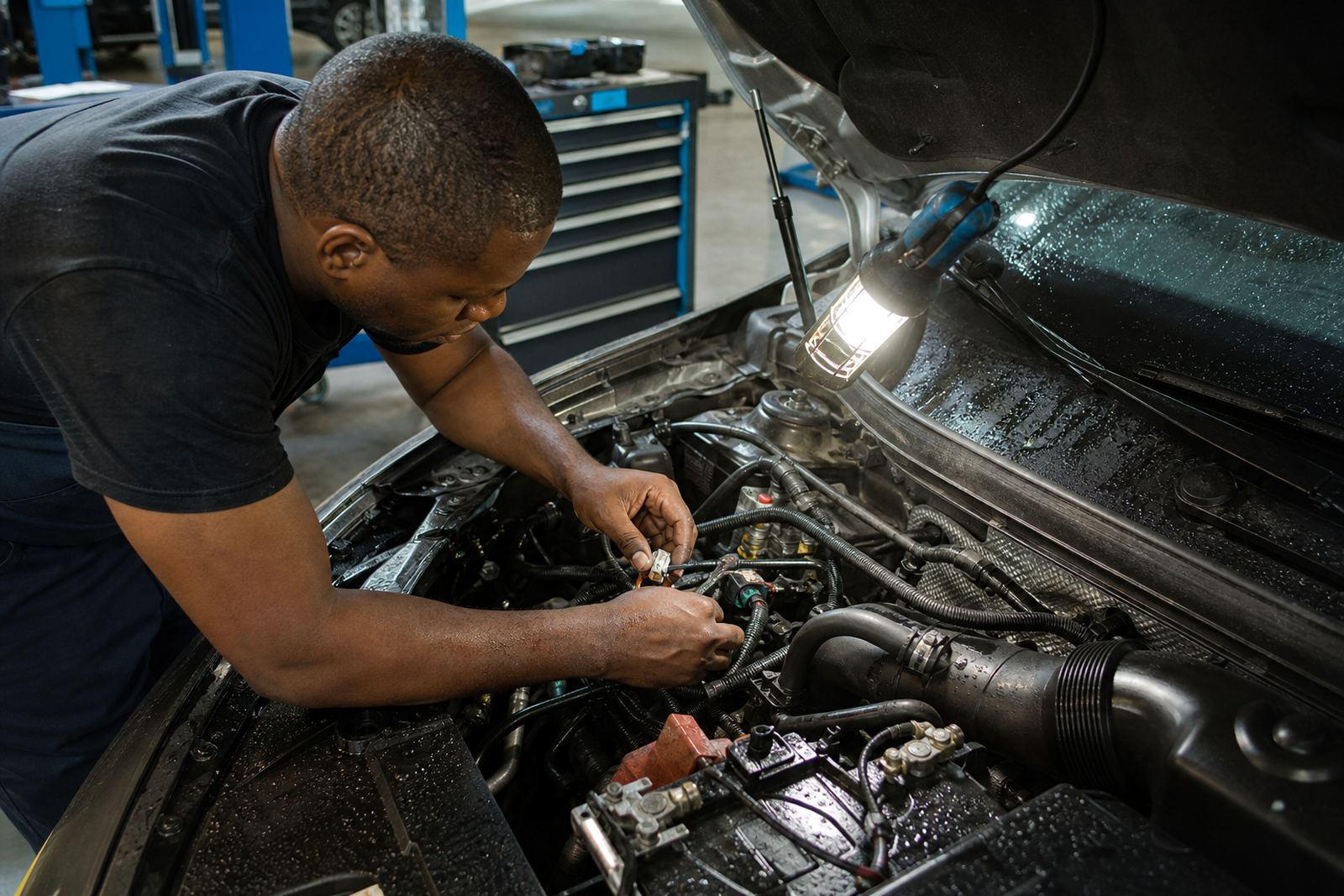
Engine bays in Cape Town vehicles deal with steady heat, then sudden cooling, then heat again. Over time insulation hardens, clamps loosen and wires rub against brackets or body edges. A cable that looked fine on the lift may fail only when the engine torques over or the vehicle reaches a certain speed.
Vibration also exposes weak crimps. A connector that was not made properly may pass current for months, then begin to open and close as the vehicle moves. That is when faults feel random, though the cause is usually very physical.
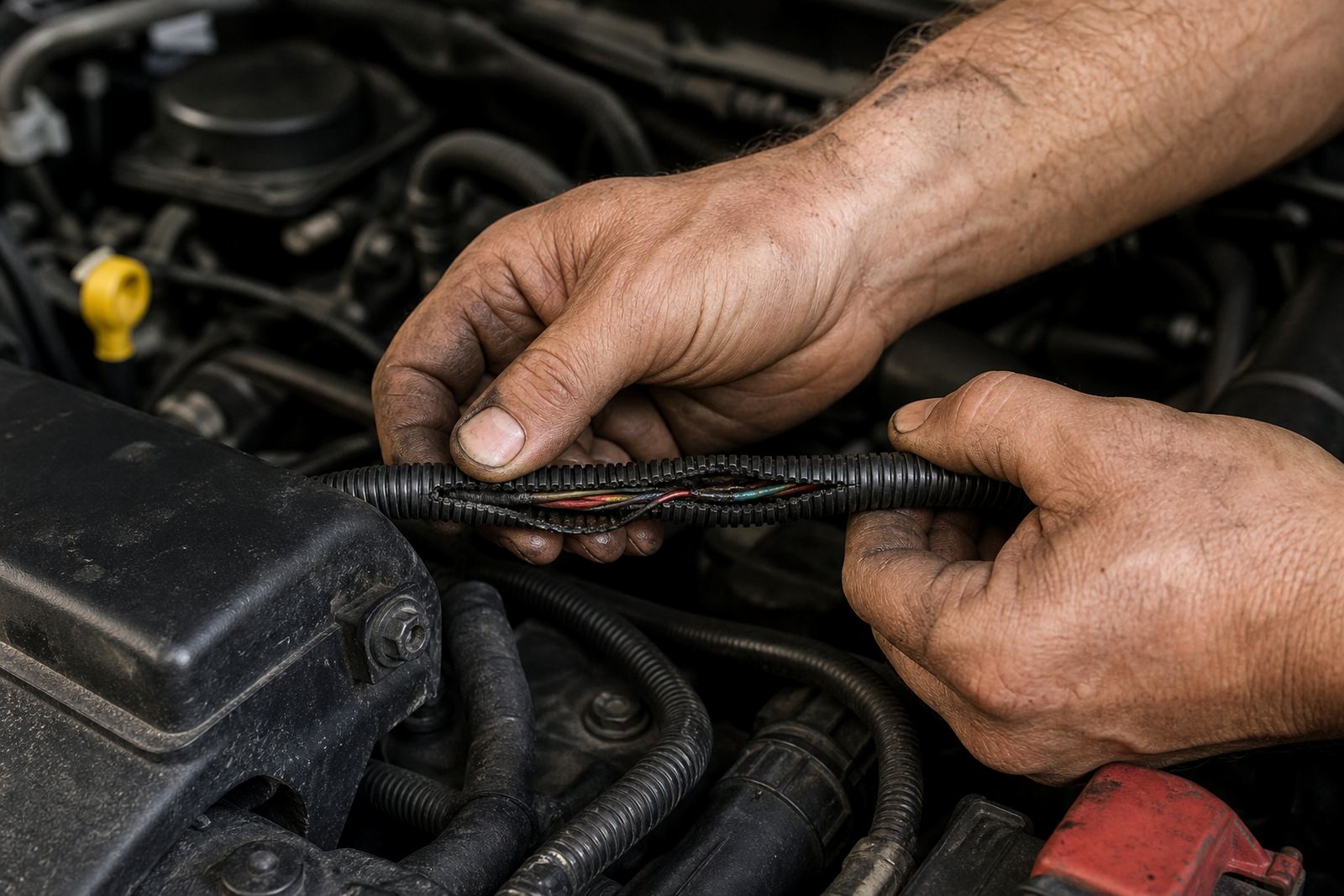
- Chafed insulation often leaves a shiny spot or copper showing through.
- Poor routing can place the loom against sharp metal or hot surfaces.
- Old tape can trap grit and hold moisture against the wire jacket.
- Loose battery terminals may mimic a bad alternator or starter issue.
Moisture near the coast changes the fault picture
Vehicles around Milnerton, Montague Gardens and Somerset West spend time in air that carries salt and damp. That does not mean every wiring issue is coastal, but moisture does speed up corrosion where protection is already weak. Fuse boxes, trailer plugs, earth points and connectors low on the body are common trouble spots.
Water ingress is often subtle. A plug can look dry outside while green oxidation builds inside the terminals. The contact then heats up under load, resistance rises, and the circuit starts failing only after a few minutes of use.
- Check for water marks inside connectors and fuse housings.
- Inspect earth points for rust, paint contamination and loose hardware.
- Look at trailer wiring where road spray and dust meet.
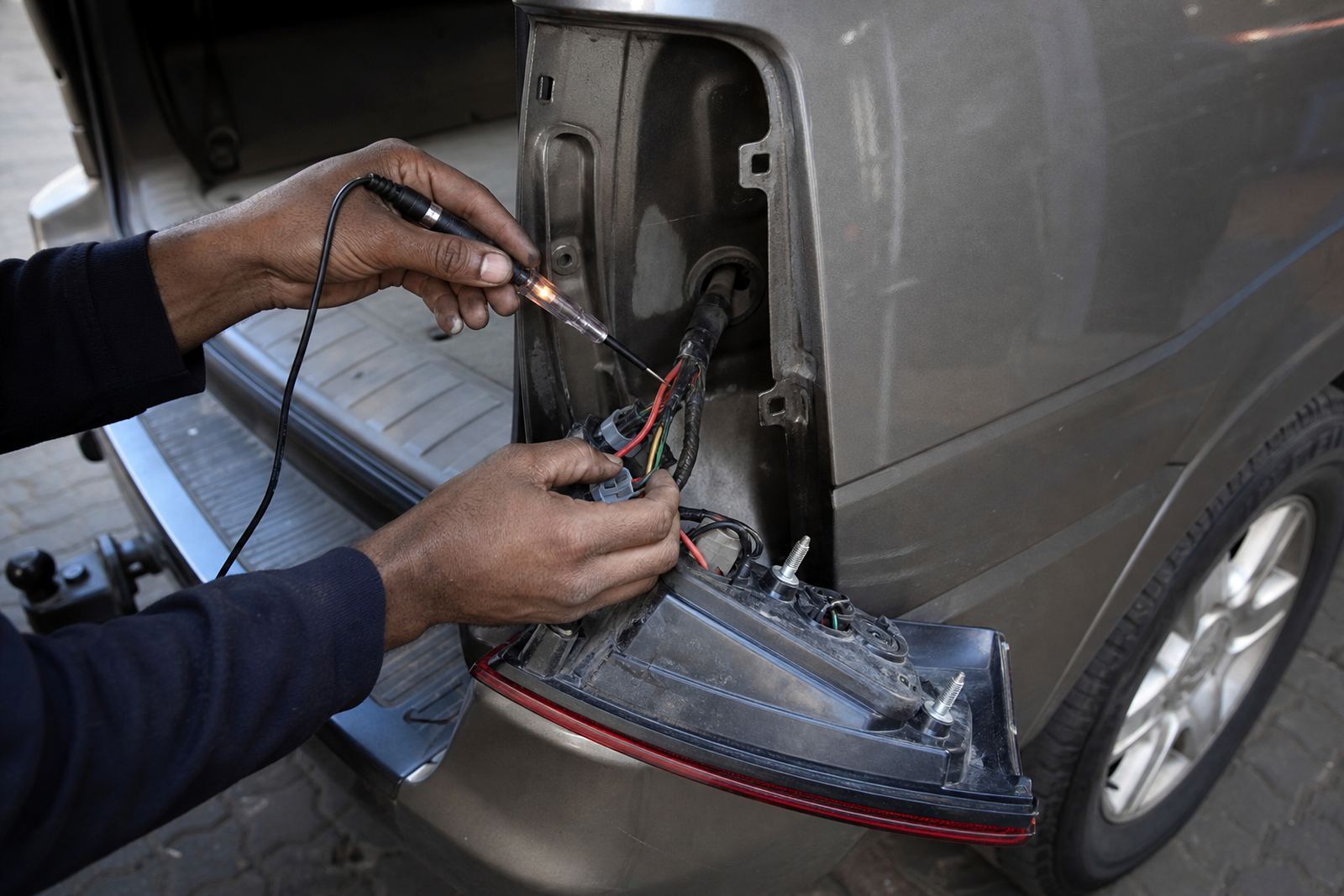
- Test lamp circuits with the lights switched on, not only at rest.
Past repairs leave clues if you know where to look
Many fault patterns begin with work done months earlier. A quick splice, a missing sleeve or a wire joined at the wrong point can carry the car for a while, then fail when the load changes. We often find repairs that were made to get a vehicle moving, but not to suit daily use on Cape Town roads.
The clue is not always visual. A repaired section can still pass continuity tests and yet drop voltage under load. That is why live data, voltage drop checks and careful probing matter. If the repair altered a CAN bus signal or disturbed a shared earth, the fault may spread beyond one component.
Common signs of earlier repair problems include:
- Non-standard joiners hidden under old tape or split loom.
- Wire colours that no longer match the original harness route.
- Fuse ratings changed to cover a deeper fault.
- Multiple lights, sensors or accessories failing from one source point.
How diagnostics separate wiring from component failure
Not every dead unit means the wire is bad. A starter can be sound while the trigger circuit is weak. An alternator can be healthy while the charge light stays on because of a poor sense wire or earth fault. The job is to separate the component from the circuit feeding it.
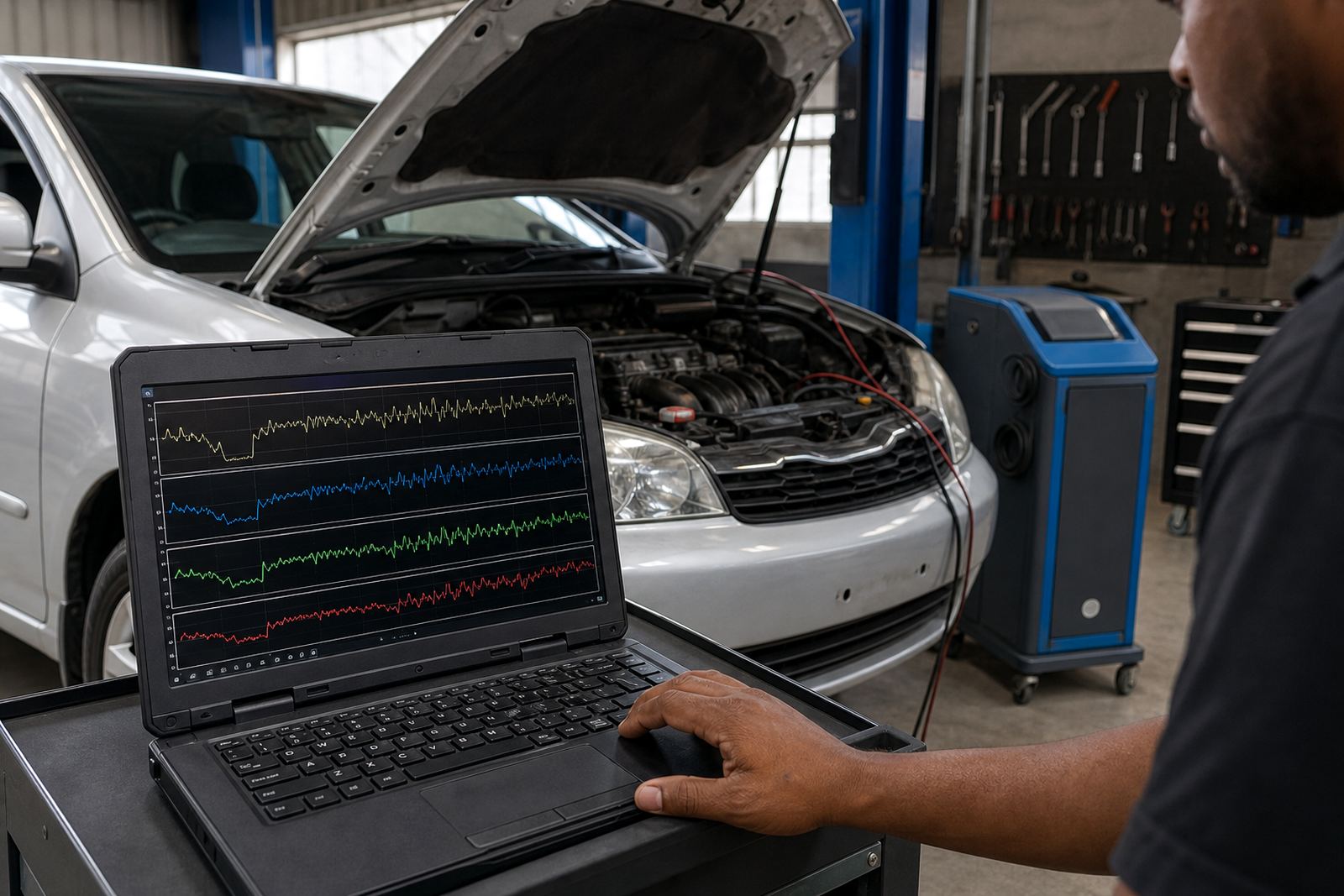
We use fault code reading, live data review, battery and charging tests, parasitic drain checks and voltage drop testing to trace the break in the chain. If needed, we inspect starter circuits, alternator output, fuse boxes and body earths, then work toward the exact point where power or signal is lost.
- Fault codes give direction, not the full answer.
- Live data shows whether a signal changes under real conditions.
- Voltage drop testing reveals resistance hidden by a basic continuity check.
- Parasitic drain testing helps when a vehicle goes flat overnight.
A Montague Gardens case with a trailer and a drain
A fleet bakkie came in from the Cape Town side with a battery that kept running flat and rear lamps that flickered only when the trailer was attached. The first signs pointed to one problem, but the pattern was wider. The rear harness had a rubbed section near the tow area, and a previous repair near the earth point had left a weak connection under load.
Once the wiring was opened up, the drain and the lamp issue made sense together. The repair needed proper rerouting, fresh terminations and a clean earth point, not just a new fuse or a quick rewrap. That is the kind of fault that can waste a full day if the pattern is not read early.
For fleet vehicles and private cars alike, the lesson is plain: the visible symptom is usually the last place to look, not the first.
Keeping repaired wiring from failing twice
A good wiring repair should suit the vehicle’s use, not just the workshop bay. After repair, the cable needs protection from rub points, heat and water, and the loom must be secured so it does not move back into the same weak spot.
On vehicles that carry accessories, trackers, extra lighting or trailer loads, the electrical system needs to be checked as a whole. One new device can expose an old fault in charging, earth return or fuse protection. That is why accessory fitting and wiring repairs often belong in the same inspection.
- Use proper routing and support clips where the loom moves.
- Protect repaired sections with correct sleeving and sealing.
- Confirm charging voltage and battery condition after the fix.
- Test the circuit under working load, not only with the ignition on.
Our workshop in Montague Gardens handles wiring repairs, earth faults, starter circuits, alternators, battery drain faults and CAN bus checks across Cape Town, Bellville, Milnerton, Somerset West, Paarl, Brackenfell and Durbanville, with mobile call-outs where that makes the job practical.