A quiet warning before the vehicle stops
Fleet downtime often starts with a complaint that sounds minor. A slow crank, a warning lamp that flickers, a tracker that drops off now and then, or a trailer light that works only when the cable is moved. These are the sort of faults that get pushed to the next service if the vehicle is still moving, but they usually point to a larger issue inside the electrical system.
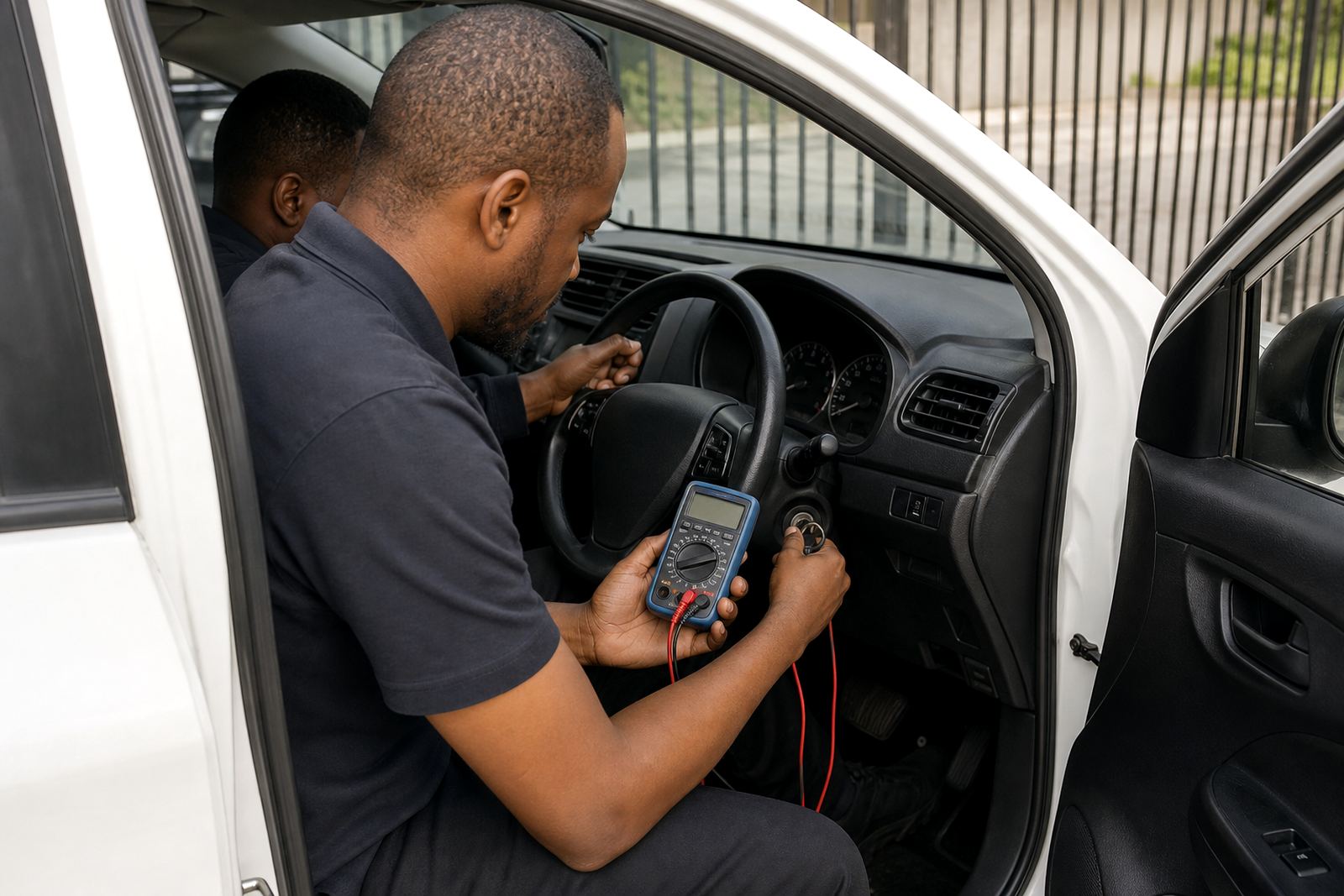
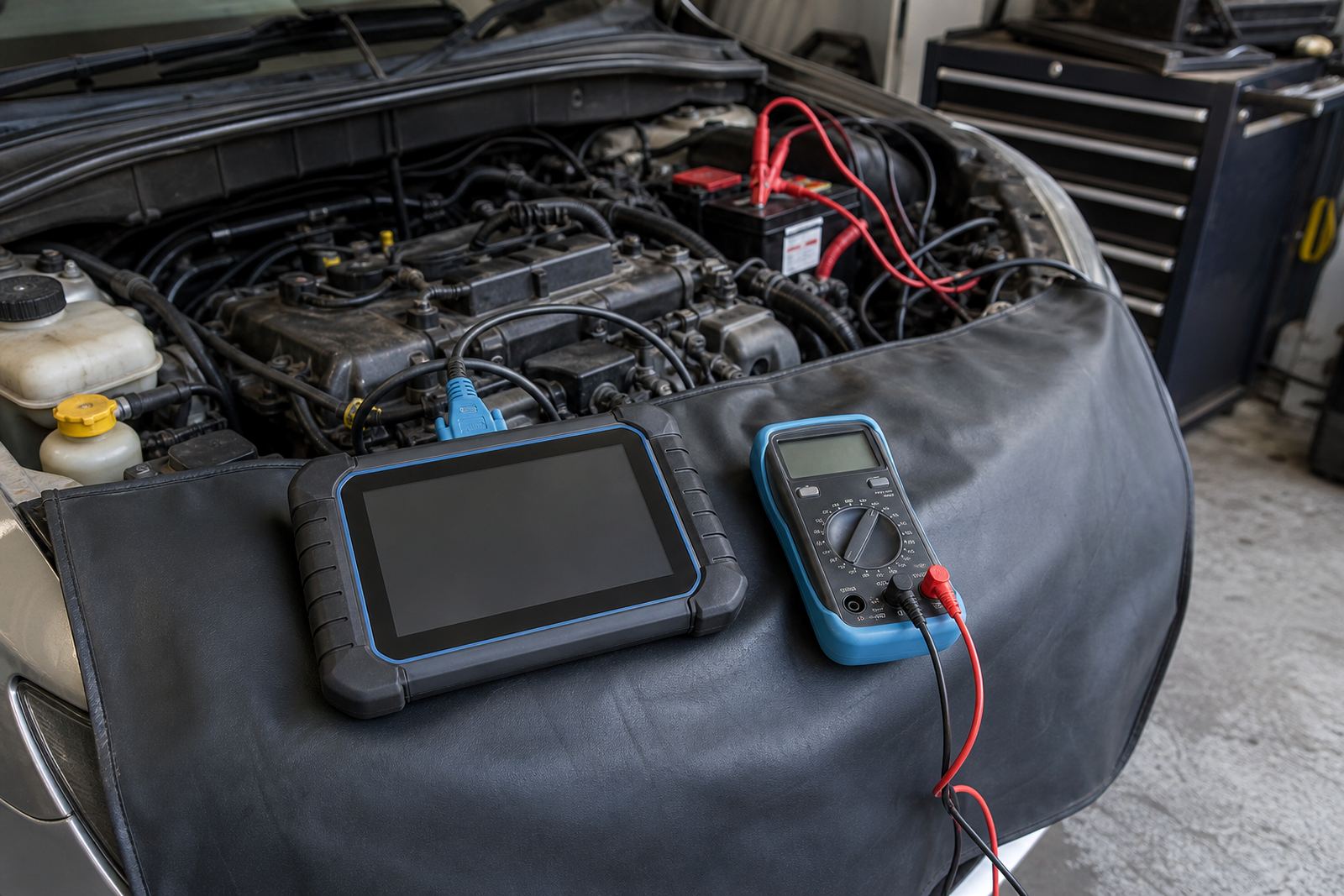
Early testing helps you catch the fault while it is still localised. OBD fault codes, live data, battery testing and charging checks give a technician a clearer picture of the fault. When a fleet vehicle is already in daily use across Cape Town, Bellville or Milnerton, that kind of check can be the difference between a planned repair and a missed delivery.
What we look at before parts get touched
Good diagnostics start with the basics. A tired battery can mimic a starter fault, a poor earth can look like a failed alternator, and a charging issue can hide behind a dashboard warning that seems unrelated. The point is not to replace parts in sequence and hope for the best, it is to test the circuit and find the break in the chain.
- Battery condition and cranking voltage under load
- Alternator output and charging voltage at idle and under load
- Parasitic drain when a vehicle is parked overnight
- Starter draw and starter circuit health
- Earth paths, fuse boxes and main wiring feeds
- CAN bus basics when modules stop talking to each other
That sequence matters on fleet units that are clocking long days. A technician who starts with the test leads and scan tool can often narrow the fault before the vehicle gets stripped.
Where delay creeps in on working fleets
Some faults are hidden because the vehicle still starts, just not cleanly. Others only appear under heat, moisture or vibration. In coastal areas around Montague Gardens and Milnerton, corrosion at terminals and connectors can appear faster than many owners expect. In the northern suburbs and out toward Paarl, vehicles that do a mix of short runs and highway work can show battery drain that only becomes obvious after several stop-start cycles.
Fleet downtime also grows when the same vehicle comes back with different symptoms each week. A loose terminal, worn starter cable or fractured wire inside a loom can behave like three separate problems. That is why a complete electrical check matters more than a quick reset and a hopeful road test.
Mobile call-outs help when the vehicle cannot sit out a shift
Not every unit can be driven to the workshop once the warning lights come on. For private owners and fleet operators across Cape Town, Bellville, Somerset West and Paarl, mobile call-outs can keep the fault check moving without waiting for towing. On-site testing is especially useful when a vehicle is stuck at a depot, in a yard or at a site where leaving it idle affects the whole day’s schedule.
On a call-out, the first job is usually to separate a charging problem from a starting problem. If the alternator is not producing the right output, the battery may never recover. If the starter circuit has excess resistance, the vehicle may crank slowly even with a good battery. Those small distinctions save time later because the repair plan is clearer from the start.
- Fleet depots with several vehicles parked in one place
- Breakdowns where a quick fault check is needed on site
- Vehicles with intermittent starting or charging complaints
- Trailer wiring faults that affect the tow vehicle too
Tracker and accessory fitting that does not create new faults
Tracker and accessory fitting should not leave a fleet with new electrical noise, poor joins or extra drain overnight. Clean routing, proper fusing and sound earth points matter just as much as the device itself. If a unit is added badly, it can upset the charging system, interfere with existing wiring or make future fault finding harder.
For fleet managers, the goal is not only installation. It is keeping the vehicle serviceable after the fitment. That means the wiring should be neat, accessible and built around the vehicle’s existing layout, not forced into places that make later repairs more difficult.
Montague Gardens battery fault diagnosis
A panel van working between Montague Gardens, Bellville and Somerset West may start showing a battery lamp only now and then. The driver notices a slow crank after a few short stops, then a dead battery after an overnight park. It looks like a single flat battery at first, but a proper electrical test can reveal a charging fault or an earth problem that has been draining the system for days.
Once the underlying fault is found, the repair becomes much more predictable. The van goes back into service with the fault repaired. For a fleet, that is the real benefit we see. Fewer repeat visits, less roadside uncertainty and less time spent trying to work out which part failed first.
How V-Auto approaches fleet electrical work in Montague Gardens
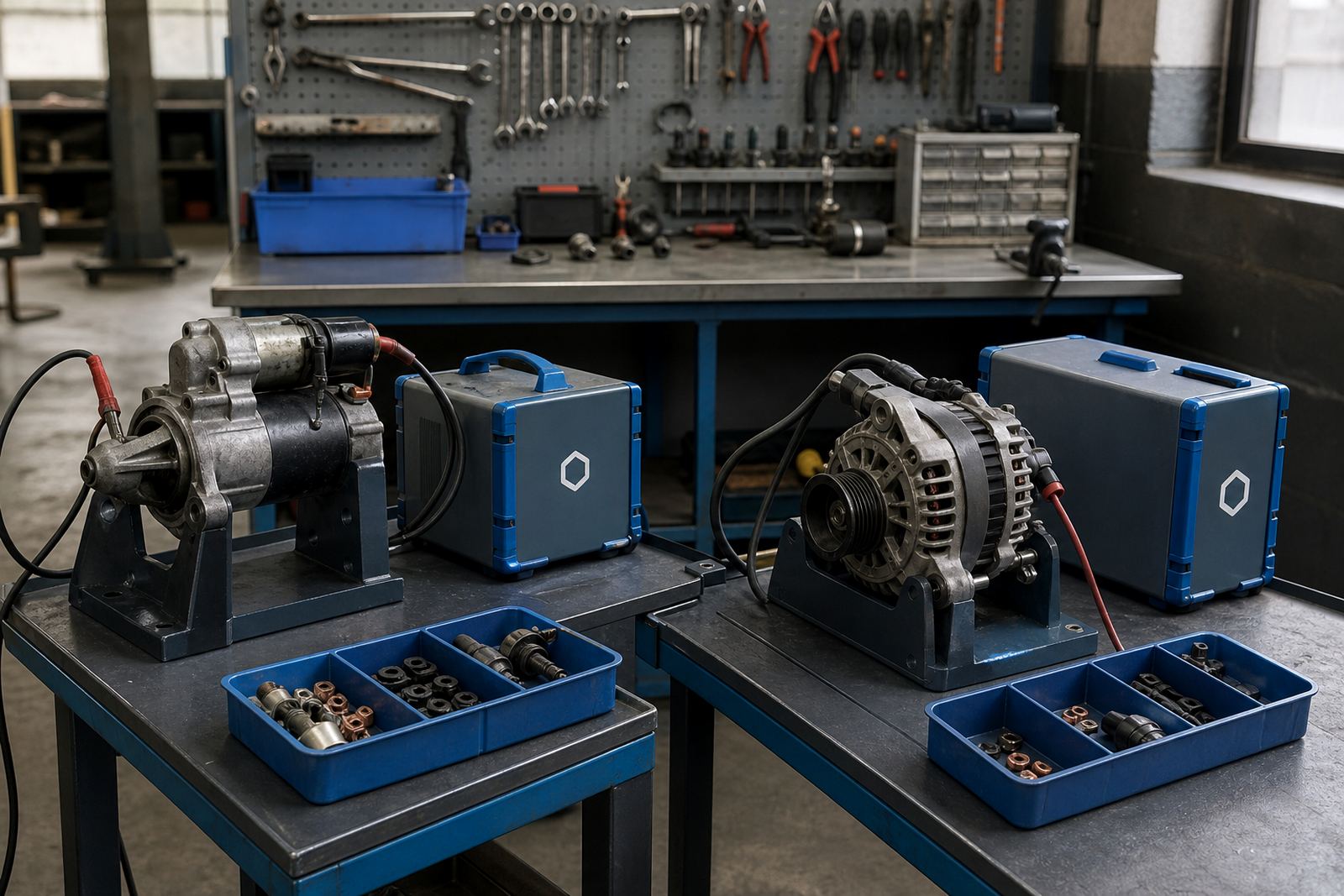
V-Auto handles vehicle diagnostics and auto electrical work from Montague Gardens, with support for Cape Town Call-Outs and the surrounding areas. The workshop team traces wiring faults, repairs starters and alternators, checks battery drain, handles charging system faults and fits trackers and accessories for fleet and private vehicles.
That mix matters because fleet downtime rarely comes from one neat category. A warning lamp may lead to a loose connector, a starter circuit issue may expose a weak battery, and a trailer wiring fault may point to a deeper earth fault. When the same workshop can read the code, test the circuit and carry out the repair, the vehicle spends less time waiting around and more time working.
Our contact form is the right place to start when a fleet vehicle keeps showing the same electrical fault or an intermittent problem is turning into lost time.