When the fuse box becomes the weak point
The fuse box is not just a row of blades and labels. It is a distribution point for power to lighting, ignition, engine management, trailer wiring and accessories, so one overheated cavity can upset several systems at once. In workshops around Cape Town we often see the same pattern: a customer swaps fuses, the fault returns, and the real problem sits behind the fuse panel in a cooked terminal, a spread socket or a bad earth path.
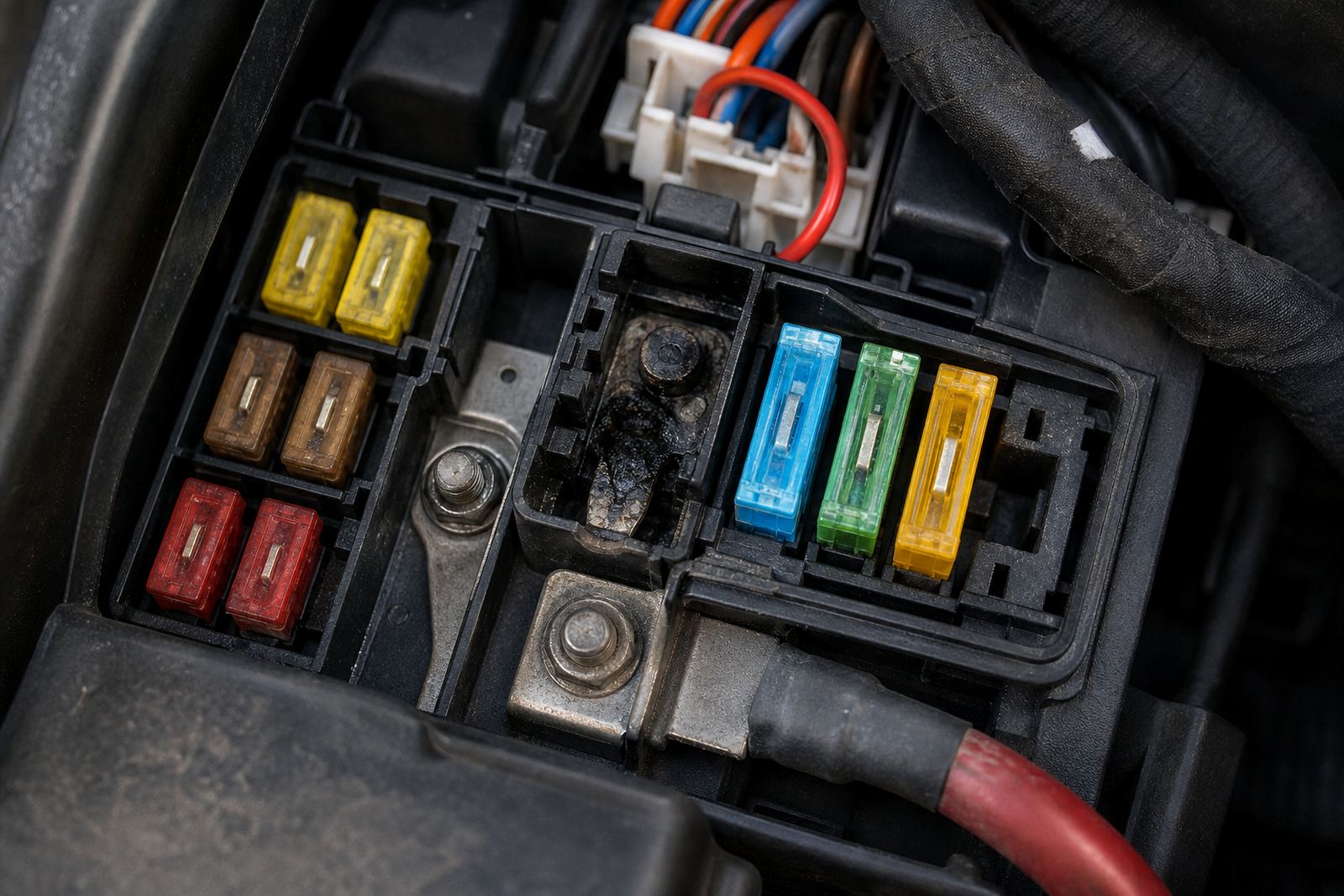
Heat is usually the first clue. Plastic may darken, a blade can sit slightly loose, or there may be a faint burnt smell around the box after a long drive or a heavy electrical load. Moisture matters too, especially on vehicles used near the coast where salt air and condensation can creep into connectors and set corrosion in motion.
What a proper fault check should cover
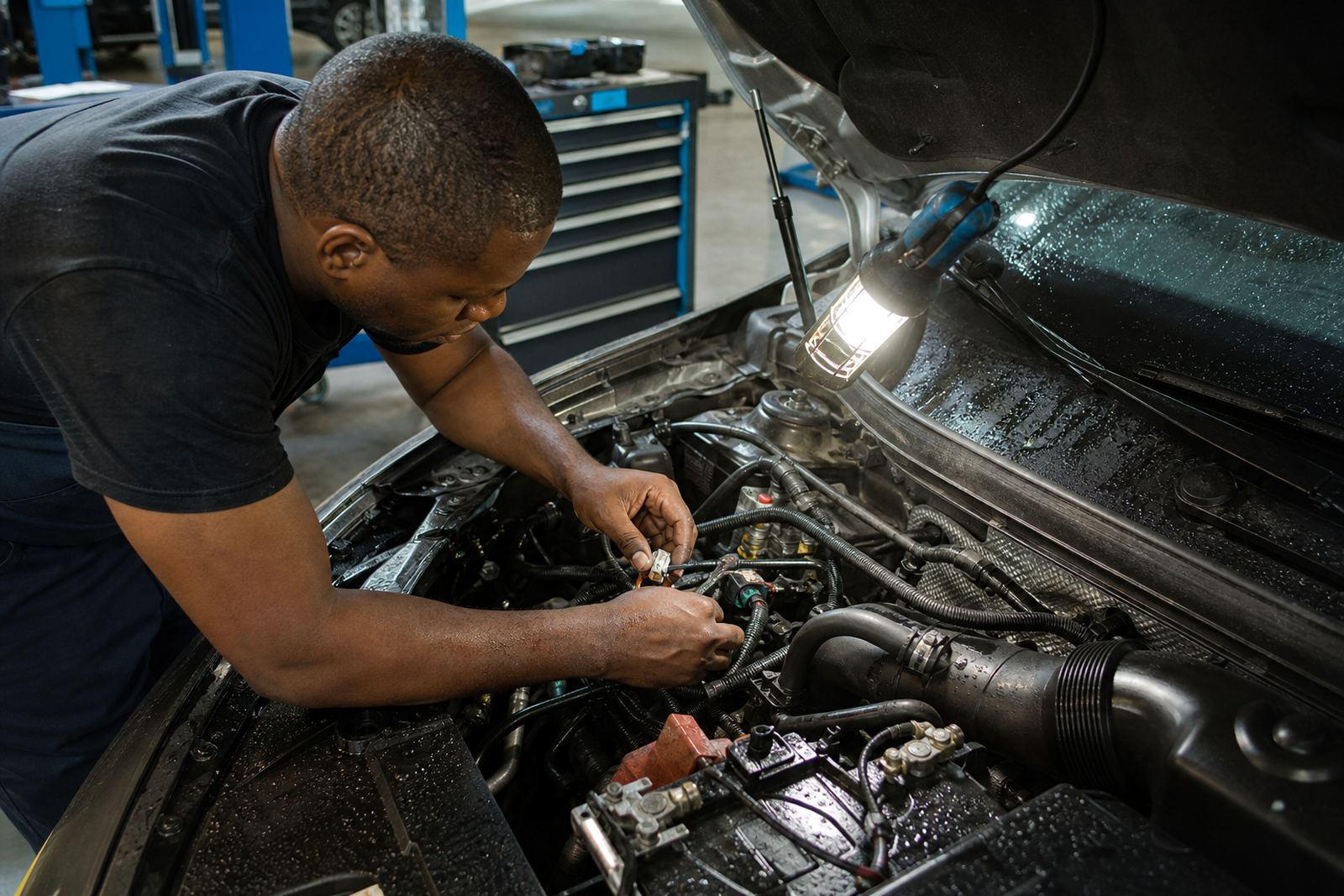
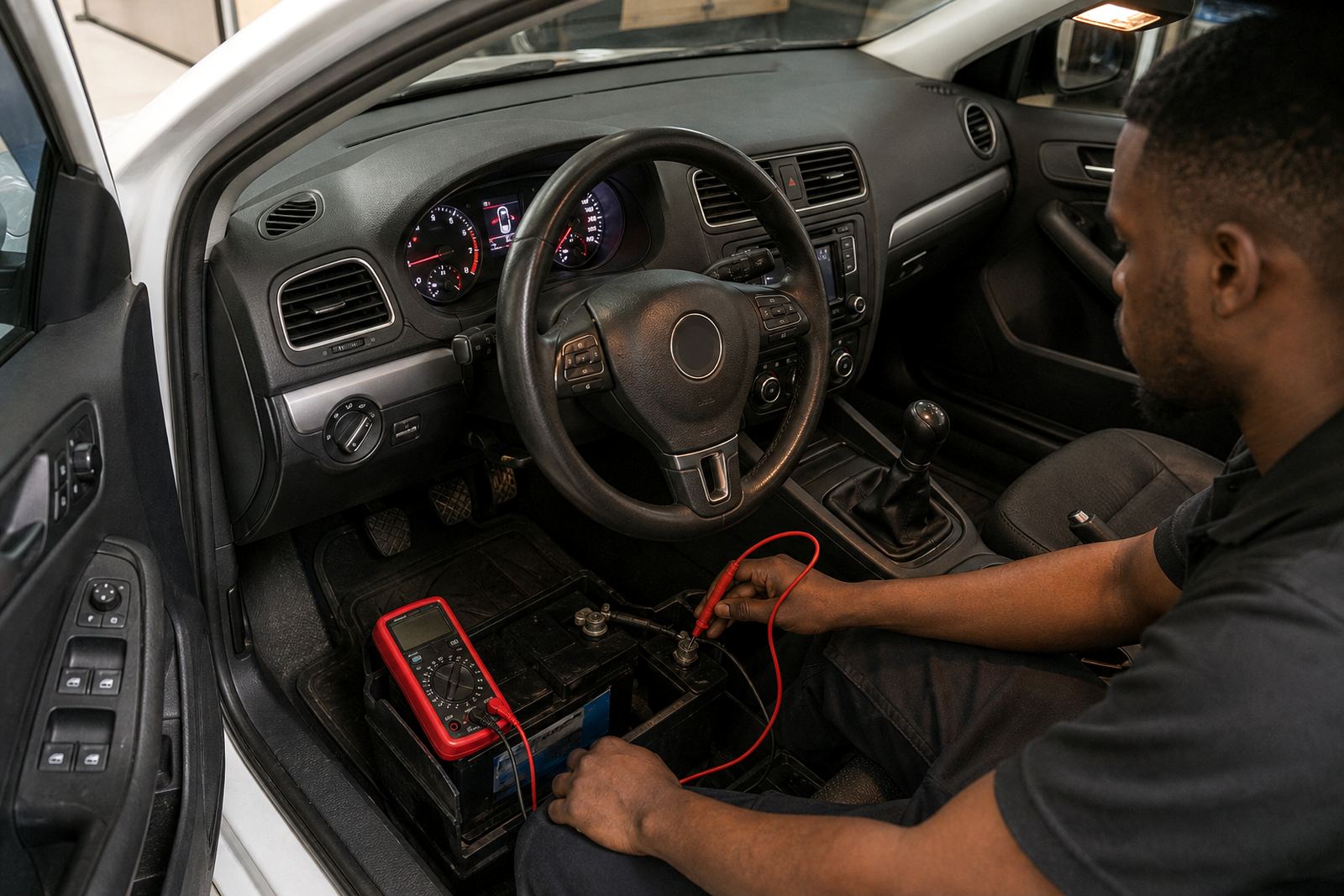
A careful check starts with the fuse box itself, then moves outwards to the circuits it feeds. We look at live battery supply, ignition feed, voltage drop across suspect points, and whether a circuit is drawing more current than it should. On some vehicles the trouble is not the fuse at all but a terminal that has opened up from repeated heating and cooling.
- Fuse condition and correct rating for the circuit
- Terminal grip inside the fuse box and signs of arcing
- Battery supply, ignition feed and earth path testing
- Voltage drop on lights, pumps and control circuits
- Related wiring faults in the loom or nearby connectors
We also scan for OBD fault codes and live data where the vehicle allows it. A code may point to low voltage, communication loss or a circuit under strain, but the code alone does not tell the full story. It still takes hands-on testing to find whether the issue sits in the box, a relay path, or an earth fault further along the line.
Common causes we see in local vehicles
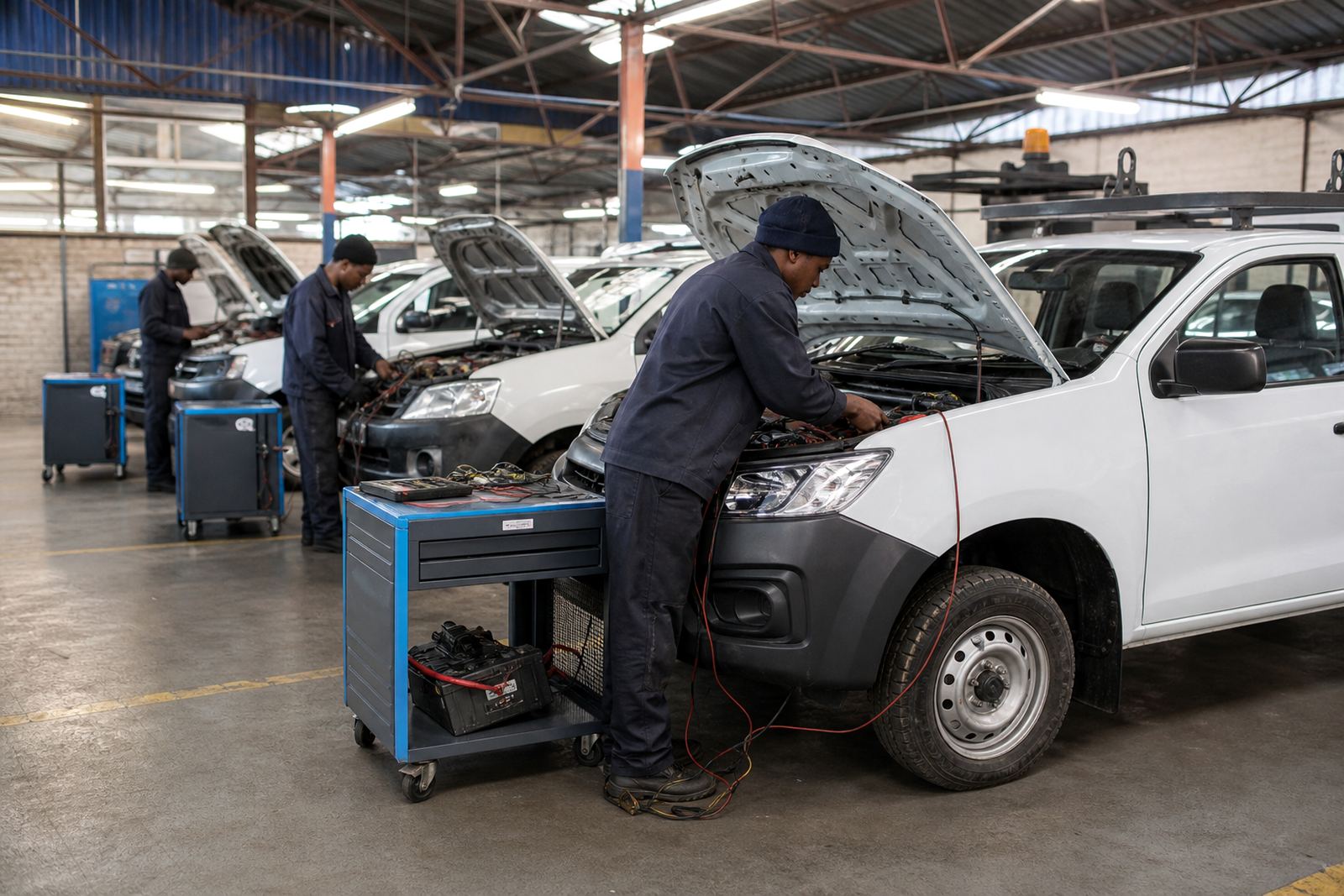
In Montague Gardens and the surrounding areas, fuse box trouble often comes from age, damp storage, trailer use or add-on accessories that were wired in without enough thought. Fleet bakkies that tow, run beacon lights or carry extra charging gear can load a circuit hard. Private vehicles that have had alarm work, stereo changes or charger fittings can suffer the same thing if the added wiring was tied into the wrong feed.
- Loose fuse or relay terminals from wear or heat
- Corrosion from moisture, coastal air or washdown water
- Overloaded circuits from poorly routed accessories
- Burnt connectors after repeated high current draw
- Earth faults that push current back through places it should not go
Sometimes the fuse box is not the only damaged point. A bad starter circuit can pull heat into nearby connectors. A charging fault can overwork the battery and make the whole electrical system unstable. If the alternator is overcharging or undercharging, the fuse panel may show the damage long before the driver notices the root cause.
How we repair the box and the circuit behind it
Repair work depends on what the test results show. A slightly loose fuse socket may be recoverable if the terminal can be tightened properly and the heat damage is light. If the plastic has softened or a terminal has lost its grip, the safer option is replacement of the damaged section or the full unit where that is required. A poor contact can return under load and take the same circuit down again.
Once the box is sorted, we verify the full circuit. That can include starter repairs, alternator repairs, charging system checks, battery drain tests and lighting repairs. If the problem came from a fitted accessory or trailer wiring, we trace the added load and rework the feed so it no longer overheats the original circuit.
- Damaged terminals cleaned, repaired or replaced
- Corroded connectors renewed where needed
- Heat affected wiring sections cut back and joined properly
- Accessory feeds separated from critical circuits
- Post repair testing under load, not only at idle
Milnerton fuse panel fault repair
A Milnerton delivery vehicle came in with a dead left headlamp, an erratic trailer light feed and a battery that kept going flat after standing overnight. The owner had already changed fuses, but the problem remained. In the workshop, the fuse box showed one warm cavity, a darkened terminal and a wiring path that had been carrying too much load for too long. The trailer feed had also been tapped into a circuit that was never meant to carry that extra draw.
After fuse box repairs, the trailer wiring was rerouted and the battery drain was traced to the same weak point. The vehicle went back with a stable charging system and lighting that held up under a proper load test. That sort of fault is common on working vehicles in Cape Town, especially when several small electrical changes have been made over time and nobody has checked the box itself.
When to book the workshop or a call-out
If the fuse box is warm to the touch, if one circuit keeps failing after new fuses are fitted, or if several unrelated items stop working at once, it is time for a proper inspection. The same goes for vehicles with repeated battery drain, slow starter pull-in, flickering lights or strange intermittent faults that appear after rain or after a long drive.
At V-Auto in Montague Gardens, we handle fuse box troubles alongside wiring repairs, earth fault checks, CAN bus fault checks and accessory fitting for fleets and private owners. We work across Cape Town, Bellville, Milnerton, Somerset West and Paarl, with mobile call-outs for vehicles that cannot make it to the workshop. For an inspection, use our contact form and tell us which circuits are giving trouble, what has already been changed, and whether the fault is constant or intermittent.