Fuse protection belongs near the battery feed
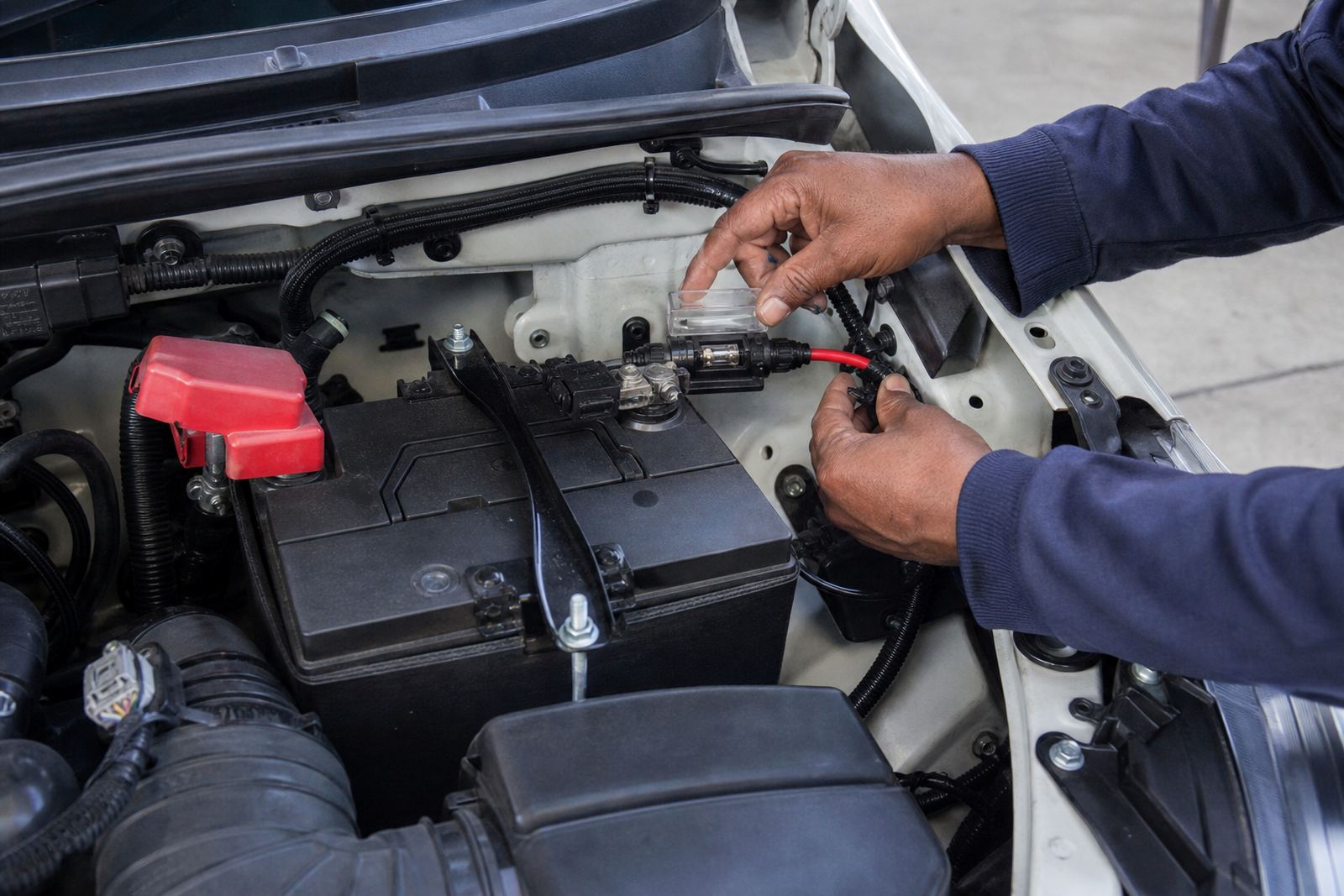
Any accessory that takes power from the vehicle needs a deliberate protection point in the circuit. That fuse is there to open the line before the wire gets hot, the insulation softens, or a fault spreads into the rest of the loom. When a feed is run long without protection, the wire becomes the weak link, and not in a good way.
We see this most often with lights, tracking units, fridges, inverters, fridge sockets, auxiliary sockets and added fleet equipment. The job is not just to make something work. The job is to give it a safe current path, a proper earth, and a fuse rating that matches the cable size and the load.
- Fuse the accessory as close to the power source as practical
- Match the cable size to the current draw and cable run
- Use a clean earth point with sound metal contact
- Keep joins sealed where moisture or dust can enter
What goes wrong when the fuse is left too far away
On a vehicle, every extra metre of unfused wire is a risk. A chafed section behind trim, a loose terminal under a seat, or a wire pulled tight through a grommet can turn a small fault into a burnt harness. That is why fused accessory wiring needs more thought than a quick tap into a live feed.
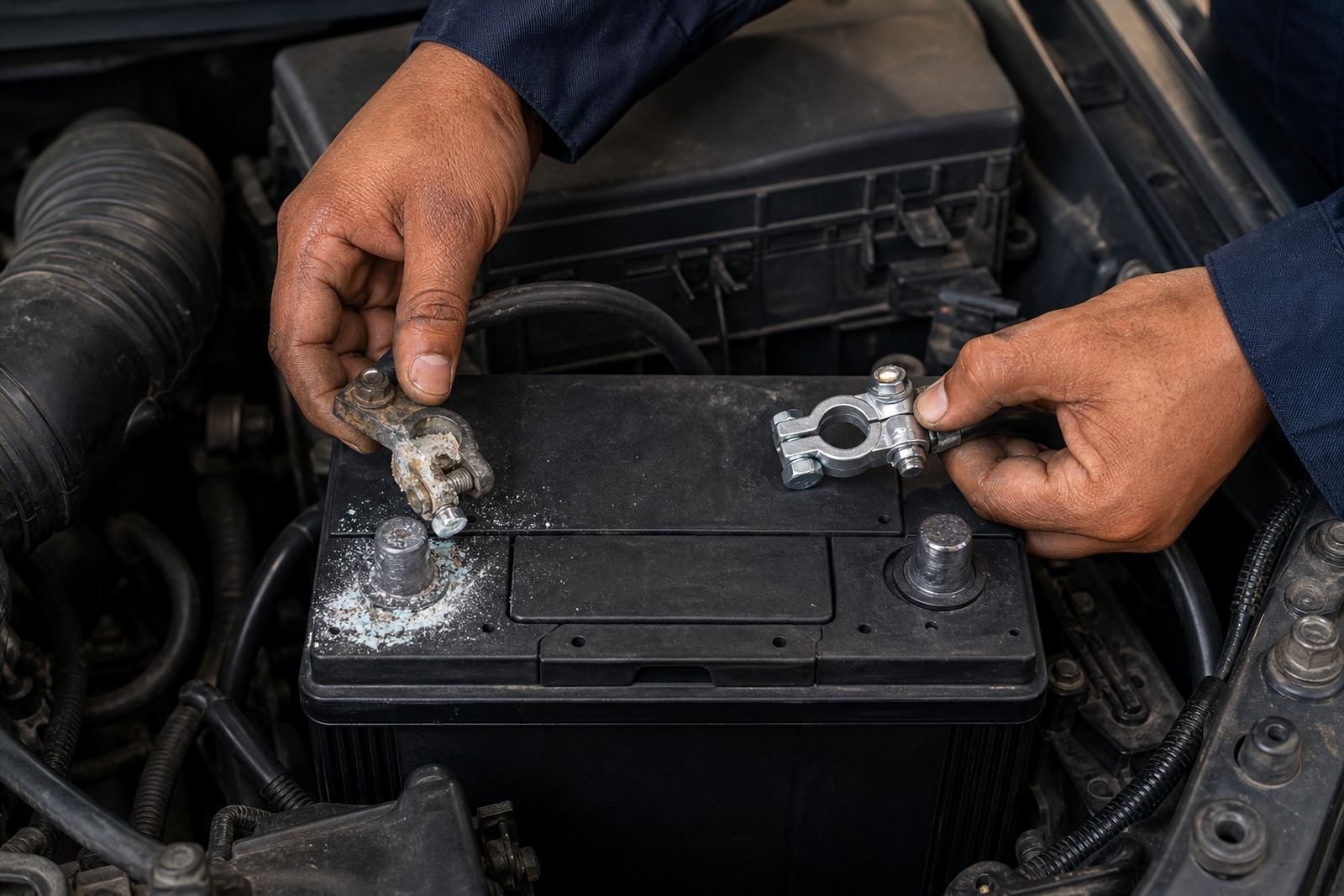
In workshop terms, the problem often shows up as a repeating blown fuse, dim accessories, a dead tracker, or an intermittent fault that only appears on rough roads. On bakkies and fleet vans used in and around Montague Gardens, vibration can work a poor joint loose fast. On coastal routes toward Milnerton or Somerset West, humidity also adds corrosion into the mix, so bad terminals age quicker than they should.
- Unfused sections can heat up before the fuse reacts
- Poor joins can create voltage drop and weak performance
- Loose earth points cause false faults and unreliable operation
- Moisture can creep into open connectors and terminals
Testing the circuit before any new accessory is fitted
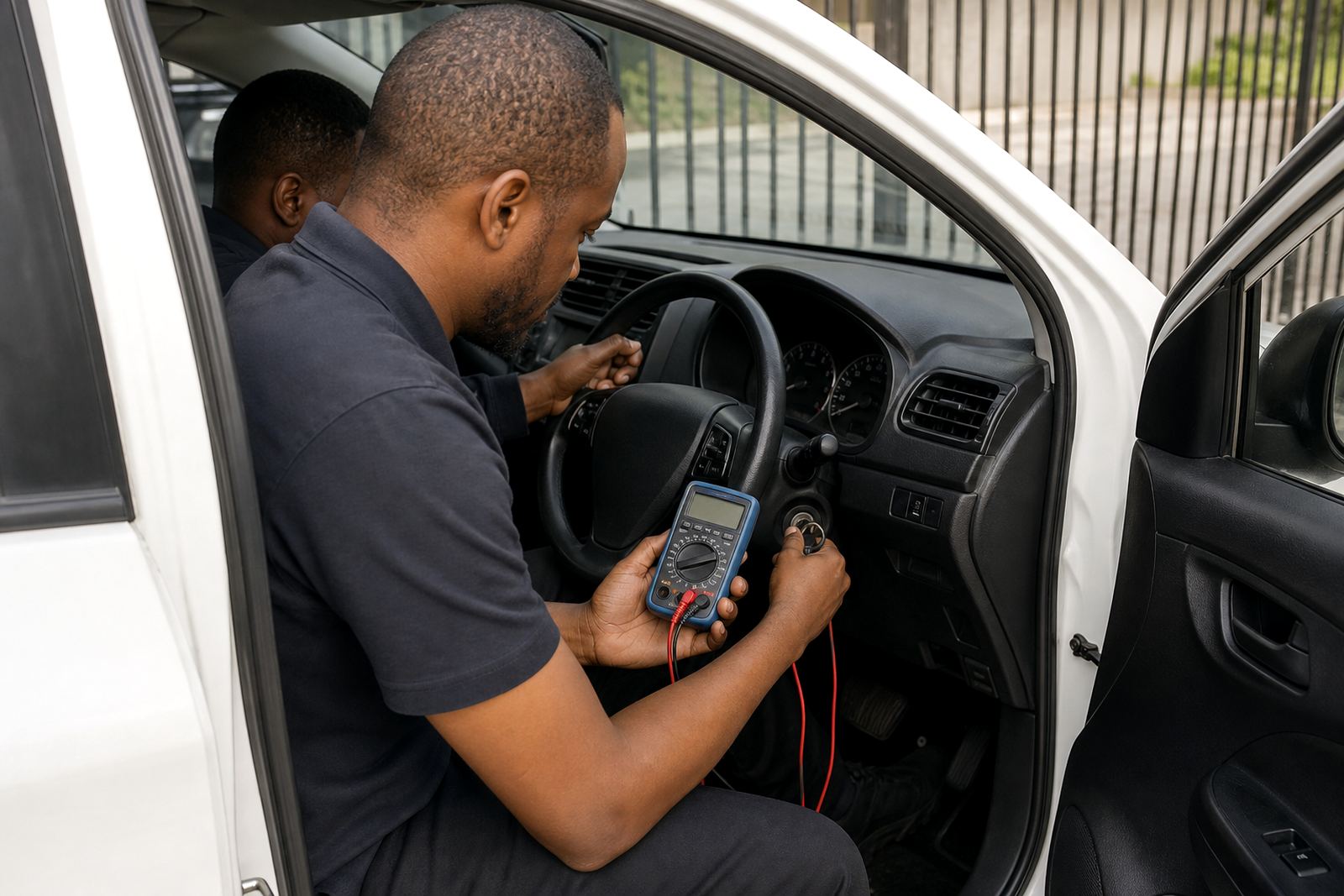
Before we fit an accessory, we test what the vehicle already has. That includes battery condition, charging output, live feed stability, fuse box layout, and any sign of parasitic drain. If the electrical system is already tired, adding another load can make a minor issue much harder to trace later.
A proper check also helps us find the right point to take power from. Some circuits are meant for ignition-switched use, others are constant live, and some should not be used for accessory loads at all. With CAN bus controlled vehicles, a wire that looks available may be monitored by the control system, so a careless tap can trigger faults or confuse the network.
- Battery test to confirm starting reserve
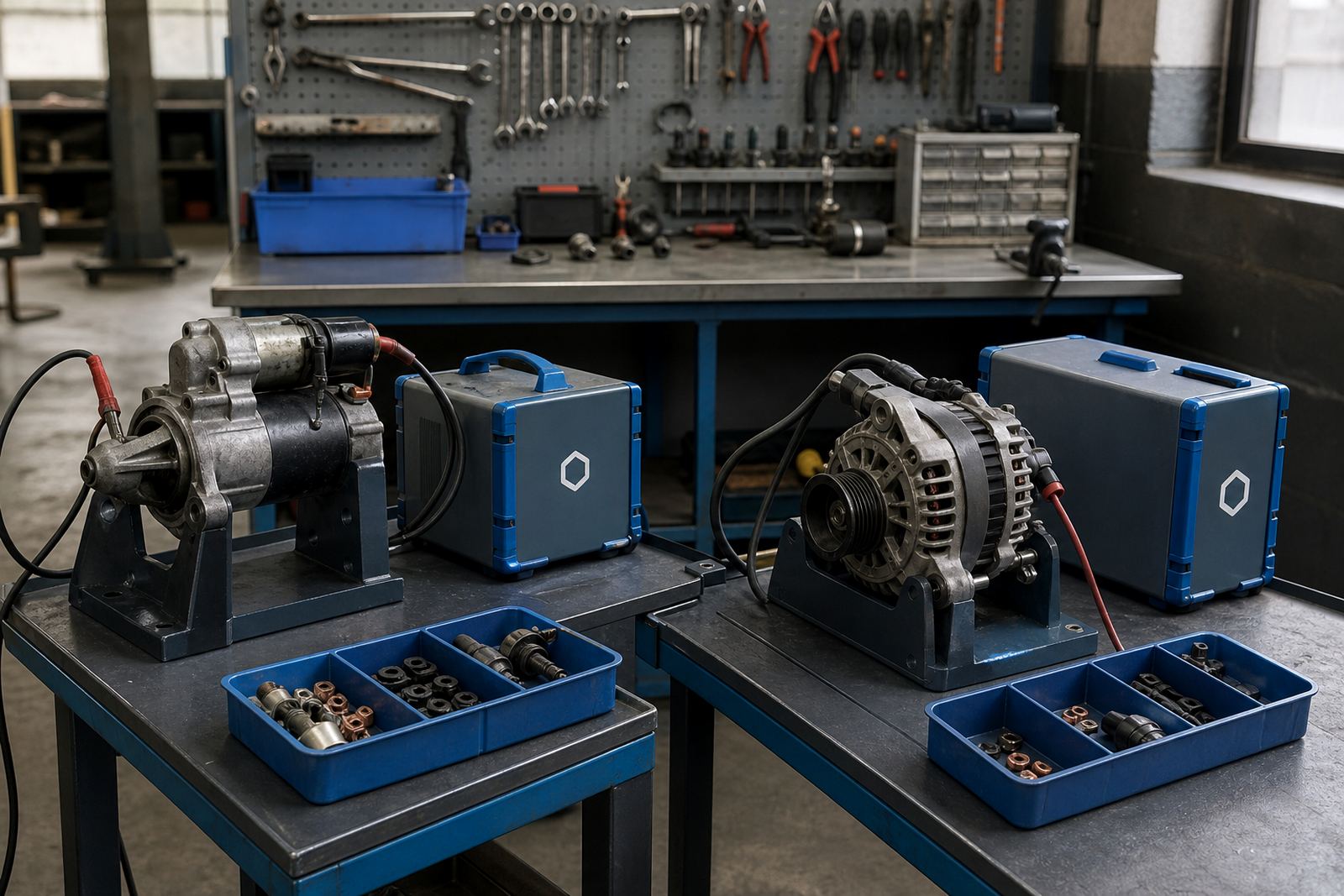
- Alternator and charging test under load
- Voltage drop check across the feed and earth side
- Parasitic drain test where standby current looks high
Accessory wiring that suits fleet work and private vehicles
Fleet vehicles need wiring that can take daily use, regular loading, and more than one driver. Private vehicles often need a neater finish, but the wiring standard should still be the same. The cable must be secured, the fuse must be accessible, and the install must not leave loose lengths rattling behind trims or dashboards.
We fit accessories for trackers, work lights, chargers, auxiliary sockets, trailer power points and control switches. The same basic rules apply each time. Protect the feed, protect the cable, and keep the circuit easy to inspect later. A tidy install saves time when a fault needs tracing months down the line.
- Trackers and monitoring units
- Accessory sockets and USB charging points
- Work lights and cargo area lighting
- Trailer wiring repairs and accessory rewiring
A Montague Gardens case with a sliding fuse issue
A local delivery van came into our Montague Gardens workshop with a fitted accessory that worked only after the driver tapped the loom under the dash. The owner had already replaced the fuse twice and thought the accessory itself was failing. The real issue was a feed taken from the wrong side of the circuit, with no proper fuse close to the source and a loose crimp that had started to burn the conductor.
We stripped the affected section, checked the battery and charging system, tested the live feed path, and rebuilt the circuit with the correct cable size, a properly mounted fuse holder, and a cleaner earth point. The accessory worked as it should, and the wiring no longer depended on a lucky bump of the harness. That sort of fault is common enough, especially on vehicles that run between Cape Town, Bellville and the industrial routes around Paarden Eiland and Milnerton.
- Fault traced beyond the visible accessory itself
- Bad join replaced with a secure crimp and sealing
- Fuse holder repositioned near the supply point
- Earth point cleaned and rechecked under load
Signs the accessory circuit needs attention
Some wiring faults stay hidden until the vehicle is under load or moving on rough roads. If an accessory flickers, loses power when another load switches on, or smells warm near the fuse area, it needs checking before the damage spreads. Repeated fuse failure is another warning sign, especially when no new device has been added.
We also look for cable rubbing, crushed insulation, overheated terminals, and loose splices hidden inside tape or split conduit. On vehicles used around Brackenfell, Durbanville or Paarl, long daily runs can shake out a weak connection that seemed fine in the shop. Good accessory wiring should stay quiet, stay cool and stay out of the driver’s way.
- Fuse keeps blowing without a clear reason
- Accessory flickers when the vehicle idles
- Lights dim when another load turns on
- Hot wiring, melted tape, or brittle insulation
How we approach fused accessory wiring at the workshop
Our workshop in Montague Gardens handles diagnosis and repair on the electrical side before any add-on is fitted or reworked. We read fault codes where needed, check live data on relevant systems, test the battery and alternator, and inspect the wiring path from source to load. If the job needs a mobile visit, we can also attend to fleet and private vehicles across the Western Cape, depending on the fault and the installation point.
The aim is straightforward: make the circuit safe, practical, and easy to maintain. That means the fuse is sized correctly, the cable is secured properly, the earth is solid, and the accessory does not depend on a loose take-off or a hidden splice that will fail later. If you need an accessory circuit checked, our contact form is the route to take.
- Fault finding for fitted accessories and added circuits
- Safe fuse placement and cable sizing checks
- Wiring repairs for damaged or overheated accessory lines
- Mobile call-outs for selected fleet and private vehicle work