
When the fault disappears under the bonnet
An intermittent fault is often a timing problem, not a broken part that stays broken. A vehicle may start cleanly in the workshop, then cut out on a cold morning in Milnerton, or show a warning light after a long run through Bellville traffic. That is why these jobs need a calmer process and proper notes from the driver.
We begin with the complaint itself. Does the fault happen after rain, over speed bumps, when the engine is hot, or only when the aircon and lights are on together? Those details help narrow down loose connections, worn relay contacts, earth faults and wiring that opens up under vibration. The fault may not be present on arrival, but the pattern usually is.
Reading data the fault leaves behind
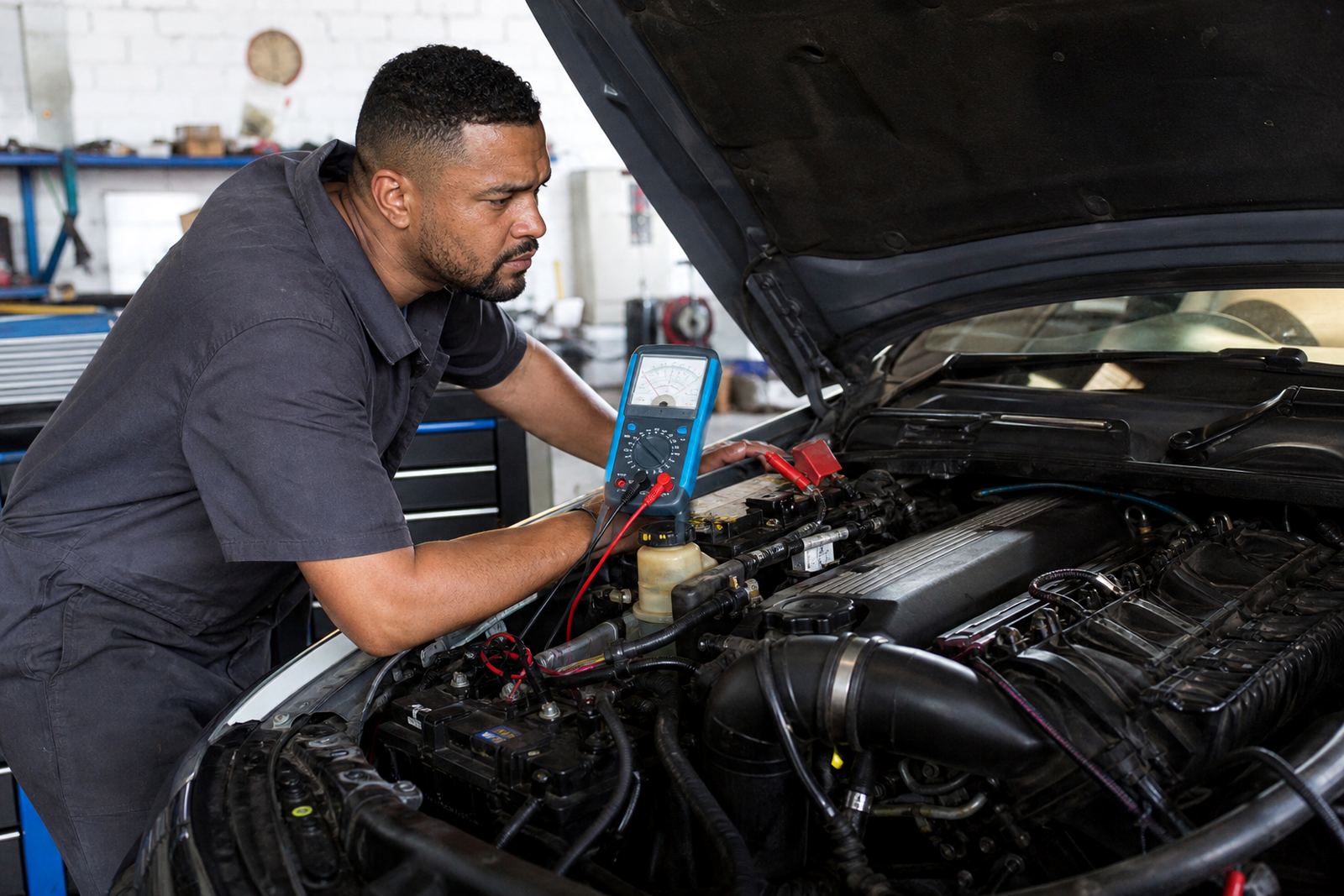
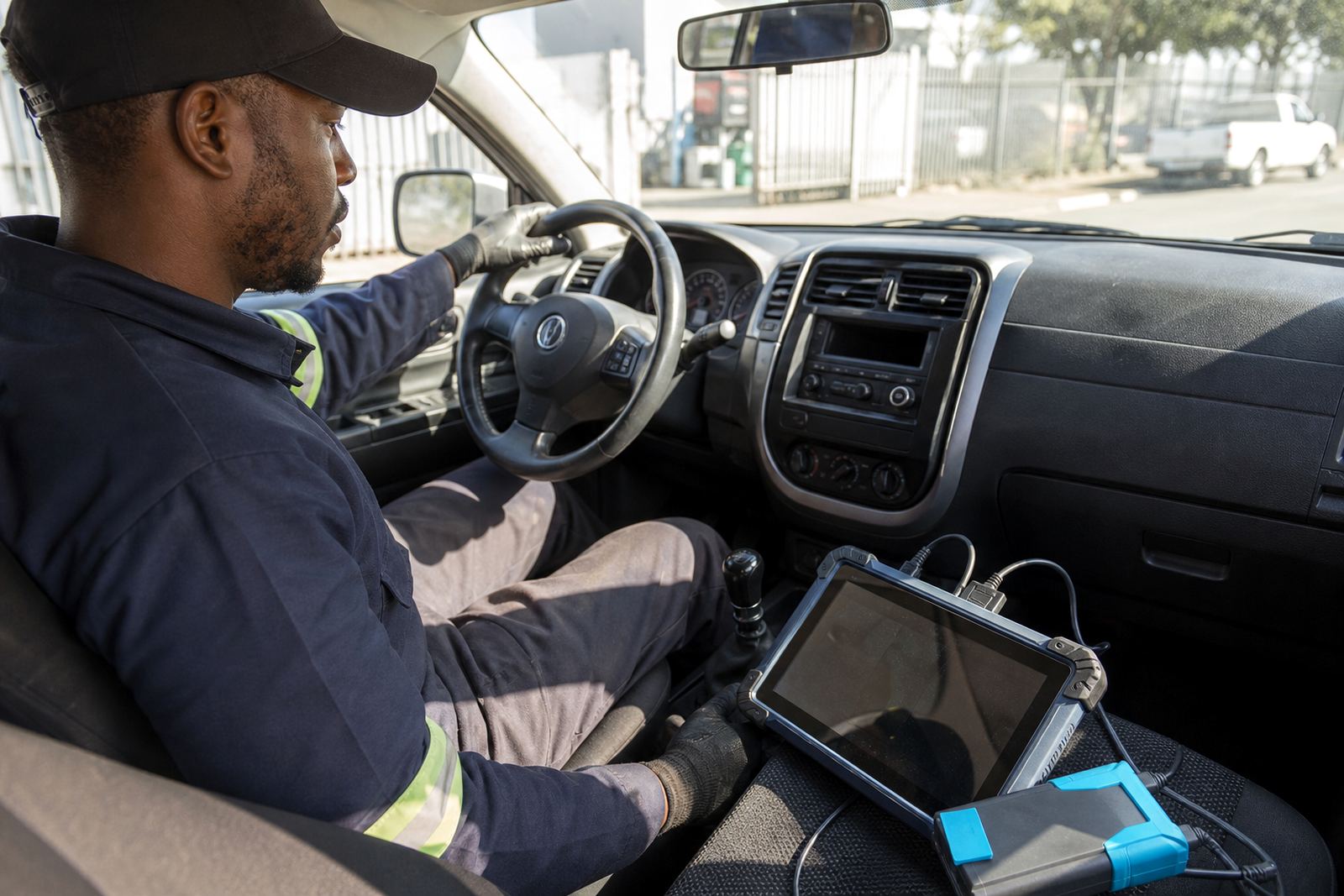
Modern vehicles often keep a trail even when the issue comes and goes. Diagnostic fault codes, live data, freeze frame details and battery voltage readings can point us toward a weak charging system or a sensor circuit that is dropping out. We also look at starter current draw, alternator output and battery health because low voltage can create strange symptoms that look unrelated at first.
- OBD fault codes can show the system affected, not always the final cause.
- Live data helps spot a signal that flickers only under load.
- Battery and charging tests show whether the fault starts with poor power supply.
- Parasitic drain testing helps find a hidden draw that flattens the battery overnight.
A small wiring fault can send a vehicle in circles. One loose earth strap or damaged connector can mimic sensor trouble, a starter fault, or even a CAN bus communication issue. That is why we work through the evidence step by step.
The parts that fail only when conditions change
Heat, movement and moisture often expose what a static test misses. An alternator may charge well when cold, then fall away once the engine bay is hot. A starter can spin on one attempt and click on the next because an internal contact is worn. A battery can pass a basic test and still struggle once the vehicle sits overnight with a small draw on the system.
On coastal routes around Cape Town, salt air and humidity can speed up corrosion in connectors, fuse boxes and earth points. That matters on panel vans, courier vehicles and family cars that park outdoors in Somerset West or Paarl. Intermittent problems often live in places people do not see first, like behind trim panels, under battery trays or along looms that rub on bodywork.
- We inspect terminals, fuses, relays and earth points for heat marks or corrosion.
- We shake-test looms and connectors while watching live readings.
- We check for rubbed insulation, water ingress and damaged clips.
- We test starter circuits and charging paths under real load, not only at idle.
Why road conditions matter in Western Cape fault tracing
A vehicle that behaves on the workshop floor may complain on the road. Speed humps, stop-start traffic, rough shoulders and long distances between towns can all change how a fault shows itself. A wiring repair that looks fine in the bay can still fail when a harness flexes on a trip to Brackenfell or when a trailer plug moves under load.
For fleet operators, that is where mobile call-outs help. We can inspect vehicles at depots and working yards across Cape Town, Milnerton, Bellville, Durbanville and surrounding areas, then compare the complaint with the way the vehicle is used. The same fault that appears on one bakkie after a trailer tow may never show on a city hatchback. Context matters more than a quick code reading.
Typical repairs after the diagnosis is pinned down
Once the source is found, the repair needs to match the fault rather than the symptom. That might mean a starter repair, alternator repair, charging system repair or a wiring repair on a damaged section of loom. In other cases it is a fuse box fault, an earth fault, a trailer wiring problem or accessory wiring that has been tied into the vehicle badly.
We also handle tracker and accessory fitting where the install has to be neat and serviceable. Good workmanship keeps future faults easier to trace, especially when a vehicle carries extra equipment. A clean route for wiring, proper fusing and solid earth points saves time later and keeps the electrical system easier to read.
- Starter circuit repairs for slow cranking or clicking issues.
- Alternator repairs where charging voltage drops under load.
- Battery drain repairs for vehicles that go flat after standing.
- Lighting repairs, fuse box repairs and trailer wiring repairs where the fault is hidden in the loom.
Montague Gardens hard-to-catch fault job
A fleet vehicle from the Cape Town side can arrive with a warning light that comes and goes, plus a battery that seems fine on test. The driver may say it only happens after a wet shift and a long idle in traffic. In a case like that, we would not rush into part replacement. We would test battery condition, charging output, earth continuity and live sensor readings while flexing the loom and checking the points where moisture can enter.
That kind of job often ends with a small repair that was easy to overlook. A corroded connector, damaged wire in a moving section, or an earth fault near a chassis bracket can create a fault that only shows under vibration. It is the sort of issue that keeps a workshop honest, because the vehicle must be checked in more than one state before the real answer appears.
What to send with an intermittent fault enquiry
When a fault comes and goes, the more context we have, the better the first inspection can be. Your enquiry does not need a long explanation. A few plain details are enough to point the diagnosis in the right direction and to avoid starting from zero on arrival.
- Tell us what the vehicle does, not only the warning light name.
- Note when it happens, such as cold start, after rain, on hills or at idle.
- Say whether the battery was recently replaced, jump-started or disconnected.
- Include the vehicle area, for example Montague Gardens, Bellville, Paarl or Somerset West.
Use our contact form and include the symptoms, the vehicle type and where it is parked or kept. That gives us a cleaner starting point for diagnostics and saves wasted motion when the fault is shy.