Why a fault code is only the first clue
An OBD fault code can point you in the right area, but it rarely tells the full story. A code for a sensor circuit may hide a loose plug, a corroded earth, a low battery or a wire that opens only when the vehicle moves over a rough road.
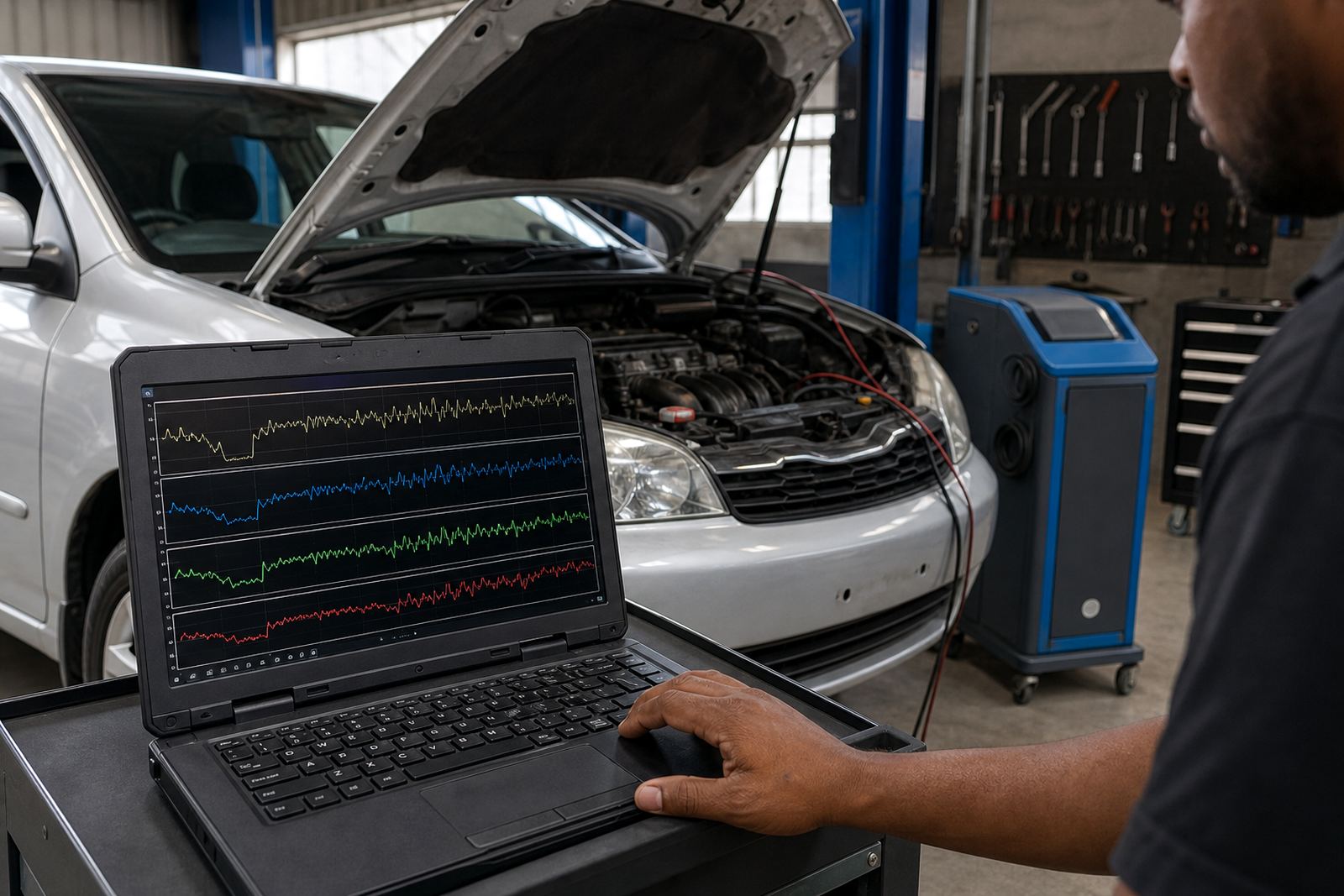
Live data lets the technician watch what the module sees in real time. That means airflow, coolant temperature, throttle position, oxygen sensor movement, battery voltage and many other readings can be compared with expected values while the engine is idling, revved or driven under load.
On a Cape Town run, a bakkie may drive fine in the morning and act up later near Milnerton when heat and vibration start to show the fault. Reading live data is how the workshop separates a real component failure from a false trail.
What we look for on the screen
Good diagnostic work starts with a steady battery and a clean scan. Once the system is connected, the technician looks for values that do not move, move too slowly, or swing far outside normal range. A dead sensor is not the only problem, because a bad earth or broken signal wire can make a healthy sensor look faulty.
- Coolant temperature that stays fixed after warm-up points to a sensor or wiring issue.
- Mass airflow or manifold pressure readings that do not match engine load can explain poor throttle response.
- Battery voltage that drops too far during cranking may send modules into fault mode.
- Injector, ignition and fuel trim data help show whether the engine is running lean, rich or unevenly.
We also compare live data from different modules when the vehicle has CAN bus faults. If one control unit is offline or sending nonsense, that tells us the problem may sit in the network wiring, not in the part that gets blamed first.
Battery and charging checks that change the diagnosis
Live data is useful on its own, but it becomes sharper when it is read alongside battery and charging tests. A weak battery can create confusing symptoms, especially on modern vehicles with multiple modules, trackers and accessories fitted.
If the alternator is charging too low, too high, or dipping under load, the live figures will show it. That matters on fleet vehicles running between Bellville, Brackenfell and Paarl, where stop-start work and long idle periods can expose charging problems that a quick driveway test misses.
- Cranking voltage shows what happens the moment the starter draws current.
- Charging voltage shows whether the alternator is supporting the system properly.
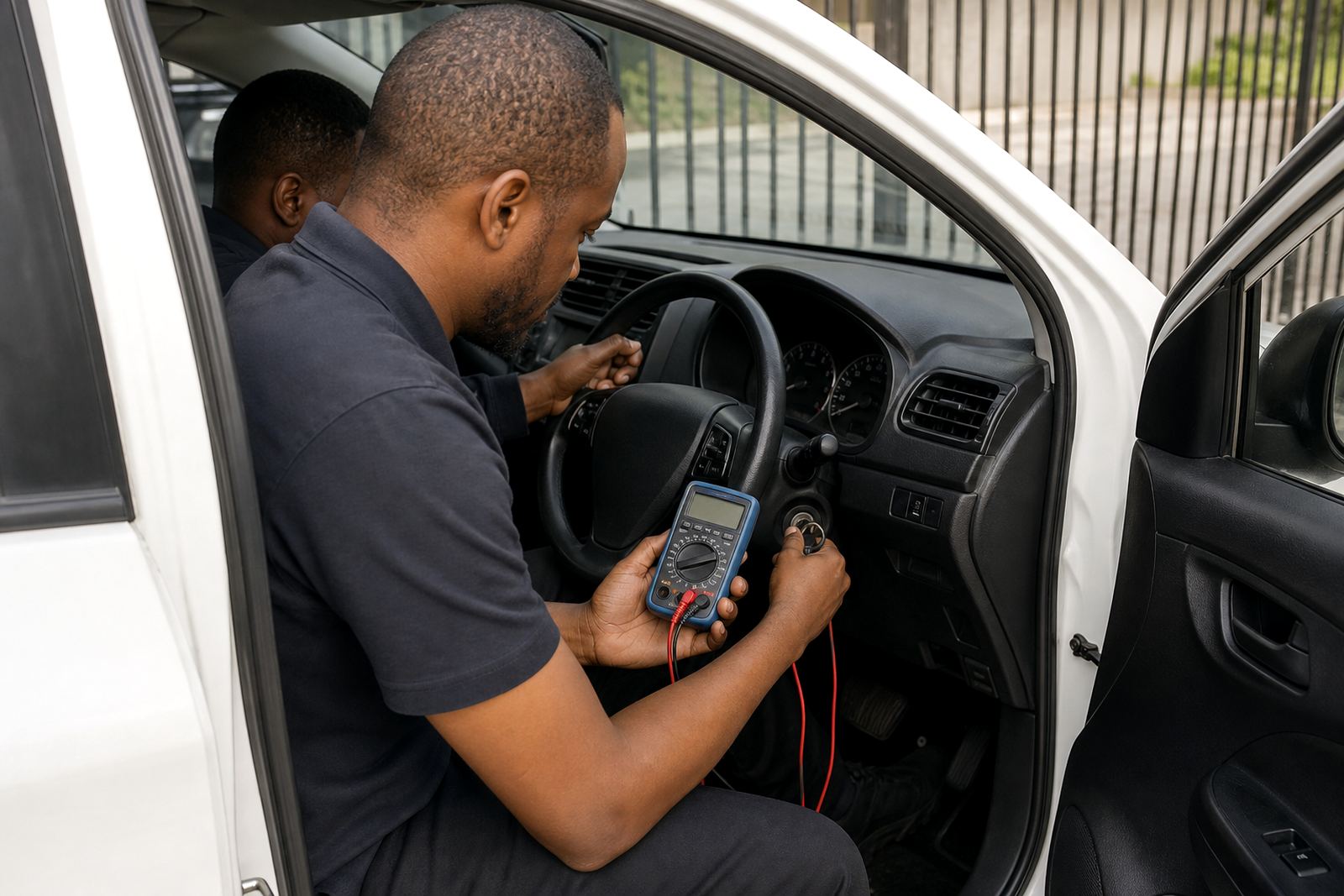
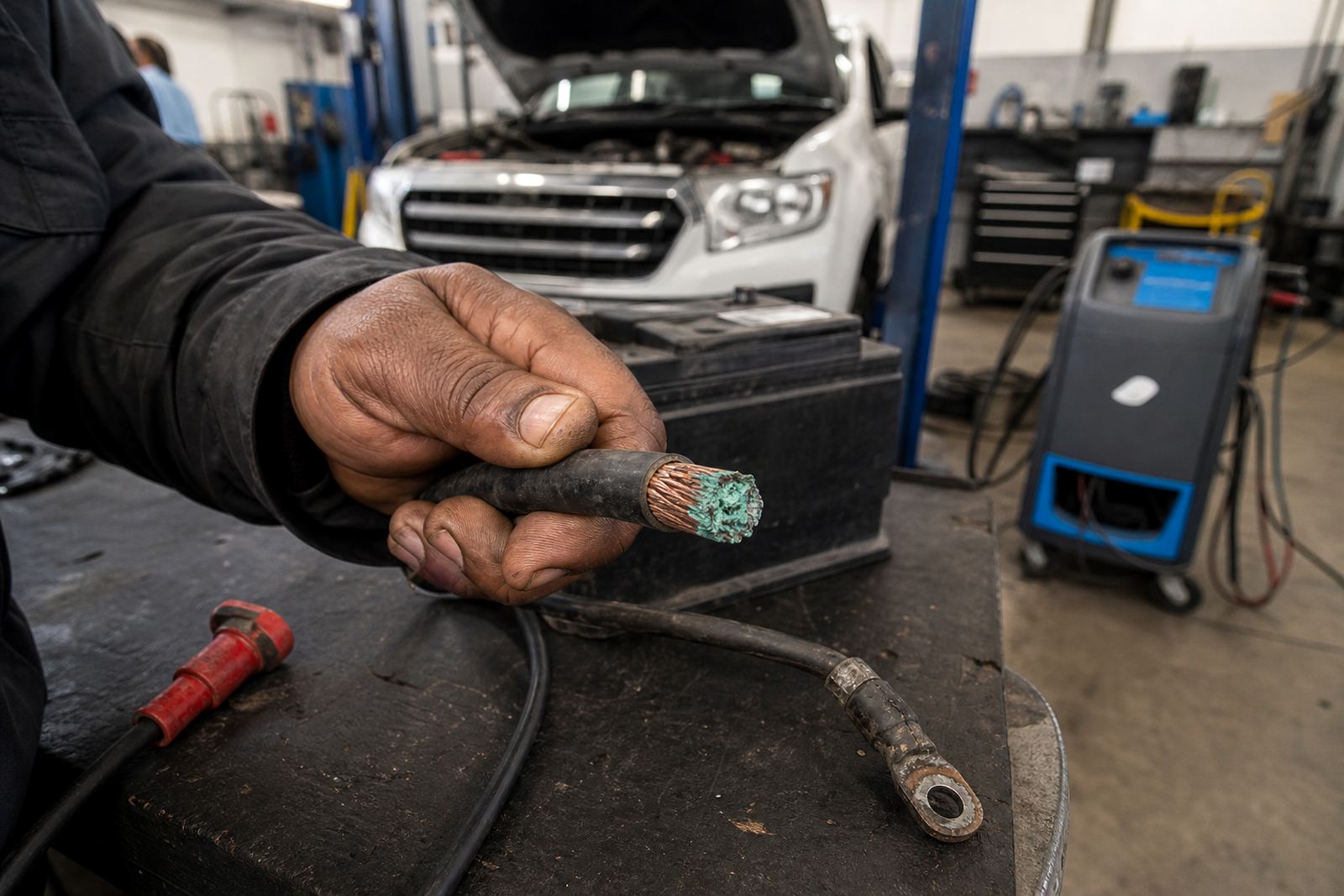
- Voltage drop tests help find losses in cables, terminals and earth straps.
- Parasitic drain testing helps uncover a module or accessory that stays awake after switch-off.
When wiring faults hide behind normal-looking numbers
Some faults only show up when the vehicle moves, turns, or hits a bump. A trailer wiring fault, corroded earth point or damaged loom may give acceptable readings on a stationary scan and then fail under vibration. That is where live data, wiring checks and old-fashioned tracing work together.
We often see this on vehicles that have had accessory wiring added by different hands over time. A tracker, canopy light, work light or extra socket can share a circuit with factory wiring if the installation was rushed. The result is erratic readings, blown fuses or a starter circuit that works only when the weather is dry.
In Montague Gardens, the coastal air can be unkind to small terminals and exposed joins. On a vehicle that is parked near the harbour or used in wet winter conditions, a small rise in resistance can change the whole diagnosis.
A local case from the Western Cape roads
A fleet van from Somerset West came in with a rough idle and a battery warning light that appeared only now and then. The scan showed more than one code, but the live data told the clearer story. Battery voltage fell too low at idle, the alternator output was unstable and one sensor reading drifted whenever the headlights and demister were switched on.
After tracing the circuit, we found a charging fault and an earth issue working together. Once the charging system was repaired and the earth path cleaned up, the live readings settled and the idle improved. That is the value of reading live data carefully, because the first fault code was only part of the picture.
Private owners in Cape Town often describe the same thing in different words, maybe a flat battery after standing overnight, a warning lamp that comes and goes, or a starter that sounds tired. The pattern changes, but the method stays the same: test the data, trace the circuit, then repair what the numbers point to.
What live data helps us decide in the workshop
Live data does not replace hands-on testing, it guides it. Once the readings point in a direction, the technician can decide whether the problem sits in a sensor, the wiring, the control module, the starter circuit or the charging side.
- Starter repairs when cranking speed and voltage drop do not line up.
- Alternator repairs when charging output is unstable or too low.
- Wiring repairs when a signal is present one moment and lost the next.
- Fuse box repairs when a circuit is fed poorly or a contact is overheating.
- Accessory fitting checks when added equipment is disturbing a factory circuit.
For operators running between Milnerton, Bellville and Durbanville, this approach saves time on guesswork and keeps the workshop focused on the real fault. It also helps when a vehicle needs tracker fitting or accessory rewiring, because the new circuit can be tested against the live behaviour of the existing system before the job is signed off.