
Where trailer plug faults usually begin
A trailer socket looks ordinary from the outside, yet it carries a lot of responsibility. Lights, brakes on some setups, charging feeds and reverse signals all depend on clean contact, sound wiring and a solid earth. When one pin is loose or dirty, the fault can move from one function to another and make the fault look random.
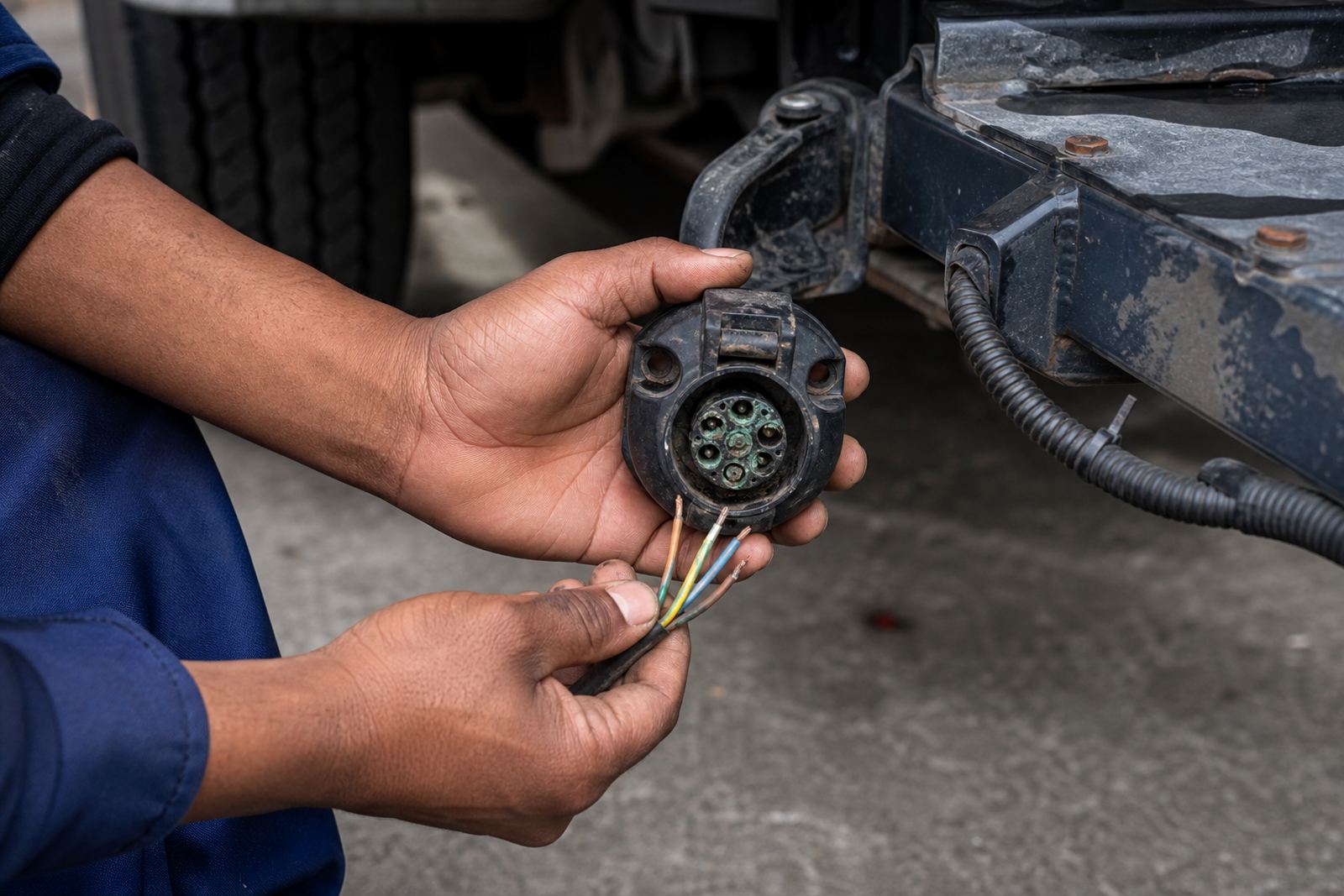
Corrosion is common on trailers that live near the coast or sit outside in damp weather. So is moisture trapped inside the plug after a wash or a tow through wet roads. Once the copper starts oxidising, resistance rises and the circuit can act weak even when the wire itself is still intact. A join done with the wrong crimp or a bare twisted splice can do the same thing.
We often see trailer issues after a DIY repair that worked for a while then failed again. The plug may have been replaced, but the real cause was an earth path that could not carry the load. That is why a proper check starts with the socket, the connector pins, the trailer side wiring and the vehicle side feed, not just the obvious burnt terminal.
What a fault trace needs to cover
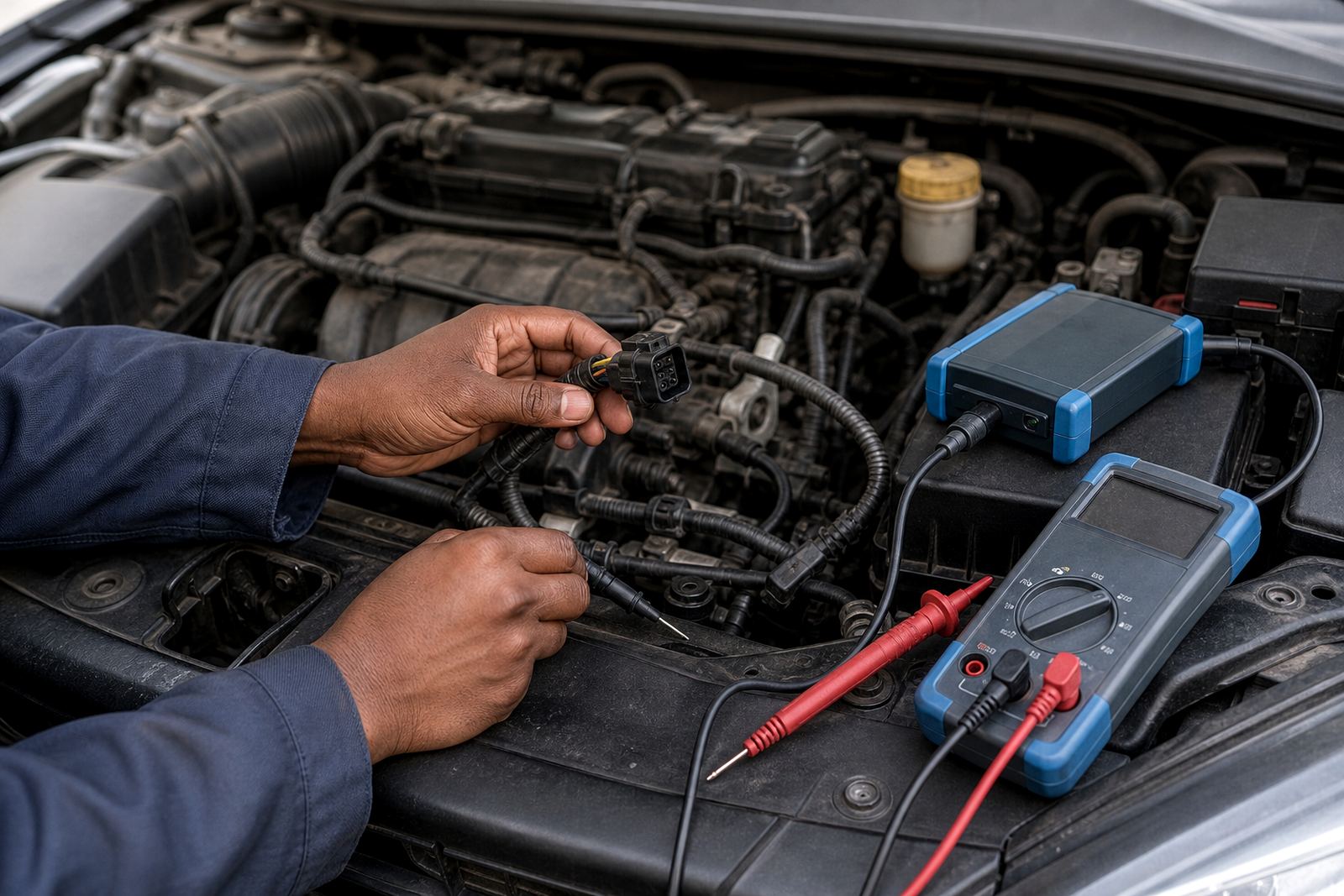
A technician checks whether power reaches the socket, whether the return path is strong enough, and whether the trailer harness is drawing current the way it should. On more modern vehicles, a trailer module or body control system may also be involved, which means the fault can sit deeper than the plug itself.
- Visual inspection of pins, socket housing and seals
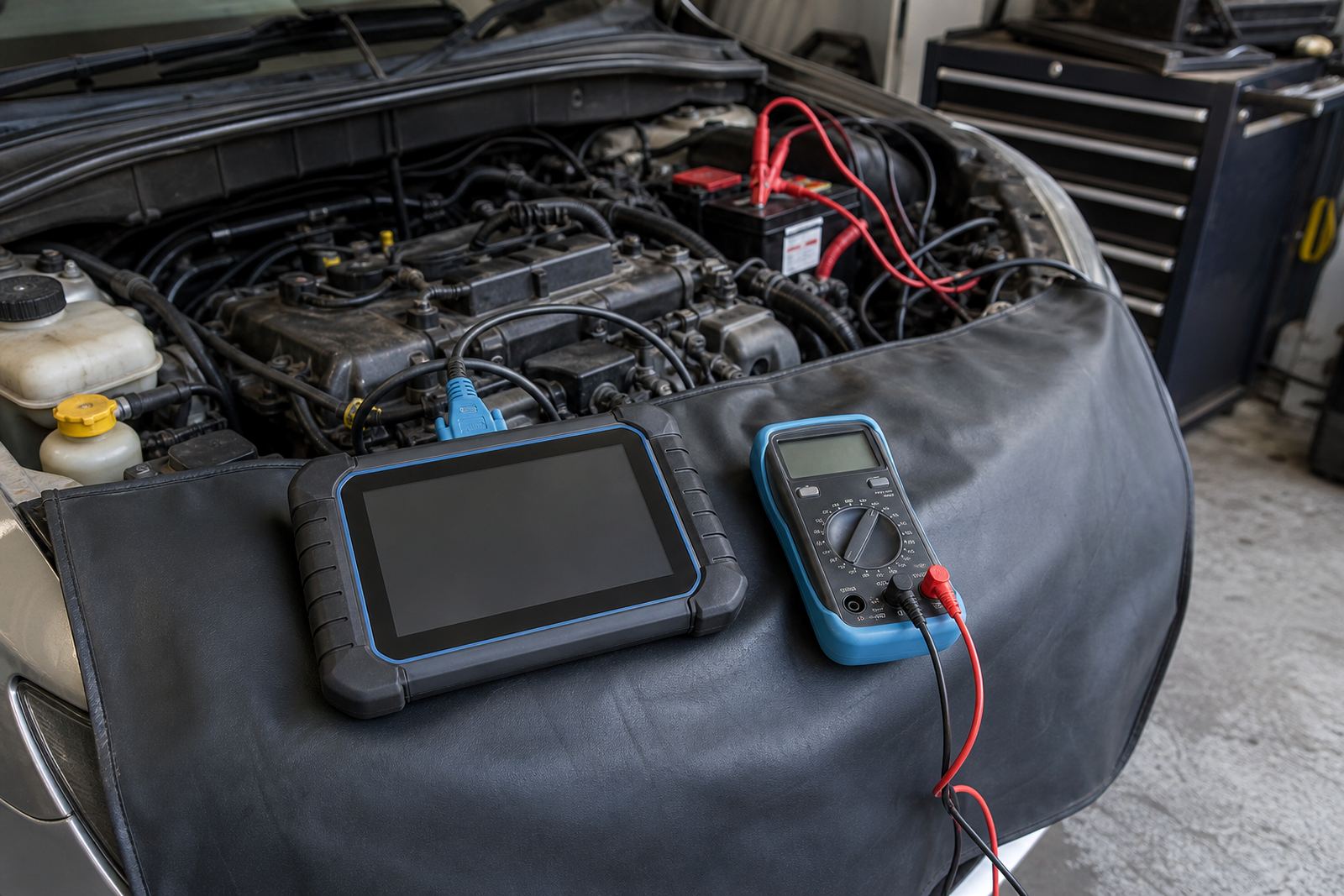
- Battery and charging test on the tow vehicle if voltage is unstable
- Earth continuity test between vehicle and trailer
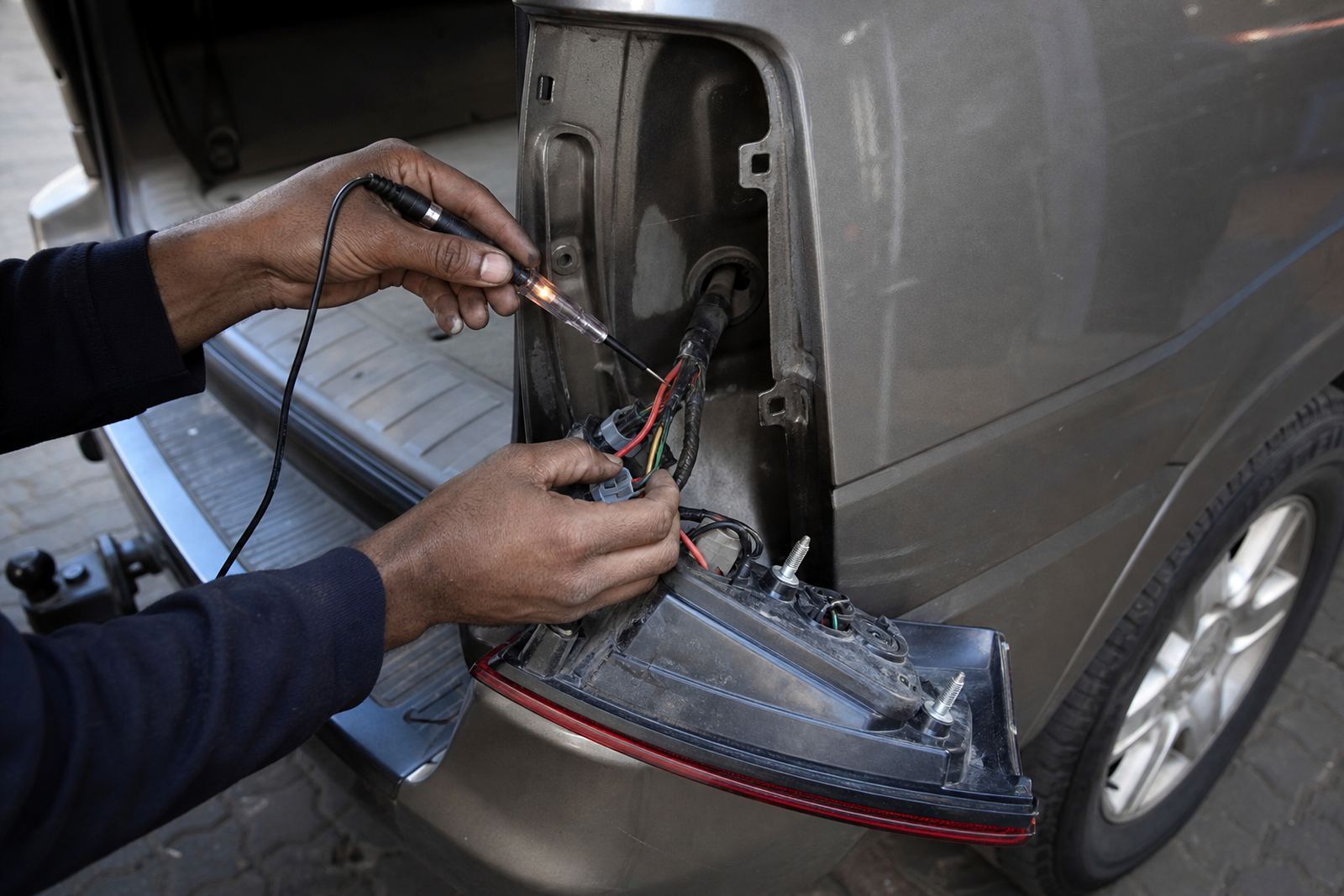
- Live checks on left, right, tail, brake and reverse circuits
- Inspection for burnt terminals, loose crimp ends and damaged sheathing
- Verification of trailer current draw where a module is fitted
With trailer wiring, the small details matter. A pin that is slightly spread, a wire strand that has pulled back, or an earth eyelet fixed to painted metal can all cause an intermittent fault. Those are the problems that usually get blamed on the trailer when the weak point is actually the connection method.
Earth faults that hide inside the tow setup
A poor earth is one of the hardest trailer faults to ignore because it produces strange symptoms. Indicators can glow faintly, brake lights can flash when the park lights are on, or one side of the trailer can fail while the other side still works. In some cases, the tow vehicle will not recognise the trailer properly at all.
Earth faults often start at a corroded mounting point or a loose ring terminal. They also appear after accident repairs, rust repairs or a replacement socket fitted without cleaning back to bare metal. On trailers used around the Cape Flats, sea air and road spray can make a weak earth worse in a short time.
The clean fix is not to add more tape. It is to test the full return path, clean the contact points, repair the damaged wire and secure the joint properly. If the harness jacket is cracked, the wire has to be protected against water and movement or the fault will return under tow vibration.
Incorrect joins that cause repeat failures
Wrong joins are common in trailer repairs because a trailer wire can look harmless until it starts heating under load. A twisted join, a cheap connector pushed onto thin copper, or a splice left exposed to moisture can create high resistance. That leads to heat, erratic lights and sometimes a melted pin in the plug.
We see this most often where a trailer has been altered for extra lamps, a canopy accessory or a different socket pattern. The existing wiring gets extended without checking polarity and function at each pin. Once the wrong wire crosses into another circuit, the result can be a pattern of faults that seems impossible until the loom is traced properly.
- Match each wire to its actual function before joining
- Use the right gauge for the current on that circuit
- Seal exposed joins against moisture and dust
- Secure the loom so vibration does not pull the repair apart
- Test every pin under load, not only with a quick visual check
A neat-looking join can still be a bad electrical join. The test metre tells the truth. That is especially important on trailers that travel far between Cape Town, Paarl and Somerset West, because constant movement and road grime punish weak repairs.
A Cape Town towing problem that starts at the socket
A fleet operator from Montague Gardens brought in a vehicle that towed a work trailer through Bellville, then Milnerton and down to a site near the harbour. The trailer lights worked on the yard, but failed once the load was strapped and the vehicle was under real movement. The fault was not in the lamps themselves. The issue sat in a corroded socket pin and a poor earth where the trailer harness had been repaired before.
After tracing the circuits, the team found a weak pin fit, a damaged earth run and one join that had been left open to moisture. The repair needed cleaning, proper termination and a fresh check across the full circuit. Once the socket and earth path were corrected, the fault stopped chasing its tail from one light to the next. That sort of job is common where trailers work hard across the Western Cape and get wet, dusty and loaded every week.
For private owners, the same pattern shows up after towing a camping trailer or small utility trailer to the coast. A plug that seemed fine in town can fail after a trip through wet roads, then leave the driver chasing brake lights, indicators and reverse lights one by one. The source is usually smaller than people expect, but it still needs a proper metre check.
What our workshop checks before a trailer leaves
At our Montague Gardens workshop, trailer plug faults are handled as an electrical tracing job, not just a socket swap. The technicians check the tow vehicle side, the trailer side and any accessory wiring that may be sharing the same earth or feed. If a CAN bus related signal, trailer module or charging feed is involved, that is tested as part of the same circuit review.
- Socket condition and pin wear
- Battery health and alternator output where low voltage is suspected
- Earth path quality from vehicle body to trailer frame
- Correct pin function for each lamp or feed circuit
- Damage from rubbing looms, loose brackets or water ingress
- Accessory wiring that may be interfering with trailer function
We also work mobile across Cape Town, Bellville, Milnerton, Somerset West, Paarl, Brackenfell and Durbanville for fleet operators and private owners. If your trailer lights keep failing, our contact form can be used to send the details and arrange a proper inspection. A clean test now is a lot better than chasing the same fault on the roadside with the trailer loaded.