
A light on the cluster is only the first clue
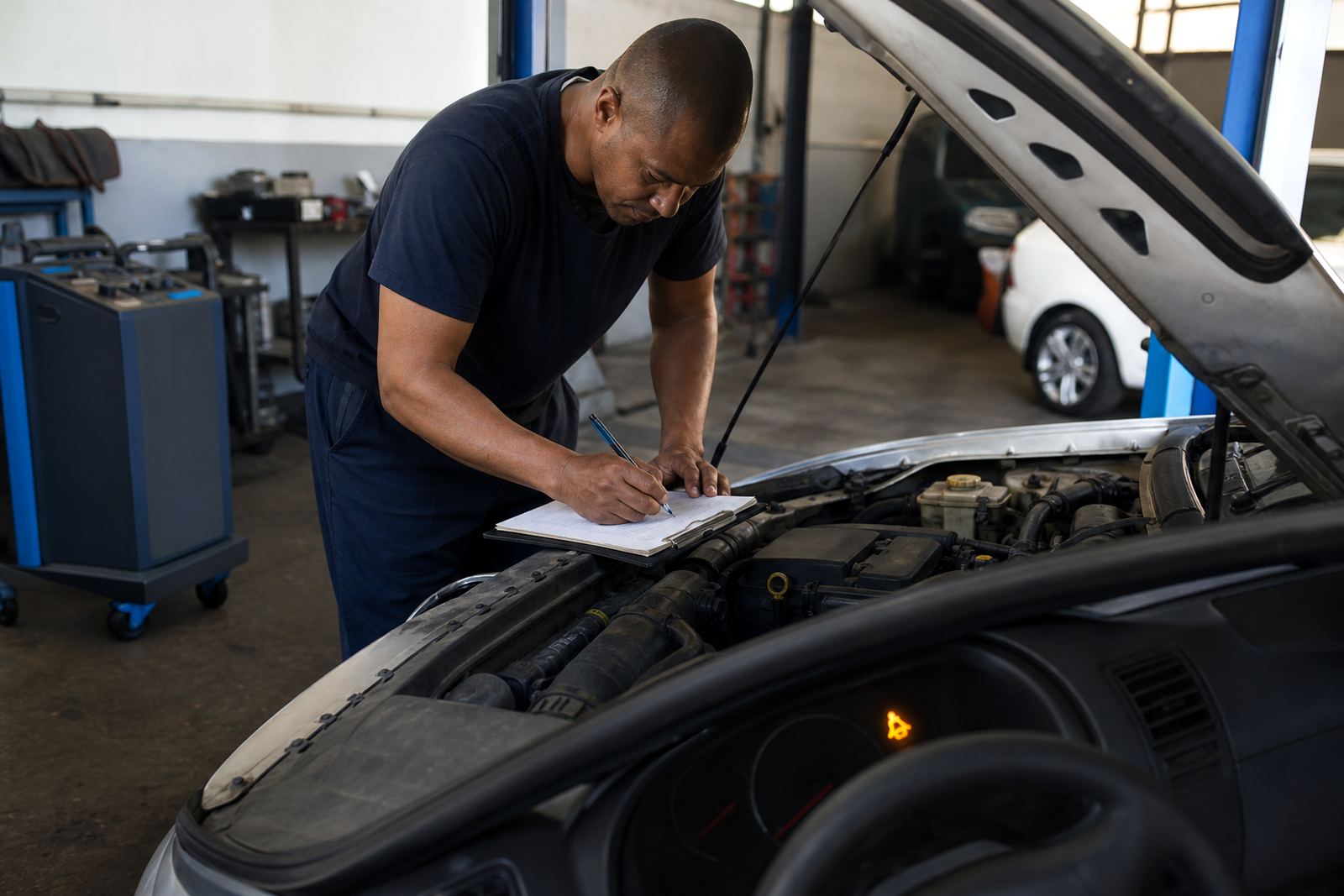
When a dashboard light appears, the useful work starts with the scan tool. A stored code can point to a sensor circuit, a charging fault, a CAN bus communication issue or a wiring break, but the code by itself does not tell the full story. The same warning can hide different faults on two vehicles, so the technician has to read the fault memory, look at live data and check whether the numbers match the road condition and battery state.
In our workshop, that means looking beyond the message on the screen. A battery warning can come from an alternator problem, a loose earth, a damaged charging cable or a battery that no longer holds voltage under load. A misfire light may start with a coil issue, yet the wiring to that circuit or a corroded connector can be the part that keeps failing. The scan tells us where to begin, not where to stop.
What the scan should lead to next
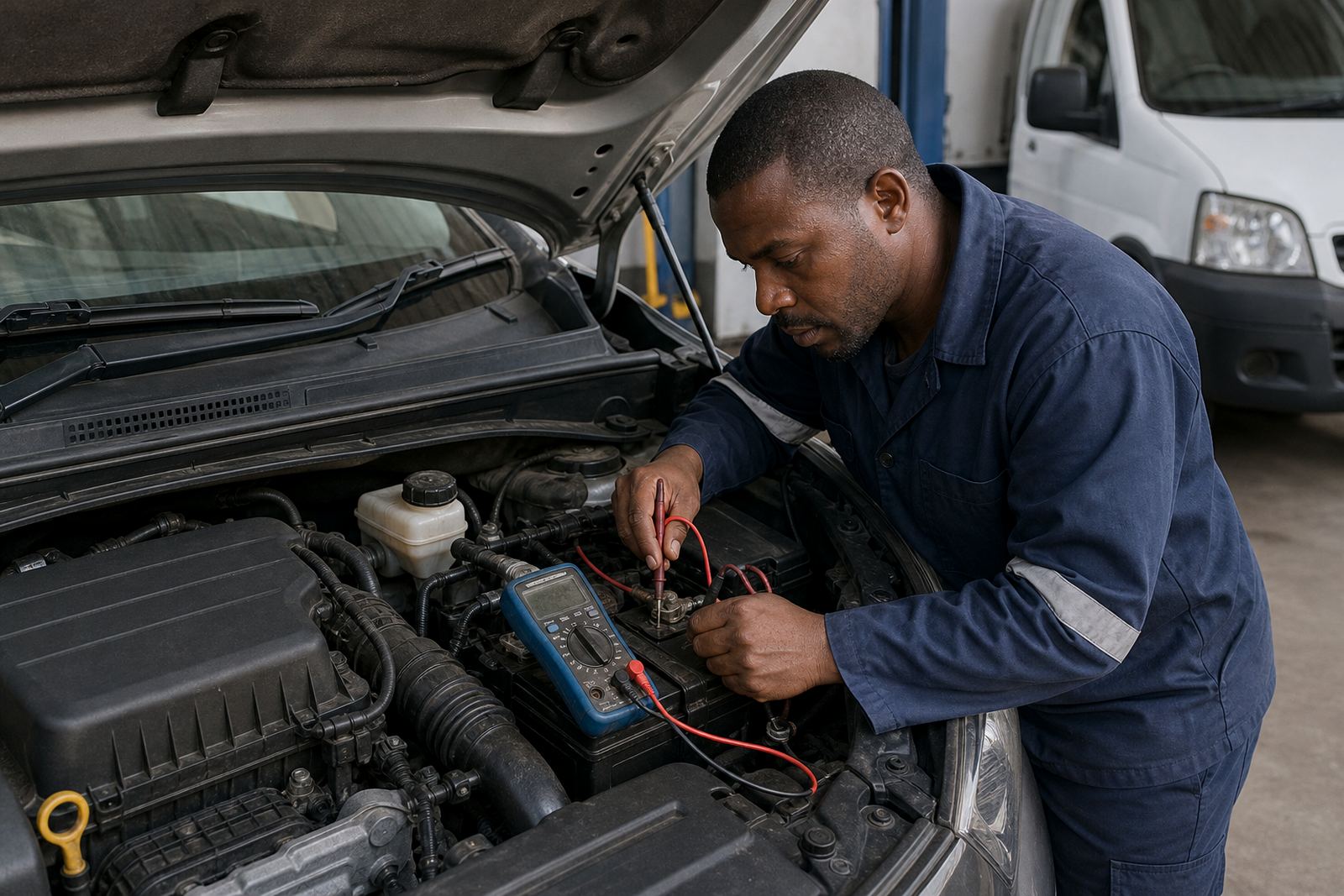
Once the fault codes are read, the next step is supporting tests. That usually includes battery and charging checks, a parasitic drain test, fuse inspection, earth point checks and a close look at the harness around the affected circuit. On modern vehicles, live data is often more useful than a single code, because it shows what the car is doing while it runs, idles or cranks.
- Check battery condition with a load test, not open-circuit voltage alone
- Alternator output and ripple on charging systems
- Starter current draw and cranking speed
- Earth faults where a return path is weak or unstable
- Communication faults on CAN bus circuits and modules
- Parasitic drain when the vehicle should be asleep
That sequence keeps the diagnosis honest. A part replacement without test results can hide the real fault for a week or two, then the warning light returns and the owner is back at square one.
Cape Town traffic makes weak electrical systems show themselves
We see plenty of vehicles from Milnerton, Bellville and Somerset West that only misbehave once the battery has been stressed by short trips, stop-start traffic and damp coastal conditions. Salt in the air is hard on terminals, connectors and trailer plugs, especially where repairs were rushed or tape was used instead of proper protection. A truck or hatchback can look fine on the road, then a bad earth starts dropping voltage the moment headlights, fans and charging loads all switch on together.
That is why a warning light should never be treated as a single isolated event. If a customer from Paarl arrives with a charging light and slow cranking, we will check the charging system, inspect the starter circuit and test for voltage drop across the main cables. If the vehicle also has accessories fitted, we check whether the extra wiring has been tied in neatly or whether it is adding noise and drain to the system.
Repairs that match the fault
Our auto electrical work covers the common problem areas that sit behind warning lights and starting issues. Sometimes the fix is a damaged wire or a corroded terminal. Sometimes it is a starter that draws too much current, an alternator that no longer charges correctly, or a fuse box with heat damage on one circuit. On newer vehicles, a CAN bus fault check may be needed before anyone starts replacing parts.
- Wiring repairs where insulation or conductors are damaged
- Starter repairs when cranking is weak or inconsistent
- Alternator repairs when charging output is off spec
- Battery drain repairs after overnight voltage loss
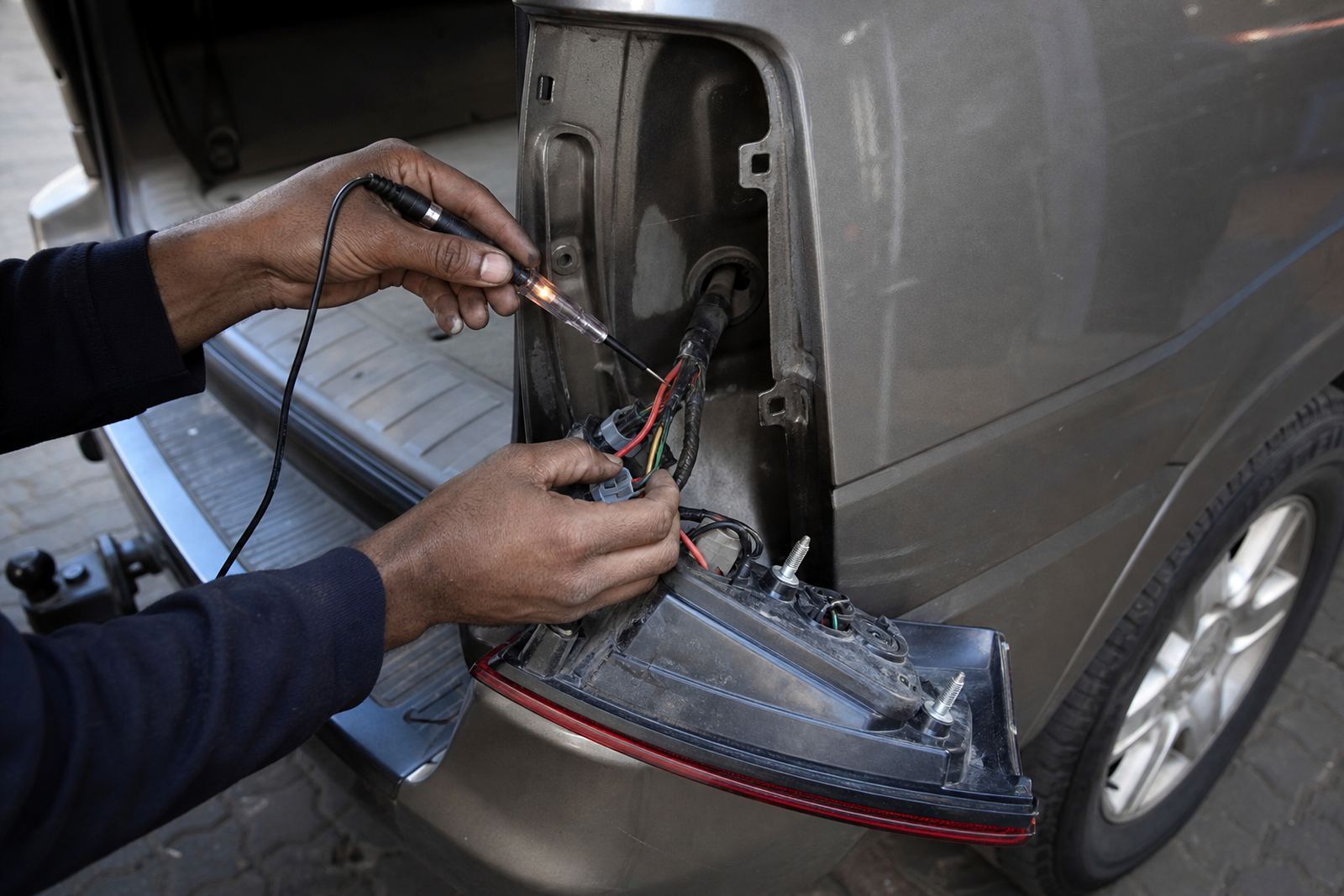
- Lighting repairs for faults that trigger dash alerts
- Trailer wiring repairs and accessory rewiring where extra circuits were added badly
We also fit trackers and accessories for private owners and fleet operators, but the wiring has to be done with the vehicle’s electrical load in mind. A neat install is not only about appearance, it also matters for fault tracing later if a warning light appears.
Repair confirmation is part of the job
A proper warning light job ends with proof that the fault has been dealt with. That means clearing the code after the cause is repaired, then checking live data again, and if needed repeating the test drive or cranking test to make sure the symptom is gone. If the fault returns during testing, the job is not finished yet, because the circuit is still telling the truth.
We also inspect the wiring around the repaired section so heat, movement and vibration do not cause the fault to reappear. A charging repair should leave stable voltage at idle and under load. A starter repair should give steady cranking. A drain repair should show normal sleep current once the vehicle has settled. That last check matters on fleet vehicles, where one weak battery can take a ute or bakkie out of service when it should be on the road.
Montague Gardens call-out for wiring fault
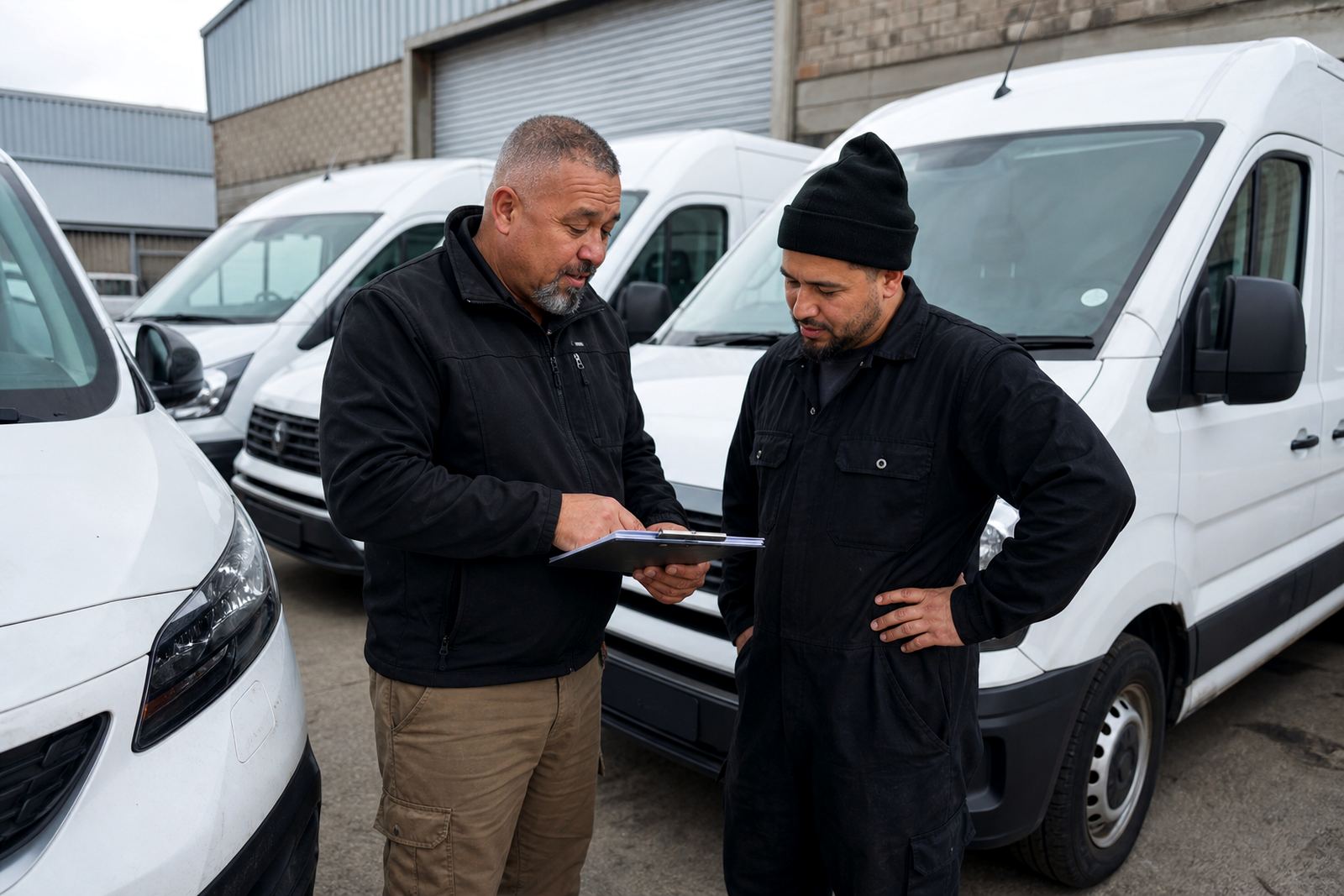
A fleet bakkie based in Montague Gardens can arrive with a battery light, rough cranking and a dash message that points in the wrong direction. The scan may show several codes, but the useful path starts with charging tests, then a voltage drop check on the main cables and earths. If the alternator is charging poorly at idle but recovers at higher rpm, the technician still has to find out whether the fault is inside the unit, in the belt drive or in the wiring that feeds it.
For mobile call-outs across Cape Town, Bellville, Milnerton, Brackenfell, Durbanville, Somerset West and Paarl, that same order matters. The warning light is the opening clue, not the answer. Once the scan results, supporting tests and repair confirmation line up, the owner has a clear picture of what failed and what was fixed.
- Read the codes and note live data
- Test battery, starter, charging and earth circuits
- Inspect the wiring and connectors around the fault
- Repair the cause, not only the symptom
- Confirm the fix before the vehicle goes back to work